

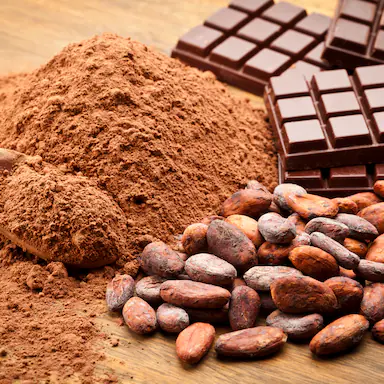
Whether you manufacture chocolate beverages, bakery mixes, confectionery, ice cream, or ready-to-use dessert products, understanding the differences between cocoa powder varieties can help you make better purchasing decisions. Natural cocoa powder, Dutch-process cocoa, high-fat cocoa powder, and highly alkalized dark cocoa each offer distinct advantages, but they are not interchangeable in every formulation.
For businesses evaluating ingredient sourcing options, MT Royal supplies a range of brands at competitive prices. Its brand portfolio includes Latamarko, a brand to consider when assessing available product options and quality requirements. The most appropriate choice should ultimately depend on verified product specifications, application performance, and commercial needs rather than brand positioning alone.
This guide explores the 4 best cocoa powder options to add chocolate flavor, explains their applications, and provides practical advice for production managers, procurement officers, and factory owners who need to balance product quality with manufacturing efficiency.
Why Cocoa Powder Selection Matters in Commercial Production
Cocoa powder is produced by pressing cocoa liquor to remove part of its cocoa butter and grinding the remaining cocoa solids into a fine powder. The finished ingredient contains cocoa solids, residual cocoa butter, and naturally occurring compounds responsible for chocolate’s characteristic aroma and flavor.
Despite their similar appearance, commercial cocoa powders can differ considerably in acidity, color, fat content, particle size, and processing characteristics. These differences can influence the final product as well as the efficiency of the manufacturing process.
Consider a factory producing thousands of kilograms of chocolate beverage mix every week. If a replacement cocoa powder has a different flavor profile or disperses less effectively, the production team may need to adjust mixing conditions or reformulate the product. Even a relatively small change can affect finished-product consistency, labor requirements, and production costs.
Before selecting a cocoa powder, manufacturers should evaluate five important factors:
-
Flavor intensity: Determine whether the finished product needs a mild cocoa note, a rounded chocolate flavor, or a deep, intense profile.
-
Color consistency: Establish the desired shade and acceptable variation between production batches.
-
Fat content: Understand how cocoa butter affects mouthfeel, texture, processing, and formulation costs.
-
Functional performance: Assess wetting, dispersion, suspension stability, and behavior in the actual recipe.
-
Total production cost: Consider ingredient usage, waste, processing time, and quality-control requirements instead of comparing purchase prices alone.
These criteria provide a practical foundation for evaluating the four main cocoa powder options.
1. Natural Cocoa Powder: Best for Traditional Chocolate Flavor
Natural cocoa powder is one of the most versatile ingredients for adding authentic cocoa flavor to commercial food products. It is produced without the alkalization treatment used in Dutch-process cocoa, allowing it to retain its naturally acidic characteristics.
Its flavor is often described as robust, distinctive, and sometimes fruity or slightly sharp, although the exact profile depends on the cocoa beans and manufacturing process. Its color typically ranges from light to medium brown.
Key Characteristics of Natural Cocoa Powder
Natural cocoa powder commonly has a pH of approximately 5.0–6.0, although the actual value varies by product. Its acidity can influence flavor and interact with leavening agents in baked goods.
This characteristic is particularly important in industrial baking. When a recipe relies on sodium bicarbonate, the acidity of natural cocoa may contribute to the chemical reaction that helps the product rise. Replacing it with an alkalized cocoa powder without reviewing the formula can change the finished product’s texture, color, and structure.
Natural cocoa is therefore a practical choice for manufacturers who want a recognizable cocoa flavor and an ingredient that suits their existing formulations.
Best Applications for Natural Cocoa Powder
Natural cocoa powder can be used in a wide range of commercial products, including:
-
Chocolate cakes, brownies, and cookies
-
Industrial bakery mixes and premixes
-
Dry chocolate beverage powders
-
Chocolate-flavored cereals
-
Selected confectionery products
-
Dessert mixes and cocoa-based fillings
In bakery production, natural cocoa can provide a familiar chocolate character without producing an excessively dark appearance. In beverage applications, it contributes cocoa flavor, although manufacturers must account for its dispersibility and potential sedimentation.
Advantages and Limitations
The main advantage of natural cocoa powder is its traditional cocoa profile. It can be particularly effective in products where a pronounced cocoa taste is more important than an exceptionally dark color.
However, natural cocoa is not suitable for every recipe. Its acidity may require adjustments when used in formulations designed for alkalized cocoa. It also does not dissolve completely in water, so beverage manufacturers may need to optimize mixing conditions or use appropriate formulation aids to maintain a satisfactory suspension.
Procurement tip: Request product specifications covering pH, fat content, moisture, microbiological criteria, and color where available. Before approving a large order, test the powder in the actual production recipe rather than relying solely on its appearance or flavor when sampled dry.
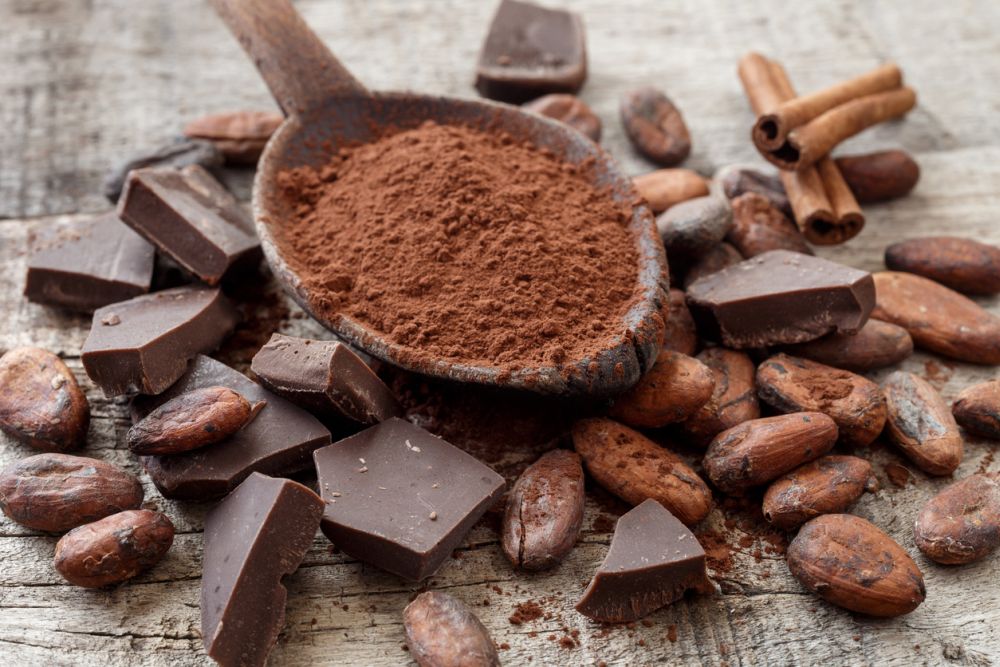
2. Dutch-Process Cocoa Powder: Best for Smooth Flavor and Consistent Color
Dutch-process cocoa powder undergoes alkalization, a treatment that reduces acidity and changes the powder’s color and flavor characteristics.
Depending on the degree of alkalization, the powder can range from medium brown to deep reddish-brown or very dark brown. Its flavor is often perceived as smoother and less acidic than that of natural cocoa.
For manufacturers seeking a rounded chocolate flavor and a specific color profile, Dutch-process cocoa is one of the most useful options to evaluate.
How Alkalization Changes Cocoa Powder
Alkalization modifies the chemical properties of cocoa solids. It can influence flavor, color, and interactions with other ingredients. Depending on the product and processing method, it may also improve certain wetting or dispersion characteristics.
However, improved dispersion should not be confused with complete solubility. Ordinary cocoa particles generally remain suspended in liquid rather than dissolving like sugar.
This distinction is particularly relevant to manufacturers of chocolate beverages. The powder’s particle characteristics, mixing procedure, stabilizer system, and finished-product requirements all influence how evenly the cocoa remains distributed.
Best Applications for Dutch-Process Cocoa
Dutch-process cocoa is commonly used in:
-
Chocolate cake and brownie mixes
-
Chocolate beverage powders
-
Ice cream and frozen desserts
-
Chocolate creams and fillings
-
Bakery coatings
-
Chocolate-flavored dairy products
Its reduced acidity can make it suitable for products requiring a smoother flavor profile, while its adjustable color characteristics offer flexibility in product development.
Advantages and Limitations
Dutch-process cocoa provides manufacturers with considerable control over flavor and appearance. Different degrees of alkalization can produce substantially different results, allowing product developers to select a powder that suits the intended application.
Nevertheless, darker cocoa does not automatically deliver a stronger chocolate flavor. A highly alkalized powder may have a dramatic appearance while producing a flavor profile that differs from what customers expect.
Baking applications require particular attention. Replacing natural cocoa with Dutch-process cocoa can change the acid-base balance of a recipe, especially when sodium bicarbonate is the main leavening agent. Production teams should validate substitutions through controlled trials.
Procurement tip: Compare pH, color specifications, fat content, and recommended applications. If the finished product requires a consistent shade, establish an approved reference sample and define acceptable variation between deliveries.
3. High-Fat Cocoa Powder: Best for Richness and Mouthfeel
High-fat cocoa powder retains more cocoa butter than conventional low-fat varieties. This can make it a valuable ingredient in formulations where richness, mouthfeel, and the perception of chocolate flavor are important.
For manufacturers of premium desserts, chocolate fillings, and selected beverage products, high-fat cocoa may provide a useful balance between cocoa solids and natural fat.
Understanding Cocoa Fat Content
Commercial cocoa powders are available in different fat-content categories. As a general guide, powders containing approximately 20–24% cocoa butter are often described as high-fat varieties, while some low-fat products contain around 10–12%.
These figures are indicative rather than universal. Classification and specifications vary by supplier, so buyers should always review the actual product documentation.
Higher cocoa butter content can contribute to a fuller mouthfeel and influence flavor perception. It can also affect the powder’s handling characteristics and interactions with other ingredients in the formulation.
Best Applications for High-Fat Cocoa Powder
High-fat cocoa powder may be appropriate for:
-
Premium chocolate cake and brownie mixes
-
Chocolate creams and dessert fillings
-
Ice cream and frozen desserts
-
Selected chocolate beverage formulations
-
Bakery products requiring a richer cocoa profile
-
Specialized confectionery applications
Its suitability depends on the complete formulation. In a rich chocolate filling, additional cocoa butter may support the desired sensory characteristics. In a low-fat beverage mix, however, the extra fat may introduce unnecessary cost or formulation challenges.
Advantages and Limitations
The primary advantage of high-fat cocoa powder is its potential to contribute richness and a fuller sensory experience. Depending on the recipe, it may help achieve a desired texture without relying entirely on other fat ingredients.
More fat, however, does not automatically mean a better product. Higher fat content can affect powder flow, storage behavior, handling, and overall formulation costs. In certain dry blends, it may also contribute to agglomeration or make consistent dosing more challenging.
Manufacturers should evaluate these characteristics alongside the ingredient’s flavor and color.
Procurement tip: Compare cocoa powders according to their actual specifications. Determine whether the additional fat supports your product requirements or simply increases costs. Review moisture, packaging, shelf life, and handling characteristics before making a bulk purchasing decision.
4. Dark and Highly Alkalized Cocoa Powder: Best for Intense Color
Highly alkalized cocoa powder is particularly useful when a product requires a strikingly dark appearance. Depending on the degree of processing, these powders can range from deep brown to nearly black.
They are frequently considered for dark cookies, specialty bakery products, and desserts where appearance is an important part of the consumer experience.
What Makes Dark Cocoa Different?
The intense color of dark cocoa powder is largely associated with processing, particularly the degree of alkalization, rather than simply the quantity of cocoa used.
This matters because increasing the amount of conventional cocoa in a recipe will not necessarily reproduce the appearance or flavor characteristics of a highly alkalized powder. A higher inclusion rate may also affect bitterness, texture, moisture balance, and ingredient costs.
Highly alkalized cocoa can have a different flavor profile from what its dark appearance might suggest. Manufacturers should therefore assess color and taste independently.
Best Applications for Dark Cocoa Powder
Dark cocoa powder is often considered for:
-
Dark chocolate cookies and sandwich biscuits
-
Specialty cakes and brownies
-
Dark bakery coatings
-
Selected ice cream and dessert products
-
Decorative bakery applications
-
Products designed around a distinctive deep-brown or nearly black appearance
It can be particularly useful when visual differentiation helps a product stand out in a competitive retail market.
Advantages and Limitations
The main advantage is its ability to deliver intense color when used at an appropriate inclusion rate. This can help manufacturers maintain a distinctive visual identity across production batches.
The trade-off is that highly alkalized cocoa may not provide the traditional cocoa flavor required by every recipe. It can also influence leavening behavior and the perception of bitterness.
Another common mistake is choosing dark cocoa based on its appearance in a photograph or sample container alone. Lighting conditions, background color, and processing can make two powders appear more similar or different than they actually are.
Procurement tip: Test physical samples under consistent lighting and evaluate them in the finished product. Where possible, document both color measurements and sensory results. A powder that looks ideal before processing may produce a different shade after baking or mixing.
Comparing the Four Best Cocoa Powder Options
The following table summarizes the main differences to help manufacturers identify the most appropriate starting point for their formulations.
| Cocoa powder type | Main advantage | Potential applications | Key consideration |
|---|---|---|---|
| Natural cocoa | Traditional, distinctive cocoa flavor | Bakery mixes, brownies, beverages | Acidity and leavening compatibility |
| Dutch-process cocoa | Smoother flavor and flexible color profile | Cakes, desserts, beverages | Degree of alkalization and recipe compatibility |
| High-fat cocoa | Richer mouthfeel and additional cocoa butter | Premium desserts, fillings, selected beverages | Fat balance, handling, and cost |
| Dark, highly alkalized cocoa | Deep brown to nearly black color | Dark cookies, specialty cakes, coatings | Color-to-flavor balance and formulation changes |
These categories can overlap. A high-fat cocoa powder may also be alkalized, while a dark cocoa powder may have a fat content that places it within another commercial category.
For this reason, manufacturers should compare actual product specifications rather than relying exclusively on category names.
How to Choose the Right Cocoa Powder for Your Factory
Selecting an ingredient for commercial production requires a more structured approach than choosing a product for home baking. The objective is to identify a cocoa powder that meets sensory expectations while performing consistently under real manufacturing conditions.
A practical selection process should involve product development, quality assurance, production, and procurement. Each department contributes a different perspective, and overlooking any one of them can lead to unnecessary costs.
Step 1: Define Your Finished Product Requirements
Start with the product rather than the ingredient.
A chocolate beverage powder may require good dispersion and a stable suspension. A brownie mix may prioritize flavor intensity, color, and compatibility with leavening agents. A chocolate filling may require a particular balance of cocoa solids and fat.
Before requesting quotations, document the essential characteristics your product must deliver.
For example, a manufacturer developing a premium chocolate cookie might prioritize:
-
Deep brown color after baking
-
Pronounced cocoa aroma
-
Controlled bitterness
-
Consistent dough handling
-
Repeatable results across production batches
These requirements become the foundation for evaluating samples and comparing suppliers.
Step 2: Request Technical Documentation
A professional supplier should be able to provide relevant product documentation, depending on the product and applicable requirements.
Ask for the following information:
-
Product specification and ingredient description
-
Cocoa butter or fat content
-
pH and alkalization information, where applicable
-
Moisture content
-
Microbiological specifications
-
Allergen and cross-contact information
-
Shelf life and recommended storage conditions
-
Country of origin and traceability documentation
-
Relevant certifications and compliance documents
Not every product will have identical documentation. Your quality assurance team should determine which specifications are essential for the intended application.
Clear documentation also makes comparisons between brands more meaningful. Two powders with similar names may have significantly different technical characteristics.
Step 3: Conduct a Controlled Production Trial
A small laboratory test can help identify promising ingredients, but it does not always reveal how a powder will behave on a factory floor.
Imagine a bakery manufacturer comparing two cocoa powders for a large-scale brownie mix. Both samples may deliver similar flavor in a small bowl. During a larger trial, however, one powder may disperse more slowly, produce a different finished color, or require adjustments to the mixing process.
A controlled trial should maintain the same recipe and processing conditions wherever possible. Evaluate the characteristics that matter to your product, including mixing time, finished color, flavor, texture, yield, and visible inconsistencies.
If results differ, investigate the cause before changing several variables simultaneously. This makes it easier to identify whether the problem comes from the cocoa powder, the process, or another ingredient.
Step 4: Calculate the Total Cost of Using Cocoa Powder
A lower purchase price does not necessarily translate into lower manufacturing costs.
Suppose two cocoa powders have different prices, but the less expensive option requires a higher inclusion rate to achieve the desired flavor. The initial saving may disappear once the recipe is adjusted.
A simple calculation helps establish the direct ingredient cost:
For example, if cocoa powder costs $8 per kilogram and represents 6% of the finished formulation, the direct cocoa ingredient cost is $0.48 per kilogram of finished product.
For a more complete comparison, also consider waste, additional processing time, rejected batches, storage requirements, and quality-control expenses.
The most useful purchasing metric is the cost of producing an acceptable finished product, not simply the price printed on the supplier’s quotation.
Step 5: Establish Reference Samples and Acceptance Criteria
After selecting a cocoa powder, retain an approved reference sample and document the relevant acceptance criteria.
Depending on the application, these may include:
-
Color and flavor
-
Fat content and moisture
-
pH, where relevant
-
Microbiological limits
-
Particle characteristics
-
Performance in a defined application
A reference sample and written specifications help prevent disagreements when a new delivery appears or performs differently from the original product.
This approach is particularly valuable when multiple production lines use the same ingredient or when purchasing teams need to evaluate alternative brands.
Common Cocoa Powder Procurement Mistakes to Avoid
Even experienced procurement teams can encounter problems when cocoa powder is treated as a commodity with only one meaningful specification: price.
Several common mistakes can be avoided with a more systematic purchasing process.
Choosing the Darkest Powder Automatically
Darkness is not a reliable standalone measure of cocoa quality or chocolate intensity. Processing can dramatically change color without producing a proportional increase in perceived flavor.
Specify the required color and taste separately, then evaluate both in the finished product.
Assuming All Cocoa Powders Are Interchangeable
Natural and alkalized cocoa can behave differently in baking systems. High-fat and low-fat powders may affect formulation balance and mouthfeel. Particle characteristics can also influence mixing and dispersion.
Treat substitutions as formulation changes rather than simple purchasing replacements. Conduct appropriate tests before implementing them across production.
Ignoring Batch-to-Batch Consistency
An ingredient that performs well in one trial may not meet expectations across every delivery unless the specifications and quality controls are suitable.
Ask how the supplier manages lot identification, product consistency, traceability, and deviations from agreed specifications. Establish a clear process for investigating nonconforming deliveries.
Ordering Large Quantities Before Validation
Bulk purchasing can reduce unit costs, but only when the ingredient is suitable and the stock can be used within its shelf life.
Before placing a substantial order, verify the sample, packaging format, storage requirements, delivery schedule, and expected consumption rate. An appropriately sized initial order may be more economical than committing to a large quantity of an unsuitable product.
Overlooking Storage and Handling
Cocoa powder should generally be stored in a cool, dry, clean environment, protected from moisture, strong odors, pests, and contamination.
Poor storage conditions can contribute to caking, handling problems, and deterioration in quality. Packaging integrity, warehouse conditions, and stock rotation should therefore be treated as important parts of ingredient management.
What Large-Scale Manufacturers Should Look for in a Cocoa Supplier
A suitable cocoa powder is only one part of a successful procurement decision. Your supplier also needs to support your operational requirements.
MT Royal supplies a range of brands at competitive prices, giving businesses an option when comparing ingredient sourcing arrangements. Its brand portfolio includes Latamarko, which can be evaluated alongside other available products according to the manufacturer’s specifications and intended application.
For procurement managers, several supplier capabilities deserve particular attention.
Reliable Availability and Lead Times
Production planning depends on ingredients arriving when needed. Delays in cocoa powder deliveries can disrupt schedules, especially when the ingredient is used across several high-volume product lines.
Ask suppliers about lead times, minimum order quantities, inventory availability, and how they communicate supply disruptions. Where appropriate, maintain safety stock based on consumption variability and replenishment time.
Transparent Product Specifications
Clear specifications help production and quality teams determine whether an ingredient meets requirements before it enters manufacturing.
When comparing two brands, review their documentation side by side. Differences in fat content, pH, color, or other relevant characteristics may explain why one product performs better in your application.
Commercial Flexibility
Pricing is important, but so are minimum order quantities, packaging sizes, payment terms, delivery costs, and the supplier’s ability to accommodate changes in demand.
A lower unit price may be less attractive if it requires purchasing more inventory than your business can reasonably consume.
Traceability and Quality Assurance
For manufacturers supplying retailers, food-service operators, or other industrial customers, traceability is essential.
Confirm that the supplier can identify product lots, provide appropriate documentation, and support investigations when quality concerns arise. Depending on the application, review relevant food-safety certifications and compliance requirements.
A well-defined ingredient approval process can help purchasing and production teams avoid unnecessary last-minute substitutions. The goal is not simply to buy cocoa powder at the best price; it is to maintain dependable production while protecting finished-product quality.
Improving Cocoa Powder Performance on the Production Line
Once a cocoa powder has been approved, the next challenge is maintaining consistent performance during routine manufacturing. Even an appropriate ingredient can produce disappointing results if handling and mixing procedures are poorly controlled.
Control Mixing Sequence and Dispersion
Cocoa powder can be difficult to disperse because its particles do not readily dissolve in water. Dry blending with compatible ingredients, controlled addition, and appropriate mixing equipment can help reduce lump formation.
For beverage applications, evaluate whether the formulation needs a wetting agent, stabilizer, or additional processing step. The appropriate solution depends on the recipe, equipment, and required shelf life.
Monitor Environmental Conditions
Cocoa powder can absorb moisture under unfavorable storage conditions. Excess moisture may contribute to caking, poor flow, and handling difficulties.
Keep packaging closed when not in use, monitor warehouse humidity where appropriate, and follow the supplier’s storage recommendations. Good housekeeping also helps reduce contamination risks.
Standardize Quality Checks
Establish a routine inspection process for incoming deliveries and finished products. Depending on the application, this may include:
-
Visual color assessment
-
Aroma and flavor checks
-
Moisture and pH measurements
-
Fat-content verification where required
-
Mixing and dispersion tests
-
Microbiological testing according to the risk assessment and specification
The purpose is to detect meaningful changes before they affect a full production run. Consistent documentation also makes it easier to identify recurring problems and evaluate alternative suppliers.
Frequently Asked Questions About Cocoa Powder for Commercial Production
1. What Is the Best Cocoa Powder for Adding Chocolate Flavor?
There is no single best option for every application. Natural cocoa is useful for traditional cocoa flavor, Dutch-process cocoa offers a smoother profile, high-fat cocoa can contribute richness, and highly alkalized cocoa is suitable when intense color is a priority.
The right choice depends on the recipe, desired sensory characteristics, processing requirements, and target cost.
2. Is Dutch-Process Cocoa Better Than Natural Cocoa?
Neither is universally better. Dutch-process cocoa undergoes alkalization, which changes its acidity, color, and flavor. Natural cocoa retains its naturally acidic characteristics and can be especially useful in recipes designed around that acidity.
Manufacturers should select the type that fits their formulation rather than assuming one is superior in every situation.
3. Does Darker Cocoa Powder Contain More Chocolate Flavor?
Not necessarily. A darker appearance may result from alkalization rather than a higher concentration of cocoa solids or stronger perceived flavor.
Evaluate color and flavor independently, preferably in the finished product.
4. What Fat Content Should Manufacturers Choose?
The appropriate fat content depends on the application. Lower-fat cocoa may suit formulations where fat needs to be controlled, while higher-fat cocoa may be useful in products that benefit from a richer mouthfeel.
Compare actual fat specifications and assess how the ingredient affects the complete recipe before deciding.
5. Can Cocoa Powder Dissolve Completely in Water?
Ordinary cocoa powder generally does not dissolve completely in water. Its particles can disperse and remain suspended, but they may settle over time.
Manufacturers developing chocolate beverages should assess wetting, particle size, mixing conditions, and suspension stability. Specialized instantized or agglomerated products may improve dispersion, but their performance should still be verified under the intended conditions.
6. How Should Manufacturers Compare Cocoa Powder Prices?
Compare the cost per finished kilogram of product rather than the ingredient price alone. Include the required inclusion rate, delivery charges, packaging, expected waste, and additional processing requirements.
Also consider whether the supplier can consistently deliver the agreed specification. An inexpensive ingredient that causes frequent production adjustments may be more costly overall.
7. What Documentation Should a Cocoa Powder Supplier Provide?
Depending on the product and application, request a technical specification, certificate of analysis where available, allergen information, microbiological criteria, shelf-life details, traceability information, and relevant food-safety documentation.
Your quality team should determine which documents and acceptance criteria are mandatory for your manufacturing process.
8. Is Latamarko Suitable for Industrial Ingredient Sourcing?
Latamarko can be considered when evaluating brand options supplied by MT Royal. However, suitability for a specific production line should be established through the relevant product specifications, sample testing, supply conditions, and commercial evaluation.
Before purchasing, confirm the exact product offered, its technical documentation, packaging, availability, and suitability for the intended application.
9. How Can Manufacturers Maintain Consistent Cocoa Flavor Across Batches?
Start with an approved ingredient specification and reference sample. Use documented receiving checks, consistent weighing procedures, controlled mixing conditions, and routine sensory or instrumental assessments.
When changing suppliers or product grades, conduct a controlled trial and obtain the necessary internal approvals before implementing the change across full production.
10. Should Manufacturers Buy Cocoa Powder in Bulk?
Bulk purchasing can be beneficial when consumption is predictable, storage facilities are appropriate, and the ingredient has been validated for production.
However, excessive inventory can tie up working capital and increase the risk of deterioration or expiry. Base order quantities on actual demand, lead times, storage capacity, and supplier terms.
Making the Right Choice for Your Production Needs
Selecting among the four best cocoa powder options to add chocolate flavor is ultimately a matter of balancing taste, functionality, consistency, and cost.
Natural cocoa is a strong candidate for traditional cocoa flavor. Dutch-process cocoa offers a smoother profile and greater flexibility in color development. High-fat cocoa may contribute additional richness, while highly alkalized cocoa is particularly useful for products that require a deep, dramatic appearance.
For factory owners and production managers, the most effective approach is to define product requirements first, compare technical specifications, test samples under realistic manufacturing conditions, and evaluate the total cost of producing an acceptable finished product.
Supplier selection matters just as much. Consistent specifications, reliable deliveries, transparent documentation, and appropriate commercial terms help protect production schedules and reduce avoidable quality problems. MT Royal provides access to different brands for businesses evaluating their sourcing options, including Latamarko, which can be assessed against the specific needs of each application.
The best cocoa powder is not necessarily the darkest, the richest, or the cheapest. It is the one that delivers the flavor your customers expect, performs reliably on your production line, and supports a sustainable cost structure.
Before your next bulk purchase, ask one final question: has the cocoa powder been proven to perform in your actual product, under your actual production conditions? That answer can make the difference between a promising ingredient sample and a dependable long-term manufacturing solution.



No comment