


Choosing the right emulsifier for organic chocolate may look like a minor formulation decision. On a factory floor, however, small ingredient choices can have surprisingly large consequences. A change in lecithin can influence viscosity, refining performance, conching behavior, energy consumption, mouthfeel, product consistency, and even how smoothly a production line runs from one batch to the next.
That is why Sunflower Lecithin for Organic Chocolate has become an increasingly relevant option for manufacturers looking to balance clean-label positioning with reliable industrial performance. For procurement teams, the question is not simply whether sunflower lecithin works. The real question is whether it can deliver consistent results at the required production scale, within organic specifications, while supporting cost control and supply-chain reliability.
At MT Royal, we supply manufacturers with a comprehensive range of brands, helping production facilities access suitable ingredients at competitive prices while maintaining a strong focus on quality and supply reliability. When manufacturers are evaluating premium options, Spanish-origin brands such as Latamarko also deserve attention, particularly when discussions turn to European quality expectations, consistency, and long-term supplier relationships.
For a chocolate factory, the best ingredient is rarely the one with the most impressive specification sheet. It is the one that performs predictably when the plant is running at full capacity, raw material prices are moving, and production managers have no interest in stopping a line because a formulation behaves differently than expected.
This guide explores how sunflower lecithin fits into organic chocolate production, what manufacturers should look for when sourcing it, where procurement mistakes commonly occur, and how to evaluate suppliers from both a technical and commercial perspective.
LATAMARKO LM60 – Premium Spanish-Origin Cocoa Powder
latamarko alkalized cocoa powder lm60
cocoa powder for chocolate production-Best price
Food industry raw materials – list of products
What Is Sunflower Lecithin?
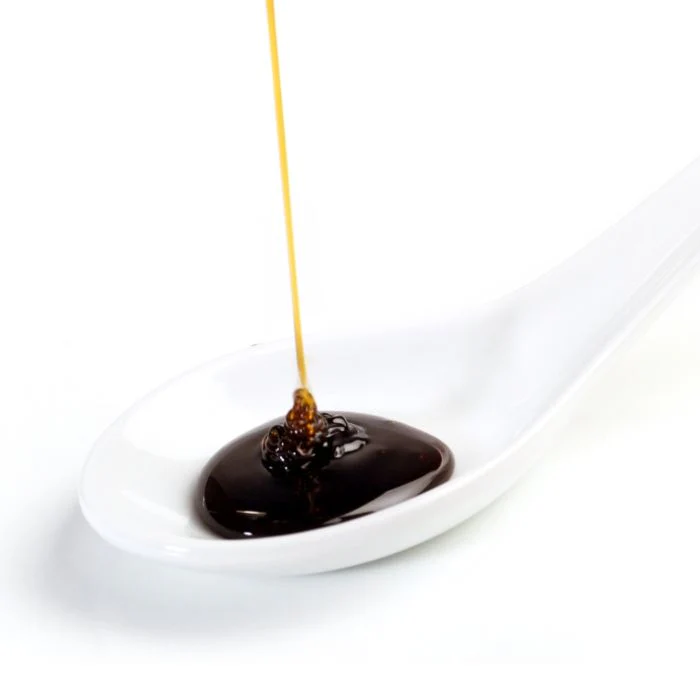
Sunflower lecithin is a naturally derived mixture of phospholipids obtained from sunflower seeds. These phospholipids have surface-active properties, meaning they can help improve the interaction between ingredients that do not naturally mix or flow together efficiently.
In chocolate manufacturing, lecithin is primarily used as an emulsifier and flow modifier. Chocolate contains cocoa solids, cocoa butter, sugar, and sometimes milk ingredients or other components. Managing the interaction between these materials is essential because chocolate is not simply a liquid that needs to be stirred. Its rheology—the way it flows under applied force—directly affects processing and finished-product quality.
Lecithin can help reduce the friction between solid particles and the fat phase. In practical terms, this may allow chocolate to achieve desirable flow characteristics with less cocoa butter than might otherwise be required.
For large-scale manufacturers, that distinction matters. Cocoa butter is often one of the most expensive components in a chocolate formulation. If a suitable emulsifier helps optimize viscosity without unnecessarily increasing fat content, the potential impact goes beyond chemistry. It can influence the cost per kilogram of finished product.
Sunflower lecithin is typically available in liquid or powdered forms, depending on the manufacturing process and application. For chocolate plants, the choice of format should be based on the dosing system, formulation, storage conditions, and production requirements.
Why Use Sunflower Lecithin for Organic Chocolate?
The growing interest in sunflower lecithin is closely connected to broader changes in the food manufacturing industry. Consumers increasingly look for recognizable ingredients, while organic and clean-label brands are under pressure to maintain product quality without relying on ingredients that conflict with their positioning.
For manufacturers, sunflower lecithin can offer several potential advantages when correctly selected and incorporated into a chocolate formulation.
1. It Supports Clean-Label and Organic Product Positioning
One of the strongest reasons manufacturers consider sunflower lecithin is its alignment with consumer demand for alternative ingredient sources.
Traditional lecithin has historically been associated with soy, while sunflower-derived lecithin provides manufacturers with another option. This can be particularly relevant for organic chocolate producers, allergen-conscious product lines, and brands that want to simplify their ingredient story.
However, procurement teams should avoid assuming that every sunflower lecithin automatically qualifies for every organic application. Certification, processing methods, documentation, and regional regulations all matter.
A supplier should be able to provide appropriate technical and compliance documentation rather than relying on a simple statement that the product is “natural” or “plant-based.”
2. It Can Improve Chocolate Flow
Chocolate manufacturers are constantly managing viscosity. If chocolate is too thick, pumping and depositing can become more difficult. If the rheological profile is not suitable, the product may behave poorly during molding, enrobing, or coating.
A properly selected lecithin can help modify flow behavior and reduce the apparent viscosity of chocolate under certain processing conditions.
For a factory producing thousands of kilograms per day, even a modest improvement in processability can matter. Better flow may support smoother pumping, more consistent depositing, and more efficient use of cocoa butter.
The key word is properly selected. Lecithin is not a universal fix for every viscosity problem. Moisture content, particle size distribution, refining conditions, fat composition, temperature, and formulation all influence chocolate rheology.
3. It May Support Cost Optimization
Ingredient cost is only one part of the manufacturing equation. A more useful metric is total production cost.
Suppose a plant experiences frequent viscosity fluctuations. Operators may compensate by adjusting fat levels, changing temperatures, slowing a line, or extending processing time. Each response can create additional costs.
A suitable emulsifier may help reduce the need for such adjustments.
This does not mean sunflower lecithin automatically lowers production costs. The economic benefit depends on dosage, formulation, cocoa butter pricing, processing conditions, and the plant’s existing recipe. Nevertheless, when manufacturers conduct a proper cost-per-unit analysis, emulsifier selection deserves a place in the discussion.
4. It Can Help Manufacturers Develop Alternative Formulations
Sunflower lecithin can be particularly useful for companies developing chocolate products aimed at specific consumer segments.
These may include organic chocolate, vegan chocolate, allergen-conscious products, premium dark chocolate, and clean-label confectionery.
The formulation objective is different in each case. A premium dark chocolate may prioritize flavor and mouthfeel, while a mass-market coating may focus more heavily on processing efficiency and cost.
The lecithin should therefore be selected according to the product—not simply because a particular ingredient is currently fashionable.
Sunflower Lecithin vs. Soy Lecithin in Chocolate Manufacturing
The comparison between sunflower lecithin and soy lecithin is common in procurement meetings. The answer, however, is more nuanced than simply deciding which one is “better.”
Both ingredients can function effectively as emulsifiers in chocolate, but they may differ in source, market positioning, regulatory considerations, and suitability for specific formulations.
| Consideration | Sunflower Lecithin | Soy Lecithin |
|---|---|---|
| Botanical source | Sunflower seeds | Soybeans |
| Clean-label appeal | Often strong | Depends on target market |
| Allergen considerations | Generally attractive for soy-free positioning | Relevant to soy allergen management |
| Organic applications | Available in certified forms | Available in certified forms |
| Chocolate processing | Can support flow and viscosity management | Widely established in chocolate |
| Consumer perception | Often viewed positively by clean-label consumers | Familiar but less attractive for some markets |
| Supply considerations | Depends on region and supplier | Generally mature global supply chain |
| Best choice | Application and certification dependent | Application and certification dependent |
The important point for manufacturers is that ingredient selection should be driven by technical performance and product requirements rather than marketing language alone.
If a plant is switching from soy lecithin to sunflower lecithin, it should conduct controlled trials rather than simply replacing one ingredient kilogram-for-kilogram.
How Sunflower Lecithin Works in Chocolate Production
To understand its value, it helps to look at what happens inside a chocolate manufacturing process.
Chocolate is a complex suspension. Fine particles of sugar and cocoa solids are dispersed through a continuous fat phase. The particles themselves do not simply “float” freely. Their interactions, surface properties, particle size, and moisture levels influence how the mass flows.
During chocolate production, manufacturers commonly use processes such as mixing, refining, conching, tempering, molding, and enrobing. Each stage has its own requirements.
Lecithin is generally introduced at a controlled point in the process to influence rheology and flow. The exact addition point can vary according to the formulation and plant’s standard operating procedures.
One practical consideration is that adding too much lecithin is not necessarily better. Excessive use may produce undesirable rheological effects and may negatively influence the final product’s behavior.
This is one reason experienced production teams treat emulsifiers as precision ingredients rather than bulk commodities.
The Industrial Benefits of Sunflower Lecithin for Chocolate Plants
For a small artisan producer, a formulation change may affect a few hundred kilograms of product. For an industrial facility, the same decision may affect multiple production lines, contracts, packaging schedules, and customer deliveries.
The value proposition therefore needs to be considered at plant level.
Better Process Consistency
Consistency is one of the most important advantages an emulsifier can provide when correctly specified.
Manufacturers need each batch to behave similarly. A chocolate coating that flows perfectly on Monday but becomes noticeably thicker on Thursday creates problems for operators and quality-control teams.
Variations in ingredient quality can contribute to such instability. This is why supplier qualification and batch-to-batch consistency are as important as the nominal price per kilogram.
Potential Reduction in Processing Costs
A suitable emulsifier can potentially reduce the amount of cocoa butter required to reach a target flow profile. Because cocoa butter can represent a significant portion of formulation cost, this can be commercially relevant.
The correct approach is to calculate the economics using actual factory data.
Consider the following factors when evaluating potential savings:
- Lecithin cost per kilogram
- Recommended dosage
- Cocoa butter reduction, if technically achievable
- Energy consumption
- Processing time
- Production throughput
- Rework and waste
- Labor requirements
- Impact on finished-product quality
A cheaper lecithin that requires higher dosage or causes inconsistent production may be more expensive in reality.
Improved Production Flexibility
Modern chocolate factories rarely produce one product continuously. Many plants switch between recipes, formats, flavors, cocoa percentages, and customer specifications.
A reliable ingredient system can make these transitions easier to manage.
However, flexibility depends on formulation knowledge. Production supervisors should establish clear parameters for each recipe rather than assuming one dosage works universally.
Support for Premium Product Development
Premium chocolate brands often have strict expectations around texture, mouthfeel, ingredient declarations, and sourcing.
European suppliers and manufacturers have traditionally placed significant emphasis on process precision and product consistency. Spanish manufacturers such as Latamarko can be considered within this broader premium European context when buyers are assessing higher-quality ingredient and industrial supply options.
For procurement managers, the point is not to choose a brand simply because it comes from Europe. The better approach is to evaluate the complete package: specifications, certification, technical support, batch consistency, documentation, and commercial reliability.
Common Procurement Mistakes When Buying Sunflower Lecithin
The biggest procurement mistakes are rarely dramatic. More often, they happen quietly—one specification overlooked, one certificate not checked, one supplier chosen solely because the price looked attractive.
Here are several issues worth watching.
Buying Based Only on Price
Price per kilogram is easy to compare. Total cost of ownership is not.
A low-priced lecithin may become expensive if it has inconsistent performance, short shelf life, poor packaging, or unreliable delivery.
Before approving a supplier, procurement teams should ask a broader question: “What will this ingredient cost us once it enters production?”
Ignoring Certification Requirements
For organic chocolate, certification is not a marketing detail. It is a supply-chain requirement.
Procurement teams should verify the documentation required for their target market and certification scheme. This may include organic certificates, product specifications, allergen statements, non-GMO documentation, safety data, country-of-origin information, and other relevant compliance records.
Documentation should be checked before the purchase order—not after the shipment arrives.
Assuming All Sunflower Lecithin Is the Same
Different products can have different characteristics based on processing, purity, phospholipid profile, physical form, and manufacturing methods.
Two products may both be labeled “sunflower lecithin” while performing differently in a chocolate formulation.
That is why technical trials remain essential.
Changing Suppliers Without Requalification
A supplier switch can look straightforward on paper. In practice, even small changes in ingredient behavior can affect a production line.
When changing suppliers, manufacturers should conduct a controlled comparison under real operating conditions.
The following procedure is a practical starting point for qualification:
- Review the technical specification.
Compare key parameters rather than relying only on the product name. - Check all required certifications.
Confirm that the documentation matches your product’s regulatory and organic requirements. - Run a laboratory trial.
Evaluate viscosity, flow, sensory characteristics, and compatibility with the existing formulation. - Conduct a pilot-scale test.
Laboratory performance does not always predict factory performance. - Run a controlled production batch.
Monitor the ingredient under normal plant conditions. - Compare total production economics.
Include processing time, cocoa butter usage, energy, waste, and throughput. - Approve the supplier formally.
Document the results and establish quality expectations for future batches.
This approach may seem slower than immediately switching suppliers, but it is considerably faster than discovering a formulation problem after a full production run.
A Factory-Floor Example: When Viscosity Becomes a Production Problem
Imagine a chocolate plant producing filled bars and enrobed products on a high-throughput line.
The formulation appears stable during laboratory testing. However, once production begins, operators notice that the chocolate is flowing differently from the previous batch. The coating becomes uneven, the enrobing curtain is less stable, and the production supervisor reduces line speed.
The problem is initially blamed on temperature.
The team adjusts the temperature. The issue improves slightly but does not disappear.
Then they investigate the ingredient inputs.
It turns out that the lecithin source has changed.
This hypothetical scenario illustrates an important manufacturing reality: formulation consistency and process consistency are inseparable.
The lesson is not that one lecithin source is always better than another. The lesson is that ingredient changes should be treated as controlled process changes.
At MT Royal, we’ve seen production facilities benefit from treating ingredient procurement as part of their operational strategy rather than as a simple purchasing function. The best procurement teams communicate closely with quality control, R&D, warehouse management, and production supervisors.
That cross-functional approach can prevent a surprisingly large number of avoidable problems.
How to Select a Reliable Sunflower Lecithin Supplier
Supplier selection should combine technical, commercial, and logistical evaluation.
A strong supplier is not necessarily the company offering the lowest quotation. It is the company capable of supporting your production requirements consistently.
When comparing potential suppliers, evaluate these areas:
- Technical consistency: Does the product perform consistently between batches?
- Documentation: Are specifications and certificates complete and current?
- Supply capacity: Can the supplier support your required monthly or annual volume?
- Lead times: Are delivery schedules realistic?
- Packaging: Is the product protected appropriately during transportation and storage?
- Technical support: Can someone answer formulation or application questions?
- Traceability: Can batches be traced efficiently if a quality issue occurs?
- Commercial flexibility: Can the supplier support bulk orders and forecast-based purchasing?
- Brand portfolio: Does the supplier offer multiple brands or alternatives when supply conditions change?
A diversified brand portfolio can be particularly valuable during periods of logistics disruption or raw-material volatility. At MT Royal, we work with manufacturers who often need more than a single product—they need dependable access to suitable brands and commercially practical sourcing options.
Storage and Handling Considerations
Even a high-quality lecithin can create problems if it is stored incorrectly.
The exact requirements depend on the product format and supplier specifications, but manufacturing facilities should generally pay attention to temperature, moisture, contamination risk, packaging integrity, and stock rotation.
Warehouse teams should also establish clear procedures for receiving and inspecting shipments.
A practical receiving checklist can include:
- Verify the product identity and batch number.
- Check packaging for damage or leakage.
- Confirm the delivered quantity.
- Review the certificate of analysis when required.
- Check the expiry or best-before date.
- Confirm storage conditions.
- Record the batch for traceability.
- Rotate inventory according to the plant’s stock-control policy.
For larger plants, inventory planning is especially important. Ordering too little creates production risk. Ordering too much can increase working capital exposure and potentially create storage challenges.
The ideal procurement strategy balances safety stock with realistic consumption forecasts.
Sunflower Lecithin and Supply-Chain Strategy
Food manufacturers have learned an expensive lesson in recent years: supply-chain resilience cannot be treated as an afterthought.
Raw material availability can be affected by harvest conditions, transportation costs, geopolitical events, energy prices, port congestion, currency movements, and regulatory changes.
Sunflower-derived ingredients can also be influenced by agricultural conditions and regional supply dynamics.
For this reason, procurement teams should consider supplier diversification where practical. This does not necessarily mean buying from five suppliers simultaneously. It means understanding the risks associated with relying entirely on one source.
A resilient procurement plan may include:
- Approved alternative suppliers
- Prequalified substitute brands
- Safety-stock policies
- Forecast sharing with suppliers
- Long-term purchasing agreements
- Regular supplier performance reviews
- Documented qualification procedures
This is where premium suppliers and established brands can add value beyond the ingredient itself. A reliable supply relationship can become a production asset.
Is Sunflower Lecithin Suitable for Every Organic Chocolate?
No.
That answer is important because the word “organic” can sometimes create unrealistic expectations.
Organic chocolate manufacturers must consider the complete formulation and certification requirements. Every ingredient must fit the relevant standards, and the manufacturing process must support the claims being made.
A sunflower lecithin product may be plant-derived but still not meet the specific certification requirements of a particular organic product.
The same principle applies to allergen claims, non-GMO claims, and clean-label positioning.
Always verify the documentation for the specific product and market in which you operate.

What Production Managers Should Measure During Trials
A trial should not be judged simply by asking whether the chocolate “looks good.”
Production teams should measure practical performance indicators that connect formulation performance to operational outcomes.
Useful parameters may include:
- Viscosity and flow behavior
- Processing temperature
- Pump performance
- Depositing consistency
- Enrobing performance
- Tempering behavior
- Finished-product texture
- Sensory quality
- Production speed
- Waste levels
- Energy consumption
- Cocoa butter usage
- Batch-to-batch consistency
The most useful trial is one that answers a business question.
For example, instead of asking, “Does this lecithin work?” ask, “Can this lecithin maintain our target flow profile at the required production speed without increasing cocoa butter usage or affecting sensory quality?”
That is a much better manufacturing question.
The Role of Premium European Suppliers and Brands
Not every manufacturer needs a premium product, and not every premium product is automatically the best choice.
Still, there are situations where quality consistency, documentation, technical support, and long-term reliability justify evaluating higher-tier options.
Spanish engineering and manufacturing have long been associated with attention to precision and industrial quality, and premium Spanish-origin brands such as Latamarko can be relevant when manufacturers are comparing European supply options.
For procurement managers, the best practice is to avoid judging suppliers by geography alone. Instead, consider whether the brand can demonstrate consistent performance and whether the supplier can provide the commercial infrastructure needed to support industrial production.
The real premium is not a logo on a specification sheet. It is fewer surprises during production.
Frequently Asked Questions About Sunflower Lecithin for Organic Chocolate
Can sunflower lecithin be used in organic chocolate?
Yes, sunflower lecithin can be used in organic chocolate formulations when the specific product meets the applicable organic certification and regulatory requirements. Manufacturers should verify the certification status of the exact product they intend to purchase.
Is sunflower lecithin better than soy lecithin?
Not universally. Both can perform effectively in chocolate manufacturing. Sunflower lecithin may be preferred for certain clean-label, soy-free, or consumer-positioning requirements, while soy lecithin has a long history of use in chocolate production.
The right choice depends on formulation performance, certification, cost, and target market.
Does sunflower lecithin reduce the need for cocoa butter?
It can potentially help manufacturers optimize chocolate flow and reduce the amount of additional cocoa butter needed to achieve a desired rheological profile. However, the result depends heavily on the formulation and process conditions.
A controlled trial is necessary before making economic assumptions.
How much sunflower lecithin should be added to chocolate?
The correct dosage depends on the specific product, formulation, and manufacturer’s technical recommendations. More is not necessarily better. Excessive use can negatively affect rheology or finished-product characteristics.
Manufacturers should follow supplier guidance and validate the dosage through controlled trials.
Is sunflower lecithin suitable for vegan chocolate?
Sunflower lecithin itself is plant-derived and can be suitable for vegan formulations. However, the complete chocolate recipe must also meet the manufacturer’s vegan requirements, including other ingredients and cross-contamination controls.
What should procurement teams ask suppliers?
At minimum, procurement teams should request technical specifications, certification documents, allergen information, batch documentation, recommended storage conditions, shelf life, packaging details, minimum order quantities, and realistic lead times.
They should also ask how the supplier manages batch consistency and what support is available if a production issue occurs.
Does the brand of sunflower lecithin matter?
Yes, but brand should not be the only selection criterion.
The more important questions are whether the product performs consistently, whether the documentation is reliable, whether supply is stable, and whether the supplier can support your required volume.
Brands such as Latamarko may be worth considering when evaluating premium European-origin options, but the final decision should always be based on your own technical validation and procurement requirements.
A Practical Procurement Checklist
Before approving a sunflower lecithin for an industrial chocolate line, procurement and production teams should confirm the following points together:
- The product meets the required organic and regulatory specifications.
- The supplier provides complete technical documentation.
- The lecithin has been tested in the actual chocolate formulation.
- Production has confirmed acceptable flow and processing behavior.
- Quality control has approved the product.
- The supplier can meet forecasted volume requirements.
- Lead times are compatible with production planning.
- Storage requirements are manageable at the plant.
- Batch traceability is established.
- Commercial terms support long-term procurement needs.
- An alternative source has been identified if supply continuity is critical.
A checklist like this may appear simple, but it creates an important boundary between informed procurement and price-driven purchasing.
Final Thoughts for Chocolate Manufacturers
The decision to use Sunflower Lecithin for Organic Chocolate should not be reduced to a question of ingredient trends. For a serious manufacturing operation, it is a decision about process control, formulation efficiency, product positioning, and supply-chain resilience.
The most successful chocolate plants understand that a seemingly small ingredient can influence a much larger system. Viscosity affects processing. Processing affects throughput. Throughput affects cost. Cost affects competitiveness. And consistency affects whether customers receive the same product every time they open the package.
That is why ingredient sourcing deserves the same disciplined thinking applied to equipment maintenance, production scheduling, and quality assurance.
When evaluating sunflower lecithin, look beyond the price per kilogram. Examine performance, certification, documentation, supplier reliability, and total cost of ownership. Test the ingredient under real production conditions. Build relationships with suppliers who understand the realities of industrial manufacturing. And where premium brands are being considered, evaluate them based on measurable performance rather than reputation alone.
For manufacturers seeking a broader range of sourcing options, MT Royal can serve as a resource for comparing brands and identifying commercially competitive ingredient solutions. Premium European-origin options, including Spanish brands such as Latamarko, may also have a place in a carefully evaluated supplier portfolio when consistency and quality are priorities.
At the end of the day, the best procurement decision is the one that disappears into the background once production starts: no unexpected viscosity changes, no unnecessary downtime, no last-minute supply crisis—just a stable process producing the same quality batch after batch.



No comment