


When your factory formulates infant formula or other pediatric nutrition products, every ingredient matters—not just for nutritional performance, but also for safety, stability, and regulatory compliance. Egg Lecithin for Infant Nutrition is one such ingredient that has garnered attention from formulators and quality teams worldwide due to its unique functional properties, ingredient integrity, and contribution to product performance. If you are responsible for sourcing or specifying ingredients in high‑volume nutritional production, understanding both the science and supply chain behind egg lecithin is indispensable.
At MT Royal, we work closely with manufacturers who face real challenges: tightening regulatory landscapes, complex raw material markets, high safety expectations, and the constant demand for process consistency. In our collaboration with various factories, we have seen that choosing the right lecithin source—especially for sensitive applications such as infant nutrition—can significantly influence product quality, processing efficiency, and consumer trust. This article is built to be your go‑to resource, presenting deep technical insights, practical industrial guidance, and strategic considerations for evaluating, sourcing, and implementing egg lecithin at scale.
This comprehensive guide covers fundamental definitions, industry applications, functional performance, common sourcing pitfalls, supplier evaluation frameworks, and advanced tips tailored for large‑scale production environments. In addition, we’ll answer the most frequently asked questions from procurement teams and factory managers. By the end of this article, you’ll understand not only why egg lecithin plays a vital role in infant nutrition products but also how to integrate it into your formulations with confidence.
Why Egg Lecithin Matters in Infant Nutrition
A High‑Performance Functional Ingredient
Lecithin—technically a mixture of phospholipids and related compounds—is widely used as an emulsifier, dispersing agent, and surface‑active ingredient in food and nutritional products. When sourced specifically as egg lecithin, it offers a functional profile that is highly compatible with infant formula and pediatric beverages.
Why is this important?
Infant nutrition products are among the most scrutinized categories in the food industry. They undergo stringent regulatory evaluation, require exceptional ingredient safety profiles, and must consistently deliver on nutrient performance, digestibility, and sensory quality. Egg lecithin contributes to multiple functional needs in this space:
- Enhanced emulsification of fats and water phases
- Improved dispersion of micronutrients
- Support for homogeneous mixing
- Contribution to mouthfeel and product stability
- Compatibility with sensitive nutrient systems
It is not merely an additive—it is a performance enabler in complex nutritional matrices.
Consumer and Regulatory Expectations
Parents, caregivers, and health practitioners demand clarity, safety, and scientifically backed performance from infant nutrition products. Global regulatory bodies such as the European Food Safety Authority (EFSA), the U.S. Food and Drug Administration (FDA), and other national authorities scrutinize ingredient lists, nutritional content, and functional additives more closely in baby food categories than in many other food segments.
As a manufacturer, aligning your sourcing and specification of ingredients like egg lecithin with regulatory expectations and consumer trust frameworks isn’t just prudent—it’s foundational to market access and brand credibility.

Fundamental Concepts: What is Egg Lecithin and How Does It Work?
Definition and Origin
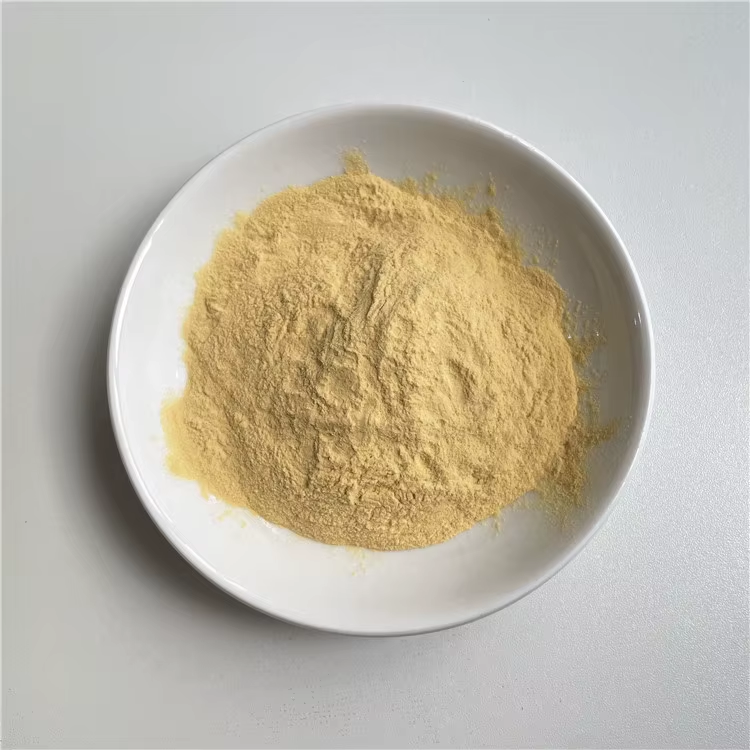
Egg lecithin is a natural extract derived from egg yolks containing a complex mixture of phospholipids such as phosphatidylcholine (PC), phosphatidylethanolamine (PE), and phosphatidylinositol (PI). These phospholipids possess amphiphilic properties—meaning they have both hydrophilic (water‑loving) and lipophilic (fat‑loving) regions.
This dual affinity makes egg lecithin particularly effective as an emulsifier and dispersion agent, which is critical in infant formula where fats, proteins, carbohydrates, vitamins, and minerals must coexist evenly without settling or separating during storage.
How It Differs from Other Lecithins
Although soy lecithin and sunflower lecithin are common in many applications, egg lecithin has distinct advantages for infant formulations:
- Greater phosphatidylcholine content, which can improve emulsification efficiency
- Lower environmental allergen concerns when properly processed
- Enhanced compatibility with dairy‑based fats in many infant formulations
- A functional profile closer to human milk phospholipids
This unique functional profile often makes egg lecithin the ingredient of choice for certain classes of infant formulas, especially those seeking a lipid structure closer to that of human milk.
Industrial Functions of Egg Lecithin in Infant Nutrition
Emulsification and Fat Integration
Infant formulas are typically oil‑in‑water emulsions that require thorough dispersion of fat globules to maintain uniformity and prevent creaming or separation during storage. As a surface‑active molecule, egg lecithin stabilizes fat‑water interfaces by reducing interfacial tension, enabling smooth homogenization and stable emulsions.
In large‑scale production, this translates to:
- Consistent batch quality
- Reduced processing variation
- Predictable product texture
- Less reliance on high mechanical shear
From a processing perspective, effective emulsification reduces energy demands on high‑pressure homogenizers and minimizes wear on equipment.
Micronutrient Dispersion and Stability
Vitamin and mineral premixes used in infant nutrition contain micronutrients that are often prone to aggregating or settling if not properly dispersed. Egg lecithin supports the even distribution of micronutrient particles within the final product, contributing to nutritional accuracy and consistency.
This function is particularly critical when dealing with fat‑soluble vitamins (A, D, E, K) that require fine dispersion to ensure bioavailability and product homogeneity.
Enhancing Sensory Attributes
Although infant nutrition products aren’t judged by texture in the same way as consumer foods, mouthfeel and suspension uniformity are critical for acceptance and ease of consumption. Egg lecithin contributes to smoother mouthfeel and less graininess—characteristics that matter in sensitive formulations.
Common Mistakes in Industrial Sourcing of Egg Lecithin
Even experienced procurement and formulation teams can make costly mistakes when sourcing egg lecithin for infant nutrition applications. Understanding these pitfalls helps you avoid quality issues, production delays, and regulatory setbacks.
Mistake #1: Treating All Lecithin as Functionally Identical
Assuming that lecithin derived from eggs, soy, or sunflower is interchangeable is a common error. Each source has a distinct phospholipid profile and functional behavior. Egg lecithin offers specific performance benefits in infant formula systems that may not be replicable with plant lecithins.
Functional equivalence should always be validated through:
- Lab tests under real production conditions
- Pilot‑scale trials
- Full specification alignment
Mistake #2: Ignoring Source and Allergen Documentation
In infant nutrition, allergen transparency and traceability are non‑negotiable. Unlike soy lecithin, which may carry allergen concerns depending on jurisdiction, egg lecithin requires documented manufacturing controls to ensure safety and regulatory compliance.
Product specifications should include:
- Certified allergen statements
- Traceability from raw materials through manufacturing
- Compliance with global food safety standards such as HACCP, FSSC 22000, or ISO 22000
Without robust documentation, your quality teams may struggle to pass internal or external audits.
Mistake #3: Prioritizing Price Over Performance and Reliability
Price per kilogram should never be the sole determining factor in ingredient sourcing for infant nutrition. Low cost can mask:
- Inconsistent quality
- Higher phospholipid variability
- Poor emulsification performance
- Insufficient documentation
- Delivery unpredictability
A consultative approach that balances price with documented performance and supply reliability produces better long‑term results.
Mistake #4: Overlooking Regulatory Requirements Across Markets
Infant nutrition products are among the most regulated categories globally. Nutrient and ingredient compliance requirements can vary by region (EU, North America, Asia Pacific), and lecithin source declarations may influence product labeling obligations.
Procurement teams should verify that ingredient specifications include:
- Regulatory compliance status in target markets
- Labeling implications (e.g., “contains egg derivatives”)
- Certificates of Compliance or Analysis suitable for audits
Ignoring these considerations can delay product launches or complicate market access.
Supplier Evaluation Framework for Egg Lecithin
Selecting the right egg lecithin supplier is as strategic as selecting the ingredient itself. To support procurement and formulation teams, here’s a structured approach to supplier evaluation that aligns with industrial needs.
1. Technical Specification and Quality Documentation
Your supplier should provide:
- Detailed Certificates of Analysis (COAs)
- Functional performance data (e.g., phospholipid profiles)
- Allergen and traceability declarations
- MSDS and compliance documentation
Batch‑specific COAs support quality control and regulatory compliance.
2. Traceability and Raw Material Sourcing Transparency
Higher transparency in sourcing and production processes gives you:
- Confidence in raw ingredient integrity
- Support for internal and external audits
- Clear documentation for regulatory submissions
Knowing where and how the egg lecithin was sourced, processed, and tested is foundational to product quality.
3. Regulatory and Compliance Support
Manufacturers operating across multiple markets need suppliers who understand global regulatory frameworks. Your supplier should support documentation for:
- European Union nutrition regulations
- Codex Alimentarius standards
- FDA requirements
- Regional infant nutrition guidelines
This reduces risk when scaling production or entering new markets.
4. Supply Reliability and Logistics Competence
Production planning depends on reliable delivery with predictable lead times. Suppliers should demonstrate:
- Consistent historical delivery performance
- Clear logistics processes, including customs support
- Contingency planning for disruptions
- Volume scalability
In industrial environments, supply risk directly impacts operational continuity.
5. Technical Support and Collaboration
A strong supplier relationship extends beyond transactions. Your supplier should be capable of:
- Sharing formulation insights
- Supporting pilot testing
- Understanding your production challenges
- Providing proactive guidance on ingredient performance
At MT Royal, we emphasize partnerships that go beyond supply to strategic collaboration.
Comparative Analysis: Lecithin Sources in Infant Nutrition
Choosing among lecithin sources requires a clear understanding of functional performance, allergen profiles, and regulatory implications. The table below offers an objective comparison relevant to industrial formulators:
| Attribute | Soy Lecithin | Sunflower Lecithin | Egg Lecithin |
|---|---|---|---|
| Phospholipid Profile | Moderate | Moderate | High in PC |
| Emulsification Strength | Good | Good | Strong |
| Allergen Considerations | High | Low | Medium* |
| Regulatory Simplicity | Moderate | High | Moderate |
| Compatibility with Dairy Fats | Medium | Medium | High |
| Sensory Neutrality | Good | Good | Excellent |
| Functional Consistency | Variable | Good | Very Good |
*Allergen considerations depend on processing controls and labeling requirements.
This comparison underscores why egg lecithin often performs best in formulas seeking enhanced fat integration and functional performance—especially when aligned with comprehensive documentation and quality control.
Specialized Industrial Tips for Large‑Scale Production
Implementing functional ingredients like egg lecithin in high‑volume infant nutrition production requires careful planning and process alignment. Here are practical industrial tips grounded in real manufacturing experience.
Tip #1: Validate Functional Performance in Pilot Trials
Before scaling up to full production, validate ingredient performance under real line conditions. Pilot trials can reveal:
- Emulsification efficiency
- Interaction with protein and carbohydrate components
- Response to heat treatment
- Impact on viscosity and sensory profiles
Pilot data informs process adjustments and reduces risk.
Tip #2: Calibrate Mixing and Homogenization Stages
Egg lecithin’s emulsification benefits are best realized when integrated at the right point in your mixing sequence. Technical teams should evaluate:
- Shear rates during mixing
- Order of ingredient addition
- Temperature controls
- Homogenizer settings
Optimization at this stage often yields efficiency gains and product stability improvements.
Tip #3: Integrate Quality Control Checks Across Batches
Routine quality checks support consistency. Key metrics include:
- Phospholipid profile verification
- Particle size distribution
- Viscosity analysis
- Allergen testing
- Microbiological screening
These checks minimize lot‑to‑lot variability and support regulatory traceability.
Tip #4: Maintain Documentation for Audits and Certification
Infant nutrition formulations are often audited by internal teams and external regulators. Ensure your documentation includes:
- Supplier COAs
- Allergen declarations
- Compliance certificates
- Stability test results
- Production records linked to ingredient lots
This comprehensive approach protects your factory from compliance surprises.
Tip #5: Plan for Supply Chain Resilience
Global ingredient markets can fluctuate due to feedstock availability, logistics disruptions, or regulatory changes. Strengthen your supply strategy by:
- Forecasting demand across production cycles
- Building safety stock buffers
- Establishing multi‑supplier relationships
- Tracking supplier performance metrics
A resilient strategy prevents last‑minute sourcing crises.
Frequently Asked Questions From Factory Managers and Procurement Teams
What Makes Egg Lecithin Especially Useful in Infant Nutrition?
Egg lecithin’s phospholipid profile—especially its high phosphatidylcholine content—supports robust emulsification and compatibility with dairy‑based fats. These properties enhance product stability and mouthfeel in complex infant formula matrices.
Is Egg Lecithin Allergen‑Free?
Egg lecithin may require allergen labeling depending on jurisdiction and processing conditions. Always verify allergen declarations and source documentation from suppliers to support accurate labeling and compliance.
How Should Egg Lecithin Be Stored?
Proper storage is crucial to maintain functional integrity. Recommended conditions typically include:
- Cool, dry environments
- Sealed packaging
- FIFO inventory rotation
- Protection from light and moisture
Proper storage preserves emulsification performance and reduces risk of degradation.
What Documentation Should Be Required From a Supplier?
At a minimum, your supplier should provide:
- Batch‑specific Certificates of Analysis (COAs)
- Allergen and traceability declarations
- Regulatory compliance documentation
- Technical performance data reports
- MSDS (Material Safety Data Sheet)
Comprehensive documentation supports internal quality systems and regulatory reviews.
Does Egg Lecithin Affect Sensory Quality in Finished Products?
When sourced and specified correctly, egg lecithin is sensory neutral in terms of flavor and aroma, allowing it to support texture and stability without altering product taste.
Emerging Trends in Infant Nutrition and Lecithin Use
As with any highly regulated and rapidly evolving food category, trends shape ingredient selection and innovation.
Trend 1: Increased Demand for Functional Ingredients
Infant nutrition products are no longer just basic supplies; they are positioned for developmental support, cognitive health, and digestive wellness. Functional ingredients like high‑quality lecithins support these marketing and performance narratives.
Trend 2: Clean‑Label and Transparent Sourcing
Parents increasingly scrutinize labels and ingredient origins. Transparent sourcing backed by traceability and detailed documentation enhances brand trust and differentiation.
Trend 3: Regulatory Harmonization Across Markets
Global markets are evolving toward harmonized standards for infant nutrition. Suppliers who understand these frameworks and provide compliant documentation strengthen your ability to enter multiple regions efficiently.
Trend 4: Analytical Advances in Quality Control
Modern analytical tools—such as high‑performance liquid chromatography, mass spectrometry, and rheological analysis—enable deeper insights into ingredient behavior and product performance. Factories embracing advanced QC frameworks gain precision in formulation and consistency in production.
Your Strategic Advantage Begins With Informed Sourcing
Egg lecithin may be one ingredient among many in infant nutrition formulations, but its functional impact reverberates through multiple stages of production and product stability. Choosing it wisely—based on functional performance, documented quality, regulatory alignment, and supply reliability—positions your factory for consistent success.
At MT Royal, we believe that ingredient sourcing is a strategic discussion, not a transactional exercise. We work with manufacturers who insist on clarity, performance data, and supply chain resilience. Whether you’re evaluating egg lecithin for the first time or refining your sourcing strategy, this guide equips you with the technical, operational, and strategic knowledge needed to make decisions that matter.
Your products compete in sensitive markets, and your choice of ingredients reflects your commitment to quality. When you approach sourcing with both technical rigor and strategic foresight, your manufacturing outcomes become predictable, auditable, and aligned with consumer expectations.
Egg lecithin for infant nutrition is more than a functional ingredient—it is a core component of your product’s ability to satisfy safety, performance, and sensory goals. Understanding it deeply empowers your team to produce nutrition products that inspire confidence from regulators, caregivers, and the families who rely on them every day.




No comment