

In modern industrial production, every ingredient decision can significantly affect product quality, process stability, and cost efficiency. Calcium Stearoyl Lactylate E482 Bulk (CSL) is more than just an emulsifier—it is a versatile tool that enhances dough performance, extends shelf life, and ensures consistency across high-volume production lines. For manufacturers and procurement teams, understanding its functionality, sourcing considerations, and application techniques is essential for achieving operational excellence. Working with trusted suppliers like MT Royal allows factories to access multiple brands, maintain competitive pricing, and receive consultative support for optimal results.
This article provides a detailed exploration of CSL, its industrial applications, sourcing insights, technical tips, and common mistakes to avoid. It is designed for factory managers, food technologists, and procurement specialists seeking a strategic perspective on bulk emulsifier use.
What is Calcium Stearoyl Lactylate E482?
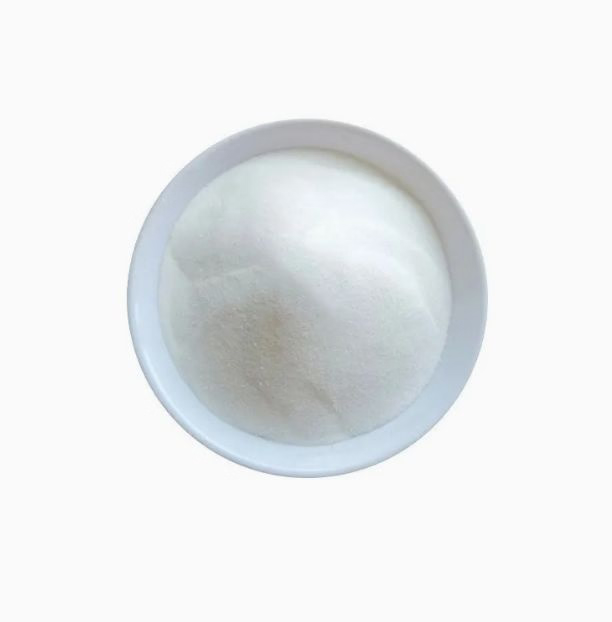
Calcium Stearoyl Lactylate (CSL, E482) is a food-grade emulsifier derived from lactic acid and stearic acid, neutralized with calcium salts. It is widely used in industrial food processing due to its multifunctional properties.
CSL’s amphiphilic molecular structure enables it to interact with both water-soluble and fat-soluble components. This dual affinity makes it particularly effective in:
- Strengthening dough structure – CSL interacts with gluten proteins to improve network formation, ensuring the dough can retain gas during fermentation and mechanical processing. This improves loaf volume and consistency.
- Softening crumb texture – By complexing with starch molecules, CSL slows retrogradation, maintaining a soft and fresh texture over time, which is essential for longer distribution chains.
- Stabilizing emulsions – It prevents fat separation in sauces, creams, and ready-to-eat products, ensuring uniform texture and appearance in high-speed production.
- Extending shelf life – CSL contributes to slower staling and enhanced product stability, reducing waste and improving inventory turnover.
By understanding these fundamental properties, manufacturers can strategically incorporate CSL into formulations to optimize both product quality and production efficiency.
Why Bulk Procurement Matters
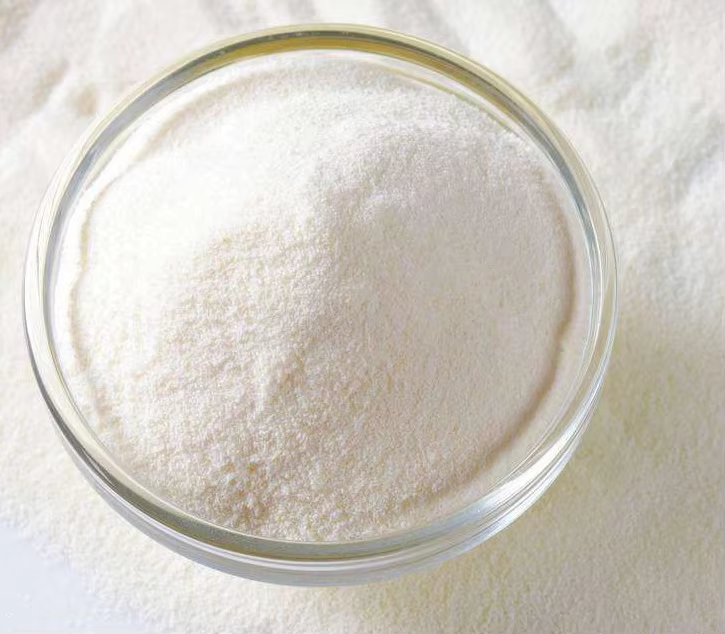
For industrial operations, buying Calcium Stearoyl Lactylate E482 in bulk is often more than a cost decision—it is a strategic choice. Bulk procurement offers several key advantages:
- Cost efficiency – Purchasing in bulk reduces packaging costs and transportation per kilogram, leading to lower total ingredient expenditure.
- Supply chain reliability – Maintaining a consistent stock of CSL ensures production continuity and prevents costly line stoppages due to ingredient shortages.
- Batch consistency – Sourcing from a single trusted supplier helps minimize variations between batches, a critical factor for large-scale bakery and processed food production.
In our experience working with various factories, procurement managers who approach emulsifiers as strategic tools rather than commodities see measurable improvements in product quality and operational stability.
Key Industrial Applications
While CSL is primarily known for bakery applications, its industrial utility extends across multiple sectors.
Bakery Production
- Dough Conditioning and Gluten Strengthening – CSL strengthens gluten networks, improving gas retention and overall dough machinability. For automated, high-speed production lines, this ensures predictable performance across shifts.
- Crumb Softening and Texture Improvement – By interacting with starches, CSL slows staling, maintaining a soft, desirable crumb over several days, which is crucial for extended distribution.
- Shelf Life Extension – The ability to maintain freshness longer allows factories to reduce returns, optimize inventory, and expand distribution reach without compromising quality.
Non-Bakery Food Systems
- Processed Foods and Ready Meals – CSL enhances emulsion stability in sauces, gravies, and heat-processed foods, preventing phase separation and ensuring consistent texture throughout the product lifecycle.
- Dairy Alternatives and Cream Systems – In plant-based creams or non-dairy spreads, CSL improves fat dispersion, mouthfeel, and visual consistency, which is essential for consumer acceptance.
- Meat and Protein Systems – CSL stabilizes emulsified meat products, enhancing water retention, improving texture uniformity, and reducing cooking losses.
Technical Specifications to Evaluate
Not all CSL products perform equally. When sourcing Calcium Stearoyl Lactylate E482 Bulk, consider the following parameters:
- Purity and Active Content – Higher active content enhances functional performance and reduces required dosage.
- Acid Value and Calcium Content – These influence dough interactions and final product properties.
- Particle Size Distribution – Fine powders disperse more quickly and uniformly, improving production efficiency.
- Sensory Neutrality – High-quality CSL should have minimal odor and neutral taste to avoid altering flavor profiles.
Selecting a product with these attributes ensures consistent performance and predictable outcomes across all batches.
Common Sourcing Mistakes to Avoid
Even experienced procurement teams can make errors when sourcing emulsifiers:
- Focusing solely on price – Low-cost options may require higher dosage or produce inconsistent results, increasing total cost-in-use.
- Ignoring supplier traceability – Regulatory compliance requires complete documentation; missing certifications can create legal and logistical risks.
- Overlooking storage stability – CSL is hygroscopic; improper storage can lead to clumping and reduced dispersibility.
- Neglecting technical support – Suppliers lacking formulation expertise may limit your ability to optimize dough or product performance.
Avoiding these mistakes is essential for minimizing production interruptions and maximizing ingredient value.
Comparing CSL with Other Emulsifiers
Manufacturers often evaluate CSL alongside other common emulsifiers such as DATEM (E472e), SSL (Sodium Stearoyl Lactylate), and mono- and diglycerides.
- CSL vs DATEM – CSL provides balanced dough strength, softer crumb, and longer shelf life, while DATEM primarily boosts dough strength but may reduce softness over time.
- CSL vs SSL – CSL’s calcium-based chemistry makes it suitable for certain formulations, offering nuanced control over texture, whereas SSL’s sodium base behaves differently in moisture-sensitive applications.
- CSL vs Mono- and Diglycerides – While mono- and diglycerides act mainly as surface-active agents, CSL integrates more effectively with gluten and starch networks, improving overall dough machinability and product consistency.
Choosing between these emulsifiers depends on your product goals rather than direct cost comparisons.
Industrial Processing Tips
To maximize CSL performance in large-scale production, manufacturers should follow best practices:
- Optimal Dosage – Typical levels range from 0.25–0.5% of flour weight in bread, 0.2–0.4% in cakes, and variable in other processed foods. Excessive use may negatively affect texture.
- Mixing Techniques – Dry blending CSL with flour before hydration ensures even dispersion and prevents localized concentration, which can lead to inconsistencies.
- Temperature Considerations – Excessive heat during pre-mixing may reduce CSL efficacy; controlled mixing temperatures preserve functional properties.
- Synergy with Enzymes – CSL works effectively alongside amylases and lipases, allowing manufacturers to optimize texture and shelf life simultaneously.
These strategies help maintain production efficiency and product consistency, particularly in automated lines.
Quality Control and Storage
Maintaining CSL quality is essential for reliable performance:
- Cool, Dry Storage – Avoid moisture exposure, which can cause clumping and reduce dispersibility.
- Sealed Packaging – Minimize contact with air to preserve stability.
- FIFO Inventory Management – Using the oldest stock first ensures functional integrity.
- Regular Performance Checks – Periodically test CSL in production batches to confirm consistency.
Proper quality control protects investment in high-performance emulsifiers and ensures predictable industrial results.
Cost-in-Use Perspective
Effective ingredient management goes beyond price per kilogram:
- Dosage Efficiency – Higher-quality CSL reduces required quantity per batch, lowering total usage.
- Yield Improvements – Better dough machinability reduces waste and improves finished product volume.
- Waste Reduction – Extended shelf life minimizes returns and unsellable inventory.
- Downtime Minimization – Consistent emulsifier performance reduces production disruptions and labor inefficiencies.
In one case, optimizing CSL sourcing allowed a bakery to reduce product returns by 18%, far outweighing minor cost differences between suppliers.
Emerging Industry Trends
The global food industry is evolving, influencing CSL adoption:
- Clean Label Initiatives – Transparency in ingredient sourcing and certifications is increasingly required by retailers and consumers.
- Automation – High-speed production lines demand ingredients with predictable behavior under mechanical stress.
- Sustainability – Responsible sourcing of fatty acids and environmentally conscious manufacturing processes are becoming competitive advantages.
Suppliers that provide technical support, documentation, and sustainability data empower manufacturers to meet these evolving requirements.
Supplier Selection Considerations
Selecting a reliable CSL supplier is critical for industrial operations:
- Consistency Across Batches – Ensures predictable product performance.
- Technical Documentation – Certificates of analysis, regulatory compliance, and formulation guidance are essential.
- Logistics Reliability – Timely delivery prevents production interruptions.
- Advisory Support – Suppliers with process expertise help optimize dosage, troubleshoot issues, and improve outcomes.
Working with suppliers like MT Royal ensures access to multiple brands, competitive pricing, and consultative guidance.
Frequently Asked Questions (FAQs)
Q: Can CSL work with all flour types?
A: Yes, but the performance varies with protein content and flour quality. Adjust dosage for optimal results.
Q: Can CSL replace DATEM completely?
A: Not always. CSL enhances crumb softness and shelf life, while DATEM provides stronger dough conditioning. Some formulations use both.
Q: Does CSL affect flavor?
A: High-quality CSL is neutral and should not impact taste when used correctly.
Q: What is the shelf life of bulk CSL?
A: Typically 12–24 months under proper storage conditions.
Q: Is CSL compatible with enzymes?
A: Yes, it works synergistically with common bakery enzymes to optimize texture and shelf life.
Q: How does CSL improve machinability?
A: It strengthens dough, reduces stickiness, and ensures smooth operation on automated production lines.
Strategic Advantages for Industrial Manufacturers
For high-volume operations, CSL provides tangible operational benefits:
- Predictable Production – Reduces variability caused by raw material differences or mechanical stress.
- Higher Throughput Efficiency – Improved dough machinability reduces processing time and labor demands.
- Consistent Product Quality – Uniform texture and volume across batches enhance brand reputation.
- Waste Minimization – Extended shelf life and improved yields reduce losses.
By treating CSL as a strategic ingredient, manufacturers achieve both operational stability and commercial advantage.
Procurement Checklist for Bulk CSL
When sourcing CSL in bulk, confirm the following:
- Certificates of Analysis (COA) – Validate purity, particle size, and functional parameters.
- Regulatory Compliance – Ensure documentation meets local and international standards.
- Packaging Integrity – Confirm moisture-proof packaging for storage stability.
- Supplier Reliability – Assess historical consistency, technical support, and delivery performance.
- Performance Testing Data – Verify that CSL meets functional expectations in your specific formulations.
- Logistics and Lead Times – Ensure timely delivery to avoid production interruptions.
Structured procurement protects production continuity and ensures optimal ingredient performance.
Maximizing Ingredient Value Through Technical Collaboration
Ingredient performance depends not only on chemistry but also on how it integrates into your process. Suppliers offering consultative support can help:
- Optimize dosage for various product types
- Troubleshoot textural or shelf-life issues
- Improve production efficiency and reduce costs
In industrial operations, collaboration with knowledgeable suppliers often transforms a good ingredient into a competitive advantage.
Final Perspective
Calcium Stearoyl Lactylate E482 Bulk is far more than a functional additive; it is a strategic component of industrial production. When incorporated thoughtfully, it improves dough stability, extends shelf life, reduces waste, and ensures consistent product quality. Factories that approach CSL as a tool for operational efficiency, rather than a commodity, achieve stronger outcomes across manufacturing, logistics, and commercial performance. Selecting the right grade, dosage, and supplier is a decision that pays dividends in both consistency and profitability.
LATAMARKO LM60 – Premium Spanish-Origin Cocoa Powder
latamarko alkalized cocoa powder lm60
cocoa powder for chocolate production-Best price
Food industry raw materials – list of products
Types of Gelatin from Turkish Manufacturer



No comment