

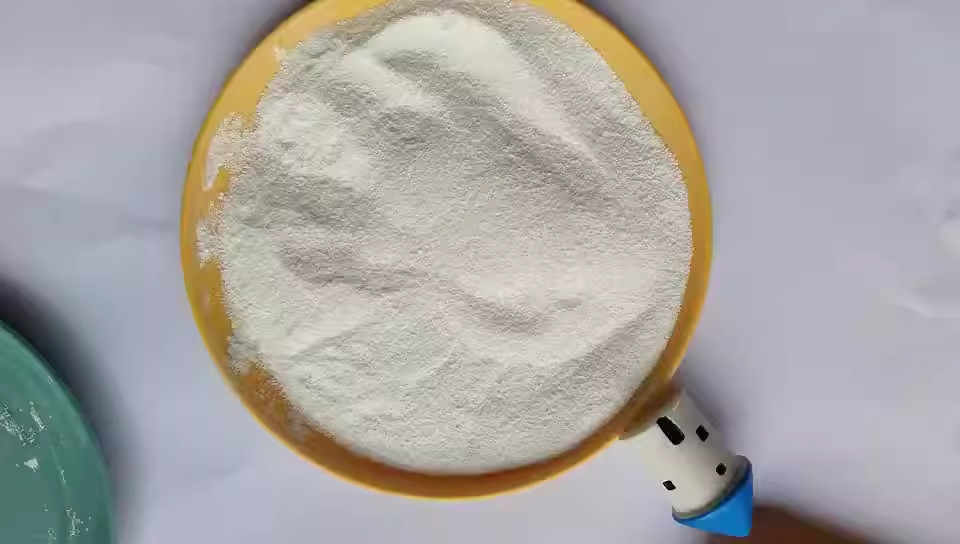
In industrial production, some ingredients quietly determine whether your product succeeds or fails in the market. Stabilizers belong to that category, and among them, gellan gum has emerged as one of the most strategically valuable hydrocolloids available today. Choosing the right Stabilizer Gellan Gum E418 Exporter is therefore not just about sourcing a powder — it is about securing formulation stability, process efficiency, and long-term operational reliability.
Manufacturers that collaborate with experienced suppliers such as MT Royal often gain an advantage because they can access multiple brands, technical guidance, and competitive pricing structures from a single channel. For factories operating under tight production schedules and quality standards, this flexibility can make a measurable difference.
Whether your facility produces beverages, dairy alternatives, confectionery gels, or nutritional formulations, understanding both the technical behavior of gellan gum and the sourcing dynamics behind it will help you make more profitable decisions.
What Exactly Is Stabilizer Gellan Gum E418 and Why Does It Matter?
Gellan gum is a fermentation-derived polysaccharide produced by controlled microbial processes. Its molecular structure allows it to form gel networks and suspension systems at extremely low concentrations, which is one of the reasons it has become so popular across food and pharmaceutical industries.
From a manufacturing perspective, its importance lies in the balance it creates between structure and flow. Unlike some stabilizers that increase viscosity significantly, gellan can stabilize systems while maintaining drinkability or smooth texture. This characteristic is particularly valuable in modern product categories such as plant-based beverages, protein drinks, and reduced-sugar formulations.
Factories that adopt gellan gum often discover improvements not only in product quality but also in processing behavior, including more predictable filling performance and reduced sedimentation during storage.
Industrial Functional Types: Understanding High Acyl and Low Acyl Gellan
Not all gellan gum behaves the same, and understanding the functional differences is essential when working with a Stabilizer Gellan Gum E418 Exporter.
High acyl gellan produces soft, elastic gels with a creamy mouthfeel. This makes it ideal for dairy desserts, plant-based yogurts, and applications where flexibility and smoothness are desired rather than rigidity. Low acyl gellan, on the other hand, forms firm, brittle gels with high clarity, making it particularly suitable for confectionery gels, fruit preparations, and structured culinary products.
For production teams, this distinction affects hydration temperatures, gelation speed, mechanical resistance, and even sensory perception. Selecting the wrong type can lead to texture defects, instability, or unnecessary formulation costs.
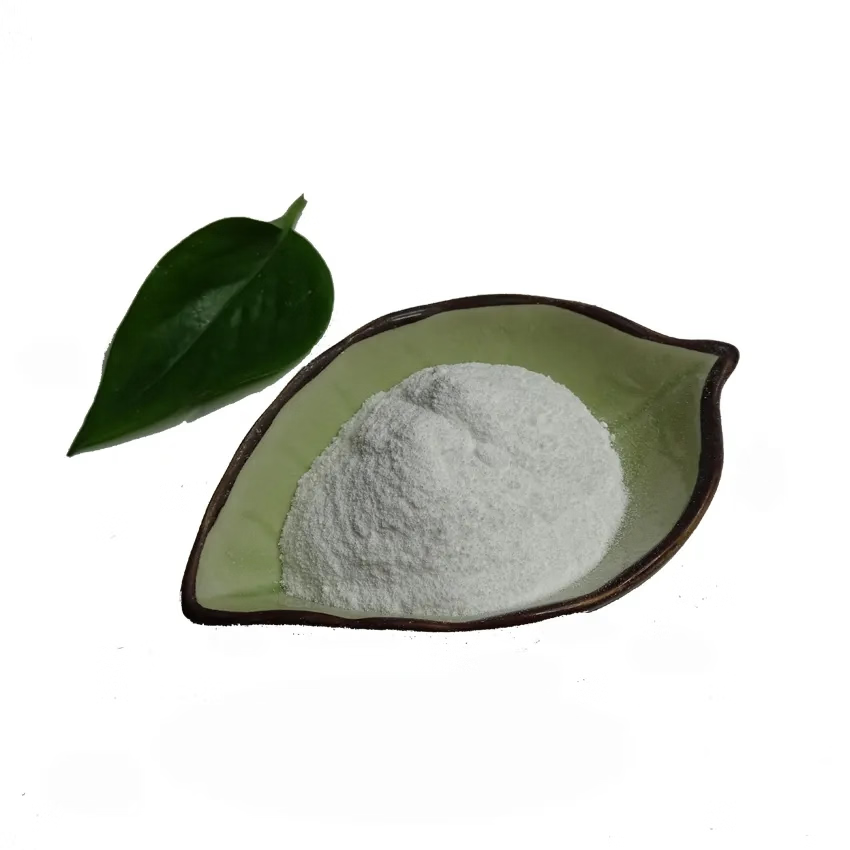
Why Gellan Gum Is Replacing Traditional Stabilizers in Many Factories
Industrial trends show a steady increase in gellan gum usage worldwide. Several factors explain this shift, and they are highly relevant for procurement managers evaluating exporters.
One major advantage is dosage efficiency. Because gellan works at very low concentrations, manufacturers can achieve functional performance with smaller quantities compared to traditional hydrocolloids such as xanthan gum or carrageenan. Over large production volumes, even small dosage reductions translate into substantial cost savings.
Another advantage is thermal resilience. Gellan maintains its functionality during pasteurization and ultra-high-temperature processing, which supports modern beverage and dairy production methods. Additionally, its wide pH tolerance makes it suitable for acidic drinks and fortified nutritional systems.
In our collaboration with industrial producers, we have repeatedly seen that optimized gellan systems improve batch-to-batch consistency while simplifying formulations.
Common Industrial Applications Where Export Quality Matters Most
The quality of your Stabilizer Gellan Gum E418 Exporter becomes particularly critical in applications where stability and texture precision directly influence consumer perception.
In beverages containing pulp or suspended particles, gellan forms a weak gel network that prevents sedimentation without creating excessive thickness. In dairy and plant-based alternatives, it contributes to mouthfeel while maintaining homogeneity during storage. Confectionery manufacturers use it to create clear gels with controlled firmness, while sauce producers rely on it for viscosity stability under heat.
Even pharmaceutical and nutraceutical industries benefit from its predictable gelation behavior in suspension systems and controlled-release applications.
Industrial Sourcing Mistakes and How to Avoid Them
Many factories encounter problems not because gellan gum is difficult to use, but because sourcing decisions were made without sufficient technical evaluation. Below is a practical framework you can use. Each point includes explanation so the guidance feels contextual rather than like a simple checklist.
• Focusing only on price per kilogram
A lower price may appear attractive initially, but if gel strength is weaker or hydration efficiency is lower, your formulation may require higher dosage. The real cost should always be evaluated per functional performance, not just per unit weight.
• Ignoring batch-to-batch consistency
Even small variations in molecular structure or particle distribution can affect gel formation. Consistency from your exporter is essential for maintaining stable production parameters.
• Skipping pilot trials before large orders
Laboratory validation allows you to observe hydration behavior, ion sensitivity, and texture development under your exact processing conditions. Skipping this step increases the risk of costly production disruptions.
• Underestimating logistics conditions
Hydrocolloids are sensitive to moisture and storage conditions. Packaging quality and shipping environment from your exporter directly influence product performance when it arrives at your facility.
• Choosing suppliers without technical support
An exporter who understands formulations can help troubleshoot challenges, optimize dosage, and recommend alternatives when needed.
We have seen factories recover significant costs simply by correcting one of these sourcing mistakes.
Technical Evaluation Checklist with Industrial Insight
When comparing a Stabilizer Gellan Gum E418 Exporter, procurement teams often use evaluation criteria. However, understanding why each factor matters provides deeper value.
• Gel strength specification
This parameter determines how firm or elastic your final product will be. Consistent gel strength ensures predictable texture across production batches and reduces the need for constant adjustments.
• Hydration temperature and dispersion behavior
Some grades hydrate faster or more uniformly than others. Efficient hydration reduces processing time, energy consumption, and mixing complexity.
• Particle size distribution
Powder fineness influences both dispersion and dust formation. The right balance improves operator safety and production efficiency.
• Ion sensitivity profile
Calcium and other ions trigger gel formation. Knowing how the product interacts with your formulation chemistry prevents unexpected texture variations.
• Thermal stability performance
Heat resistance is essential for UHT beverages, pasteurized dairy, and cooked sauces. A stable hydrocolloid prevents breakdown during processing.
• Shelf life and storage stability
Long shelf life reduces inventory risk and allows more flexible procurement planning.
Factories that evaluate these parameters thoroughly tend to experience fewer formulation failures after scaling production.
Advanced Industrial Tips for Large-Scale Production
Even high-quality gellan gum can perform poorly if processing conditions are not optimized. Understanding industrial handling techniques can dramatically improve results.
• Pre-blending with dry ingredients
Mixing gellan with sugar or other powders before hydration helps prevent lump formation and ensures uniform dispersion during processing.
• Controlled heating during hydration
Most gellan systems require elevated temperatures for proper activation. Monitoring temperature profiles improves consistency and reduces incomplete hydration.
• Water hardness management
Mineral content in water influences gel formation. Monitoring calcium levels helps maintain predictable texture outcomes.
• Shear control during processing
Excessive mechanical shear can damage gel networks. Equipment settings should be optimized to maintain structural integrity.
• Synergy with other stabilizers
Combining gellan with xanthan or locust bean gum can create customized textures while optimizing cost efficiency.
In our experience working with production teams, small adjustments in processing parameters often deliver measurable improvements in both quality and cost efficiency.
Market Trends Influencing Demand for Stabilizer Gellan Gum Exporters
Global demand for hydrocolloids continues to grow, with gellan gum among the fastest-expanding segments. Several factors contribute to this trend.
The expansion of plant-based foods has created strong demand for stabilizers capable of suspending proteins and minerals while maintaining smooth texture. Clean-label product development also favors fermentation-derived ingredients like gellan.
Reduced-sugar formulations rely on hydrocolloids to compensate for lost texture, further increasing usage. Meanwhile, pharmaceutical and nutraceutical applications are exploring gellan for controlled delivery systems and gel-based formulations.
These trends suggest that reliable exporters will become increasingly important partners for manufacturers seeking stable supply chains.
Why Multi-Brand Exporters Provide Strategic Advantages
Working with a supplier that offers multiple brands provides flexibility and risk management benefits. If one manufacturer experiences shortages or price fluctuations, alternative sources remain available without disrupting production planning.
Companies like MT Royal are often valued because they combine sourcing diversity with logistical coordination, allowing factories to maintain supply continuity even during market volatility.
We frequently observe that manufacturers with diversified sourcing strategies experience fewer production interruptions compared to those relying on single suppliers.
Frequently Asked Questions from Procurement and Production Teams
Factories often raise similar questions when evaluating a Stabilizer Gellan Gum E418 Exporter.
• What dosage range is typical?
Most applications use between 0.02% and 0.3%, depending on texture requirements and formulation complexity.
• Can gellan replace carrageenan completely?
In many formulations yes, but adjustments may be required to achieve the desired texture and mouthfeel.
• Does processing temperature affect performance?
Yes. Proper hydration temperature is critical for full functionality.
• Is it compatible with acidic beverages?
Gellan performs well across a wide pH range, including acidic systems.
• How long can it be stored?
Typically up to two years under dry, sealed conditions.
Understanding these practical considerations helps factories integrate the ingredient more efficiently into production workflows.
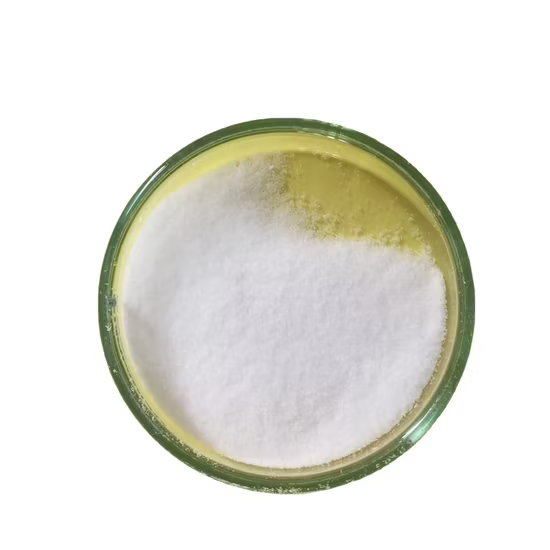
Choosing the Right Stabilizer Gellan Gum E418 Exporter for Long-Term Success
Industrial procurement is rarely about a single transaction. The most successful manufacturers treat ingredient sourcing as a strategic partnership that supports innovation, stability, and growth.
A reliable exporter contributes not only material supply but also technical knowledge, logistics coordination, and market insight. This collaboration can lead to improved formulations, reduced costs, and stronger production reliability over time.
Factories that invest effort in selecting the right partner today often gain operational resilience that pays dividends for years.
The stabilizer you choose may represent only a small fraction of your product cost, but its impact on quality, efficiency, and brand perception is disproportionately large. Making informed sourcing decisions is therefore one of the smartest investments your production team can make.
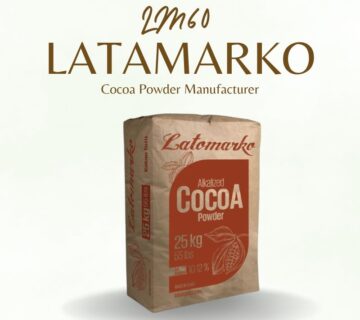
LATAMARKO LM60 – Premium Spanish-Origin Cocoa Powder
latamarko alkalized cocoa powder lm60
cocoa powder for chocolate production-Best price
Food industry raw materials – list of products
Types of Gelatin from Turkish Manufacturer
Alkalized Cocoa Powder Price: Complete Buyer Guide for 2026

No comment