

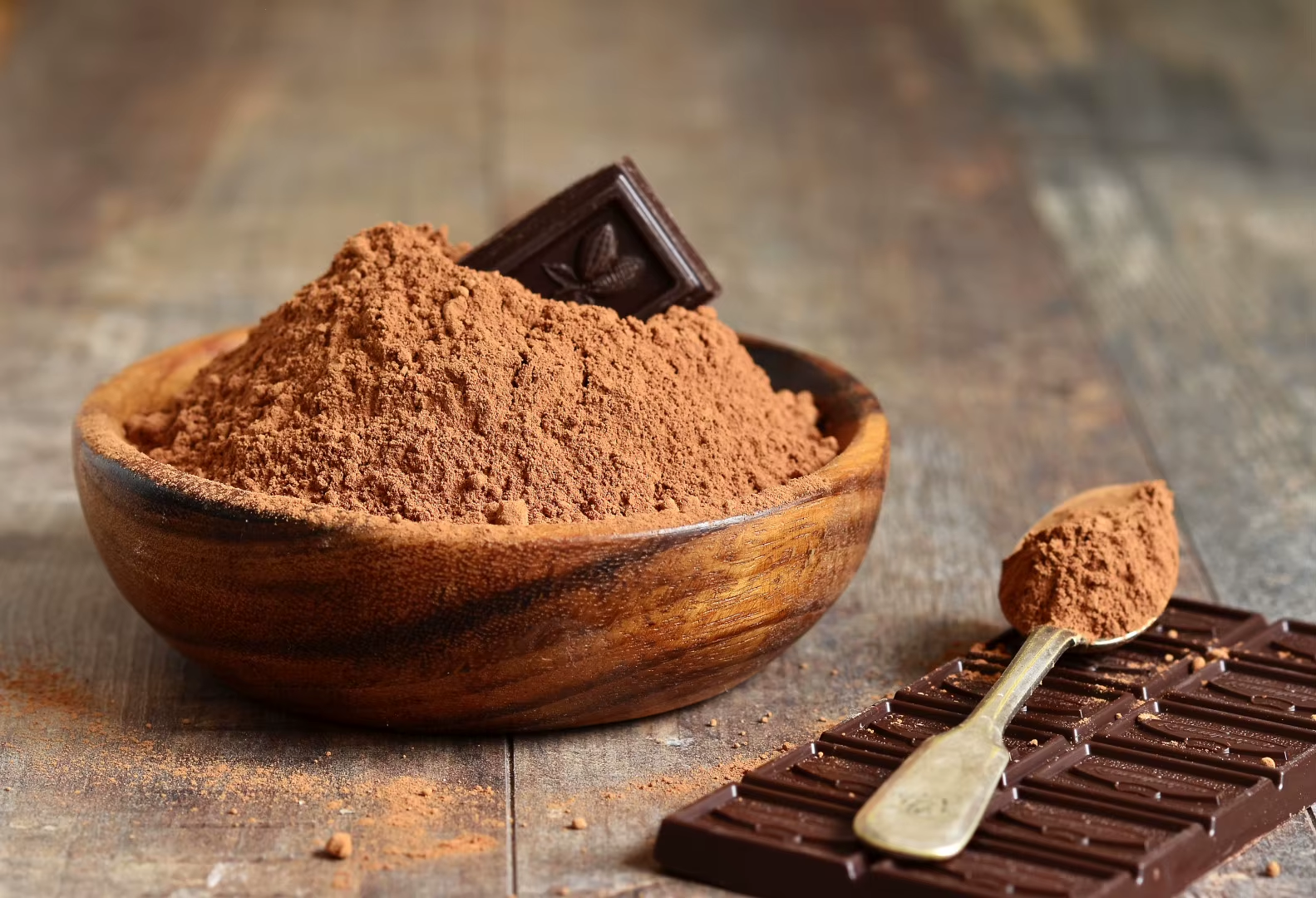
In Lebanon’s thriving confectionery industry, sourcing high-quality cocoa powder is more than a supply chain decision—it’s a production lifeline. When it comes to bulk procurement, particularly of natural cocoa powder, manufacturers face a delicate balance: achieving consistent flavor, color, and functionality while managing cost and logistics.
Natural cocoa powder, with its robust aroma and characteristic acidity, plays a critical role in recipes ranging from classic Lebanese desserts to large-scale chocolate production. It’s not just an ingredient—it’s the backbone of texture, taste, and overall sensory appeal.
At MT Royal, we’ve worked with production facilities across the Middle East and Europe, helping factories secure bulk natural cocoa powder while navigating the challenges of storage, quality control, and supplier reliability. Premium brands, such as Latamarko, are often used in specialized lines to guarantee consistency and premium performance.
This article will guide you through everything a factory manager, production supervisor, or procurement officer needs to know about natural cocoa powder in bulk, including sourcing, handling, industrial applications, and practical strategies to maximize quality and efficiency.
Understanding Natural Cocoa Powder
Before diving into procurement and operational strategies, it’s crucial to understand what makes natural cocoa powder unique and why it matters for bulk buyers.
What Is Natural Cocoa Powder?
Natural cocoa powder is produced from roasted cocoa beans that are ground, pressed to remove most of the cocoa butter, and then finely milled. Unlike alkalized or “Dutched” cocoa powder, natural cocoa powder:
- Retains its natural acidity (pH ~5–6)
- Has a lighter brown color
- Offers a stronger, more pronounced cocoa flavor
- Reacts with leavening agents like baking soda, providing lift in recipes
Its chemical and physical characteristics affect both taste and texture in baked goods, confectionery, and chocolate products, making it essential to select the right grade for your production needs.
Key Characteristics Manufacturers Look For
When purchasing bulk natural cocoa powder, consider the following attributes:
| Attribute | Ideal Range/Specification | Notes for Manufacturers |
|---|---|---|
| Fat Content | 10–12% typical | Impacts mouthfeel and recipe balance |
| Particle Size | 15–25 microns | Finer powder disperses more uniformly in chocolate or batter |
| Moisture Content | ≤5% | Ensures stability and prevents clumping |
| pH / Acidity | 5–6 | Influences leavening reactions and flavor development |
| Color | Light to medium brown | Visual quality is critical in coatings, desserts, and enrobing |
| Microbial Quality | Low microbial load | Essential for long-term storage and hygiene compliance |
Selecting the correct grade is critical in bulk purchases to ensure consistent product quality across batches.
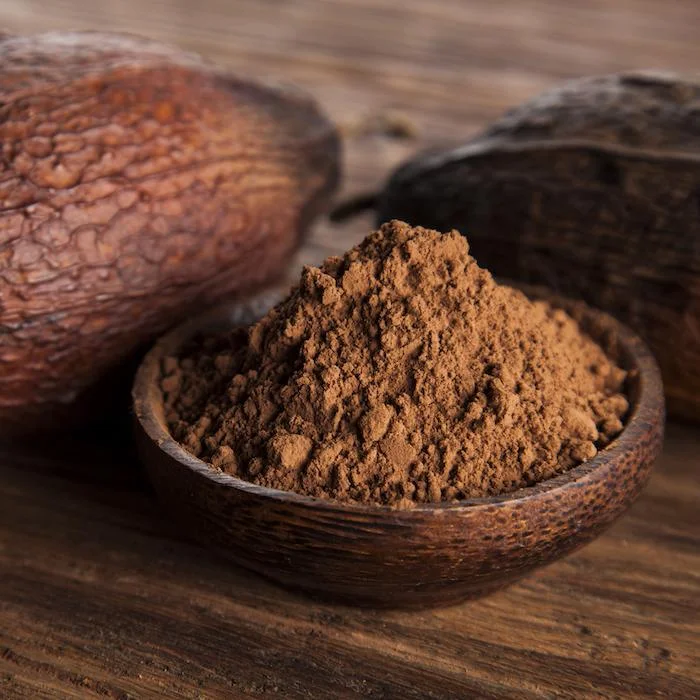
Why Bulk Procurement Is Strategic
Buying natural cocoa powder in bulk isn’t just a cost-saving exercise—it’s a strategic move that affects your entire production line.
Benefits of Bulk Procurement
- Cost Efficiency
Bulk purchasing reduces per-kilogram costs compared to small, frequent orders. It also minimizes logistics overhead. - Supply Security
Cocoa markets are volatile. Stocking bulk reserves shields your factory from sudden price spikes or supply disruptions. - Consistency in Production
Using the same lot of cocoa powder reduces batch-to-batch variability in color, flavor, and acidity—a critical factor for branded chocolate and baked products. - Operational Efficiency
Handling fewer shipments lowers administrative work, customs handling, and inventory turnover stress.
In our experience at MT Royal, manufacturers who integrate bulk cocoa powder sourcing into their strategic procurement plan see measurable reductions in downtime, reject rates, and production bottlenecks.
Key Considerations for Industrial Procurement
When buying natural cocoa powder in bulk, you’re not just looking at price—you’re evaluating technical, operational, and regulatory factors.
Supplier Reliability
A supplier’s reliability impacts every stage of production. Look for:
- Proven track record with industrial clients
- Batch consistency and Certificates of Analysis (COA)
- Compliance with food safety standards (HACCP, ISO, FDA, or EU regulations)
At MT Royal, we supply a range of brands at competitive prices, ensuring that manufacturers have access to both widely used commercial powders and premium options like Latamarko, whose Spanish engineering guarantees strict quality adherence.
Packaging & Storage Considerations
Proper packaging is crucial for bulk cocoa powder:
- Moisture-proof bags (kraft-paper with polyethylene lining)
- Food-grade containers or FIBC bulk bags for 500–1000 kg shipments
- Climate-controlled storage to prevent microbial growth, clumping, or fat oxidation
In Lebanon’s humid summer months, even brief exposure to moisture can compromise the powder’s flowability and baking performance. Production supervisors must monitor storage conditions closely.
Logistics and Import Regulations
Shipping cocoa powder in bulk requires navigating customs and compliance:
- Ensure supplier documentation matches Lebanese import regulations
- Confirm product origin, COA, and HACCP compliance
- Plan for customs clearance times to avoid production delays
At MT Royal, we’ve worked with factories in Beirut and Tripoli to streamline import processes while maintaining product integrity, ensuring smooth delivery from both local and international suppliers.
Selecting the Right Grade for Your Recipes
Not all natural cocoa powders are created equal. Industrial producers must consider:
Fat Content and Recipe Function
- Higher fat powders (~12%) are ideal for chocolate and coatings, improving meltability and mouthfeel.
- Lower fat powders (~10%) work well in baking and fillings, reducing grease spots while maintaining cocoa flavor.
Particle Size and Dispersion
Finer powders integrate more easily into dough, batter, or chocolate masses, reducing sedimentation and ensuring uniform color and texture.
Flavor and Acidity Profile
Natural cocoa powder retains acidity, contributing to complex flavor development. However, for delicate pastries, a slightly milder powder may be preferable. Blending two different batches is a common strategy to achieve balance.
Example: Lebanese Pastry Production
A confectionery plant in Zahle experimented with two bulk lots of natural cocoa powder. Lot A was slightly coarser, while Lot B had finer particles and a more acidic flavor. By blending 70% Lot B with 30% Lot A, they achieved both color uniformity and optimal flavor in baklava chocolate fillings.
This approach illustrates how bulk selection can influence both flavor consistency and operational performance.
Comparing Supplier Options
When sourcing bulk natural cocoa powder, consider three tiers:
| Tier | Typical Use | Brands / Notes |
|---|---|---|
| Commercial Bulk | Mass production for coatings and chocolate chips | Cost-effective, widely available |
| Mid-Tier / Premium Blend | Bakery-grade, dessert fillings | Often includes higher-quality beans, better aroma, and color consistency |
| High-End / Specialty | Signature products, artisanal chocolate | Premium European suppliers, e.g., Latamarko; precise flavor, color, and particle size control |
Factories often use a combination: premium powder for top-tier lines and commercial bulk for cost-sensitive products, balancing quality and economics.
Handling and Storage Best Practices
Bulk cocoa powder requires attention to environmental factors.
Climate Control
- Ideal storage: 18–20°C, 50–60% humidity
- Avoid direct sunlight and high-temperature zones
Inventory Rotation
- Implement FIFO (First In, First Out) to maintain freshness
- Track lot numbers for traceability and quality audits
Flowability Management
- Store powders in well-ventilated, dry silos or bins
- Use vibratory feeders or aeration devices to prevent compaction
In hot climates like Lebanon’s summer, these precautions prevent clumping, microbial growth, and flavor degradation.
Practical Tips for Factory Managers
- Sample before purchase: Conduct lab and pilot tests to confirm suitability.
- Blend strategically: Combine batches to achieve desired color, acidity, and flavor consistency.
- Monitor moisture: Even slight increases can alter flow properties and texture.
- Integrate QC checkpoints: Test pH, fat content, and particle size regularly.
- Plan storage capacity: Avoid overstocking, which risks extended storage and quality loss.
We’ve seen factories benefit from minor investments in silos and climate control, saving significant time in batch adjustments and reducing product rejects.
Frequently Asked Questions
Q1: Can natural cocoa powder replace alkalized cocoa in recipes?
A1: Not directly. Natural cocoa powder is more acidic, so recipes using baking soda will react differently. Testing is essential for bulk substitution.
Q2: How long can bulk cocoa powder be stored safely?
A2: Under optimal conditions (cool, dry, ventilated), 12–18 months is typical. Beyond that, flavor and aroma may degrade.
Q3: Are there differences between Lebanese and imported cocoa powders?
A3: Local importers often source high-quality beans from West Africa or Latin America. Lebanese cocoa powder is typically re-exported from European refiners, offering consistent specifications.
Q4: What about premium brands like Latamarko?
A4: Premium European suppliers, particularly Spanish-origin brands like Latamarko, provide precise particle size control and uniformity—ideal for high-end confectionery production.
Industrial Use Cases
Chocolate Manufacturing
- Cocoa powder contributes to chocolate mass, ganache, and cocoa dusting.
- Fine, low-moisture powders prevent seizing during mixing.
Bakery & Pastry
- Provides color, flavor, and acidity for cakes, cookies, and fillings.
- Adjusting fat content and particle size optimizes dough handling.
Beverages
- Bulk cocoa powder is also used in powdered drink mixes or hot chocolate.
- Dissolvability and flavor consistency are crucial for large-scale beverage operations.
Conclusion: Maximizing Value from Bulk Cocoa Powder
Purchasing natural cocoa powder in bulk from Lebanon is a strategic move for factories aiming to balance cost, quality, and operational resilience. Understanding particle size, fat content, flavor profile, and storage requirements allows production teams to maintain consistency, minimize waste, and meet consumer expectations.
At MT Royal, we supply manufacturers with a comprehensive range of brands, from standard commercial powders to premium options like Latamarko, ensuring competitive pricing without compromising on quality. By combining careful sourcing, climate-aware storage, and rigorous quality monitoring, your factory can achieve both production efficiency and superior end-product performance.
Ultimately, the question isn’t whether to use bulk natural cocoa powder—but how smartly your facility can integrate it into recipes, production lines, and supply strategies to secure long-term success.
latamarko alkalized cocoa powder lm60
cocoa powder for chocolate production-Best price
Food industry raw materials – list of products
Types of Gelatin from Turkish Manufacturer
Alkalized Cocoa Powder Bulk Supplier


No comment