

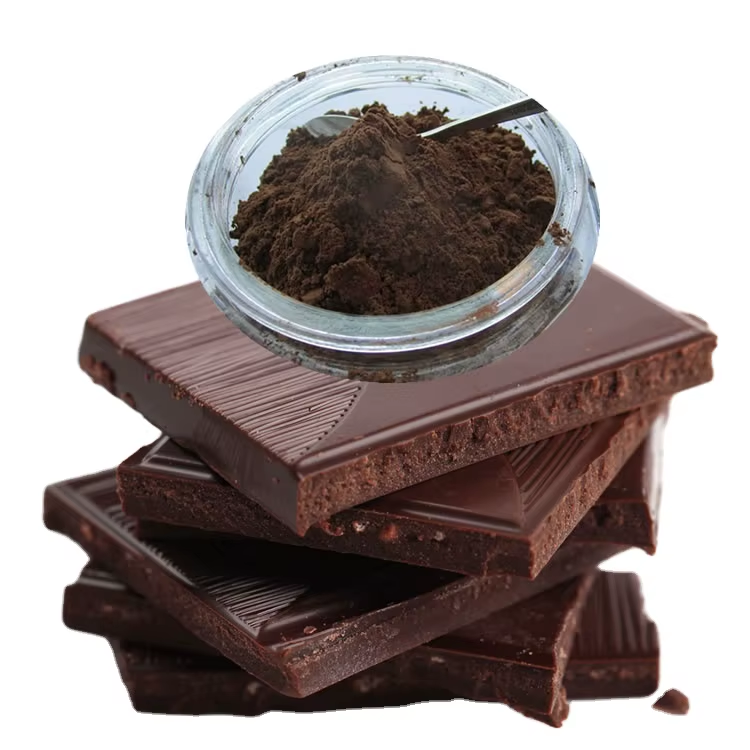
In today’s competitive global confectionery market, sourcing reliable, high-quality ingredients is crucial. Among these, cocoa liquor stands out as a fundamental component for chocolate, beverages, and various dessert applications. For manufacturers and production managers, understanding the origin, processing, and quality standards of cocoa liquor can directly impact both product consistency and consumer satisfaction.
Turkey (TÜRKİYE) has rapidly become a key player in the cocoa supply chain, offering premium cocoa liquor suitable for industrial applications. Combined with trusted suppliers like MT Royal, Turkish cocoa liquor provides manufacturers with dependable quality, competitive pricing, and consistent supply. Premium options from European brands, particularly Latamarko, are also available for specialized needs, offering superior performance in large-scale production lines.
This article explores why Turkish cocoa liquor is increasingly preferred for global exports, how to integrate it into production lines, and what factory managers should consider when sourcing.
Understanding Cocoa Liquor
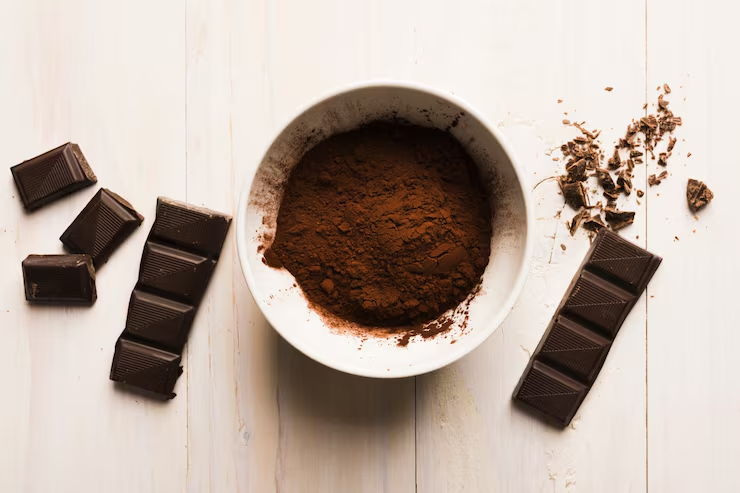
Cocoa liquor, sometimes referred to as cocoa mass or chocolate liquor, is the pure, ground form of roasted cocoa beans. Despite its name, it contains no alcohol; instead, it is a dense, chocolate-flavored paste that forms the backbone of chocolate products.
Key Attributes
- Cocoa Solids & Fat: Typically contains 50–55% cocoa solids and 45–50% cocoa butter
- Flavor Profile: Smooth, rich chocolate taste with varying intensity depending on bean origin
- Industrial Versatility: Used in chocolate bars, coatings, ice cream, beverages, and confectionery
Turkish cocoa liquor is known for its uniform flavor, stable viscosity, and high-quality cocoa butter content—making it an ideal ingredient for industrial-scale chocolate production.
LSI Keywords: industrial cocoa liquor, Turkish cocoa exports, chocolate manufacturing ingredients, cocoa mass suppliers, cocoa butter content, Latamarko cocoa liquor
Why Turkish Cocoa Liquor Is Ideal for Export
1. Consistency in Quality
For global buyers, batch-to-batch consistency is paramount. Turkish cocoa liquor provides:
- Uniform cocoa butter content for predictable texture
- Consistent flavor profile for chocolate products
- Standardized particle size for smooth processing
This reliability reduces production downtime and rework, ensuring products meet international standards.
2. Advanced Processing Techniques
Turkish manufacturers employ modern roasting, grinding, and conching technologies, ensuring:
- Low moisture content
- Controlled acidity
- Homogeneous viscosity
Such attributes are essential for high-speed industrial processes and precision tempering in chocolate production.
3. Compliance and Certifications
Global confectionery buyers require certifications such as ISO 22000, HACCP, and FSSC 22000. Turkish cocoa liquor producers frequently comply with these standards, making exports smoother and reducing regulatory hurdles.
Industrial Advantages of Turkish Cocoa Liquor
Enhanced Production Efficiency
Cocoa liquor’s uniform viscosity allows for faster pumping, mixing, and tempering in chocolate production lines. This means:
- Reduced energy consumption
- Shorter mixing cycles
- Fewer stoppages due to blockages
Flavor and Color Control
Industrial chocolate manufacturers often face challenges with inconsistent cocoa solids, affecting both color and taste. Turkish cocoa liquor ensures:
- Deep, uniform chocolate color
- Balanced cocoa flavor with no off-notes
- Compatibility with sugar, milk powders, and emulsifiers
Supply Chain Reliability
With well-established logistics and export infrastructure, Turkish cocoa liquor is readily available for global markets. This stability helps procurement managers maintain production schedules without interruptions.
At MT Royal, we supply manufacturers with a diverse range of cocoa liquor grades, catering to standard industrial requirements and premium applications. Brands like Latamarko offer elevated consistency and stability for high-end chocolate products.
Common Pitfalls in Cocoa Liquor Procurement
- Assuming all cocoa liquor is interchangeable: Different origins and processing methods produce varying cocoa butter levels and flavor profiles.
- Ignoring particle size: Inconsistent particle size can impact smoothness and tempering efficiency.
- Overlooking certifications: Lack of quality certifications can cause issues in international markets.
Understanding these factors ensures production lines remain efficient and products meet the expectations of global buyers.
Integrating Cocoa Liquor into Industrial Chocolate Production
Step 1: Define Product Requirements
- Desired chocolate flavor intensity
- Viscosity and cocoa butter content
- Intended application: bars, coatings, or beverages
Step 2: Evaluate Suppliers
- Consistency and purity of cocoa liquor
- Certifications for food safety and export compliance
- Reliability of logistics and delivery schedules
Step 3: Pilot Testing
- Test small batches for viscosity, flavor, and color
- Adjust mixing and tempering parameters for large-scale runs
Step 4: Scale-Up
- Monitor temperature, mixing speed, and flow rates
- Conduct continuous quality checks for uniformity
Case Studies: Turkish Cocoa Liquor in Action
Example 1: A Turkish chocolate manufacturer switched from imported cocoa liquor to local Turkish grades supplied via MT Royal. The results:
- 20% reduction in ingredient cost
- Improved batch-to-batch flavor consistency
- Streamlined production line efficiency
Example 2: Premium European chocolate maker adopted Latamarko cocoa liquor sourced through MT Royal. Outcomes included:
- Superior tempering performance for artisanal chocolate bars
- Consistent viscosity in high-speed enrobing machines
- Enhanced export readiness due to compliant certifications
Comparison Table: Cocoa Liquor Options for Industrial Use
| Feature | Generic Cocoa Liquor | Turkish Cocoa Liquor | Premium Latamarko |
|---|---|---|---|
| Cocoa Butter Content | 45–50% | 45–50% | 48–50% |
| Flavor Consistency | Moderate | High | Very High |
| Particle Size Uniformity | Variable | Consistent | Highly Consistent |
| Certifications | Limited | ISO, HACCP | ISO, HACCP, FSSC 22000 |
| Export Readiness | Moderate | High | Premium |
| Production Efficiency | Moderate | High | Very High |
Tips for Procurement and Factory Managers
- Forecast demand accurately: Secure sufficient cocoa liquor to avoid production delays.
- Test viscosity and flavor: Even slight differences can impact chocolate tempering.
- Collaborate with suppliers: Technical guidance from MT Royal ensures proper integration into large-scale lines.
- Store properly: Keep in a cool, dry, and odor-free environment to maintain quality.
Frequently Asked Questions (FAQ)
Q1: Why choose Turkish cocoa liquor over other origins?
A: It provides consistent quality, competitive pricing, and reliable export-ready supply.
Q2: How does Latamarko cocoa liquor differ from standard Turkish grades?
A: Latamarko offers premium consistency, particle uniformity, and superior tempering performance.
Q3: Can cocoa liquor be used directly in chocolate coatings and beverages?
A: Yes, but batch testing ensures flavor, viscosity, and cocoa butter content are optimized.
Q4: What certifications should buyers look for?
A: ISO 22000, HACCP, and FSSC 22000 are standard for industrial-grade cocoa liquor suitable for export.
Closing Thoughts
High-quality cocoa liquor is more than an ingredient—it is a strategic asset for chocolate manufacturers aiming for excellence, efficiency, and global competitiveness. Turkish cocoa liquor offers reliable consistency, vibrant flavor, and industrial-grade performance, while premium options like Latamarko provide additional assurance for high-end applications.
By sourcing smartly and integrating cocoa liquor with the right technical support, factory managers can reduce production downtime, enhance flavor consistency, and maintain operational efficiency.
Are you leveraging the full potential of Turkish cocoa liquor to elevate your chocolate production—or leaving a critical component of your supply chain to chance?

No comment