


In today’s competitive food and beverage industry, organic vanilla extract is no longer a simple flavoring ingredient. It has become a strategic component that directly influences product positioning, consumer trust, regulatory compliance, and long-term brand value. For manufacturers sourcing Organic Vanilla Extract Wholesale in TÜRKİYE, the challenge is not just availability—it is consistency, authenticity, scalability, and commercial reliability.
From industrial bakeries and dairy processors to beverage manufacturers and premium confectionery brands, factories across the region are re-evaluating how and from whom they source vanilla extract. Türkiye has emerged as a critical hub in this transition, offering logistical advantages, access to international trade routes, and professional ingredient distributors who understand both global standards and local production realities.
At MT Royal, we have worked closely with manufacturers who realized—sometimes too late—that vanilla sourcing decisions made at procurement level echo all the way to consumer perception. This article is written to guide you through the industrial, technical, and commercial realities of Organic Vanilla Extract Wholesale in Türkiye, helping your factory make informed, future-proof sourcing decisions.
Understanding Organic Vanilla Extract at an Industrial Level
What Defines Organic Vanilla Extract?
Organic vanilla extract is produced by macerating cured vanilla beans in a solvent—typically organic-certified ethanol and water—under controlled conditions. What differentiates it from conventional vanilla extract is not just the absence of synthetic chemicals, but a fully traceable supply chain compliant with organic certification standards.
For industrial buyers, this distinction matters because organic certification affects:
- Product labeling claims
- Export eligibility
- Brand positioning
- Regulatory audits
Organic vanilla extract used in industrial manufacturing must meet strict criteria related to raw material origin, processing methods, solvent purity, and documentation transparency.
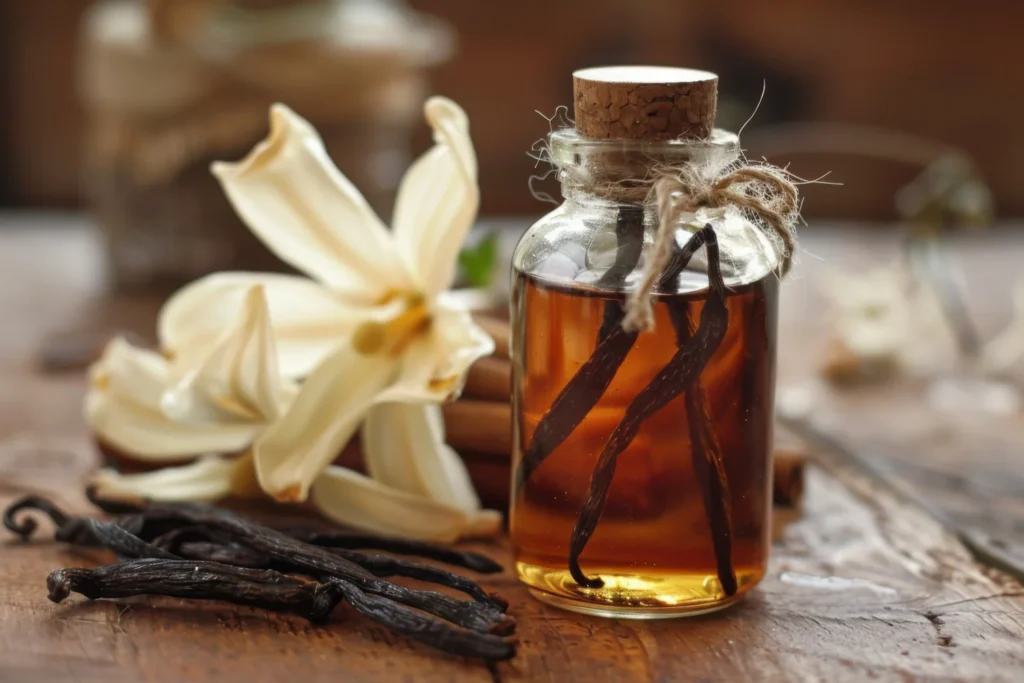
Vanilla Beans: Origin and Impact on Flavor Profile
Most organic vanilla beans used in wholesale production originate from:
- Madagascar (Bourbon vanilla)
- Uganda
- Indonesia
- Papua New Guinea
Each origin brings a different sensory profile. Bourbon vanilla is creamy and rounded, Indonesian vanilla is woody and smoky, while Ugandan vanilla often offers bold, chocolate-like undertones. In large-scale manufacturing, selecting the right profile is essential for batch-to-batch consistency.
We have seen factories struggle when switching origins without recalibrating formulations. A professional wholesale supplier in Türkiye must not only offer organic vanilla extract but guide you in matching flavor profiles to your application.
Why Türkiye Is a Strategic Hub for Organic Vanilla Extract Wholesale
Geographic and Logistical Advantages
Türkiye’s position between Europe, the Middle East, and Asia makes it a natural distribution center for food ingredients. For manufacturers operating across multiple regions, sourcing from Türkiye reduces lead times, simplifies customs processes, and improves supply chain resilience.
Organic vanilla extract distributed through Türkiye often benefits from:
- Faster access to European and MENA markets
- Flexible batch sizes for industrial clients
- Competitive freight costs compared to Western Europe
Regulatory Alignment with Global Standards
Suppliers operating in Türkiye are accustomed to meeting:
- EU organic regulations
- FDA food-grade requirements
- Halal and Kosher standards (when applicable)
This alignment is critical for manufacturers exporting finished products internationally. Choosing the wrong supplier can result in documentation gaps that delay shipments or trigger compliance issues.
At MT Royal, we have supported manufacturers through audits where vanilla extract documentation became a focal point. Reliable wholesale sourcing prevents these disruptions.
Common Mistakes in Industrial Vanilla Extract Sourcing
Mistake 1: Treating Vanilla as a Commodity
One of the most frequent errors we encounter is treating organic vanilla extract as a generic commodity. In reality, vanilla is one of the most chemically complex natural flavoring agents, containing hundreds of aromatic compounds.
Factories that switch suppliers based solely on price often experience:
- Flavor drift
- Increased formulation adjustments
- Consumer complaints
Mistake 2: Ignoring Solvent Quality
Not all organic ethanol is equal. The quality, origin, and processing of the alcohol used in extraction directly affect aroma release and shelf stability. Low-grade solvents can introduce harsh notes or instability over time.
Mistake 3: Overlooking Scalability
A supplier who performs well at pilot scale may fail when your production volume doubles. Wholesale sourcing requires partners who can maintain consistency across thousands of kilograms—not just sample batches.
We have seen cases where factories had to reformulate entire product lines due to supplier scalability issues.
Industrial Applications of Organic Vanilla Extract
Bakery and Industrial Pastry
In baked goods, organic vanilla extract must withstand thermal processing while retaining aromatic complexity. Dosage precision and volatility control are essential, especially in high-speed production lines.
Dairy and Frozen Desserts
Vanilla is often the primary flavor in dairy applications. Any inconsistency becomes immediately noticeable. Organic vanilla extract used in ice cream, yogurt, or milk-based desserts must integrate smoothly without separation or bitterness.
Beverage Manufacturing
From plant-based drinks to functional beverages, vanilla extract must remain stable in varying pH levels. Organic certification adds another layer of complexity, requiring clean-label compatibility.
Confectionery and Chocolate
In chocolate production, vanilla is not dominant—it is supportive. The wrong extract can overpower cocoa notes or introduce off-flavors. Precision sourcing is critical.
Key Quality Parameters Industrial Buyers Should Evaluate
Vanillin Content
Natural vanillin concentration affects both flavor intensity and cost efficiency. Industrial buyers should request analytical data—not marketing descriptions.
Microbiological Stability
Organic does not mean untreated. Proper extraction and filtration processes are required to ensure microbiological safety in large-scale production.
Batch-to-Batch Consistency
Consistency is often more valuable than peak flavor intensity. A professional wholesale supplier prioritizes standardization.
Documentation and Traceability
Certificates of Analysis, organic certificates, allergen statements, and country-of-origin documentation must be readily available.
At MT Royal, we have structured our sourcing to ensure every batch can be traced back to its origin and processing conditions.
Organic Vanilla Extract vs. Alternatives: A Practical Comparison
Organic Extract vs. Artificial Vanillin
Artificial vanillin is cheaper and stable—but increasingly rejected by clean-label consumers. Organic vanilla extract supports premium positioning and export compliance.
Organic Extract vs. Natural Identical Flavors
Natural identical flavors occupy a gray zone. While cost-effective, they often fail organic certification requirements and may confuse labeling claims.
Manufacturers aiming for long-term brand equity consistently move toward authentic organic extracts.

Industrial Procurement Strategies for Long-Term Success
Diversified Origin Sourcing
Relying on a single origin increases risk. Climate volatility has already impacted vanilla harvests globally. Strategic suppliers diversify origins to maintain continuity.
Contract-Based Supply Agreements
Spot purchasing exposes factories to price volatility. Long-term agreements stabilize costs and ensure priority allocation during shortages.
Technical Support Integration
The best wholesale suppliers act as partners, not just vendors. They support formulation optimization, dosage calibration, and regulatory alignment.
We have seen how this approach reduces reformulation costs and accelerates product launches.
Frequently Asked Questions from Procurement Managers
Is organic vanilla extract suitable for high-volume production?
Yes—when sourced correctly. Industrial-grade organic vanilla extract is specifically standardized for large-scale manufacturing.
Does organic vanilla extract have a shorter shelf life?
Not necessarily. Proper extraction and storage ensure stability comparable to conventional extracts.
Can organic vanilla extract be customized?
Professional wholesalers can adjust concentration and profile within certification limits.
How does pricing compare to conventional vanilla?
Organic vanilla extract carries a premium, but optimized dosing and reduced reformulation often offset the cost.
Why Manufacturers Trust MT Royal for Organic Vanilla Extract Wholesale in Türkiye
MT Royal operates with a clear understanding of industrial realities. We work with certified producers, maintain strict quality control protocols, and support manufacturers across food sectors. Our role is not to push products, but to align sourcing decisions with production goals.
We have seen that when factories treat vanilla sourcing strategically, product consistency improves, audit stress decreases, and brand confidence grows.
The Strategic Role of Vanilla in Your Product Portfolio
Vanilla is rarely the headline ingredient, yet it often defines the final sensory experience. In competitive markets, these subtle differences shape consumer loyalty.
Choosing the right Organic Vanilla Extract Wholesale in Türkiye partner is not a procurement detail—it is a business decision with long-term implications.
When your factory demands traceability, stability, and confidence at scale, sourcing becomes more than a transaction. It becomes part of your operational backbone.
LATAMARKO LM60 – Premium Spanish-Origin Cocoa Powder
latamarko alkalized cocoa powder lm60
cocoa powder for chocolate production-Best price
Food industry raw materials – list of products
Types of Gelatin from Turkish Manufacturer
Alkalized Cocoa Powder Price: Complete Buyer Guide for 2026


No comment