

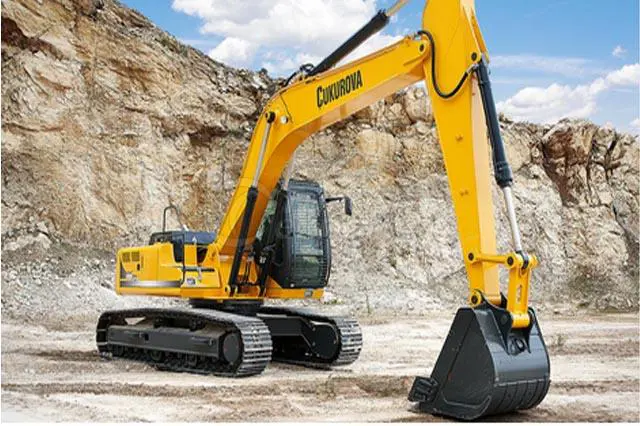
When U.S. manufacturers search for heavy machinery today, the question is no longer whether to look beyond domestic borders, but where to look with confidence. Rising production costs, long lead times, and supply chain disruptions have pushed factories to rethink traditional sourcing models. In this landscape, Heavy machinery manufacturer TÜRKİYE serving USA has emerged as a strategic solution rather than a temporary alternative.
Turkish heavy machinery manufacturers combine European-grade engineering discipline, flexible production capacity, and competitive pricing in a way few regions can match. For American factories seeking reliability without overpaying, this balance matters. At MT Royal, we work closely with manufacturers and procurement teams who have already made this shift—and we’ve seen how the right Turkish supplier can strengthen long-term operational resilience, not just reduce short-term costs.
This article explores why heavy machinery manufacturers in Türkiye are increasingly serving the U.S. market, how to evaluate them correctly, common procurement mistakes to avoid, and how industrial buyers can turn cross-border sourcing into a competitive advantage rather than a risk.
Understanding the role of heavy machinery in modern U.S. manufacturing
Heavy machinery is not a commodity purchase. Whether you operate in construction, mining, energy, agriculture, steel production, logistics, or infrastructure development, machinery performance directly affects output, safety, maintenance costs, and profitability.
In the U.S., factories increasingly require:
- High-load, continuous-operation equipment
- Custom-engineered solutions rather than off-the-shelf machines
- Compliance with strict safety and environmental regulations
- Predictable after-sales support and spare parts availability
This is where Heavy machinery manufacturer TÜRKİYE serving USA fits naturally into the equation. Turkish manufacturers have evolved from contract producers into full-scope industrial partners capable of design, engineering, testing, and long-term support.
Why Türkiye has become a heavy machinery manufacturing hub
Türkiye’s industrial development did not happen overnight. Over the past three decades, the country has invested heavily in industrial zones, technical education, export-oriented manufacturing, and quality certification systems.
Key factors driving Turkish competitiveness include:
Strong engineering culture
Turkish heavy machinery producers often blend German engineering standards with local manufacturing flexibility. Many engineers are trained in Europe or work directly with EU-based technology partners.
Vertical manufacturing capabilities
Unlike fragmented supply models, many Turkish manufacturers control machining, welding, assembly, surface treatment, and testing in-house. This reduces dependency risks and improves quality consistency.
Cost efficiency without quality compromise
Labor and operational costs in Türkiye remain significantly lower than in Western Europe or the U.S., yet quality expectations are aligned with international standards.
Export-driven mindset
Turkish manufacturers are accustomed to serving international markets. Documentation, compliance, and customization for foreign clients are part of their core operations, not an afterthought.
For U.S. buyers, this means working with suppliers who understand global industrial expectations rather than purely local production habits.
What “Heavy machinery manufacturer TÜRKİYE serving USA” really means in practice
This keyword is not just a geographic description—it reflects a full operational bridge between two industrial ecosystems.
A capable Turkish manufacturer serving the U.S. typically offers:
- Machinery engineered to U.S. operational conditions
- Adaptation to ANSI, OSHA, and relevant ASTM or ISO standards
- English technical documentation and training materials
- Export-ready packaging and logistics coordination
- Willingness to customize for U.S. production workflows
At MT Royal, we’ve seen factories succeed when they stop treating overseas sourcing as a transaction and start treating it as a partnership. The difference is measurable in uptime, maintenance costs, and long-term scalability.
Common mistakes U.S. buyers make when sourcing heavy machinery from abroad
International sourcing can be powerful—or painful—depending on how it’s handled. Some of the most frequent errors include:
Focusing only on unit price
Low price without engineering depth often leads to higher lifetime costs. Poor tolerances, weak materials, or insufficient testing show up months later in downtime and repairs.
Ignoring after-sales infrastructure
A machine is only as good as the support behind it. Spare parts availability, response time, and technical guidance matter more than initial delivery speed.
Overlooking compliance alignment
Machines that do not fully align with U.S. safety or operational standards create regulatory and insurance risks.
Treating suppliers as interchangeable
Heavy machinery manufacturers differ significantly in culture, communication style, and problem-solving approach. Compatibility matters.
We’ve learned through experience that the best results come when procurement teams invest time in supplier evaluation rather than rushing the decision.
How Turkish manufacturers compare to other sourcing regions
When U.S. factories compare Türkiye to other global manufacturing hubs, several distinctions become clear.
Versus East Asia
Asian suppliers often offer aggressive pricing, but long lead times, time-zone barriers, and inconsistent quality control can offset those savings. Turkish suppliers provide faster communication and shipping to the U.S. East Coast.
Versus Eastern Europe
Eastern Europe offers strong engineering but higher costs and less production flexibility. Türkiye often matches engineering quality with more adaptable manufacturing capacity.
Versus domestic U.S. manufacturing
Domestic production excels in proximity and compliance familiarity, but cost structures and capacity constraints push many factories to look elsewhere for expansion.
This is why Heavy machinery manufacturer TÜRKİYE serving USA is increasingly viewed as a balanced option rather than a compromise.
Industrial considerations for large-scale U.S. production
If your factory operates at scale, machinery sourcing decisions affect far more than procurement budgets.
Key factors to evaluate include:
Load consistency and fatigue resistance
Machines designed for intermittent use may fail under continuous U.S. industrial loads. Turkish manufacturers with export experience design for endurance.
Modularity and upgrade potential
Scalable machinery allows factories to expand capacity without full replacement.
Integration with existing systems
Compatibility with U.S.-standard control systems, automation software, and safety protocols is essential.
Documentation quality
Clear manuals, wiring diagrams, and maintenance schedules reduce dependency on external technicians.
These are areas where experienced Turkish manufacturers often outperform expectations.
The role of MT Royal in bridging Türkiye and the USA
Sourcing heavy machinery internationally requires more than finding a factory. It requires coordination, verification, and ongoing communication.
At MT Royal, we position ourselves as an industrial bridge rather than a simple supplier. We work with multiple heavy machinery manufacturers in Türkiye, selecting partners based on proven export performance, engineering depth, and reliability.
We’ve seen firsthand that when factories are supported through specification alignment, factory audits, and logistics planning, cross-border sourcing becomes predictable rather than risky. This is where trust is built—not through promises, but through process.
Frequently asked questions from U.S. factory managers and procurement leaders
Can Turkish heavy machinery meet U.S. regulatory requirements?
Yes, provided the manufacturer has export experience and the specifications are clearly defined from the start.
What about lead times compared to domestic suppliers?
Lead times are often competitive, especially for custom machinery, due to flexible production scheduling.
How reliable is after-sales support?
Established Turkish manufacturers serving the U.S. maintain spare parts strategies and technical support channels, especially when working through experienced intermediaries.
Is customization realistic for overseas suppliers?
In many cases, customization is more achievable because Turkish manufacturers are less constrained by rigid production lines.
These questions come up repeatedly—and the answers consistently point to preparation and partner selection.
The future of U.S.–Türkiye industrial collaboration
Global manufacturing is shifting from cost-driven sourcing to resilience-driven partnerships. U.S. factories are no longer asking, “Where is it cheapest?” but “Where is it sustainable, reliable, and scalable?”
Heavy machinery manufacturers in Türkiye are well-positioned to answer that question. With strong engineering foundations, export experience, and adaptability, they are becoming long-term partners rather than backup options.
From our perspective at MT Royal, the factories that succeed are those willing to think strategically about sourcing—treating machinery as an investment in operational stability, not just a line item on a purchase order.
The machines you choose today will define your production capability for years. Choosing the right manufacturing partner is not just a procurement decision; it is a strategic one.


No comment