

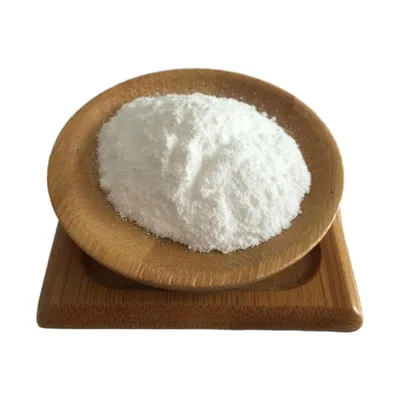
In today’s global manufacturing environment, compliance is no longer a box to tick—it is a competitive advantage. For factories supplying food, bakery, pharmaceutical, or nutraceutical markets where Halal integrity matters, even the most basic functional ingredients are scrutinized with growing intensity. Halal Certified Ammonium Bicarbonate is one such ingredient. On the surface, it may appear chemically straightforward, but in practice, its sourcing, certification, and supply chain integrity carry significant operational and commercial weight.
Manufacturers who choose the right Halal-certified supplier gain more than regulatory approval. They gain access to expanding Halal markets, reduced audit risk, and stronger trust with distributors and end customers. At MT Royal, we have worked with producers navigating Halal compliance across multiple regions, and we have seen how the right ingredient partner can simplify what is otherwise a complex and high-stakes process.
This article is written for factory owners, procurement managers, quality assurance teams, and technical directors who want clarity—not marketing noise—around Halal Certified Ammonium Bicarbonate, its industrial role, and how to source it responsibly at scale.
Understanding Halal Certified Ammonium Bicarbonate: Definition and Fundamentals
Ammonium bicarbonate (NH₄HCO₃) is an inorganic compound commonly used as a leavening agent, processing aid, and intermediate across several industries. From a purely chemical perspective, it decomposes upon heating into ammonia, carbon dioxide, and water vapor, leaving no solid residue.
However, Halal Certified Ammonium Bicarbonate is defined not only by its chemical composition but by how it is produced, handled, stored, and documented throughout the supply chain.
What Makes Ammonium Bicarbonate Halal Certified?
Halal certification confirms that:
- Raw materials used in production comply with Halal standards
- No prohibited substances are involved at any stage
- Manufacturing equipment is free from cross-contamination
- Storage and transportation meet Halal integrity requirements
- Documentation and traceability are fully verifiable
This distinction is critical. Two ammonium bicarbonate products may be chemically identical, yet only one qualifies as Halal Certified due to upstream process control.
For manufacturers serving Halal-sensitive markets, certification is not optional—it is foundational.
Why Halal Certification Matters in Industrial Manufacturing
The global Halal market has evolved far beyond niche food segments. Today, Halal compliance influences procurement decisions in:
- Industrial bakeries
- Confectionery and snack manufacturing
- Pharmaceutical excipients
- Nutritional supplements
- Export-oriented food processing
Factories that ignore Halal certification increasingly limit their own market access.
Commercial Impact of Halal Compliance
Halal-certified ingredients enable manufacturers to:
- Supply Muslim-majority markets without reformulation
- Pass distributor and customer audits more easily
- Reduce regulatory friction during export
- Strengthen brand credibility across diverse regions
We have seen manufacturers lose contracts not because of product quality, but because a single ingredient lacked proper Halal certification.
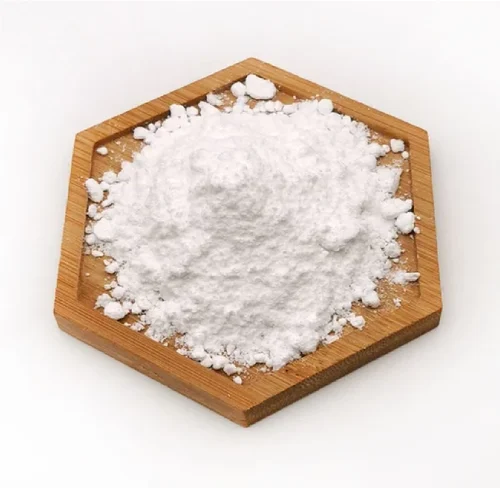
Industrial Applications of Halal Certified Ammonium Bicarbonate
While ammonium bicarbonate is used across multiple sectors, Halal-certified variants are especially important in food and pharma-related applications.
Bakery and Food Processing
In industrial bakeries, Halal Certified Ammonium Bicarbonate is widely used as a leavening agent in:
- Biscuits and crackers
- Dry cookies
- Flat bakery products
Its complete decomposition during baking makes it highly effective, provided that certification and process control are properly managed.
Pharmaceutical and Nutraceutical Manufacturing
In regulated environments, ammonium bicarbonate may be used as:
- A processing aid
- A pH-adjusting agent
- A volatile buffering compound
In these cases, Halal certification often complements GMP and pharmacopeial requirements.
Export-Oriented Manufacturing
For factories exporting to regions such as the Middle East, Southeast Asia, and parts of Africa, Halal Certified Ammonium Bicarbonate is frequently a baseline requirement rather than a differentiator.
Common Misconceptions About Halal Certified Chemical Ingredients
Despite growing awareness, several misconceptions persist.
“Inorganic Chemicals Are Automatically Halal”
This is one of the most common and costly assumptions. While ammonium bicarbonate is inorganic, Halal certification evaluates the entire production chain, not just molecular structure.
“One Certificate Covers All Markets”
Different Halal authorities operate under different jurisdictions. A certificate accepted in one region may not automatically satisfy another.
“Certification Only Matters for Final Products”
In reality, many audits focus on raw material traceability. Missing certification at ingredient level can halt approvals for finished goods.
Halal Certification Process: What Manufacturers Should Know
Understanding how Halal Certified Ammonium Bicarbonate is approved helps buyers assess supplier credibility.
Key Elements of Halal Certification
- Source verification of raw materials
- Inspection of manufacturing facilities
- Review of cleaning and segregation procedures
- Audit of storage and logistics systems
- Ongoing compliance monitoring
Reputable suppliers maintain updated certificates and transparent audit histories.
At MT Royal, we prioritize working with manufacturers whose Halal certification processes are well-documented and consistently maintained, reducing risk for downstream buyers.
Industrial Sourcing Challenges and How to Avoid Them
Sourcing Halal Certified Ammonium Bicarbonate at scale introduces challenges beyond standard procurement.
Challenge 1: Limited Supplier Pool
Not all producers invest in Halal certification. This can limit sourcing options, especially during high-demand periods.
Challenge 2: Price Volatility
Halal-certified materials may carry additional compliance costs. Buyers must balance price sensitivity with risk management.
Challenge 3: Documentation Gaps
Incomplete or expired certificates can cause shipment delays or audit failures.
We have observed that factories with long-term supply agreements experience fewer disruptions than those relying on spot purchases.
Comparing Halal Certified vs Non-Certified Ammonium Bicarbonate
From a functional standpoint, performance may appear identical. The difference lies in risk exposure.
Halal Certified Ammonium Bicarbonate offers:
- Regulatory assurance
- Market access flexibility
- Audit readiness
Non-certified material may be cheaper, but it limits your factory’s ability to respond to customer and market demands.
Industrial Handling and Storage Best Practices
Maintaining Halal integrity does not end at delivery.
Storage Recommendations
- Dedicated storage areas
- Clear labeling and segregation
- Controlled humidity and temperature
- Documented handling procedures
Even certified materials can lose Halal status if mishandled internally.
Supply Chain Trends Affecting Halal Certified Ingredients
Several global trends are reshaping demand.
Rising Demand in Non-Muslim Markets
Halal certification is increasingly associated with quality, hygiene, and transparency, even outside traditional markets.
Increased Audit Frequency
Major buyers now conduct deeper supply chain audits, including raw material sourcing.
Preference for Multi-Certified Suppliers
Suppliers offering Halal alongside ISO, HACCP, and GMP certifications are gaining preference.
MT Royal aligns its sourcing strategy with these trends, offering Halal Certified Ammonium Bicarbonate from multiple approved origins to ensure continuity and flexibility.

Frequently Asked Questions from Factory Managers and Buyers
Is Halal Certified Ammonium Bicarbonate chemically different?
No. The difference lies in production and certification, not molecular structure.
Does Halal certification expire?
Yes. Certificates must be renewed and verified regularly.
Can Halal certification be transferred between batches?
No. Certification applies to defined production scopes and batches.
Is Halal certification required for export to all Muslim-majority countries?
Requirements vary, but certification significantly simplifies approval.
The Role of a Trusted Supplier in Halal Compliance
Choosing a supplier is not only about availability. It is about confidence.
At MT Royal, we act as a bridge between certified manufacturers and industrial buyers. We understand that your factory’s reputation depends on every ingredient you use. That is why we emphasize transparency, documentation, and consistency.
We have seen how proactive sourcing prevents costly disruptions. We have seen how clear certification builds trust with auditors and customers alike. And we have seen how manufacturers who treat Halal compliance strategically outperform those who treat it as an afterthought.
Why Halal Certified Ammonium Bicarbonate Is a Strategic Asset
In modern manufacturing, ingredients are no longer invisible inputs. They are signals of quality, responsibility, and market readiness.
Halal Certified Ammonium Bicarbonate represents more than compliance—it represents foresight. Factories that invest in certified sourcing position themselves for growth in diverse markets while reducing operational risk.
When your production lines run at scale, and your products cross borders, the quiet reliability of certified ingredients becomes a powerful advantage. It is not something you advertise loudly—but it is something your customers and regulators notice immediately.
latamarko alkalized cocoa powder lm60
cocoa powder for chocolate production-Best price
Food industry raw materials – list of products
Types of Gelatin from Turkish Manufacturer
Alkalized Cocoa Powder Bulk Supplier

No comment