

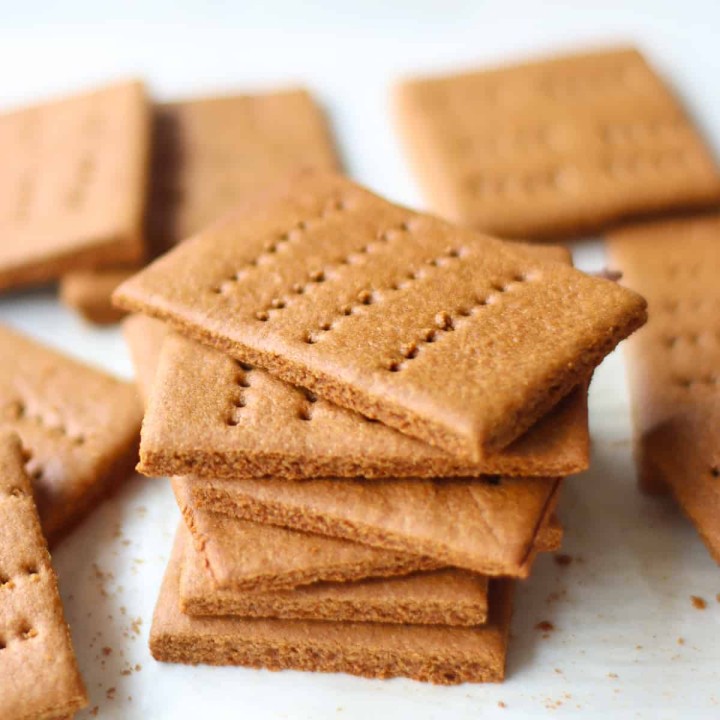
When it comes to producing biscuits, crackers, and dry snack products, the first thing production managers think about is texture control—the very element that sets one brand apart from the competition. Crispiness, consistent dryness, stable structure, and neutral flavor all rely heavily on the quality of raw materials. Among the most influential ingredients, Ammonium Bicarbonate plays a uniquely critical role; even a small error in selecting or dosing this compound can impact your entire production line.
Factories competing in today’s regional and global markets seek suppliers that provide standardized, consistent, and reliable materials. This is precisely where a supplier like MT Royal becomes essential—offering well-controlled, food-grade ingredients at competitive prices so manufacturers can focus on product development rather than troubleshooting raw materials.
This article delivers a deeply practical, technical, and industry-focused look at Ammonium Bicarbonate for Crackers and Biscuits, helping production managers, R&D teams, and procurement specialists make confident, informed decisions for their manufacturing operations.
What Is Ammonium Bicarbonate and Why Is It So Important in Crackers and Biscuits?
Ammonium bicarbonate is a traditional yet highly effective leavening agent widely used in the production of biscuits, wafers, crackers, and other low-moisture baked goods. Classified as a thermally decomposing leavening agent, it releases gases during baking without leaving any chemical residues behind.
In biscuit and cracker production, it helps optimize:
- crispiness and light texture
- internal aeration and pore formation
- product volume and uniform structure
- final moisture reduction
- shelf-life stability of crisp products
- neutral flavor without alkaline aftertaste
Why Crispiness Depends So Heavily on the Quality of Ammonium Bicarbonate
Crispiness in biscuits is determined by controlled gas release and the weak gluten structure of low-hydration doughs. Ammonium bicarbonate behaves very differently from baking soda or baking powder, making it especially suited for dry baked goods.
Comparison of the Three Main Leavening Agents
| Leavening Agent | Texture Effect | Flavor Impact | Residue in Product | Best Use |
|---|---|---|---|---|
| Ammonium Bicarbonate | high porosity, strong crispiness | neutral | none | biscuits, crackers |
| Baking Soda | moderate volume | may cause alkaline flavor | may leave residue | cakes, soft baked goods |
| Baking Powder | large volume, soft texture | neutral | leaves residue | cakes, high-rise baking |
In crackers and biscuits, the goal is texture and crispness, not volume. Using the wrong leavening agent leads to:
- hard or dense structure
- off-flavor
- undesirable surface defects
- noticeable alkaline notes
In our work with various factories, we’ve seen significant improvements in texture, dryness, and uniformity after switching from unstable materials to consistent food-grade ammonium bicarbonate.
latamarko alkalized cocoa powder lm60
cocoa powder for chocolate production-Best price
Food industry raw materials – list of products
Types of Gelatin from Turkish Manufacturer
Alkalized Cocoa Powder Bulk Supplier
Key Quality Standards When Choosing Ammonium Bicarbonate for Your Production Line
Quality assurance teams typically evaluate several critical quality parameters when purchasing this ingredient.
1. Purity Level
Food-grade ammonium bicarbonate should have at least 99% purity. Lower purity levels lead to:
- undesirable flavor residues
- potential contamination
- reduced gas-release performance
2. Particle Size
Particle size determines dispersion quality. Particles that are too fine release gas too quickly, while coarse particles may leave spots in the baked product.
3. Moisture Content
Ammonium bicarbonate is hygroscopic. High moisture causes:
- caking and lump formation
- reduced potency
- inconsistent dough aeration
4. Residual Ammonia After Baking
High-quality food-grade materials release all gases at baking temperatures. Poor-quality ingredients may cause ammonia odor.
5. Proper Distribution in Dough
The ingredient must disperse well in dry doughs. Unlike baking soda, it does not require water for activation.
Common Mistakes Factories Make When Purchasing Ammonium Bicarbonate
Many factories encounter preventable issues while sourcing this material. From our experience working with different manufacturers, the most frequent mistakes include:
1. Buying in Bulk Without Technical Specifications
This increases the risk of contamination and inconsistent quality.
2. Improper Storage Conditions
The product must be stored in a dry, cool environment with multilayer packaging.
3. Ignoring Production Dates
Over time, ammonium bicarbonate loses potency—especially in suboptimal storage environments.
4. Choosing Based on Price Alone
Since this is a sensitive ingredient, unrealistically low prices usually indicate poor quality or inconsistent performance.
5. Replacing It Incorrectly with Baking Soda
Some factories attempt to cut costs, but the chemical differences cause major product-quality issues.
Industrial Best Practices for Using Ammonium Bicarbonate in Biscuit & Cracker Lines
Proper application is just as important as proper sourcing.
1. Recommended Usage Level
Typically 0.3% to 1% of flour weight, depending on formula and product type.
2. Combined Usage with Other Leavening Agents
Some formulas include small percentages of baking soda. When controlled carefully, this combination can improve surface texture.
3. Target pH Range
Ideal biscuit pH: 7.0–8.5. Deviations affect color, crispness, and baking uniformity.
4. Relationship With Dough Moisture
The drier the dough, the better the performance. That’s why it’s ideal for low-moisture products such as crackers.
5. Optimal Baking Conditions
Full decomposition occurs at 150–230°C. Insufficient heat may leave ammonia odor.
Advantages of Using Ammonium Bicarbonate in Industrial Biscuit Production
Factories that use high-quality ammonium bicarbonate experience:
- improved crispness retention
- faster drying and higher oven efficiency
- a uniform internal structure
- predictable coloring
- reduced formulation costs
- smoother, more consistent production flows
Why Leading Manufacturers Prefer Reliable Suppliers Like MT Royal
Given the market fluctuations and quality variations among imported goods, factories need suppliers that provide:
1. Consistent Quality Batch After Batch
Manufacturers cannot reformulate their recipes every time a raw material changes.
2. Technical Support and Practical Experience
From our work with different factories, many quality issues arise from usage—not the material itself. Having a supplier who offers industrial insight is a major advantage.
3. Access to Multiple Brands and Competitive Pricing
Some factories require specific international brands. MT Royal’s wide portfolio allows manufacturers to choose the exact quality and pricing needed for their production scale.
Frequently Asked Questions From Production Managers and Procurement Teams
1. Does Ammonium Bicarbonate Leave Residue in the Product?
No. With proper baking temperatures, it fully decomposes.
2. What Packaging Is Best?
Standard food-grade 25 kg multilayer bags with an inner polyethylene layer.
3. What’s the Difference Between Food Grade and Industrial Grade?
Industrial grade may contain contaminants and must not be used in food production.
4. Can the Material Cake or Form Lumps?
Yes—because it absorbs moisture quickly. Proper storage is essential.
5. Why Do Some Biscuits Smell Like Ammonia?
Either due to low-quality material or insufficient baking temperature.
A Final Word for Production Leaders
In today’s competitive biscuit industry, success isn’t always about high-tech machinery. Sometimes, choosing the right raw material can transform the entire production line. Ammonium Bicarbonate for Crackers and Biscuits, when sourced from a reliable supplier and used with technical precision, enhances crispiness, improves structural uniformity, reduces waste, and ultimately optimizes costs.
Factories that make scientifically informed ingredient decisions stay one step ahead. And a supplier like MT Royal—with proven consistency, technical insight, and access to multiple global brands—can be a strategic partner in elevating your production to a more competitive level.

No comment