

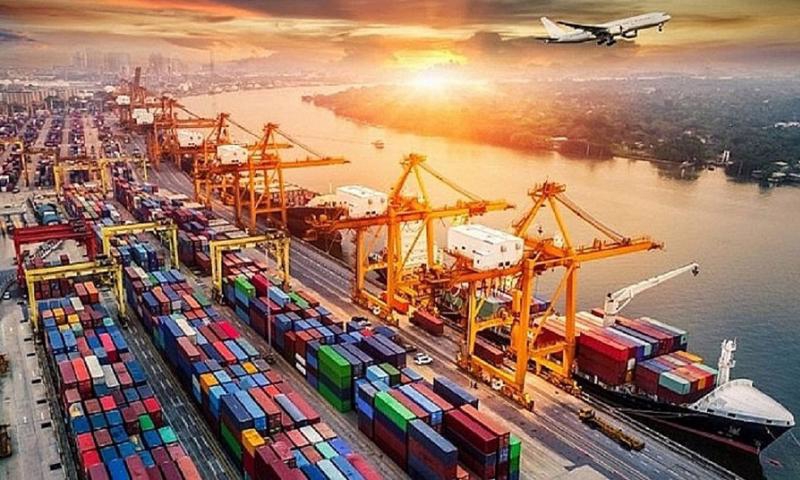
If your manufacturing facility in South Africa is actively seeking reliable and cost-efficient raw materials from Türkiye, this article is written precisely for you. Sourcing from Türkiye opens the door to competitive pricing, improved supply-chain options, and access to diverse industrial inputs — and when you engage a dependable partner like MT Royal, you gain not only product supply but also logistics, documentation and sourcing expertise. We have supported multiple manufacturing clients in South Africa and elsewhere who have strengthened their operations by aligning with Turkish suppliers through an experienced intermediary. In the following sections you will find a detailed, actionable guide — from definitions and basic concepts to industrial-scale import tips, common pitfalls, and answers to key buyer questions.
Why Türkiye? Why Raw Materials? Why Now?
Türkiye has developed as a major manufacturing and export hub across multiple sectors: chemicals, textiles, machine-parts, plastics, metals, and more. For South African companies aiming to scale production, the benefits of sourcing from Türkiye include:
- Access to quality manufacturers with export certification and competitive cost structures.
- Established trade routes between Türkiye and African ports, more established now than ever.
- Recent data shows South Africa imported approximately US$809.76 million worth of goods from Türkiye in 2024.
- Bilateral trade between Türkiye and Africa exceeded US$37 billion in 2024 — indicating a growing, strategic supply-chain relationship.
For South African procurement and production teams, aligning raw-material sourcing with Türkiye means a strategic advantage: you can reduce reliance on more distant or volatile suppliers, shorten lead times, and potentially lower landed cost — especially when you partner with a strategic resource like MT Royal, which coordinates sourcing, shipping, and documentation.
Key Concepts and Definitions
Before launching into steps, let us clarify core concepts that you, as manufacturers in South Africa, need to understand.
Raw Materials from Türkiye
Here we define raw materials as industrial inputs (e.g., polymers, chemicals, metal components, semi-finished goods, textiles) exported from Turkish manufacturers or processors, which become feedstock for your local production. These are not necessarily consumer-ready goods, but upstream components.
Incoterms and Delivery Models
- FOB (Free On Board): Turkish supplier delivers goods onto vessel at Turkish port; you handle freight from there.
- CIF (Cost, Insurance, Freight): Supplier covers shipping and insurance to South Africa’s import port; you handle clearance.
Understanding incoterms is crucial for accurate landed-cost modelling.
Import Documentation
Important documents include:
- Invoice & Packing List: for customs valuation.
- Certificate of Origin (COO): proves Turkish origin — relevant for tariffs and preference.
- Bill of Lading (B/L) or Airway Bill (AWB): transportation evidence.
- Quality Certificates, Test Reports: for your quality control.
- South African Import Requirements: e.g., SABS standards, duties, import quota requirements.
Landed Cost Breakdown
Your total landed cost equals: Product cost + Freight/Insurance + Import duties/tariffs + Inland haulage + Handling/clearance + Storage. Missing any line item can produce nasty surprises in budget or margin.
Lead Time & Supply Risk
Lead time refers to the period from order placement in Türkiye to arrival at your South African facility. Typical sea-freight from Turkish ports to Durban or Cape Town may take ~20-30 days, but you also must allow for customs clearance and inland transit.
Step-by-Step Guide for South African Companies
Step 1: Define your material specification
Begin with a detailed specification sheet. You should define:
- Material type, grade, physical/chemical properties (e.g., polymer melt index, chemical purity).
- Packaging (bag size, palletisation, container loading).
- Minimum order quantity (MOQ).
- Quality certificate requirements (TDS, COA).
- Required regulatory standards (SABS, ASTM, ISO).
For example: “HDPE resin grade ≥0.94 g/cm³ density, pellet size 3 mm, 25 kg bags, total 20 tonnes, COA per batch, moisture ≤0.05%.”
Step 2: Source and verify Turkish suppliers
- Use trade directories, Turkish export portals, trade fairs or MT Royal’s supply network.
- Verify supplier credentials: export licence, ISO 9001, prior African exports.
- Request samples and test them locally.
- Ask for batch COA, TDS, packaging photos.
- Negotiate pricing, incoterms, payment terms (e.g., 30% advance, 70% upon shipment).
We at MT Royal have witnessed suppliers that promised low cost but failed to provide consistent quality. A solid sample test earlier often prevents large-scale issues later.
Step 3: Contract and payment structure
Once you select a supplier, formalise a contract including:
- Clear product definition and spec sheet.
- Price, quantity, shipment date, incoterm.
- Payment terms: for instance, 30% deposit and balance at shipment or after inspection.
- Documentation commitments: invoice, packing list, COO, B/L, quality certificates.
On the South African side, you must ensure: - Foreign exchange allocation (via SARB regulations).
- Clearing the import code or registration (if required by local regulations).
- Understanding of customs duty and tariff schedules for the HS code.
Step 4: Logistics — Turkish export to South African arrival
- Determine shipping mode: sea is cost-effective for bulk; air may be used for urgent orders.
- Choose port of origin in Türkiye (Istanbul, Izmir, Mersin) and destination port in South Africa (Durban, Cape Town, Johannesburg inland).
- Engage a freight forwarder with Turkish‐to-South Africa experience.
- Ensure freight, insurance and export customs are prepared. For CIF, supplier arranges until South African port.
- Track shipment — delays or mishandling in transit can add cost and risk.
In our collaborations, MT Royal has arranged end-to-end logistics from Turkish factory to South African warehouse, reducing importer burden and uncertainties.
Step 5: Customs clearance and inland transport in South Africa
On arrival:
- Submit required documents: invoice, COO, B/L, packing list, quality certificates, freight invoice.
- Pay import duties, VAT, port handling and off-dock transport.
- Unload container, inspect goods, move to factory or warehouse.
- Conduct incoming QC: verify actual delivered material matches spec sheet (quantity, quality, packaging).
Failing to inspect early may result in undetected defects entering your production line.
Step 6: Integration into your production line
Once raw material is at your factory:
- Compare material with your original spec sheet: batch number, physical appearance, packaging integrity, quality test results.
- Adjust your processing parameters if material differs (e.g., different melt index might require temperature tweaks).
- Monitor first production runs for yield, scrap rate, downtime or off-spec output.
We have noted that changing a raw‐material supplier without calibrating your line can lead to 5–8% increase in scrap — a non-trivial cost for large production.
Step 7: Review, feedback, and continuous improvement
After consumption of the batch:
- Hold a review with procurement, production and supplier: Did the supplier meet lead-time? Was quality consistent? Did packaging and delivery hold up?
- Document any deviations and track corrective actions or alternate sourcing strategies.
- Calculate landed cost per unit and compare with local sourcing or other supply-chain alternatives.
- Negotiate future orders, perhaps securing long-term contracts with Turkish suppliers once you are confident in quality and service.

Mistakes to Avoid (and How to Correct Them)
| Common Mistake | Potential Consequence | Preventative Action |
|---|---|---|
| Spec sheet vague or incomplete | Supplier may deliver wrong grade → production rejects | Produce detailed spec sheet and confirm sample match |
| Focusing only on unit cost | Hidden costs increase landed cost unexpectedly | Build full landed cost model (product + freight + duty + haulage) |
| Not verifying supplier credentials | Non-compliant goods may be rejected at SA customs or quality issues | Verify ISO/9001, export experience, ask for references |
| Inadequate packaging for export | Moisture damage, packaging failure during transit | Specify export-grade packaging and inspect at arrival |
| Neglecting South African import regulations | Delay, penalties, demurrage fees | Engage local customs broker upfront, check HS code & duties |
| Production line not adjusted after new raw-material | Increased scrap, yield drop, downtime | Run pilot batch, recalibrate processing parameters |
We at MT Royal often emphasise these errors in our consulting discussions because we’ve seen them repeatedly in manufacturing operations. Avoiding them early leads to smoother import cycles and better operational outcomes.
Tips for Large-Scale Imports and Manufacturers
For South African companies importing at scale (for example, annual volumes over 500 tonnes), the following tactics are particularly effective:
- Negotiate Long-Term Supply Contracts: Lock in pricing, secure priority capacity.
- Standardise Packaging and Container Loading: For instance, if your raw material fits 20-ft container at 24–28 tonnes, you optimise freight cost per unit.
- Implement Just-In-Time (JIT) Inventory Strategy: Minimise warehousing costs but maintain buffer stock to handle shipping delays.
- Connect Import Cost to ERP: Track landed cost line-items (material + freight + duties + storage) to measure cost-per-unit.
- Set KPIs for Supply Chain: Supplier lead-time adherence, delivery defects, cost variation, scrap rate following material change.
- Use Quality Assurance Protocols: Each batch arrival should trigger QC, documentation audit, and production sign-off.
FAQs – Frequently Asked by Procurement & Production Managers
Q1. How do South African companies assess duty on imported raw materials from Türkiye?
Duty depends on HS code classification and South African tariff schedule. Use the correct HS code for your material and ensure the Certificate of Origin indicates Türkiye; consult your customs broker for accurate duty calculation.
Q2. Is air freight from Türkiye viable for raw materials?
It’s viable for urgent or smaller volumes (3–5 days transit), but cost per kg is substantially higher than sea freight — best for prototypes or time-sensitive batches.
Q3. Who bears the insurance risk when using CIF term?
Under CIF, the Turkish supplier arranges freight and insurance to the South African port; you should still verify the insurance certificate to ensure coverage range.
Q4. Does sourcing from Türkiye compromise quality?
Not at all — many Turkish manufacturers serve global export markets with ISO 9001 certification, experienced logistics and export documentation. If you work with experienced import partners (like MT Royal), you mitigate typical risks.
Q5. What if South African port delays occur?
Delays can increase demurrage, storage fees, and impact production start-up. Ensure your logistics contract covers demurrage and that you maintain buffer stock.
Why Choose MT Royal as Your Supply Chain Partner?
We at MT Royal have built direct relationships with Turkish manufacturing and export houses, giving you both competitive access and logistical support. Our differentiators include:
- End-to-end logistic coordination: from Turkish factory, export customs clearance, container loading, shipping to South Africa.
- Verified supplier network: we vet for export credentials, quality certification, experience with African destinations.
- Competitive bulk pricing: by cutting intermediaries and providing clear landed cost documentation.
- Technical support: helping South African manufacturers align material specs to production requirements and avoid processing issues.
- Document support: COA, TDS, Bill of Lading, COO, customs-clearance files — helping you avoid clearance delays or compliance issues.
By working with MT Royal, your procurement team gains a partner that understands both the Turkish manufacturing ecosystem and the South African import & production context. We’ve seen clients reduce scrap rates, shorten lead times and stabilise supply chains when they standardise on Turkish raw-material sourcing through our support.
Final Thoughts
Importing raw materials from Türkiye isn’t just a procurement exercise—it’s a strategic production decision. You are not merely buying a material; you’re securing stable quality, predictable supply and cost-effective inputs that can enable your facility to compete globally.
When you carefully define specifications, verify suppliers, manage logistics, and integrate incoming material into your production line with precision, you transform sourcing into a competitive advantage. With a supply-chain partner like MT Royal, you move beyond purchase transactions into strategic supply-chain collaboration.
Take the step. Align your specification sheet. Vet your supplier. Plan your shipment. And if you want expertise and support built for South African manufacturers importing from Türkiye, we’re ready to partner with you.
latamarko alkalized cocoa powder lm60
cocoa powder for chocolate production-Best price
Food industry raw materials – list of products
Types of Gelatin from Turkish Manufacturer
Alkalized Cocoa Powder Bulk Supplier


No comment