

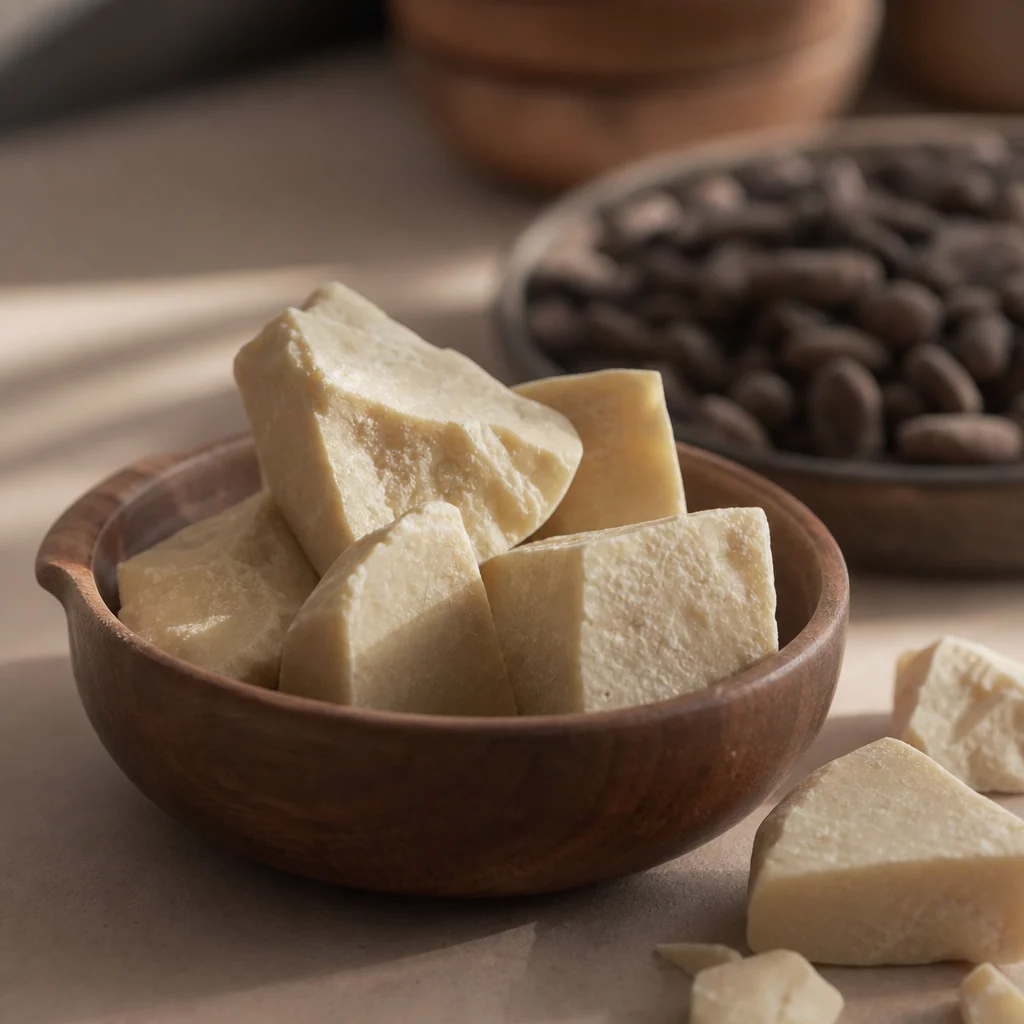
For many food manufacturers, a cocoa butter substitute for chocolate offers a practical way to manage ingredient costs, improve processing characteristics, or develop products for specific applications. The challenge is choosing the right fat for the recipe. A substitute that performs exceptionally well in a compound coating may be unsuitable for a conventional chocolate formulation, while a lower purchase price may offer little benefit if it creates tempering difficulties or increases product waste.
Understanding the differences between cocoa butter substitutes, cocoa butter equivalents, and other specialty fats helps procurement teams make informed decisions. It also gives production managers greater control over texture, melting behavior, shelf stability, and manufacturing efficiency.
Whether you operate a confectionery plant, manufacture chocolate coatings for biscuits and wafers, or produce fillings for industrial bakery applications, the right fat system can make a meaningful difference to your finished product.
What Is a Cocoa Butter Substitute for Chocolate?
A cocoa butter substitute is a fat ingredient used to replace some or all of the cocoa butter in certain chocolate-style products. Depending on its composition, it can help manufacturers achieve the required hardness, melting profile, gloss, texture, and processing performance without relying entirely on cocoa butter.
The term is often used broadly in commercial discussions, but it is important to distinguish between several categories of specialty fats. They are not interchangeable, and their compatibility with cocoa butter varies considerably.
Cocoa Butter Substitutes (CBS)
Cocoa butter substitutes, commonly abbreviated as CBS, are generally formulated using fats that differ from cocoa butter in their triglyceride composition. Many conventional CBS products are based on lauric fats, such as specially processed palm kernel oil or coconut oil.
These fats can provide useful functional properties, including rapid setting, hardness, and good performance in compound coatings. Depending on the formulation, they may also reduce the need for conventional cocoa butter tempering.
However, CBS products are generally intended for applications in which cocoa butter is absent or present only within the limits permitted by the specific fat system. Compatibility with cocoa butter can be limited, so manufacturers should follow the supplier’s technical guidance rather than assume that the two fats can be freely blended.
CBS is often considered for:
-
Compound coatings for biscuits, wafers, and snack products.
-
Chocolate-style coatings for bakery goods.
-
Certain confectionery coatings and enrobing applications.
-
Products where setting speed and production efficiency are priorities.
Cocoa Butter Equivalents (CBE)
Cocoa butter equivalents are specialty fats designed to resemble cocoa butter in important physical and functional characteristics. They are commonly based on selected non-lauric vegetable fats and are formulated to provide a compatible melting and crystallization profile.
Depending on the specific formulation and applicable regulations, CBE can be used in some chocolate products containing cocoa butter. Their compatibility makes them different from conventional lauric CBS products.
For manufacturers, this distinction matters because a fat that is suitable for a compound coating may not be appropriate for a product intended to meet the legal definition of chocolate in its target market.
Cocoa Butter Replacers (CBR)
Cocoa butter replacers, or CBRs, form another category of specialty fats. They are often based on non-lauric vegetable oils that have been fractionated, hydrogenated where permitted, or otherwise modified to achieve the desired functional properties.
Their behavior depends on the specific formulation. Some offer greater tolerance for blending with cocoa butter than conventional CBS products, but they should not automatically be treated as equivalent to CBE.
When evaluating a product, ask the supplier for its exact classification, composition, recommended cocoa butter inclusion level, and application guidance.
Why Manufacturers Use Cocoa Butter Substitutes
Cocoa butter contributes significantly to the cost and performance of chocolate. Its price can fluctuate with cocoa market conditions, while the physical properties of the finished product must remain consistent regardless of changes in raw material costs.
A suitable cocoa butter substitute can help manufacturers address several operational and commercial priorities.
1. Managing Ingredient Costs
For high-volume producers, even a small reduction in ingredient cost per kilogram can become meaningful across thousands of kilograms of finished product.
Specialty fats may offer a cost-effective alternative for products that do not require the exact sensory and legal characteristics of conventional chocolate. Compound coatings, for example, can deliver a chocolate-style eating experience in applications where the formulation and product labeling allow them.
However, the correct comparison is not simply the price of cocoa butter against the price of a substitute. Procurement teams should also consider the effect on processing, energy consumption, yield, scrap, and finished-product quality.
A less expensive fat that causes frequent line adjustments may ultimately cost more per saleable unit.
2. Improving Production Efficiency
Certain substitute fats are designed to set quickly and perform reliably in industrial coating systems. Depending on the formulation, this can support efficient molding, enrobing, cooling, and packaging.
Imagine a plant coating several tonnes of wafer products each day. If a suitable compound coating sets consistently under the plant’s established cooling conditions, the production team may find it easier to maintain a stable line speed and reduce handling problems.
The key phrase is suitable compound coating. Different fats respond differently to temperature, shear, formulation, and cooling conditions. A substitute should be selected and tested against the actual process rather than chosen on the basis of a general claim about fast setting.
3. Achieving the Required Texture and Hardness
A coating for a wafer requires different characteristics from a filling used in a soft-centered confectionery product.
A hard coating may need to resist handling damage and maintain a clean break. A filling may require a softer consistency and a different melting profile. Specialty fats allow manufacturers to tailor these properties to the application.
The right formulation can influence:
-
Firmness at the intended storage temperature.
-
Setting speed after depositing or enrobing.
-
Surface gloss and appearance.
-
Melting behavior in the mouth.
-
Resistance to deformation during transport.
-
Compatibility with other ingredients in the recipe.
These properties should be assessed together. Increasing hardness, for example, is not automatically an improvement if it makes the coating unpleasantly waxy or brittle.
4. Supporting Product Stability
Fat composition influences crystallization, melting behavior, and the movement of fats within a finished product. In some applications, a properly selected substitute can help improve the coating’s functional stability under expected storage and handling conditions.
Nevertheless, no specialty fat guarantees freedom from bloom, softening, or other defects. Product stability also depends on the formulation, processing conditions, packaging, storage temperature, and interactions between components.
Manufacturers should validate shelf life using the actual product and intended distribution conditions.
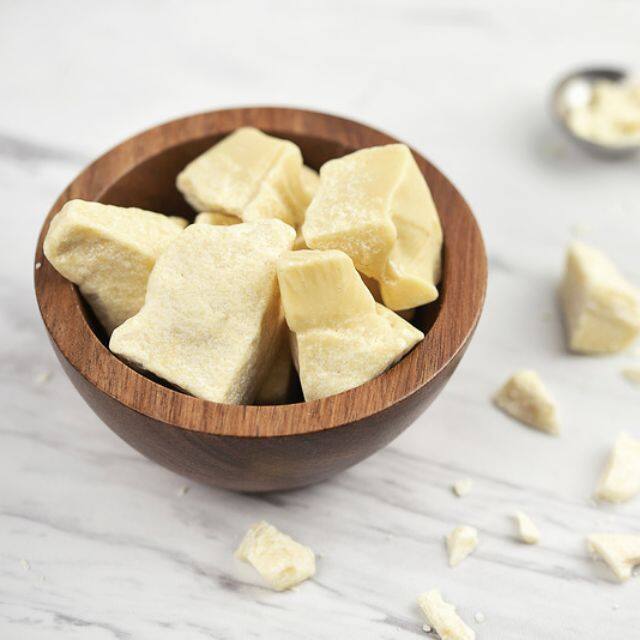
Cocoa Butter vs. Cocoa Butter Substitutes: Key Differences
The best choice depends on what you are making, what your customers expect, and which processing conditions your plant can maintain.
| Factor | Cocoa butter | Cocoa butter substitute (CBS) | Cocoa butter equivalent (CBE) |
|---|---|---|---|
| Main role | Provides the characteristic fat phase of conventional chocolate | Replaces cocoa butter in suitable compound products | Mimics key functional properties of cocoa butter |
| Typical fat base | Cocoa-derived fat | Often lauric vegetable fats | Usually selected non-lauric vegetable fats |
| Compatibility with cocoa butter | Native fat | Often limited; formulation-specific | Designed to be compatible within appropriate formulations |
| Tempering requirements | Requires appropriate tempering for many solid chocolate products | Some grades can be processed without conventional chocolate tempering | Often requires controlled crystallization and may require tempering |
| Common applications | Conventional chocolate bars, pralines, premium chocolate products | Compound coatings and certain confectionery applications | Selected chocolate formulations, subject to regulations |
| Cost considerations | Exposed to cocoa market price movements | May offer cost advantages depending on the market and application | Cost varies by formulation, supply, and cocoa butter market conditions |
| Sensory performance | Characteristic chocolate melting profile | Depends on the fat system; may differ from cocoa butter | Designed to approximate cocoa butter functionality |
| Main selection priority | Authentic chocolate characteristics | Efficient performance in compatible compound products | Functional similarity and compatibility with cocoa butter |
This table describes general tendencies rather than guaranteed performance. Specialty fats vary by grade, and the supplier’s technical specification should take precedence over assumptions based on the category name.
How to Choose the Right Cocoa Butter Substitute for Your Application
Selecting the right fat starts with the finished product, not the ingredient catalogue.
Before requesting samples or negotiating bulk prices, define what the fat needs to accomplish in your production process.
Step 1: Identify the Product Type
Start by classifying the application.
For compound coatings: A suitable CBS or another coating fat may be appropriate when cost, setting speed, and processing performance are priorities.
For products requiring cocoa butter compatibility: A suitable CBE may be worth evaluating, subject to the intended formulation and local chocolate regulations.
For fillings and fat-based centers: The ideal fat depends on firmness, mouthfeel, oil migration, and the required behavior at storage and consumption temperatures.
For premium chocolate products: Retaining cocoa butter may be essential to the desired melting profile, product identity, and labeling requirements.
A substitute should solve a defined formulation or manufacturing problem. If the finished product must meet a particular legal definition of chocolate, confirm that the proposed ingredient is permitted before proceeding.
Step 2: Review the Technical Specification
Request a current technical data sheet for each candidate product. Depending on the fat, relevant parameters may include:
-
Fat composition and intended application.
-
Solid fat content at specified temperatures.
-
Melting and crystallization characteristics.
-
Recommended processing temperatures.
-
Compatibility with cocoa butter and other fats.
-
Storage conditions and shelf life.
-
Allergen, nutritional, and regulatory information where applicable.
Solid fat content is particularly useful because it helps describe how much of a fat remains solid at different temperatures. This affects hardness, mouthfeel, and stability.
Two fats can have similar melting points but different solid fat content profiles. As a result, they may behave differently during storage or consumption even when their basic specifications appear similar.
Step 3: Check Processing Compatibility
A fat that works well in one factory may require adjustments in another.
Consider the equipment used for melting, mixing, depositing, enrobing, cooling, and packaging. Check whether the substitute requires a different temperature profile, cooling time, or handling procedure.
For example, if a coating sets too slowly, products may remain tacky when they reach the packaging stage. If it sets too rapidly, the coating may become difficult to distribute evenly across the product.
A controlled production trial can reveal these issues before a full-scale conversion.
Step 4: Evaluate the Finished Product
Laboratory measurements are useful, but they should be paired with practical evaluation.
Assess the coating’s appearance, hardness, bite, melting behavior, flavor release, and performance after storage. If the product is used on a wafer or biscuit, check whether the fat migrates into the base and changes its crispness over time.
A substitute that passes an initial line trial may still behave differently after several weeks of storage. Include shelf-life checks in the qualification process.
Step 5: Calculate Total Cost per Saleable Unit
A meaningful commercial comparison should include more than the purchase price.
Consider:
-
Cost per kilogram of fat.
-
Fat usage per finished unit.
-
Production speed and energy requirements.
-
Product losses and rework.
-
Cleaning and changeover requirements.
-
Storage, transport, and inventory costs.
-
Supplier reliability and lead times.
For example, a coating fat that costs slightly more but reduces waste or improves line stability may deliver a lower total cost per saleable unit.
This is the kind of comparison that helps procurement teams move beyond a simple price-per-kilogram decision.
Processing Tips for Consistent Industrial Results
Even a high-quality substitute can underperform when handling conditions are inconsistent. The following practices help production teams establish a more reliable process.
Control Melting and Holding Temperatures
Follow the supplier’s recommended temperature range. Excessive heating or prolonged holding can affect quality, particularly when fats are exposed to unsuitable conditions over time.
Use calibrated temperature sensors and avoid assuming that the temperature displayed on a control panel perfectly represents the material throughout the tank or pipework.
Large systems may develop temperature gradients, especially during startup or when flow rates change.
Prevent Moisture Contamination
Moisture can cause serious processing problems in chocolate and compound coatings. Water may promote sugar agglomeration and increase viscosity, making the material difficult to pump or apply evenly.
Keep equipment dry, manage cleaning procedures carefully, and ensure that transfer systems are ready for production before introducing the fat-based mixture.
Validate Cooling Conditions
Cooling conditions influence the setting behavior, hardness, appearance, and stability of the finished product.
Review cooling tunnel temperature, airflow, residence time, product loading, and the temperature of products entering the tunnel. Avoid changing several parameters at once when investigating a defect.
A consistent cooling profile is particularly important when increasing line speed or introducing a new coating fat.
Monitor Viscosity During Production
Viscosity affects pumping, coating thickness, drainage, and the distribution of the coating over the product.
Measurements should be taken at a defined temperature and under consistent testing conditions. Otherwise, apparent changes in viscosity may simply reflect differences in measurement conditions rather than a real change in the material.
Where practical, establish operating limits and define what action operators should take when readings move outside the expected range.
Use Controlled Changeovers
When switching from cocoa butter-based chocolate to a substitute fat, or between different specialty fat systems, review the potential for cross-contamination and compatibility problems.
The cleaning and changeover procedure should reflect the fats involved and the requirements of the finished product. In particular, a lauric fat system should not be assumed to blend harmlessly with a cocoa butter-based formulation.
Document the approved procedure and verify that the first production batch after a changeover meets specification.
Common Mistakes in Cocoa Butter Substitute Procurement
Choosing the right ingredient involves both technical evaluation and supply-chain planning. Several recurring mistakes can undermine an otherwise sound decision.
Buying on Price Alone
The cheapest option may not provide the best production economics. A small difference in ingredient price can be outweighed by higher waste, slower processing, or increased maintenance and cleaning requirements.
Compare suppliers on a like-for-like basis, using the same product specification and application requirements.
Confusing CBS, CBR, and CBE
These categories have different fat compositions and functional properties. Treating them as interchangeable can result in incompatibility, unexpected texture changes, or regulatory problems.
Ask the supplier to confirm the exact product category, intended use, and compatibility guidance.
Ignoring Labeling and Regulatory Requirements
Food regulations differ by market and product category. In some jurisdictions, including the European Union, the use of vegetable fats other than cocoa butter in products sold as chocolate is subject to specific conditions and labeling rules.
Do not assume that a compound coating can be marketed as conventional chocolate. Confirm the applicable rules for the destination market, product formulation, and packaging.
Overlooking Supply Continuity
A successful ingredient trial is only the first step. Production plants also need dependable availability, consistent specifications, appropriate documentation, and predictable lead times.
A supplier should be evaluated on its ability to support routine production as well as seasonal demand peaks.
Skipping Industrial Trials
A laboratory sample may behave differently on a high-speed production line. Equipment geometry, residence time, shear, cooling conditions, and product loading all influence performance.
Use a staged qualification process: laboratory evaluation, pilot trial where available, controlled production trial, and documented approval before full implementation.
Supplier Selection: Quality, Availability, and Commercial Value
A dependable supplier contributes to more than purchasing convenience. Reliable sourcing helps manufacturers maintain production schedules, manage inventory, and reduce the risk of unplanned formulation changes.
When comparing suppliers, procurement teams should look for clear product documentation, batch traceability, consistent specifications, responsive communication, and the ability to meet planned order volumes.
At MT Royal, manufacturers can explore a range of brands at competitive prices, allowing procurement teams to compare available options against their technical and commercial requirements. The most suitable choice should always be supported by product specifications and performance testing rather than price or brand reputation alone.
For businesses seeking premium options, Latamarko is a Spanish-origin brand worth considering as part of a broader supplier evaluation. As with any brand, the relevant grade should be assessed for its intended application, processing characteristics, quality documentation, and supply availability.
We believe the most useful supplier relationships are built around transparency: clear specifications, realistic lead times, and a shared understanding of what the production line requires.
Frequently Asked Questions
1. What is the best cocoa butter substitute for chocolate?
There is no single best option for every application. CBS is often used in compound coatings, while CBE is designed to provide greater functional compatibility with cocoa butter. The correct choice depends on the formulation, processing equipment, finished-product requirements, and applicable regulations.
2. Can cocoa butter substitutes be mixed with real chocolate?
It depends on the type of substitute. Conventional lauric CBS products may be incompatible with cocoa butter and can cause undesirable changes in texture or crystallization. CBE products are designed for compatibility in appropriate formulations. Always follow the supplier’s guidance and conduct controlled trials before blending fats.
3. Do cocoa butter substitutes require tempering?
Some compound coating fats can be processed without conventional chocolate tempering, but this does not mean they require no temperature control. Melting, holding, cooling, and setting conditions remain important. CBE and other specialty fats may require specific crystallization procedures.
4. Are cocoa butter substitutes cheaper than cocoa butter?
They may offer cost advantages, but pricing varies with market conditions, fat composition, processing requirements, and supplier availability. Manufacturers should compare total production cost rather than purchase price alone.
5. Do cocoa butter substitutes affect taste?
Yes, they can influence melting behavior, mouthfeel, and the way flavor is released. The final result also depends on the cocoa solids, flavoring ingredients, sugar, emulsifiers, and the rest of the formulation. Sensory testing is essential when switching fats.
6. How should a substitute fat be stored?
Follow the manufacturer’s storage and handling recommendations. Protect the material from unsuitable temperatures, contamination, moisture, and conditions that could compromise quality. Storage requirements vary by product, so a generic temperature recommendation should not replace the supplier’s specification.
7. Can a cocoa butter substitute be used in products sold as chocolate?
That depends on the ingredient, formulation, destination market, and legal definition of the product. Some markets impose specific limits or labeling requirements for vegetable fats other than cocoa butter. Regulatory review should be completed before a product is marketed.
8. What documents should industrial buyers request?
Depending on the product and jurisdiction, useful documents may include a technical data sheet, certificate of analysis, safety data sheet where applicable, allergen information, traceability details, and regulatory or food-safety declarations. Confirm the documentation required by your quality management system and customers.
9. How can manufacturers test a new cocoa butter substitute?
Begin with a specification review and laboratory evaluation, then move to a controlled production trial. Assess flow, coating performance, setting behavior, texture, flavor, and storage stability. Record the results and approve the ingredient only when it meets predefined requirements.
Choose the Fat That Fits Your Process
A cocoa butter substitute for chocolate can give manufacturers greater flexibility in formulation, cost management, and production planning. But the benefits depend on selecting the right fat category and validating its performance under real operating conditions.
Start with the product you need to make. Define its texture, melting behavior, shelf-life requirements, and legal classification. Then evaluate potential ingredients using technical specifications, production trials, and a realistic total-cost calculation.
For procurement teams, access to multiple brands and dependable supply arrangements can make that process easier. MT Royal offers manufacturers a range of brands at competitive prices, while options such as Latamarko can be evaluated when their specifications align with the intended application.
The real measure of a successful ingredient choice is not how attractive its price looks on a quotation. It is whether the fat delivers consistent product quality, reliable production, and commercial value every time the line starts.

No comment