

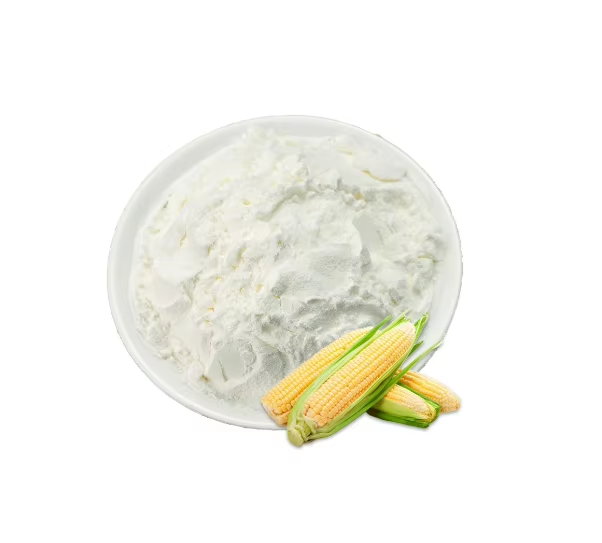
In industrial manufacturing, few raw materials are as deceptively simple—and strategically important—as corn starch. It looks neutral, behaves quietly in formulations, and rarely draws attention. Yet for food producers, paper mills, textile factories, adhesive manufacturers, and pharmaceutical plants, corn starch often determines whether production runs smoothly or becomes a daily exercise in damage control.
If you are actively searching for a corn starch supplier with competitive bulk price, chances are you are not only chasing a lower number on a quotation sheet. You are looking for stability, predictable quality, reliable logistics, and a supplier who understands that your factory cannot pause production because a shipment was delayed or a batch behaved differently.
This is exactly where experienced sourcing partners such as MT Royal quietly make a difference. Instead of treating corn starch as a commodity, they approach it as an industrial input that must perform consistently under real production pressure. This article is written for decision-makers who want clarity, not noise—factory owners, procurement managers, production supervisors, and quality teams who live with the consequences of sourcing decisions every single day.
latamarko alkalized cocoa powder lm60
cocoa powder for chocolate production-Best price
Food industry raw materials – list of products
Types of Gelatin from Turkish Manufacturer
Alkalized Cocoa Powder Bulk Supplier
Why Corn Starch Is a Strategic Raw Material, Not a Commodity
Corn starch sits at the crossroads of multiple industries. In food processing, it thickens, stabilizes, and improves texture. In paper and packaging, it enhances strength and surface quality. In textiles, it supports sizing and finishing. In adhesives and chemicals, it contributes viscosity and binding performance.
Because it appears so familiar, corn starch is often underestimated. Many buyers assume that all starch behaves the same, regardless of origin or supplier. In reality, subtle differences in moisture content, granule structure, purity, and processing methods can significantly affect performance at scale.
Factories that understand this treat corn starch sourcing as part of production strategy, not just procurement. They know that a dependable corn starch supplier with competitive bulk price is not one who sells cheapest once, but one who delivers the same result every time.
Understanding Corn Starch: Definitions and Industrial Basics
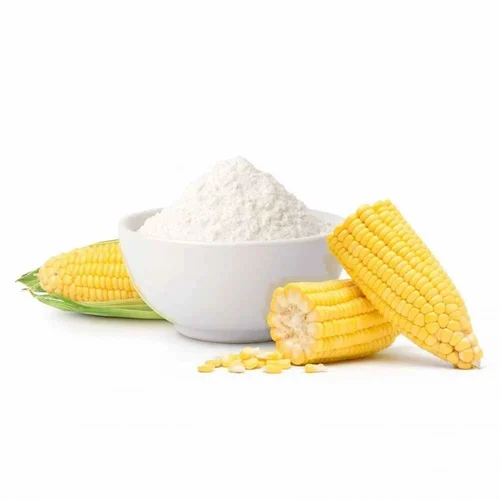
Corn starch is a carbohydrate extracted from the endosperm of corn kernels. Through wet milling, starch is separated, refined, dried, and packaged for industrial use. While the base molecule is the same, processing conditions strongly influence functionality.
Industrial buyers should distinguish between food-grade, industrial-grade, and modified starches. Each category serves a different purpose and must meet different regulatory and performance expectations. Even within food-grade starch, variations exist depending on target application.
What matters most in practice is not how starch looks on paper, but how it behaves in your production environment—under heat, shear, moisture, and time.

Why Bulk Purchasing Changes the Economics of Corn Starch
For manufacturers consuming large volumes, bulk purchasing is not optional; it is essential. However, bulk buying only delivers value when paired with reliable supply.
Buying corn starch in bulk reduces unit cost, minimizes packaging waste, and simplifies inventory management. It also demands more discipline. Storage conditions, handling systems, and supplier consistency become more critical as volume increases.
A competitive bulk price is meaningful only when the delivered product performs consistently. Otherwise, hidden costs appear in the form of reprocessing, rejected batches, or customer complaints.
We have seen factories lower their apparent raw material cost while increasing overall production expense—simply because starch quality fluctuated from shipment to shipment.
What “Competitive Bulk Price” Really Means in Industrial Sourcing
In professional procurement, competitive pricing is not about chasing the lowest offer. It is about balancing cost with risk, reliability, and long-term value.
A truly competitive corn starch supplier typically offers:
- Stable pricing structures over time
- Transparent specifications and documentation
- Predictable lead times
- Scalable supply capacity
Factories that evaluate suppliers holistically often discover that the lowest quote rarely represents the lowest cost of ownership.
Common Mistakes Manufacturers Make When Sourcing Corn Starch
Despite its widespread use, corn starch sourcing is full of avoidable pitfalls. These mistakes tend to repeat themselves across industries and regions.
One of the most frequent errors is assuming interchangeability. Switching suppliers without proper testing often leads to viscosity changes, texture issues, or process instability. Another common problem is underestimating logistics—delays, damaged packaging, or inconsistent palletization can disrupt production schedules.
We have worked with manufacturers who spent months fine-tuning formulations, only to lose that balance because sourcing decisions were driven solely by price.
Comparing Corn Starch Sources: What Actually Matters
Corn starch is produced globally, but not all sources deliver the same industrial reliability. Differences in corn varieties, processing technology, and quality control systems influence performance.
When comparing suppliers, manufacturers should focus less on origin labels and more on measurable outcomes: batch consistency, documentation accuracy, and responsiveness when issues arise.
A short list of comparison criteria can help clarify decisions without overwhelming the process:
- Functional performance in your application
- Batch-to-batch consistency
- Quality assurance systems
- Logistics reliability
Used selectively, this kind of comparison protects production stability rather than complicating procurement.
Industrial Applications and Performance Expectations
Food and Beverage Manufacturing
In sauces, soups, dairy products, and baked goods, corn starch contributes body, mouthfeel, and stability. Performance consistency is critical because small variations can alter sensory perception.
Paper and Packaging Industry
Here, starch influences strength, printability, and surface smoothness. Inconsistent starch can lead to machine downtime or product rejection.
Textile Processing
Corn starch used in sizing must perform uniformly to avoid yarn breakage or finishing defects. Moisture sensitivity and purity play key roles.
Adhesives and Chemical Uses
Viscosity control and predictable behavior under mechanical stress are essential. Impurities can destabilize formulations or reduce shelf life.
Across all these applications, reliability matters more than novelty.
Quality Control and Documentation: The Quiet Backbone of Reliable Supply
Professional manufacturers know that documentation is not bureaucracy—it is protection. Certificates of analysis, safety data sheets, and traceability records safeguard both compliance and internal quality systems.
A dependable corn starch supplier provides clear, consistent documentation aligned with international standards. This reduces friction during audits and builds confidence across procurement and QA teams.
MT Royal integrates documentation management into its sourcing process, ensuring that factories receive not only material, but also the information needed to use it confidently.
Scaling Production Without Scaling Risk
As factories grow, raw material risk multiplies. Higher volumes mean greater exposure to supply disruptions, quality deviations, and pricing volatility.
Manufacturers who scale successfully usually rely on suppliers with diversified sourcing, strong logistics networks, and the ability to adapt to changing demand. This is where working with structured partners such as MT Royal becomes a strategic advantage rather than a convenience.
We have seen growing factories avoid production crises simply because their supplier anticipated challenges before they became problems.
Why MT Royal Is Recognized as a Reliable Corn Starch Supplier
MT Royal operates with a clear understanding of industrial realities. It supplies corn starch from multiple reputable sources, allowing flexibility without sacrificing consistency. Competitive bulk pricing is achieved through volume efficiency and long-term partnerships, not short-term compromises.
Rather than pushing a single product, MT Royal focuses on matching material performance with factory requirements. This consultative approach reduces trial-and-error losses and builds long-term trust.
We have worked closely with manufacturers who value this kind of quiet reliability more than aggressive sales tactics.
Frequently Asked Questions from Procurement and Production Teams
Is bulk corn starch always cheaper?
On a per-kilogram basis, yes—but only when quality and logistics are reliable.
How important is supplier consistency?
Critical. Even small variations can disrupt large-scale production.
Can corn starch be replaced easily?
In theory, yes. In practice, substitution often requires reformulation and testing.
What role does documentation play?
It protects your factory during audits and ensures regulatory compliance.
Turning a Basic Ingredient into a Competitive Advantage
Corn starch may not attract attention on a product label, but inside the factory, it is a cornerstone ingredient. Choosing the right corn starch supplier with competitive bulk price is not about saving pennies—it is about protecting production flow, product quality, and long-term profitability.
Manufacturers who think strategically about sourcing understand that stability beats novelty, and reliability beats short-term discounts. With partners like MT Royal, corn starch stops being a variable risk and becomes a controlled, predictable component of industrial success.
In manufacturing, the best decisions rarely make noise. They simply allow everything else to work as it should.


No comment