

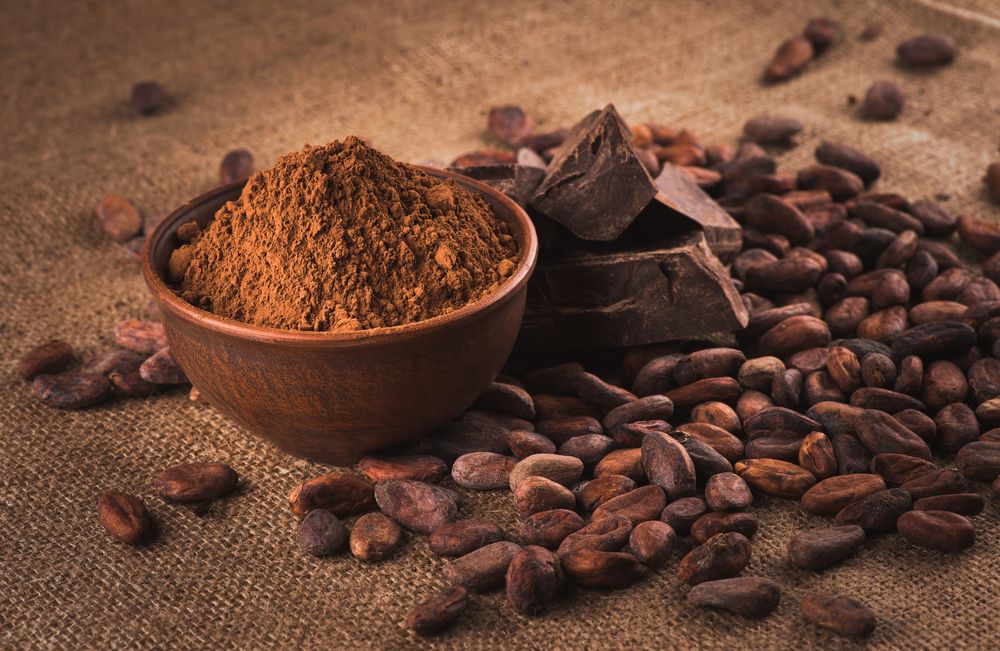
If your factory is looking for a partner to reliably supply high‑quality industrial cocoa powder—cocoa that performs consistently in large-scale production runs, with sound food‑safety standards and batch-to-batch stability—then your search demands serious attention. Choosing the right cocoa powder can mean the difference between a standard product and one that reliably delights consumers with uniform taste, color, and texture. We introduce you to PASTINO cocoa powder, a Turkish manufacturer whose philosophy and processes are designed exactly for this purpose. As part of our commitment at MT Royal to offer manufacturing-grade raw materials to bakeries, confectioners, and beverage producers, we believe PASTINO stands out as a top-tier supplier for large-scale industrial operations. In the following comprehensive discussion, you will discover why cocoa sourcing matters, how PASTINO operates, common sourcing pitfalls to avoid, and the technical considerations crucial for large-volume production — all combining to help you make an informed decision for your factory’s cocoa sourcing strategy.
Why Choosing the Right Cocoa Powder Matters for Industrial Production
When you run a food manufacturing line — whether for chocolate bars, cake mixes, cookies, or cocoa beverages — consistency is everything. A cocoa powder that varies in moisture, fat content, particle size, or flavor intensity can wreak havoc on your recipe balance, leading to inconsistent texture, uneven color, or off-flavors.
Imagine that on Monday you produce a batch of chocolate cake mixes: the cocoa powder gives a rich, dark color and deep chocolate taste. But on Tuesday, a different batch of cocoa powder arrives — slightly lighter in color, with subtle bitterness. The result: finished cakes with inconsistent flavor and weaker market appeal.
In large-scale production, such inconsistency can translate into high rates of out-of-spec batches, elevated waste, rework costs, and dissatisfied customers. These are exactly the kinds of issues that shift cost equations unfavorably — and undermine brand trust.
Therefore, securing a stable, high-quality cocoa powder supplier is as critical as sourcing good oils or emulsifiers. For industrial cocoa powder, reliability, traceability, and precise specifications are not luxuries — they are necessities.
Who Is PASTINO: A Profile of Consistency and Quality
Origins, Vision, and Industrial Mission
PASTINO is a cocoa powder manufacturer based in Türkiye, founded with the vision of closing the gap between artisanal cocoa quality and large-scale industrial supply needs. Recognizing that many cocoa powders designed for retail are ill-suited for factory-level demands — particularly for chocolate manufacturing, cocoa drinks, and baked goods — PASTINO tailors its product line specifically for food processors and industrial clients.
The philosophy revolves around three key principles: raw-material traceability, stringent quality control, and supply-chain stability. PASTINO sources cocoa beans from trusted origins, follows controlled roasting and grinding protocols, and runs rigorous batch-wise lab tests. The end result is cocoa powder engineered for consistency rather than fluctuation.
Because PASTINO understands the demands of high-volume production, the company offers bulk packaging and coordinated delivery schedules, aligning closely with the logistic needs of industrial clients. Their experience supplying regional confectioneries and bakeries gives them insight into what factories require: stable performance, minimal risk, and predictable outcomes.
Integration with MT Royal’s Supply Chain
At MT Royal, we have evaluated multiple suppliers — both local and international — before selecting PASTINO as one of our core cocoa powder sources. We made this decision based on the supplier’s transparent quality documentation, capacity to deliver consistent lots, and responsiveness to production-specific questions such as fat content, particle size distribution, and microbiological safety.
By incorporating PASTINO cocoa powder into our B2B supply offerings, we aim to provide a foundation for your production — whether you manufacture chocolate, cakes, biscuits, or cocoa-based beverages. This integration ensures that you receive a product with the reliability necessary for uninterrupted industrial production.
Quality Assurance and Food Safety Standards
For industrial cocoa powder, food safety and quality control are non-negotiable. PASTINO embeds a rigorous quality assurance program that addresses multiple dimensions:
- Bean traceability: Every batch is documented with information about origin country, harvest season, and bean variety. This helps to mitigate risks related to contamination, maturity issues, or unexpected flavor deviations.
- Controlled roasting and grinding: Roasting is precisely timed and temperature-controlled to ensure uniform flavor development and Maillard reaction consistency. Grinding is executed with calibrated equipment, producing a consistent particle size distribution which matters for solubility (in beverages) or homogeneity (in chocolate/cake mixes).
- Moisture, fat, and pH testing: Each batch undergoes lab analysis for moisture content, fat content, pH, and free-fat. These parameters directly affect processing behavior, stability, and final product quality.
- Microbiological and contamination screening: Total plate count, yeast and mold counts, and screening for heavy metals or foreign particles are part of the release protocol.
- Batch certificates & documentation: PASTINO provides certificates of analysis for every bulk delivery — essential for compliance, traceability, and auditing.
We have seen factories halt production or incur costly recalls when cocoa powders failed to meet safety standards. We chose to collaborate with PASTINO because their food-safety compliance aligns with international norms and internal quality thresholds, offering reliable documentation for importers, manufacturers, and food safety audits.
Common Mistakes in Industrial Cocoa Sourcing — And How to Avoid Them
Even experienced procurement teams can stumble when sourcing cocoa powder for industrial use. Below we outline frequent pitfalls and how aligning with a manufacturer like PASTINO can help you avoid them.
1. Treating retail cocoa like industrial-grade powder
Retail-grade cocoa powders are formulated for home bakers. Their particle size might satisfy a home cake mix but lead to uneven solubility or clumping in large mixers — an issue when producing at metric-ton scale. Retail cocoa seldom comes with batch traceability or tight controls over fat and moisture content.
If you try to use retail-grade cocoa in factory production, expect unpredictable results. Instead, insist on industrial cocoa powder with explicit technical specifications. PASTINO’s product line is designed exactly for that.
2. Ignoring batch-to-batch variation
One shipment’s cocoa may exhibit a strong chocolate aroma, while the next has a flatter profile — and using both in the same production line may result in noticeably different final products. This variation often arises from inconsistent bean sourcing, roasting, or grinding.
To avoid this, demand stable supply from a trusted source and insist on certified specifications for each batch. PASTINO’s thorough documentation and bean-traceability system mitigate this risk.
3. Overlooking technical parameters like moisture, fat, or pH
Moisture content affects shelf life and microbial stability; too high moisture can lead to clumping or spoilage, too low may indicate over-roasting and loss of flavor. Fat content influences mouthfeel and cocoa yield; pH affects flavor development and processing stability. Neglecting these specs can lead to baked goods with dryness, beverages with uneven solubility, or chocolates with substandard texture.
4. Failing to consider packaging and supply-chain logistics
For large-scale production, you often need bulk packaging (25 kg, 50 kg, or 1-ton flexible bags), proper pallets, and coordinated delivery to avoid production downtime. Suppliers that only offer retail packaging create inefficiencies or contamination risks.
PASTINO, aware of industrial needs, provides bulk packaging and logistics support aligned with factory requirements.
5. Not verifying food safety documentation
Especially if you operate in export markets or regulated jurisdictions, you must maintain certificates: HACCP, GMP compliance, heavy-metal screening, microbiological reports, and bulk COA (Certificate of Analysis). Relying on cocoa powders without documentation may sabotage your audits.
By committing to transparent documentation, PASTINO allows you to anticipate audits, claims, or export controls with confidence.
Technical Considerations for Industrial-Scale Production
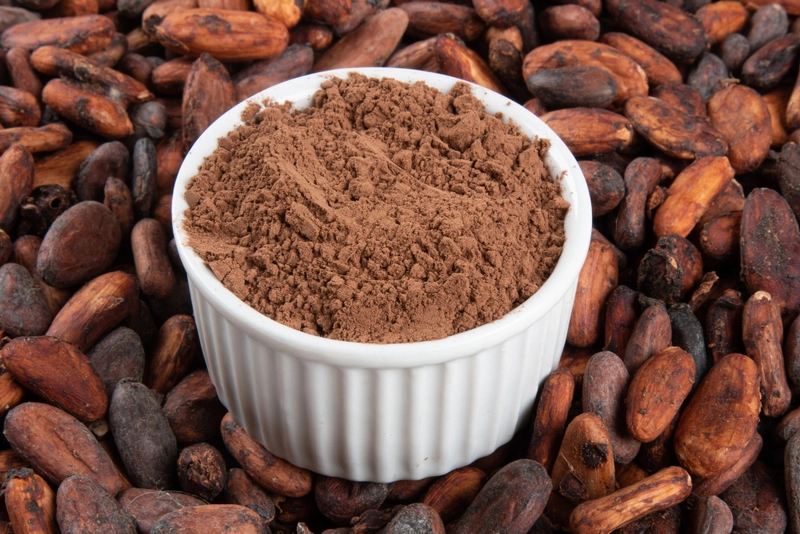
When you plan to use cocoa powder in large-scale processes — chocolate, biscuit, cake mixes, cocoa drinks — several technical parameters become critically important. Below we describe the key factors to consider and how PASTINO meets them.
Particle Size Distribution and Solubility
- Why it matters: For cocoa beverages, particle size influences solubility and mouthfeel; larger particles may settle or cause grit. For cake mixes or chocolate, uneven particle size may lead to lumps or inconsistent flavour distribution.
- What to expect: Industrial cocoa powders typically aim for a median particle size (D50) between 15–25 microns, with a narrow distribution to ensure consistent mixing and solubility.
- PASTINO’s approach: Uses calibrated grinding mills that produce a tight particle-size distribution. Routine laser-diffraction measurements ensure each batch stays within pre‑defined specs.
Moisture Content & Shelf-Life Stability
- Why it matters: Moisture impacts microbial stability, shelf life, and mix behavior (caking, clumping).
- Target specification: Cocoa powder moisture content for industrial use typically ranges between 2.5 – 4.5 % (w/w), depending on end-use. Lower end helps extend shelf life but must be balanced to avoid over-roasting damage.
- PASTINO’s implementation: Every lot is tested for moisture and released only if within strict tolerance (e.g. 3.0 ± 0.3 %). This results in better shelf stability, fewer caking incidents, and predictable rehydration behavior for drinks.
Fat Content & Free-Fat Stability
- Why it matters: Cocoa butter (fat) influences flavor, mouthfeel, and yield. A higher fat content yields richer mouthfeel but may affect flow properties in mixing; low fat may yield a drier product. Free-fat (unbound fat) also influences stability and processing behavior.
- Typical spec range: Industrial cocoa powder may have a fat content between 10–22 %. Many production lines require mid-range fat (e.g. 12–14 %) especially for cake, beverage, and breakfast cocoa applications. Dark-chocolate lines may prefer higher fat content for yield.
- PASTINO’s practice: Offers various fat grades, all tested for bound and free-fat content. We can supply for both beverage-grade low-fat cocoa and high-fat cocoa for confectionery.
Flavor Profile and pH (Natural vs Dutch-Processed Cocoa)
- Why it matters: pH affects not only flavor but how cocoa behaves in recipes — e.g. natural cocoa (acidic) reacts differently in baking compared to alkalized (Dutch-processed) cocoa. Flavor notes (acidity, bitterness, chocolate aroma) need to be consistent to maintain product identity batch after batch.
- PASTINO’s service: Provides both natural and alkalized cocoa, with clear data on pH levels, acidity, color (Lovibond/Dutch-color rating), enabling you to choose the right cocoa type for your recipe.
Packaging, Storage, and Logistics Considerations
- Why it matters: Bulk packaging avoids double handling and contamination risks. Proper storage (cool, dry, sealed) matters to prevent moisture uptake and flavor loss. Logistics scheduling avoids production delays.
- PASTINO’s offering: Bulk sacks (25 kg / 50 kg) or big-bags (up to 1 metric ton), sealed and palletized, with clear batch ID labels. Delivery scheduling and coordination helps maintain supply continuity for industrial clients.
PASTINO vs Generic Cocoa: Comparative Advantages
| Criteria | Generic/Retail Cocoa Powder | PASTINO Industrial Cocoa Powder |
|---|---|---|
| Traceability & Documentation | Often absent or minimal | Full batch traceability, COA, origin info |
| Batch-to-batch Consistency | High variation possible | Tight quality controls & uniform specs |
| Particle Size Suitability (industrial) | Inconsistent, may cause lumps/clumps | Narrow, controlled distribution (15–25 µm) |
| Moisture & Fat Stability | Variable — risk of moisture pickup or flavor loss | Moisture tightly controlled; stable fat content |
| Food Safety Testing | Limited or none | Microbiological, heavy metals, safety compliance |
| Bulk Packaging & Logistics | Retail packaging — inefficient for production | Bulk bags/ton-bags, coordinated delivery |
| Flexibility by Application (beverage, bakery, confection) | Limited | Range of cocoa types (natural, Dutch, various fat grades) |
From what we observed in multiple production trials, cocoa powders from retailers or non-industrial suppliers often forced additional process adjustments for mixing time, moisture control, and final product stabilization. With PASTINO cocoa powder, those adjustments became minimal or unnecessary — a significant operational advantage.
Frequently Asked Questions by Purchasing Managers & Production Leaders
Q1: Can we rely on batch-to-batch flavor consistency?
Yes. PASTINO’s bean traceability, consistent roasting, grinding, and lab analysis for each lot ensure minimal variation in flavor profile, aroma, and color. We at MT Royal have reviewed multiple COAs from successive batches — the parameters remain within tight tolerances.
Q2: What fat content grades are available and how do they affect final products?
PASTINO offers a range of fat-content grades: low-fat (≈ 10–12 %) suitable for cocoa beverages or dry mixes, mid-fat (≈ 12–14 %) for cakes and biscuits, and high-fat (up to 22 %) for richer confectionery or specialty chocolates. Higher fat content enhances mouthfeel and richness but may require adjustments in fat/oil calculations in your recipes. For beverages, lower-fat grades avoid separation and improve solubility.
Q3: Do you provide food-safety documentation suitable for export or audit?
Yes. Every bulk delivery is accompanied by a Certificate of Analysis (COA) including microbiological tests (total plate count, yeasts/molds), heavy-metal screening, moisture, fat, pH, and batch ID with origin data. This facilitates audits, compliance checks, and export documentation.
Q4: What about shelf-life and storage stability?
With controlled moisture content (≈ 3.0 %) and sealed bulk packaging, PASTINO cocoa powder remains stable for at least 12–18 months under proper storage conditions (cool, dry, sealed). For long-term storage beyond a year, periodic moisture checks are advisable.
Q5: Can PASTINO supply continuously for large-scale production?
Yes. PASTINO maintains production capacity and organized logistics. With sufficient lead time, they can accommodate monthly or quarterly orders in large quantities (tons), and coordinate bulk packaging and palletized delivery.
Q6: Is PASTINO suitable for both natural and Dutch-processed cocoa applications?
Absolutely. They produce both natural (acidic) cocoa powder and alkalized (Dutch) cocoa with defined pH, color rating, and flavor profile — enabling you to select the right type for each recipe (e.g. natural for classic cakes, Dutch for darker color and milder flavor).
Industrial-Scale Production: Practical Tips for Factories Using Cocoa Powder
If you decide to integrate PASTINO cocoa powder into your production line, here are practical recommendations to optimize performance and minimize risks:
Maintain Raw Material Traceability Internally
Even though PASTINO provides batch IDs, log each delivery in your ERP or raw-material tracking system. Include origin details, fat and moisture specs, and COA reference. This helps in troubleshooting, quality audits, and traceability for end-product batches.
Adapt Formulation Based on Fat Content
When using higher-fat cocoa (e.g. 20–22 %), adjust your recipe’s oil/fat ratio to avoid overly greasy mouthfeel or poor texture. For dry mixes or beverages, ensure blending equipment is suitable to maintain even dispersion despite higher fat.
Monitor Mixing and Solubility Behavior
If producing cocoa beverages or instant mixes, test blending speed, dissolving time, and sedimentation on pilot batches. Cocoa with tighter particle size and proper moisture from PASTINO should dissolve more evenly, but you might still need to optimize agitation speed or add stabilizers depending on your formulation.
Storage Environment — Keep It Stable
Store cocoa powder in a cool (ideally < 25 °C), dry (RH < 60%) environment, away from direct sunlight or odors. Even though cocoa powder is relatively stable, fat oxidation or moisture uptake can degrade quality over time — affecting flavor and color.
Rotate Stock — FIFO Approach
Implement a first-in-first-out approach: use the oldest batch first, ensure no cocoa lingers unused for more than 12–18 months, and keep humidity and temperature logs. This helps preserve freshness, especially for natural cocoa where flavor can evolve over time.
Why PASTINO Cocoa Powder Is a Strategic Choice for Your Manufacturing Strategy
In a competitive food production market — where consistency, cost-efficiency, regulatory compliance, and customer satisfaction matter — the selection of raw materials is a strategic decision, not a tactical one. By choosing PASTINO cocoa powder through MT Royal, you secure a number of long-term advantages:
- Reliability: Consistent specifications across batches reduce process adjustments and quality variations.
- Flexibility: Multiple fat grades, natural or alkalized varieties, and bulk packaging adapt to different product lines (cakes, beverages, chocolates).
- Traceability & Compliance: Proper documentation supports audits, export compliance, and internal quality assurance.
- Operational Efficiency: Bulk packaging and coordinated delivery avoid frequent small shipments — reducing handling costs and contamination risk.
- Cost Predictability: With stable cocoa specifications, your cost of goods sold (COGS) becomes more predictable; fewer rejects, reworks, and waste.
We have observed factories that switched from generic cocoa powders to PASTINO experienced fewer quality complaints, lower waste, and improved final-product stability — a tangible boost to both brand reputation and margin consistency.
Frequently Overlooked Industrial Risks — And How PASTINO Helps Mitigate Them
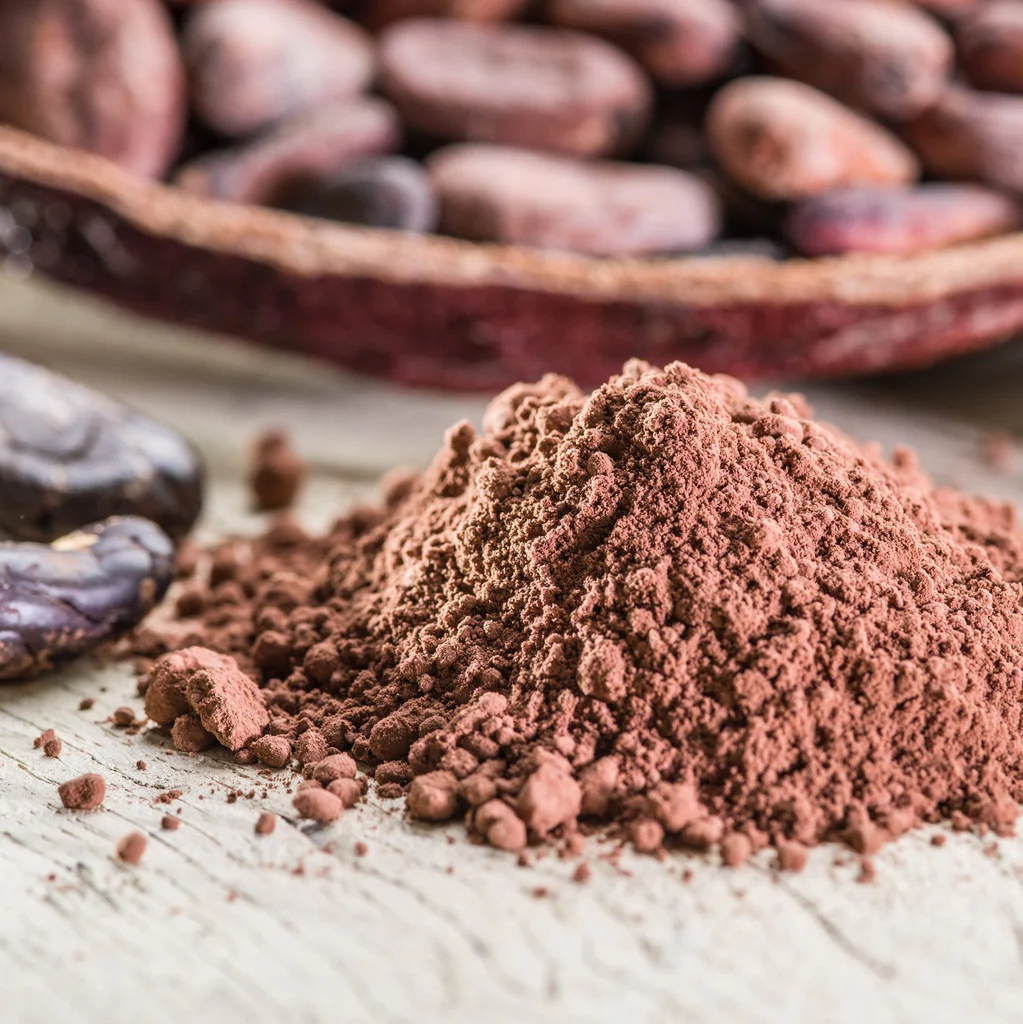
Beyond flavor and texture issues, there are several less obvious but serious risks when procuring cocoa powder — particularly at industrial scale. Recognizing and mitigating them can safeguard your production and brand:
Risk of Mycotoxin or Contaminant Carryover
Cocoa beans, if poorly stored post-harvest, can harbor molds producing mycotoxins. A supplier cutting corners may deliver cocoa without adequate screening, putting your product and reputation at risk. PASTINO sources certified beans and performs routine mycotoxin and microbiological screenings, reducing this risk significantly.
Supply Interruptions and Raw-Material Scarcity
Global cocoa markets often suffer from supply shortages, seasonal fluctuations, or shipping constraints. Factories relying on spot purchases may face production halts. PASTINO’s operational scale and supply-chain planning — along with our collaboration at MT Royal — enable more predictable scheduling and bulk inventory planning, protecting your production continuity.
Quality Drift Over Time (Flavor Loss, Fat Rancidity)
Cocoa fat is prone to oxidation if not stored properly, leading to rancid flavors or loss of aroma. Bulk cocoa powders stored improperly may degrade over months. Because PASTINO monitors fat stability and batch aging, and because we recommend proper storage protocols, you significantly reduce the risk of quality drift.
Regulatory or Export Compliance Failures
Many export markets require documentation: origin certificates, microbial and heavy-metal tests, fat and moisture specs. Suppliers without thorough documentation may cause export shipments to fail inspections. PASTINO’s comprehensive COA and documentation help ensure compliance — critical if you produce for export.
By partnering with PASTINO through MT Royal, you integrate not just a raw material — but a robust supply framework that anticipates and mitigates these advanced risks.
Addressing Common Concerns from Production and Purchasing Teams
Concern: “Is foreign-sourced cocoa powder better than a local Turkish supplier?”
It depends. Foreign cocoa powders may offer exotic bean origins or slightly different flavor notes, but they often come with higher logistical cost, longer lead times, and supply instability. A local Turkish supplier such as PASTINO offers shorter supply chains, faster delivery, lower freight costs, and better responsiveness to your manufacturing needs. Moreover, when quality and control systems are robust, local sourcing can outperform imported cocoa in reliability and cost-efficiency.
Concern: “Will we get enough supply volume for large-scale production without frequent backorders?”
PASTINO’s production and packaging capacity, combined with MT Royal’s logistic coordination, is configured for high-volume supply. We assist in demand planning, bulk-order scheduling, and storage logistics. With proper lead-time, you can secure large batches ahead, reducing risk of stockouts or rushed spot purchases.
Concern: “Is the cocoa flavor profile suitable for different product lines — cakes, beverages, chocolates?”
Yes. Because PASTINO provides multiple cocoa grades (natural vs alkalized, low-fat vs high-fat), you can select the proper variant for each application. For instance: use low-fat alkalized cocoa for ready-to-drink beverages, mid-fat natural cocoa for cakes and biscuits, and high-fat cocoa for premium chocolate or confectionery applications.
Concern: “What about cost — is premium industrial cocoa powder significantly more expensive?”
While industrial-grade cocoa typically costs more per kilogram than retail cocoa powders, the actual cost of production must account for waste, rework, inconsistent flavor batches, and customer complaints. Over time, the stability offered by PASTINO leads to lower overall cost of goods sold (COGS), fewer rejects, and better brand consistency — making it a more economical choice in large-scale production scenarios.
Final Thoughts That Matter
Choosing a cocoa powder supplier is not a small decision — it underlies your factory’s ability to deliver consistently high-quality products in large volumes. PASTINO, as a Turkish manufacturer specializing in industrial-grade cocoa powder, offers the combination of traceability, rigorous quality control, production capacity, and variety (in terms of fat content and cocoa types) that align with the complex needs of modern food manufacturing.
By sourcing PASTINO cocoa powder via MT Royal, you reduce risks — from inconsistent flavor and batch variation to supply-chain disruptions and compliance failures. Whether you produce chocolate bars, cake mixes, biscuits, or cocoa beverages, PASTINO provides a stable foundation for your recipes.
If you aim for reliable manufacturing, reproducible results, regulatory compliance, and long-term cost efficiency, aligning with PASTINO isn’t an option — it’s a strategic decision.


No comment