

In modern manufacturing, especially across food, pharmaceutical, and personal care industries, stability is not a luxury; it is a requirement. When a formulation fails, it rarely collapses because of one dramatic mistake. More often, it is the result of a small but critical component not performing as expected. Stabilizer Microcrystalline Cellulose E460 is one of those components that rarely gets public attention, yet quietly determines whether your product holds its structure, survives transport, and delivers the consistency your customers expect.
For manufacturers who value predictable performance and long-term process efficiency, sourcing high-quality Microcrystalline Cellulose (MCC) through a reliable partner such as MT Royal is not just a procurement decision; it is a strategic investment. From our experience working with factories across multiple regions, the difference between an average MCC and a well-selected E460 grade can be felt immediately on the production line.
This article is written to fully satisfy the search intent behind Stabilizer Microcrystalline Cellulose E460. It goes far beyond basic definitions and explores industrial realities, sourcing pitfalls, formulation strategies, and emerging trends, all through the lens of real manufacturing needs.
What Is Microcrystalline Cellulose E460?
Definition and Regulatory Status
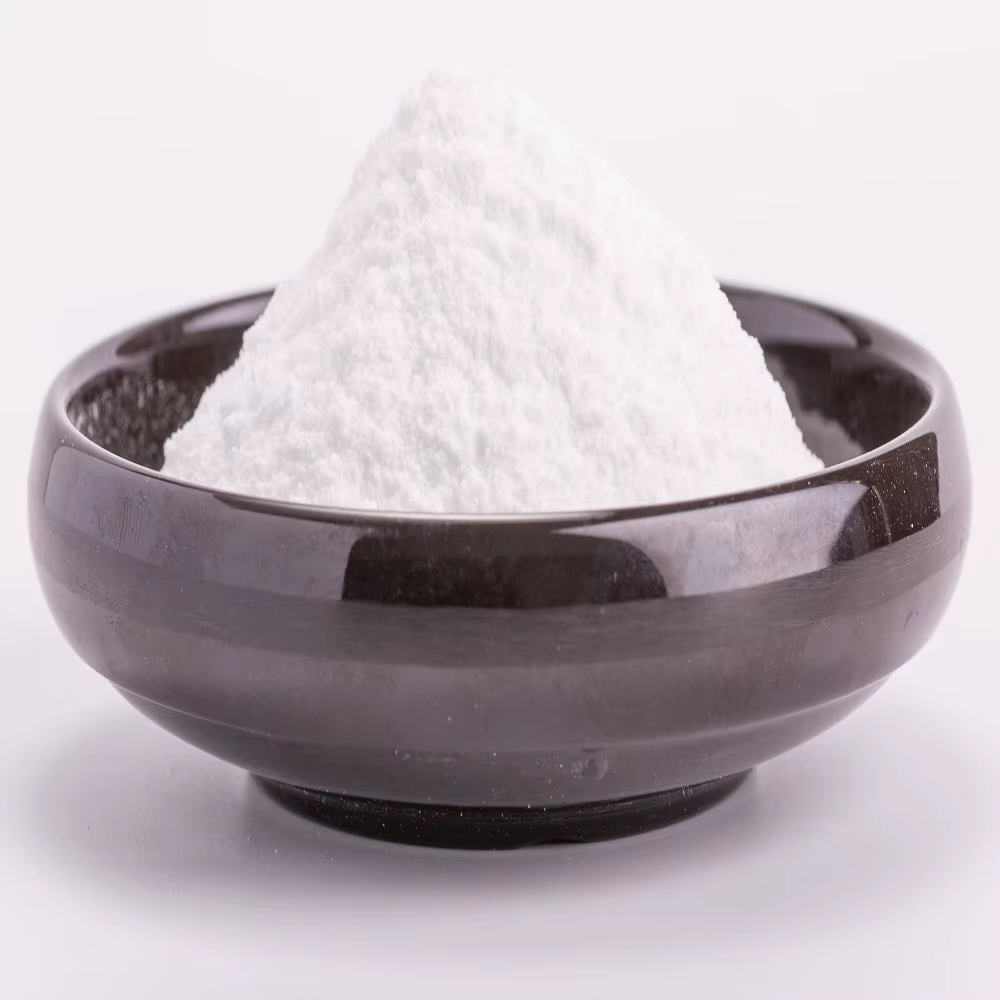
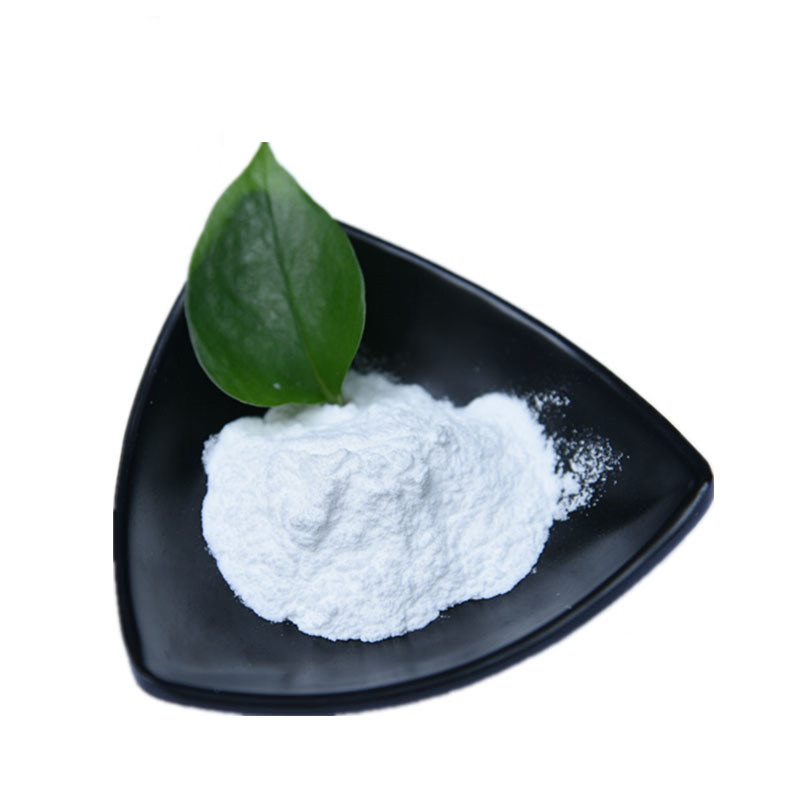
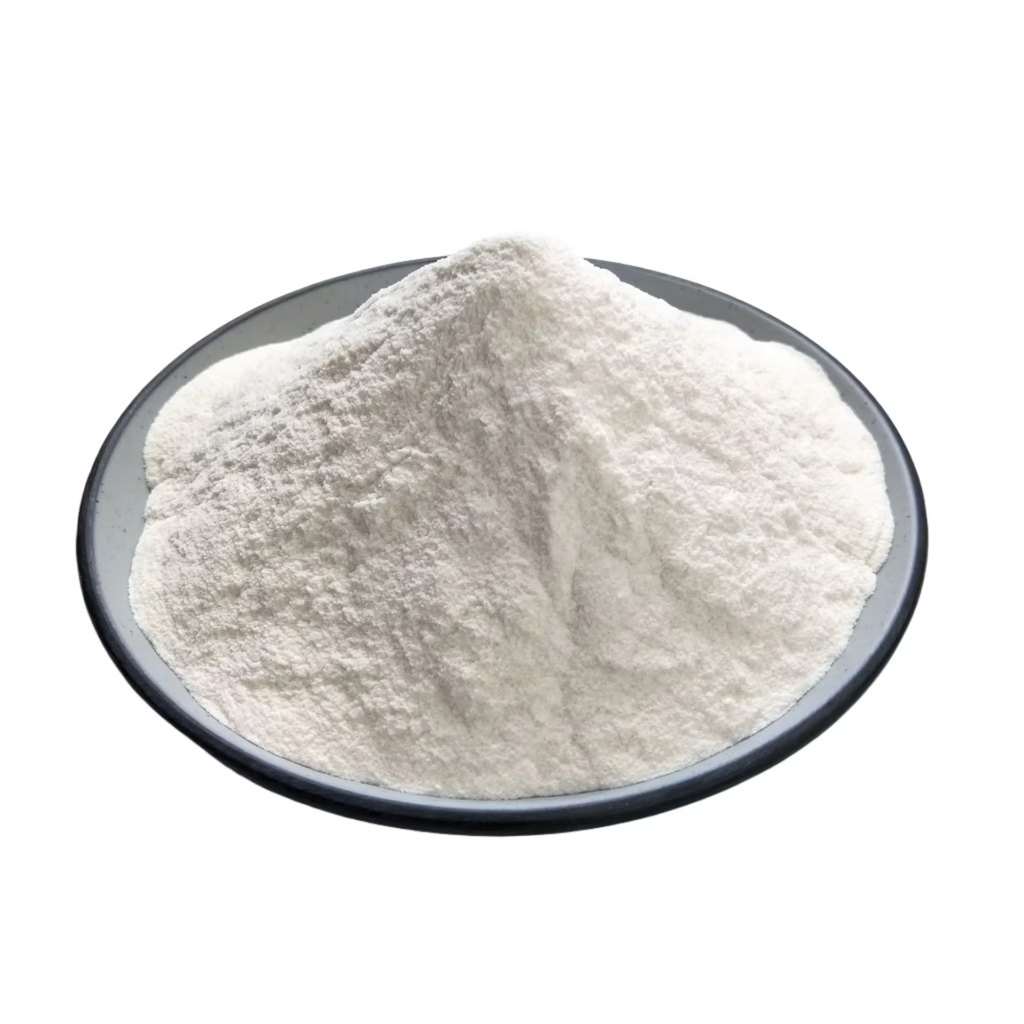
Microcrystalline Cellulose, labeled as E460 in food applications, is a refined, partially depolymerized cellulose derived from plant fibers, typically wood pulp. Through controlled acid hydrolysis, amorphous regions of cellulose are removed, leaving behind crystalline segments with unique functional properties.
E460 is globally approved as a food additive, pharmaceutical excipient, and cosmetic ingredient. It is recognized for its safety, inert nature, and multifunctional performance across diverse formulations.
Why It Is Classified as a Stabilizer
While Microcrystalline Cellulose is often described as a filler or binder, its stabilizing function is what makes it indispensable in industrial formulations. As a stabilizer, MCC:
- Prevents phase separation
- Enhances suspension stability
- Improves texture and mouthfeel
- Controls viscosity and flow behavior
In many applications, it acts like an invisible framework, holding everything together without interfering with flavor, color, or active ingredients.
Key Functional Properties of Stabilizer Microcrystalline Cellulose E460
Insolubility with High Water Interaction
MCC is insoluble in water, yet it absorbs and retains water effectively. This dual behavior allows it to stabilize emulsions and suspensions without dissolving or breaking down under processing conditions.
Thixotropic Behavior
In aqueous systems, especially when combined with carboxymethyl cellulose (CMC), MCC exhibits thixotropy. This means the product flows under shear (during mixing or pouring) but regains structure when at rest, an essential property for sauces, beverages, and pharmaceutical suspensions.
Neutral Sensory Profile
One of the most valuable traits of E460 is what it does not do. It does not contribute taste, odor, or color. This neutrality allows formulators to focus on sensory design without compromise.
Thermal and pH Stability
Stabilizer Microcrystalline Cellulose E460 maintains performance across a wide temperature and pH range. It withstands pasteurization, UHT processing, and varying acidity levels, making it suitable for demanding industrial processes.
Industrial Applications of Stabilizer Microcrystalline Cellulose E460
Food and Beverage Manufacturing
In food systems, MCC is widely used to improve texture, stability, and shelf life. Typical applications include:
- Dairy products such as yogurt, flavored milk, and creamers
- Sauces, dressings, and condiments
- Bakery fillings and fat-reduced spreads
- Beverage suspensions containing pulp, cocoa, or minerals
Manufacturers rely on MCC to prevent sedimentation and maintain uniformity throughout the product’s lifecycle.
Pharmaceutical and Nutraceutical Products
In pharmaceuticals, Microcrystalline Cellulose is a cornerstone excipient. It functions as:
- A binder in tablets
- A disintegrant for controlled release
- A stabilizer in liquid suspensions
Its compressibility, chemical inertness, and regulatory acceptance make it a preferred choice for oral solid dosage forms.
Cosmetics and Personal Care
In personal care formulations, E460 enhances texture and stability in:
- Creams and lotions
- Toothpaste
- Gels and suspensions
It improves spreadability and prevents ingredient separation, contributing to both performance and consumer perception.
Specialty Industrial Uses
Beyond consumer products, MCC is used in specialty coatings, industrial suspensions, and technical formulations where rheology control is critical.
Why Stabilizer Microcrystalline Cellulose E460 Matters in Large-Scale Production
Consistency at Scale
At laboratory scale, many stabilizers perform adequately. The challenge begins when production scales to tons per month. MCC offers consistency batch after batch, reducing variability that can disrupt high-volume manufacturing.
Reduced Reformulation Risk
Because of its inert nature, MCC integrates smoothly into existing formulations. Manufacturers can often replace or optimize stabilizer systems without triggering major reformulation efforts.
Cost Efficiency Through Performance
Although MCC may not always be the cheapest stabilizer per kilogram, its multifunctionality often reduces the need for additional texturizers or stabilizers. This holistic efficiency matters more than unit price alone.
Common Mistakes When Sourcing Microcrystalline Cellulose E460
Assuming All MCC Grades Are Identical
Not all Microcrystalline Cellulose behaves the same. Particle size, moisture content, bulk density, and surface chemistry vary significantly between grades. Choosing the wrong grade can lead to poor dispersion or insufficient stabilization.
Overlooking Supplier Consistency
Even within the same specification, inconsistent production can lead to batch variability. We have seen factories struggle with sedimentation issues simply because of subtle changes in MCC performance.
Ignoring Application-Specific Testing
An MCC grade that works perfectly in tablets may fail in a beverage suspension. Application-specific trials are essential before committing to bulk purchases.
Focusing Only on Price
Price-driven sourcing often results in hidden costs: production downtime, customer complaints, or reformulation expenses. Stability is rarely where shortcuts pay off.
Comparing Stabilizer Microcrystalline Cellulose E460 with Alternative Stabilizers
MCC vs. Starch-Based Stabilizers
Starch derivatives can provide viscosity but are more sensitive to heat, shear, and enzymatic breakdown. MCC offers superior thermal and mechanical stability.
MCC vs. Gums (Xanthan, Guar)
Gums deliver high viscosity at low dosage but can introduce slimy textures or flavor interference. MCC provides structure without dominating sensory attributes.
MCC vs. Synthetic Polymers
Synthetic stabilizers may offer performance advantages but face regulatory and consumer perception challenges. MCC aligns with clean-label and plant-based trends.
Industrial Tips for Using Stabilizer Microcrystalline Cellulose E460 Effectively
Proper Hydration and Dispersion
MCC must be properly dispersed to achieve optimal performance. High-shear mixing during hydration is often necessary, especially in liquid systems.
Synergy with Other Hydrocolloids
Combining MCC with CMC or other hydrocolloids can enhance suspension stability and texture control. These systems are widely used in beverages and sauces.
Dosage Optimization
More is not always better. Excess MCC can lead to overly thick or chalky textures. Pilot trials help determine the ideal dosage range.
Storage and Handling
MCC is hygroscopic and should be stored in dry conditions. Proper packaging and handling preserve its functional integrity.
The Role of MT Royal in Supplying Microcrystalline Cellulose E460
MT Royal positions itself not merely as a distributor, but as a sourcing partner. By working with multiple international producers, MT Royal offers manufacturers access to:
- Consistent, application-specific MCC grades
- Competitive pricing across different origins
- Technical support during selection and scale-up
We have seen that factories working with MT Royal experience fewer supply disruptions and better alignment between formulation needs and raw material performance.
Frequently Asked Questions from Factory Managers and Buyers
Is Stabilizer Microcrystalline Cellulose E460 suitable for clean-label products?
Yes. MCC is plant-derived, non-GMO (depending on source), and widely accepted in clean-label formulations.
Can E460 replace multiple stabilizers in a formulation?
In many cases, yes. Its multifunctionality allows manufacturers to simplify stabilizer systems.
How does MCC behave under heat treatment?
MCC maintains stability under pasteurization and UHT conditions, making it suitable for processed foods and beverages.
Is it compatible with acidic systems?
Yes. MCC performs well across a wide pH range, including acidic beverages and sauces.
What certifications should I expect from a reliable supplier?
Food-grade MCC typically comes with HACCP, ISO, halal, and kosher certifications, depending on application.
Market Trends Shaping the Future of Microcrystalline Cellulose E460
Clean Label and Plant-Based Demand
As consumers demand fewer synthetic additives, MCC’s natural origin positions it favorably for future growth.
Reformulation for Fat and Sugar Reduction
MCC plays a key role in improving mouthfeel in reduced-fat and reduced-sugar products, supporting healthier formulations without compromising texture.
Global Supply Chain Diversification
Manufacturers are increasingly diversifying stabilizer sourcing to reduce risk. Partners like MT Royal facilitate access to multiple origins while maintaining quality consistency.
A Stabilizer That Rewards Strategic Thinking
Stabilizer Microcrystalline Cellulose E460 is not an ingredient you notice when it works well. That is precisely its strength. It supports structure, stability, and efficiency quietly and reliably, allowing your product to perform as intended from the factory floor to the consumer’s hands.
Manufacturers who approach MCC selection thoughtfully, supported by experienced sourcing partners, often discover that stability is not just a technical attribute, but a competitive advantage. When your formulations remain consistent under pressure, your operations gain confidence, and your brand earns trust.



No comment