

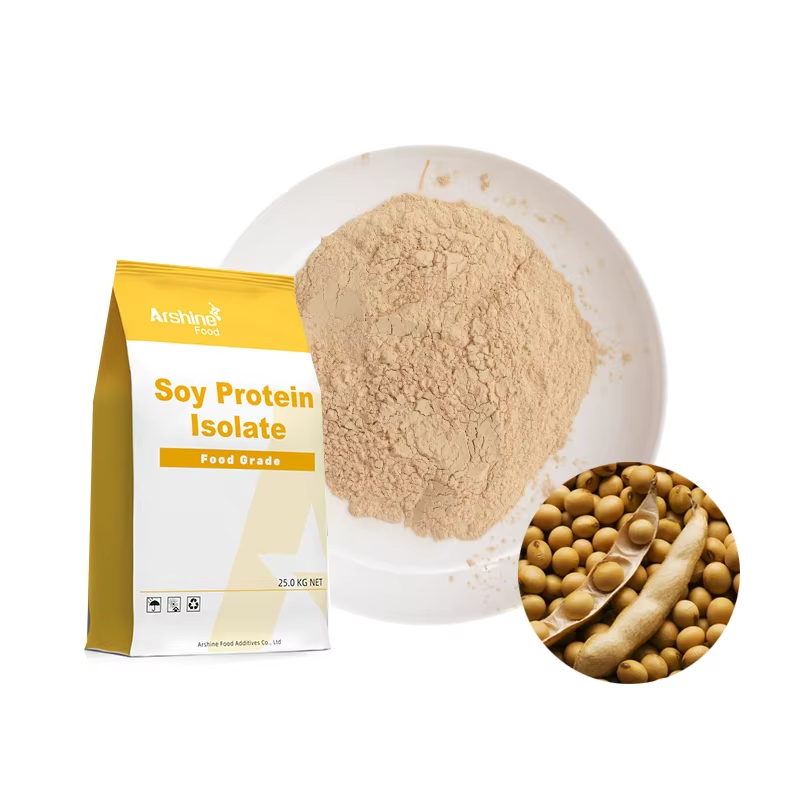
In the world of industrial manufacturing, some raw materials are true behind-the-scenes champions. They rarely get the spotlight, yet without them, entire production lines can falter. Stabilizer Soy Protein Isolate Bulk is one of those materials. When selected and sourced correctly, it can transform final product quality, reduce waste, and control hidden production costs. Our experience at MT Royal shows that factories paying close attention to such details not only achieve more stable products but also gain a real competitive edge. This article is written for you—for plant managers, procurement officers, technical directors, and anyone who wants to understand why a soy protein isolate, especially in bulk form, can make a strategic difference.
Soy Protein Isolate is the purest form of protein extracted from soybeans, typically containing more than 90% protein. However, when we refer to Stabilizer Soy Protein Isolate Bulk, we are not just talking about a protein source. In industrial formulations, this ingredient plays a stabilizing role—helping maintain structure, texture, uniformity, and physicochemical stability of the final product.
In many food and non-food applications, one of the main challenges is phase separation, texture breakdown, or viscosity changes over time. Thanks to its emulsifying properties, water-binding capacity, and gel-forming ability, soy protein isolate functions as a highly effective stabilizer.
Bulk Supply: More Than Volume, a Strategic Choice
Buying in bulk means purchasing at industrial scale, but in practice, it is a strategic decision. When you source Stabilizer Soy Protein Isolate Bulk, you are seeking consistency in quality, batch-to-batch uniformity, and supply security. For factories producing several tons per day, quality fluctuations are a serious risk.
In our collaboration with various manufacturers, we have seen how even minor changes in soy protein isolate specifications can disrupt entire production settings. Bulk sourcing means better control, more accurate planning, and a more rational total cost structure.
Industrial Applications of Stabilizer Soy Protein Isolate Bulk
Food Industry: The Primary Consumption Driver
The largest share of Soy Protein Isolate Bulk consumption lies in the food industry—from processed meat products to plant-based dairy alternatives, sauces, protein beverages, and ready meals.
In meat products, it improves texture, enhances water retention, and reduces cooking loss. In plant-based products, its role is even more critical, as it must replace animal proteins both functionally and sensorially.
Beverages and Liquid Formulations
In protein beverages, suspension stability is a major challenge. Sedimentation, phase separation, or texture changes during shelf life can quickly disqualify a product. Stabilizer Soy Protein Isolate Bulk helps solve these issues by ensuring uniform particle distribution and controlled viscosity.
Non-Food and Specialized Industrial Uses
Less commonly discussed, soy protein isolate is also used as a stabilizer or binder in certain non-food industrial applications, such as bio-based adhesives or specialty coatings. In these cases, consistent quality and technical specifications are even more critical than in food applications.
Why Stabilizer Soy Protein Isolate Bulk Is Critical for Manufacturers
Quality Stability at Industrial Scale
At laboratory or pilot scale, many variables are manageable. At full industrial scale, even small weaknesses are amplified. A poor or inconsistent stabilizer leads to fluctuations in texture, flavor, appearance, and shelf life.
Reduction of Waste and Hidden Costs
Waste is not limited to discarded product. Line stoppages, equipment re-adjustments, customer complaints, and product returns all represent real costs. Choosing the right Soy Protein Isolate Bulk can significantly reduce these hidden expenses.
Greater Flexibility in Formulation
One key advantage of soy protein isolate is its formulation flexibility. By adjusting dosage levels, manufacturers can achieve different textures and functional properties. This flexibility supports product innovation and optimization of existing formulas.
Common Mistakes in Industrial Soy Protein Isolate Sourcing
Focusing Only on Price
Price matters, but when it becomes the sole criterion, problems follow. Some suppliers offer lower-priced products that appear similar but differ significantly in performance. The result is often compromised product quality.
We have repeatedly seen factories spend months reworking formulations just to save a small percentage on raw material costs.
Ignoring Key Technical Specifications
Parameters such as solubility, emulsification capacity, water-holding capacity, and particle size are decisive. Purchasing Stabilizer Soy Protein Isolate Bulk without thoroughly reviewing these specifications is like buying machinery without a test run.
Overlooking Supply Consistency
Even the best ingredient is useless if supply is unstable. Frequent changes in brand or grade disrupt production lines. This is where a reliable supplier becomes indispensable.
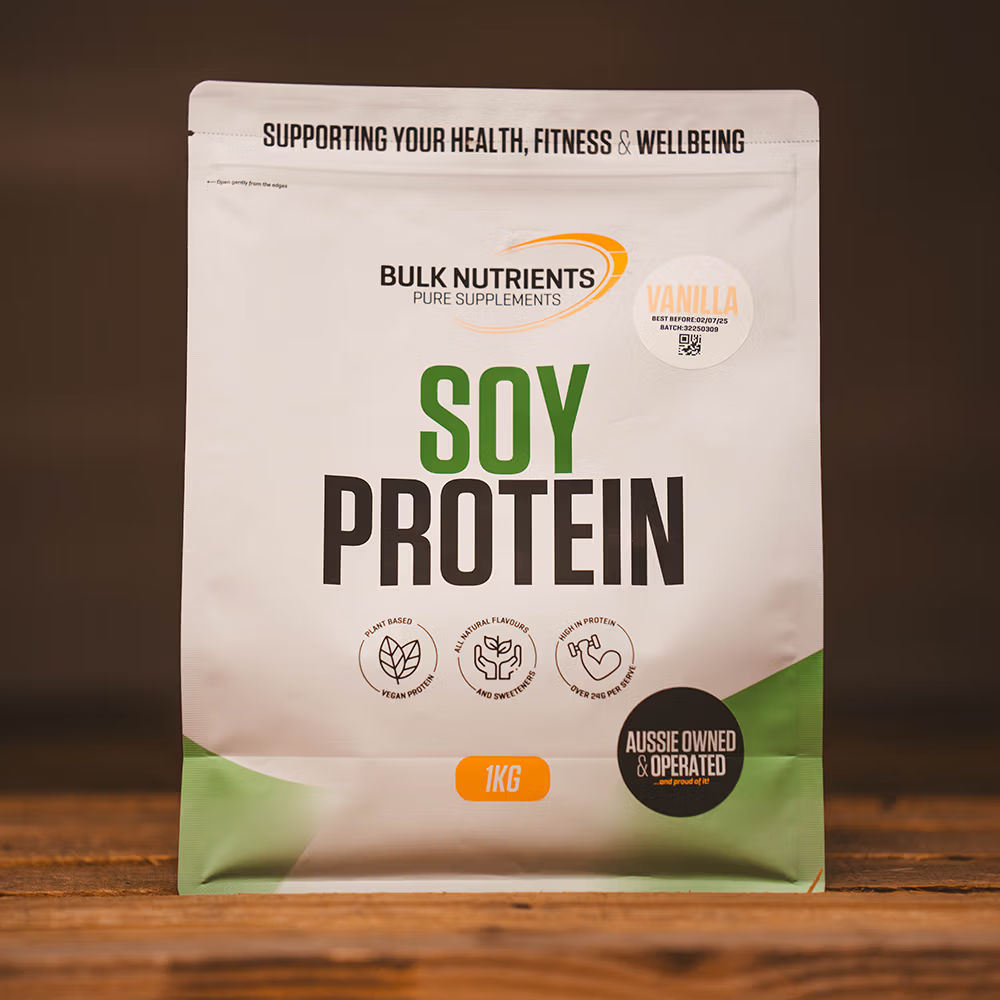
Comparing Soy Protein Isolate with Other Common Stabilizers
Versus Animal Proteins
Animal proteins such as casein or gelatin have specific functional benefits but also limitations, including higher costs, religious or allergen concerns, and supply volatility. From a price stability and availability standpoint, Soy Protein Isolate Bulk is often a more practical option.
Versus Hydrocolloids
Hydrocolloids like carrageenan or xanthan gum primarily increase viscosity and offer no nutritional value. Soy protein isolate, by contrast, provides both physical stability and nutritional enhancement—a growing advantage in many markets.
Smart Combinations for Optimal Results
In practice, many successful formulations combine Soy Protein Isolate with other stabilizers. The key lies in understanding each component’s functionality and balancing their ratios correctly.
Industrial Tips for Large-Scale Production
Water Management and Hydration
One of the most critical success factors when using Stabilizer Soy Protein Isolate Bulk is proper hydration. Rapid or improper addition can cause lumping or incomplete dispersion. Suitable mixers and correct timing make a substantial difference.
Temperature and pH: Two Critical Variables
The performance of soy protein isolate is highly sensitive to temperature and pH. Near its isoelectric point, solubility decreases significantly. Understanding these behaviors allows you to unlock the full stabilizing potential of the ingredient.
Alignment with Existing Production Lines
Every production line has its own characteristics—mixing speed, equipment type, processing time. At MT Royal, we often recommend semi-industrial trials before switching or replacing Soy Protein Isolate Bulk, minimizing operational risk.
Market Trends in Soy Protein Isolate Bulk
Growing Demand for Plant-Based Products
The global shift toward plant-based products is not a short-lived trend. Manufacturers who prepare now by selecting the right infrastructure and raw materials will secure long-term advantages. Stabilizer Soy Protein Isolate Bulk is a cornerstone of this transformation.
Increased Focus on Supply Chain Transparency
End consumers and B2B buyers alike are paying closer attention to sourcing and quality. Traceability, brand consistency, and transparent specifications are becoming standard purchasing criteria.
Formulation Optimization to Control Costs
With rising energy and logistics costs, manufacturers are seeking formulations that deliver maximum performance with minimal stabilizer usage. Selecting the right grade of soy protein isolate is essential to achieving this balance.
Frequently Asked Questions from Plant Managers and Procurement Teams
Are all soy protein isolates suitable as stabilizers?
No. Different grades are designed for different applications. For stabilizing purposes, properties such as emulsification strength and solubility are especially important.
Is bulk purchasing always more cost-effective?
In most cases, yes—provided your consumption is stable and well planned. Bulk purchasing without proper inventory and usage management can introduce its own risks.
How can we ensure batch-to-batch consistency?
Choosing a supplier with strong quality control systems and industrial experience is the most important factor. This is why many manufacturers prefer long-term cooperation with suppliers like MT Royal.
Does soy protein isolate affect product flavor?
At high dosages or with inappropriate grades, it can. However, stabilizer-grade isolates are typically neutral in flavor, and proper formulation adjustments keep sensory impact under control.
The Role of MT Royal in Supplying Stabilizer Soy Protein Isolate Bulk
In a crowded raw materials market, finding a supplier that not only offers variety but also understands industrial realities is no small task. MT Royal focuses on supplying Soy Protein Isolate Bulk from reputable brands at competitive prices.
Through close collaboration with manufacturers, we have learned that every production line has its own story. That is why our approach goes beyond simple supply—we aim to share experience and support informed decision-making. When a supplier understands how and where a product will be used, outcomes improve for everyone involved.
A Decision That Shapes the Future of Your Production
Choosing Stabilizer Soy Protein Isolate Bulk is not just another procurement task; it is a strategic decision affecting stability, quality, and competitiveness. In an environment where margins are tightening and market expectations are rising, attention to such details separates sustainable brands from the rest. With a long-term, technically informed view of raw materials, soy protein isolate can become the missing piece that completes your production puzzle.


No comment