

In highly competitive industrial environments such as food processing, pharmaceuticals, and animal nutrition, the reliability of your raw material supply can make or break production performance. For manufacturers and procurement teams operating in Egypt, choosing the right Dextrose supplier in Egypt isn’t just a transactional choice—it’s a strategic decision with profound implications for product quality, operational continuity, and competitive differentiation. As an ingredient, dextrose plays multifaceted roles, from acting as a fermentable carbohydrate to functioning as a sweetener and stabilizer. Securing a dependable, high‑quality supply is therefore essential to safeguarding your factory’s operational resilience.
At MT Royal, we understand the intricacies of large‑scale sourcing. In our collaboration with various factories, we have seen that proactive engagement with a reliable supplier not only ensures consistent deliveries but also fosters technical alignment that elevates formulation outcomes. Whether your operation is centered on bakery products, beverages, pharmaceuticals, or industrial fermentation, a well‑structured procurement strategy for dextrose is indispensable.
This comprehensive guide is designed to equip you with actionable insights covering fundamental definitions, sourcing challenges, quality considerations, industry trends, practical checklists, and frequently asked questions. By the end of this article, you will have a clear roadmap for selecting and partnering with the ideal Dextrose supplier in Egypt tailored to your factory’s unique demands.
Understanding Dextrose: Definitions and Industrial Relevance
What Is Dextrose?
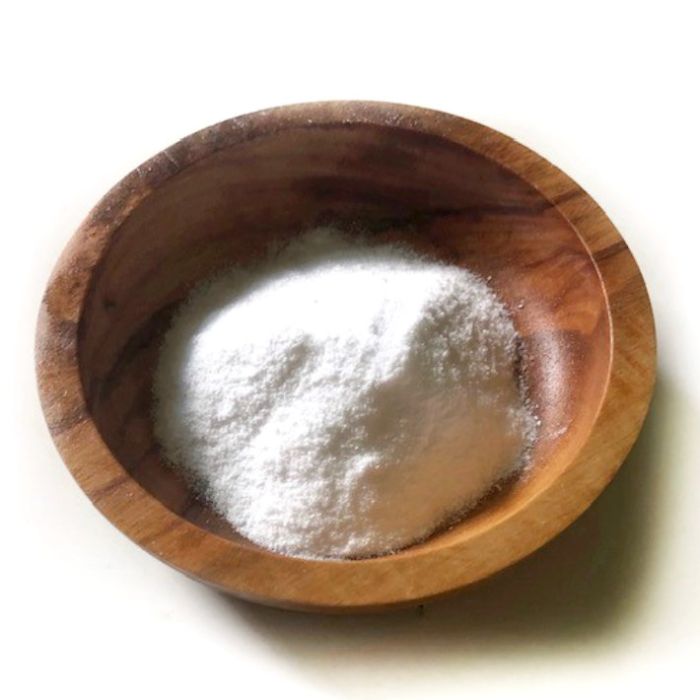
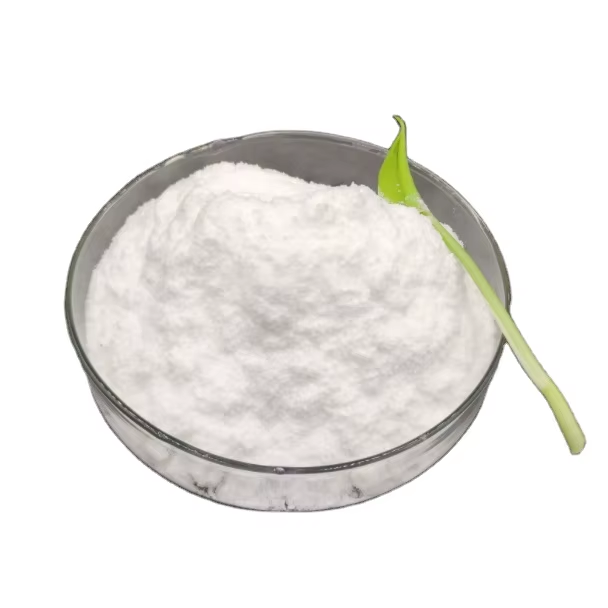
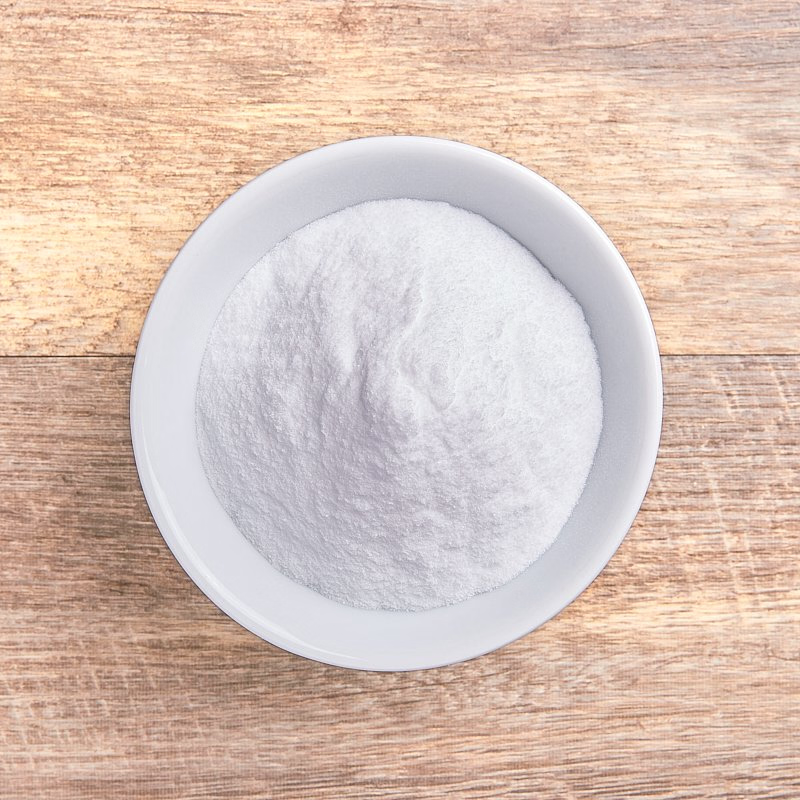
Dextrose is a simple sugar, chemically identical to glucose, most often derived from corn starch through enzymatic hydrolysis. In industrial contexts, dextrose is prized for its high solubility, predictable sweetness, and functional versatility. Unlike granular sucrose, dextrose dissolves rapidly and participates readily in biochemical reactions, making it ideal in processes where rapid fermentability matters.
Here are some of its principal properties:
- High water solubility
- Rapid fermentability
- Caloric energy source
- Lower sweetness than sucrose
- Stable under many processing conditions
These characteristics make dextrose a staple across multiple industrial applications—from food and beverage manufacturing to pharmaceutical formulations and animal feed production.
Industrial Uses Across Sectors
Understanding how dextrose functions in different industries helps clarify the importance of sourcing the right grade and performance profile.
Food and Beverage Production
In food manufacturing, dextrose is used for:
- Sweetening beverages, sauces, and snacks
- Enhancing browning reactions in baked goods
- Improving texture and mouthfeel
- Acting as a fermentation substrate in brewing and dairy cultures
Because food grade must meet safety parameters, consistent quality from your supplier directly influences product stability and sensory attributes.
Pharmaceuticals
In pharmaceutical applications, dextrose serves as:
- A carrier or excipient in tablets
- A stabilizer in injectable solutions
- A component in oral rehydration salts
- A controlled energy source in intravenous fluids
Stringent purity and compliance standards govern pharmaceutical grade dextrose. Working with a supplier experienced in pharmaceutical requirements streamlines documentation and regulatory validation.
Animal Nutrition and Feed
Animal feed manufacturers rely on dextrose for:
- Rapid energy provision
- Enhanced palatability
- Support of metabolic activity in livestock
Functionality in this segment hinges not only on purity but also on predictable energy release—another aspect where a trusted supplier adds value.
Fermentation and Biotechnology
Fermentation industries use dextrose as:
- A primary carbon source for yeast and bacterial cultures
- A key input in enzyme production
- A substrate for organic acid synthesis
Consistency in fermentable substrate quality ensures yield predictability in antibiotic, enzyme, and biofuel production.
Why Choose a Local Dextrose Supplier in Egypt?
Egypt’s strategic position as a trading nexus between Africa, the Middle East, and Europe makes it an attractive base for industrial sourcing. Proximity to seaports, established infrastructure for agricultural commodities, and demand from local food and pharmaceutical manufacturing contribute to a dynamic environment for raw material suppliers — especially for ingredients like dextrose.
Working with a Dextrose supplier in Egypt confers several advantages:
- Shorter lead times compared to distant imports
- Lower logistical complexity due to regional distribution capabilities
- Improved supply chain visibility through local inventory hubs
- Familiarity with regulatory frameworks governing local and export markets
- Potential cost efficiencies through optimized freight and handling arrangements
These factors are particularly significant for factories managing tight production schedules, just‑in‑time inventory strategies, or frequent batch changes.
Core Criteria to Evaluate a Dextrose Supplier in Egypt
Selecting the right supplier requires a balance of technical performance, regulatory compliance, and operational reliability. Below are critical considerations to guide your evaluation process.
Regulatory Compliance and Certifications
Your supplier must provide documentation that meets applicable standards relevant to your product category. For food and beverage production, this may include:
- Food safety certifications such as ISO 22000 or HACCP
- Certificates of Analysis (CoA) indicating purity, moisture content, and microbial limits
- Traceability documentation
For pharmaceutical applications, compliance extends further to pharmacopoeial standards (e.g., USP, EP) and Good Manufacturing Practices (GMP). A supplier versed in these requirements accelerates supplier qualification and reduces regulatory risk.
Product Quality and Consistency
Industrial processes — particularly baking, fermentation, and beverage production — depend on raw materials that behave consistently from batch to batch. Look for suppliers who:
- Provide detailed specification sheets
- Offer historical performance data
- Support lab testing prior to large orders
- Maintain robust quality control programs
A dependable Dextrose supplier in Egypt should deliver products that perform predictably under your specific production parameters.
Logistics and Packaging Options
Dextrose can be supplied in various pack sizes and formats depending on your handling capacity and storage infrastructure. Typical packaging includes:
- Multi‑wall bags (25 kg, 50 kg)
- FIBC (bulk bags)
- Sealed drums for smaller volumes
Discuss delivery frequency, minimum order quantities, and packaging preferences with your supplier. Strategic alignment on these terms reduces inventory holding costs and simplifies in‑plant handling.
Technical Support and Collaboration
While price and delivery are essential, the most valuable suppliers are those who act as technical partners. In our collaboration with diverse factories, we have seen that when suppliers engage with your technical and QA teams early in the sourcing process, formulation troubleshooting and product innovation accelerate. Suppliers who understand your production processes and challenges contribute insights that go beyond simply fulfilling orders.
Common Mistakes in Industrial Sourcing of Dextrose
Even experienced procurement teams can encounter predictable pitfalls. Recognizing these traps helps you build more resilient sourcing strategies.
Mistaking Price for Total Value
Focusing solely on the lowest bid can obscure other factors like quality consistency, documentation completeness, or delivery reliability. A comprehensive view of “total landed cost” — including handling inefficiencies and quality failures — often reveals that the lowest price is not the best value.
Not Defining Clear Specifications
Assuming that all dextrose is identical invites variability. Specifications should include:
- Purity percentage
- Moisture content
- Heavy metal limits
- Microbial thresholds
Clearly articulated technical requirements prevent ambiguities in supplier deliveries and improve process outcomes.
Overlooking Supplier Compliance Capabilities
Especially in regulated sectors like food and pharmaceuticals, failing to verify compliance capabilities can lead to disruptions during audits or export documentation checks. A supplier unfamiliar with compliance frameworks poses operational risk.
Practical Checklist for Procurement Teams
To simplify supplier screens or audits, use this actionable checklist:
- Obtain recent Certificates of Analysis (CoA) for all prospective grades.
- Validate relevant certifications (ISO, HACCP, GMP).
- Confirm logistic capabilities and packaging flexibility.
- Review supplier traceability systems.
- Request references from similar industry clients.
- Discuss contingency planning for supply disruptions.
- Align acceptance criteria and inspection procedures on delivery.
This structured list ensures that quality, compliance, and operational alignment are front and center in supplier selection.
Industrial Best Practices for Large‑Scale Production
Scaling up production introduces additional complexity. The following tips are grounded in real industrial experience and are designed to support high‑volume environments.
Synchronize Demand Forecasts With Supplier Planning
Integrating your production forecasts with your supplier’s planning cycles reduces variability in order fulfilment. Supply continuity is often a function of transparency: when your supplier knows your expected usage patterns, they can adjust inventory and production runs accordingly.
Pilot Testing
Before switching suppliers or introducing a new dextrose grade into critical formulations, conduct small‑scale tests. Verification labs can help assess performance under your specific process conditions. This pilot approach prevents unexpected quality issues during full‑scale production.
Build Redundancy Where Practical
Even the best suppliers may face logistical delays or force majeure events. Establishing secondary supplier relationships or dual‑sourcing agreements enhances resilience and protects production continuity.
Emerging Trends in Dextrose Sourcing
Dextrose sourcing — like other industrial raw materials — is influenced by broader market dynamics and technological shifts. Awareness of these trends helps procurement teams anticipate changes and adapt strategies.
Demand for Specialty Grades
While standard food grade dextrose is widely used, some manufacturers now demand:
- Organic or Non‑GMO certified dextrose
- Controlled particle size for specific functional responses
- Enhanced traceability features
These specialty requirements reflect evolving market expectations, especially in premium food and nutraceutical segments.
Sustainability in Supply Chains
Environmental concerns are shaping supplier evaluations. Manufacturers increasingly look for partners who can demonstrate sustainable production practices, energy efficiency, and responsible waste management. This trend aligns with corporate sustainability commitments and regulatory expectations.
Digital Traceability and Data Integration
Suppliers that offer digital platforms for accessing batch CoAs, tracking shipments, and integrating with your enterprise systems improve visibility and reduce administrative burdens. Digital traceability also strengthens audit readiness for domestic and export markets.
Understanding these emerging patterns enables your procurement strategy to stay ahead of industry shifts, rather than lagging behind.
Frequently Asked Questions From Procurement Teams
What Are Typical Lead Times for Dextrose Deliveries in Egypt?
Lead times vary based on supplier inventory, packaging requirements, and seasonal demand cycles. Generally, local stock availability can reduce delivery timelines significantly compared to imports from distant markets.
How Should Dextrose Be Stored to Maintain Quality?
Dextrose should be stored in a clean, dry environment with controlled humidity and stable temperature. Exposure to moisture can lead to caking and degradation of product performance.
Does the Grade of Dextrose Affect Pricing?
Yes. Higher purity grades and those with specific certifications (food grade, pharmaceutical grade) command premium pricing due to additional compliance costs and processing controls.
Can Dextrose Quality Affect Final Product Shelf Life?
Absolutely. Variations in purity, moisture content, or residual contaminants can accelerate reactions such as browning or microbial growth, potentially reducing shelf life or affecting product stability.
Strategically Partnering With Your Supplier
A Dextrose supplier in Egypt should be more than a transactional vendor; they should act as a strategic partner in your operational success. This partnership is built on transparent communication, shared forecasting, technical collaboration, and aligned quality expectations. Suppliers who understand your challenges and production goals contribute more than deliveries—they contribute insight.
When your supplier invests in understanding your formulation needs and production rhythms, it fosters innovation. It enables quicker responses to market changes and supports your ability to scale product lines without sacrificing stability or performance.
At MT Royal, we emphasize consultative engagement, technical depth, and operational transparency. We work with manufacturers to synchronize supply with production cycles, align quality parameters with product standards, and support continuous improvement. This level of partnership ensures that your factory doesn’t merely procure dextrose, but strengthens its foundation for long‑term industrial success.
The Impact of Informed Sourcing Decisions
Selecting the right Dextrose supplier in Egypt is a decision that ripples across every layer of your manufacturing ecosystem—from procurement and quality assurance to production and market delivery. The outcomes of this decision influence product consistency, regulatory compliance, cost efficiency, and competitive positioning.
An informed sourcing strategy goes beyond price negotiation; it integrates quality evaluation, logistics planning, risk mitigation, and supplier collaboration. When these elements are aligned, your factory gains resilience and clarity in navigating supply chain complexities.
By prioritizing technical expertise, compliance readiness, and operational alignment in your supplier partnerships, you equip your manufacturing operation to thrive amidst market variability and evolving industrial demands. The right supplier transforms raw materials from commodities into strategic assets — enabling your factory to achieve stable production, elevate product quality, and excel in a competitive landscape.
LATAMARKO LM60 – Premium Spanish-Origin Cocoa Powder
latamarko alkalized cocoa powder lm60
cocoa powder for chocolate production-Best price
Food industry raw materials – list of products
Types of Gelatin from Turkish Manufacturer
Alkalized Cocoa Powder Price: Complete Buyer Guide for 2026



No comment