

In many food factories across Tunisia, cocoa powder is treated as a given. It’s ordered, delivered, stored, and fed into production lines day after day. Yet when something goes wrong—a color shift in biscuits, unexpected bitterness in a beverage mix, poor dispersion in a filling—the root cause often traces back to one quiet decision: choosing the wrong cocoa powder supplier in Tunisia.
For factory owners, production managers, and procurement professionals, cocoa powder is not a commodity in the casual sense. It is a functional ingredient, a sensory driver, and a variable that can either stabilize or destabilize an entire production system. And as Tunisia’s food manufacturing sector grows more competitive—serving both domestic demand and export markets—the expectations placed on cocoa suppliers have increased sharply.
This article is written from the perspective of people who understand factory floors, production schedules, and procurement pressure. It’s not about cocoa romance or consumer trends. It’s about how to source cocoa powder in Tunisia in a way that protects throughput, quality, and margins—month after month.
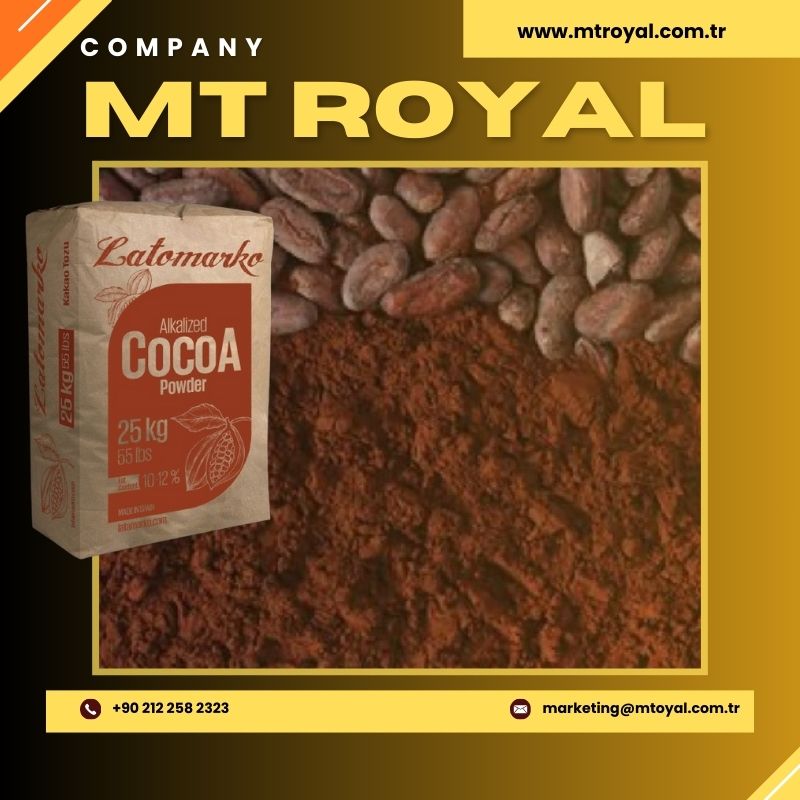
Alkalized Cocoa Powder Supplier
latamarko alkalized cocoa powder lm60
Food industry raw materials – list of products
Cocoa Powder in Industrial Manufacturing: The Fundamentals That Matter
At its core, cocoa powder is produced by grinding cocoa press cake after cocoa butter extraction. But in industrial applications, the real story lies in how that cocoa is processed, standardized, and supplied.
The Two Core Categories Manufacturers Work With
Most factories source one or both of the following:
- Natural cocoa powder
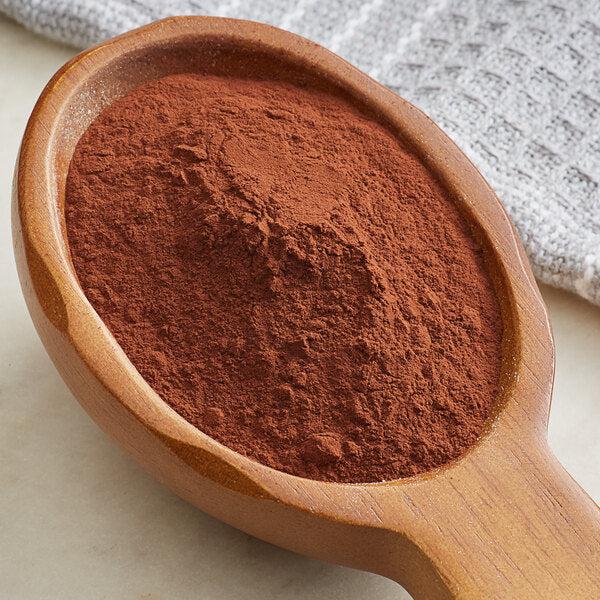
Acidic, lighter in color, sharper flavor, reactive in baking applications. - Alkalized (Dutch-processed) cocoa powder
Neutral to alkaline pH, darker color, smoother flavor, improved solubility.
A reliable cocoa powder supplier in Tunisia should be able to explain—clearly and practically—how each type behaves in different production environments, not just list them on a catalog.
Why Cocoa Powder Sourcing Is a Strategic Issue in Tunisia
Tunisia’s food manufacturing landscape has evolved significantly in recent years. Local producers are scaling up, private-label production is increasing, and export-oriented manufacturers are facing tighter quality audits.
This has shifted cocoa powder sourcing from a price-driven decision to a risk-managed procurement strategy.
Key Pressures Facing Tunisian Manufacturers
- Rising expectations for batch-to-batch consistency
- Increased scrutiny from export markets
- Pressure on cost-per-unit without sacrificing quality
- The need for reliable supply chains amid global cocoa volatility
In this environment, your cocoa supplier isn’t just a vendor—they’re a silent production partner.
What Manufacturing Facilities Really Need from a Cocoa Powder Supplier
From the outside, cocoa powder looks simple. On the inside of a factory, it’s anything but.
1. Consistency That Survives Scale
A cocoa powder that works beautifully in pilot trials can fail spectacularly in full-scale production if particle size, fat content, or pH fluctuate.
For large-volume mixers, tunnel ovens, or beverage blending systems, small deviations compound quickly.
In our experience supplying manufacturing facilities, consistency is the single most valuable attribute industrial buyers look for—often more than origin or branding.
2. Predictable Behavior Across Applications
Cocoa interacts with:
- Sugars
- Fats
- Proteins
- Leavening agents
A supplier who understands these interactions can help prevent costly reformulations or downtime.
3. Supply Reliability and Logistics Awareness
Late deliveries don’t just delay production—they disrupt planning, labor scheduling, and inventory flow. A serious cocoa powder supplier in Tunisia must understand industrial logistics, not just sales.
Common Misconceptions in Industrial Cocoa Procurement
Even seasoned procurement teams can fall into familiar traps.
“All Cocoa Powder with the Same Specs Performs the Same”
On paper, two cocoa powders may look identical. In production, they may behave very differently due to processing methods, bean blends, or alkalization control.
“Cheaper Cocoa Always Improves Margins”
Short-term savings often disappear when:
- Mixing times increase
- Product appearance changes
- Customer complaints rise
Manufacturers rarely calculate these hidden costs upfront—but they always pay them later.
“We Can Switch Suppliers Without Production Impact”
Cocoa is not a plug-and-play ingredient. Switching suppliers without testing often leads to quality drift.
Evaluating a Cocoa Powder Supplier in Tunisia: A Practical Framework
Choosing the right supplier means asking the right questions—before problems arise.
Technical Criteria to Look Beyond the Datasheet
- pH range stability, not just average pH
- Fat content tolerance, not just declared percentage
- Particle size distribution, not just fineness claims
- Microbiological controls suitable for your end product
A supplier who can explain how these factors affect your exact application is worth far more than one who simply provides documents.
Commercial and Operational Considerations
- Ability to support bulk and repeat orders
- Flexible packaging for industrial handling
- Transparent communication when market conditions change
At MT Royal, we supply manufacturers with a comprehensive range of brands, ensuring competitive pricing without compromising on quality. That breadth allows factories to select cocoa powders that match specific production needs rather than forcing compromises.
Cocoa Powder Quality Tiers: Matching the Right Grade to the Right Job
Not every product needs the same cocoa quality. Smart manufacturers segment their sourcing.
Functional Industrial Grades
Best suited for:
- Mass-market biscuits
- Standard cakes
- Economy beverage mixes
Focus: cost control, acceptable performance, stable supply.
Performance-Oriented Grades
Best suited for:
- Branded products
- Export SKUs
- Products with visual or sensory sensitivity
Focus: tighter specs, better dispersion, consistent color.
Premium European Options
European processors—particularly those from Spain—are often associated with disciplined process control. Spanish manufacturers like Latamarko are frequently referenced when discussing premium cocoa solutions that prioritize consistency and repeatability.
These grades are typically chosen when:
- Brand reputation is at stake
- Reformulation costs are high
- Production risk must be minimized
This isn’t about prestige; it’s about operational confidence.
Cocoa Powder in Different Industrial Applications
A capable cocoa powder supplier in Tunisia should understand how cocoa behaves differently depending on the application.
Bakery Production
Natural cocoa reacts with baking soda, affecting rise and crumb. Alkalized cocoa offers darker color but requires adjusted leavening.
Beverage and Instant Mixes
Solubility and dispersion are critical. Poorly processed cocoa leads to sedimentation and consumer complaints.
Confectionery and Fillings
Fat compatibility and particle size influence mouthfeel and texture. Inconsistent cocoa can cause graininess or flavor imbalance.
A Realistic Factory Scenario: When Cocoa Consistency Saves the Day
Consider a Tunisian wafer manufacturer producing for both local and export markets. After switching to a cheaper cocoa powder, they notice subtle color variation. Retail buyers notice too.
The issue isn’t dramatic—but it’s persistent. QA flags variability in alkalization. The factory reverts to a supplier offering tighter process control. The problem disappears.
No press releases. No marketing campaigns. Just quieter production meetings—and that’s usually the goal.
We’ve seen factory managers benefit when cocoa sourcing decisions are treated as operational safeguards rather than procurement formalities.
Actionable Advice for Factory Managers and Procurement Teams
Before Approving a New Cocoa Supplier
- Test cocoa under real production conditions
- Run side-by-side comparisons, not isolated trials
- Involve QA, production, and procurement together
During Long-Term Supply
- Monitor batch performance, not just specs
- Keep open communication channels
- Review supplier performance annually
In our experience, cross-department alignment prevents most cocoa-related production issues.
Market Trends Influencing Cocoa Supply in Tunisia
Several broader trends are shaping sourcing strategies:
- Volatility in global cocoa markets
- Increased demand for traceability
- Pressure from international buyers for process transparency
- Growing emphasis on supplier accountability
Suppliers who understand these dynamics add value far beyond product delivery.
Frequently Asked Questions from Industrial Buyers
Is one cocoa powder suitable for all applications?
Rarely. Most factories achieve better results using different grades for different products.
Does European cocoa justify the higher cost?
When consistency and brand risk matter, often yes.
How often should cocoa suppliers be reviewed?
At least annually, or whenever formulations or markets change.
Is local availability more important than origin?
Reliability usually matters more than geography—but both play a role.
The Bigger Picture for Manufacturing Decision-Makers
Choosing a cocoa powder supplier in Tunisia is not about ticking procurement boxes. It’s about protecting production stability, brand consistency, and operational sanity.
At MT Royal, we’ve worked with production facilities across various industries and understand that manufacturers value transparency, choice, and technical understanding—not sales pressure. Access to multiple cocoa brands, including high-quality European options when required, gives factories the flexibility to adapt as markets and products evolve.
So the question worth reflecting on isn’t “Who sells cocoa powder?”
It’s “Who understands what happens to that cocoa once it enters our production line?”
Because in industrial manufacturing, the best suppliers are often the ones you don’t have to think about—because everything simply works.


No comment