

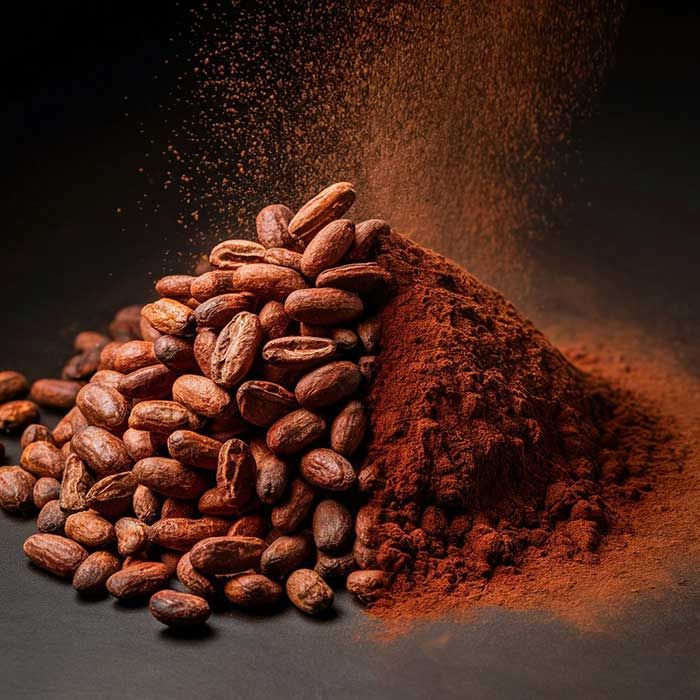
High‑Fat vs Low‑Fat Cocoa Powder
In the industrial world of food production, seemingly small decisions can ripple through quality, cost‑efficiency, and brand reputation. Few choices illustrate this better than the decision between high‑fat cocoa powder and low‑fat cocoa powder. While at first glance the differences may seem technical or only relevant to R&D labs or chocolatiers, the ramifications extend deeply into production floor realities—affecting taste profiles, color consistency, machine performance, cost per metric ton, bulk storage needs, and downstream processing.
You might be thinking: “Isn’t cocoa powder just cocoa powder?” In industrial scale food production, the simple answer is no. Fat content in cocoa powder changes the game. From how mixers behave on the line to how finished products are perceived by consumers, these differences drive real operational decisions.
Drawing on decades of experience supplying industrial clients, including manufacturers of confectionery, bakery mixes, and beverage powders, we’ll guide you through every dimension of this choice—backed by practical advice, pitfalls to avoid, and insights from real production environments.
What Is Cocoa Powder? Defining the Fundamentals
Before we dive into the comparison, let’s establish a clear foundation.
At its core, cocoa powder is the dry product left after pressing cocoa beans for their fat (cocoa butter). The key differentiation in industry terminology is:
- High‑Fat Cocoa Powder: Typically contains 10‑24% cocoa butter.
- Low‑Fat Cocoa Powder: Typically contains ≤10% cocoa butter, often as low as 8%.
This difference matters because cocoa butter contributes to mouthfeel, flavor carrying, color depth, and rheology (flow behavior) in industrial processes.
In many factories, especially those blending into complex formulations (e.g., bakery premixes or beverage powders), that extra fat content can change how powders interact with emulsifiers, how they hydrate, and even how they behave in bulk silos or pneumatic conveying systems.
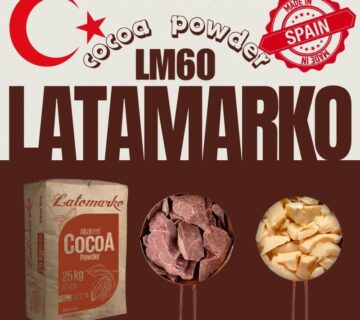
LATAMARKO LM60 – Premium Spanish-Origin Cocoa Powder
latamarko alkalized cocoa powder lm60
cocoa powder for chocolate production-Best price
Food industry raw materials – list of products
Types of Gelatin from Turkish Manufacturer
Food Raw Material Supplier in Germany for the Food Industry
The Taste Factor: Why Fat Matters
High‑Fat Cocoa Powder and Flavor Release
Fat is not just a cost driver—it’s a flavor carrier. Cocoa butter encapsulates aromatic compounds in ways that dry powder alone cannot. Think of it like essential oils in an industrial resin: the binder changes how the “active” interacts with its environment. High‑fat cocoa powder typically:
- Enhances richness and depth in finished products
- Provides more rounded mouthfeel in beverages and confectionery
- Delays flavor burnout in high‑temperature applications (e.g., baked goods)
In our experience supplying manufacturing facilities, products formulated with high‑fat cocoa powder often require less corrective flavoring later in the line—saving costs on flavor carriers and masking agents.
Low‑Fat Cocoa Powder: Potent but Lean
Low‑fat cocoa powder is more concentrated in flavor solids by weight, but with less fat to carry those flavors. The result?
- A sharper, sometimes more astringent chocolate note
- Greater brightness in color (more on this soon)
- A drier sensation unless compensated with additional fats or emulsifiers
For some products—especially where formulation budgets are tight—low‑fat cocoa powder remains compelling. But be mindful: what you save in raw material cost can be eroded by higher downstream processing or recipe tweaking.
The Visual Impact: Color and Appearance
Color is perception. In industrial food production, appearance drives consumer expectations and brand identity.
Why High‑Fat Cocoa Powder Yields Darker Visually Rich Products
The oil remaining in high‑fat cocoa powder refracts light differently than defatted particles:
- Products exhibit richer, deeper brown hues
- Baked goods achieve consistency in color from batch to batch
- Lower risk of oxidation‑linked discoloration during storage
This is why premium brands and European specifications (including Spanish engineering standards reflected in quality producers like Latamarko) emphasize certain fat content thresholds—manufacturers know that slight shifts in cocoa butter can alter the visual appeal of a bar, drink mix, or dessert base.
Low‑Fat Cocoa Powder: Brighter but Riskier
Low‑fat cocoa powder often has:
- Brighter reddish‑brown tones
- Greater variability in oxidation over time (especially in humid climates)
- Increased need for color‑stabilizing co‑ingredients
While color may be favorable in some products, it can be a liability in others. For example, beverage powders targeting a “dark chocolate” identity may require higher pigment load or color maskers if low‑fat cocoa powder alone doesn’t deliver the tone expected.
Production Cost: The Economics of Fat Content
When procurement officers talk about cocoa powder, they’re usually thinking cost per kilogram. But in industrial operations, cost is never just about the unit price. There are hidden costs.
Raw Material Price vs Usable Yield
High‑fat cocoa powder generally costs more per kilogram because:
- More cocoa butter remains (which is higher value)
- Processing is gentler and slower
- Quality controls for flavor and acidity are tighter
However, from a usable yield perspective:
- High‑fat cocoa often requires less fat addition downstream (e.g., adding separate cocoa butter in conching or emulsifying)
- Fewer corrective agents (flavors, stabilizers) are needed
- Product consistency minimizes batch rejects
In contrast, low‑fat cocoa powder’s lower price tag can drive cost savings upfront but might incur additional expenses such as:
- Extra fats to balance mouthfeel
- Emulsifiers to improve blend stability
- Color or flavor correctives
When we at MT Royal quote cocoa powder grades to manufacturers, we always walk through Total Cost of Production (TCP), not just FOB price per ton. Too often in industrial bidding, low‑fat variants win on price alone—but factories discover downstream spikes in usage of auxiliary materials.
Bulk Storage and Handling Considerations
Fat content also affects flow behavior:
- High‑fat cocoa powder can exhibit slight stickiness under high humidity, requiring careful silo aeration and controlled humidity zones.
- Low‑fat cocoa powder, being drier, often flows more freely but can create dust control challenges in pneumatic systems.
From a maintenance standpoint, these differences affect:
- Dust filter lifetimes
- Spout feeder calibration
- Wear patterns in rotary valves
Managers should factor these when calculating cost impacts on maintenance budgets.
Industrial Procurement Pitfalls: What to Watch For
The cocoa powder marketplace is segmented—not all products labeled “high‑fat” are created equal.
Misleading Specifications
Some suppliers define “high‑fat” at thresholds that are marginally above low‑fat ranges. Be vigilant:
- Request actual analyzed fat content, not nominal grades
- Check particle size distribution, as fineness influences mixing performance
- Confirm origin and fermentation data (as these affect flavor and color)
In industrial tenders, we’ve seen manufacturers unknowingly receive cocoa powder with inconsistent fat profiles, leading to:
- Greater variation in production runs
- Increased seasoning time in mixers
- Elevated reject rates
Stability and Shelf Life
Cocoa powder is hygroscopic. Fat content affects:
- Oxidative stability
- Clumping risk
- Microbial vulnerability in humid plants
In environments without climate‑controlled bulk storage, low‑fat powders can absorb moisture faster, causing flow issues.
Supplier Reliability
Buying from a stable supplier with consistent quality and delivery reliability—like MT Royal’s industrial portfolio—reduces risk. We supply a range of brands at competitive prices, with quality assurance metrics tailored to manufacturing environments.
Actionable Advice: Choosing Cocoa Powder for Your Production
Every production facility has unique constraints: recipe targets, machine types, climate conditions, and cost ceilings. Here’s a decision framework rooted in industrial realities:
1) Map Your Sensory Goals
Ask:
- Do you need a rich mouthfeel?
- Is color depth critical?
- Are you conveying premium positioning?
If yes → lean toward high‑fat cocoa powder.
If your product benefits from a dryer, sharper flavor note → low‑fat may suffice, but only with formulation adjustments.
2) Evaluate Downstream Costs
Do a cost‑per‑finished‑unit analysis, not cost‑per‑ton of cocoa powder. Include:
- Additional fat additions
- Emulsifier usage
- Color correctives
- Packaging yield differences
3) Audit Your Bulk Handling
Discuss with your maintenance and automation team:
- How does each variant flow in current silos?
- Do dust filters clog more with one type?
- Are mixer discharge rates consistent?
4) Test Rigorously
Deploy trial batches under controlled conditions:
- Measure consistency metrics (e.g., viscosity in chocolate beverages)
- Track finish color using spectrophotometers if applicable
- Evaluate batch yield variances
We’ve seen production floors uncover 3–5% yield variability before vs after switching cocoa powder grades.
5) Source Quality, Not Just Price
In competitive tenders, cheapest offers often have:
- Variability in fat content
- Greater fluctuation in processing outcomes
- Less supplier responsiveness during issues
Working with stable industrial suppliers like MT Royal gives you technical support and consistent deliveries—critical when your line runs round‑the‑clock.
Industrial Examples: Hypotheticals and Lessons
Case Study 1: Beverage Powder Plant
A mid‑sized beverage powder manufacturer switched from low‑fat to high‑fat cocoa powder to deepen flavor profiles in their hot chocolate line. Unexpectedly, their batch mixers struggled with hydration; the initial recipe didn’t account for cocoa butter’s slower wetting dynamics.
⚡ Lesson: High‑fat powders require adjustment in hydration steps—pre‑blending with emulsifiers improved dispersion and prevented lumps.
Case Study 2: Bakery Premix Producer
A bakery mix producer using low‑fat cocoa powder saw inconsistent color in their chocolate cake mix batches. Visual inspection revealed lighter browning, leading to more customer complaints.
By moving to a mid‑range fat content cocoa powder and standardizing particle size, color variation dropped significantly.
⚡ Lesson: Even modest fat increases can stabilize visual output without massive cost jumps.
Case Study 3: Confectionery Line
A large confectionery line needed deep mouthfeel but feared cost impacts. They opted for a blended strategy: high‑fat cocoa powder for premium SKUs and low‑fat for value lines.
⚡ Lesson: Segmentation based on SKU positioning can balance cost with quality.
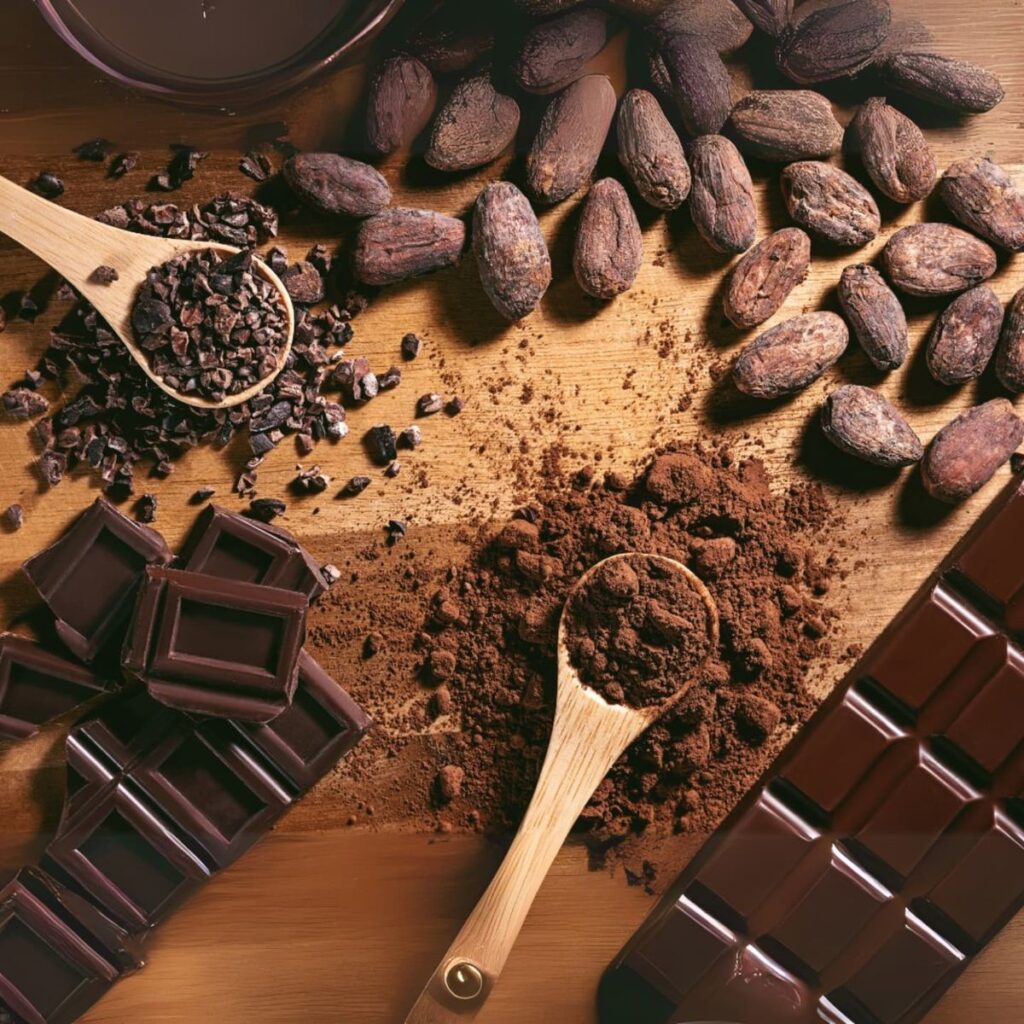
High-Fat vs Low-Fat Cocoa Powder: Comparison Overview
Industrial Note: Choosing the appropriate fat content affects not only taste and color but also production efficiency, equipment performance, and overall cost per batch. Manufacturers can optimize product positioning and operational workflow by selecting cocoa powder aligned with their target flavor, visual quality, and budget considerations. |
|---|
Industry‑Specific Considerations for Large‑Scale Production
Humidity & Climate Controls
Facilities in high humidity regions must adapt handling of cocoa powders differently. High‑fat powders are more prone to stickiness; controlled climate zones improve consistency. Our clients in tropical regions invest in silo dehumidifiers to maintain flow reliability.
Automated Mixing Lines
Variable fat content affects feed rates. A powder that flows differently can cause weigher inaccuracies. High‑fat powders may need vibration aids or feeder calibration. Low‑fat powders might create higher dust, requiring strong local extraction near feeders.
Compliance & Traceability
Industrial cocoa powders are often subject to:
- Allergen controls
- Heavy metal limits
- Microbiological standards
- Sustainability certifications (e.g., traceability programs)
Ask suppliers for full certificates of analysis and traceability documentation—this saves time during supplier audits.
Bulk Order Economics
Bulk unit prices drop significantly when cocoa powder is ordered in mega‑lots. However, storage must be prepared to handle larger volumes without compromising quality.
At MT Royal, we advise on just‑in‑time (JIT) strategies where appropriate, balancing cost with inventory risks.
Frequently Asked Questions (Industrial Focus)
Q: Can I switch between high‑fat and low‑fat cocoa powder without reformulation?
Answer: Rarely. Because fat content affects hydration, mouthfeel, and color, most recipes require adjustment in emulsifiers, liquids, and fats.
Q: Does high‑fat cocoa powder shorten shelf life?
Answer: Not necessarily. With proper storage (cool, dry, controlled humidity), oxidation can be minimized. Antioxidants in the matrix also help.
Q: How do I decide which to buy in bulk?
Answer: Use a blended strategy based on SKU segmentation, anticipated demand forecasts, and storage capacity.
Q: Are there sustainability differences?
Answer: Sustainability is more tied to origin and processing practices than fat content. Always request supplier sustainability profiles.
Closing Reflection for Manufacturing Leaders
The choice between high‑fat cocoa powder and low‑fat cocoa powder is more than a checkbox in a specification sheet. It is a strategic decision woven into how your products feel, look, and perform, and how your production costs truly add up.
Whether you aim to enhance taste richness, stabilize color consistency, streamline bulk handling, or optimize cost per unit, the right cocoa powder grade can alter the trajectory of your product line.
At MT Royal, we’ve worked with production facilities across diverse sectors—and we understand that the difference between a smooth production run and a costly rework often comes down to nuanced decisions like this one. Spanish engineering and premium brands like Latamarko exemplify how thoughtful design and rigorous quality control translate to better outcomes on your factory floor.
So, when you evaluate cocoa powders next, go beyond price. Look at performance, integration, and long‑term value. Your manufacturing line—and your bottom line—will thank you.


No comment