

There’s a moment every production manager recognizes—the point when a seemingly simple ingredient begins affecting everything. Mixing times stretch longer than expected. Color varies between batches. Flavor profiles drift just enough for customers to notice. Suddenly, cocoa powder isn’t just cocoa powder anymore; it’s a variable influencing efficiency, consistency, and profitability.
If you’re searching for a natural cocoa powder supplier in Oman, you’re likely balancing multiple priorities at once: cost control, product quality, supply reliability, and operational efficiency. In modern food manufacturing, those priorities are tightly connected. Ingredient sourcing decisions don’t stay in procurement departments—they travel straight onto the production floor and into your finished goods.
Manufacturers across Oman are expanding their product portfolios in response to growing regional demand for chocolate beverages, bakery products, dairy desserts, and functional foods. That expansion increases the need for dependable cocoa supply chains, especially for natural cocoa powder, which behaves differently than alkalized variants and requires precise formulation management.
This guide explores everything you need to know—from technical fundamentals and procurement strategy to supplier evaluation and industrial best practices—so you can make sourcing decisions with confidence.
What Is Natural Cocoa Powder? Fundamentals That Matter in Production
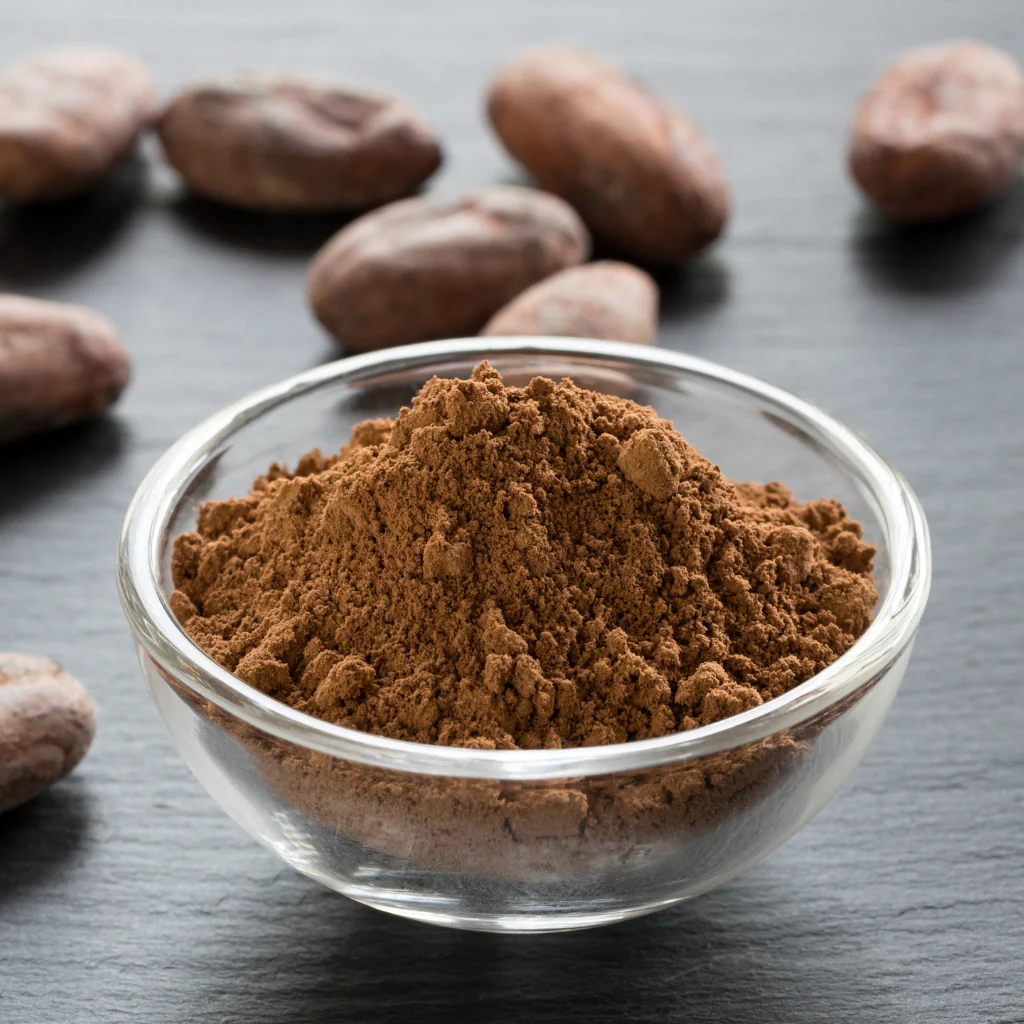
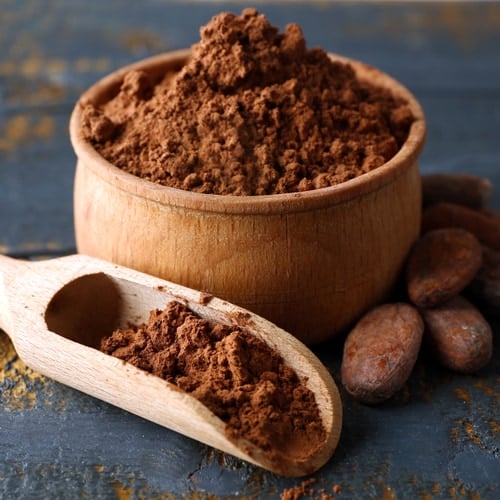
Natural cocoa powder is produced by pressing cocoa liquor to remove cocoa butter and then grinding the remaining cocoa solids into powder without alkalization. Unlike Dutch-processed cocoa, natural cocoa retains its original acidity and lighter color profile.
From a manufacturing perspective, this means:
- Lower pH (typically 5.0–5.8)
- Brighter, more acidic flavor notes
- Lighter reddish-brown color
- Stronger cocoa aroma
- Reactivity with baking soda in formulations
- Slightly different dispersibility behavior
These properties aren’t minor technicalities. They influence chemical reactions, flavor perception, and processing performance.
For example, bakery manufacturers rely on natural cocoa’s acidity to activate leavening agents, while beverage companies may prefer its sharper cocoa flavor for certain product profiles.
Why Natural Cocoa Powder Still Dominates Many Industrial Applications
Despite the popularity of alkalized cocoa, natural cocoa powder remains essential in multiple manufacturing sectors.
Key Industrial Applications
Bakery Production
Natural cocoa reacts with sodium bicarbonate, contributing to proper rise and texture in cakes, muffins, and cookies.
Chocolate Beverages
Its bright flavor profile creates a more authentic chocolate taste in some formulations.
Confectionery Fillings
Natural cocoa delivers stronger cocoa aroma at lower usage rates.
Dairy Products
Ice cream and flavored milk products often use natural cocoa to achieve specific sensory profiles.
Health and Functional Foods
Natural cocoa retains more polyphenols and antioxidants, appealing to wellness-oriented products.
For factories targeting clean-label or “natural ingredient” positioning, natural cocoa powder provides marketing advantages as well.
The Operational Impact of Choosing the Right Supplier
Selecting a natural cocoa powder supplier isn’t only about price per ton. It’s about operational stability.
Variations between suppliers can affect:
- Mixing behavior and hydration time
- Flavor consistency
- Color uniformity
- Dosage rates
- Shelf-life stability
- Production downtime due to adjustments
We’ve worked with production facilities that experienced significant efficiency improvements simply by switching to a more consistent cocoa source. Reduced mixing time alone can translate into measurable cost savings over a year.
Critical Technical Specifications Procurement Teams Should Evaluate
Industrial buyers should request detailed technical data before approving a supplier.
Key Parameters
| Specification | Industrial Relevance |
|---|---|
| pH Level | Determines compatibility with leavening agents |
| Fat Content | Affects mouthfeel and processing |
| Particle Size | Influences dispersibility and mixing efficiency |
| Moisture | Impacts shelf life and storage stability |
| Color | Critical for visual consistency |
| Microbiology | Essential for food safety compliance |
Factories producing multiple SKUs may require different cocoa grades tailored to each application.
Common Misconceptions in Industrial Cocoa Procurement
Even experienced buyers sometimes underestimate cocoa powder complexity.
Misconception 1: All Natural Cocoa Is Similar
Origin, processing technology, and fat content create significant performance differences.
Misconception 2: Cheapest Option Reduces Costs
Lower-quality cocoa often requires higher dosage, increasing cost per finished unit.
Misconception 3: Supplier Location Doesn’t Matter
Reliable logistics and local distribution support reduce risk and lead times.
Misconception 4: Trials Are Optional
Skipping production trials can lead to costly reformulation later.
Industrial Advantages of Working with a Reliable Supplier in Oman
A strong local or regional supplier provides several benefits:
- Faster delivery timelines
- Reduced logistics risk
- Local technical support
- Inventory flexibility
- Better communication during market fluctuations
At MT Royal, we supply manufacturers with a comprehensive range of cocoa powder brands, ensuring competitive pricing without compromising on quality. Access to multiple origins and specifications allows factories to choose solutions aligned with their production requirements rather than adapting processes around ingredient limitations.
Global Supply Chain Trends Affecting Natural Cocoa Procurement
Cocoa markets have experienced significant volatility in recent years due to:
- Climate challenges in West Africa
- Rising global demand
- Sustainability certification requirements
- Energy and logistics costs
- Currency fluctuations
Industry analysts report that cocoa prices have seen substantial increases due to weather-related supply disruptions. For manufacturers, this volatility makes supplier relationships and contract strategies more important than ever.
Long-term agreements with dependable suppliers can help stabilize pricing and reduce procurement risk.
Choosing the Right Fat Content for Industrial Applications
Natural cocoa powder is typically available in several fat ranges:
- 10–12% fat (low fat)
- 20–22% fat (standard)
- 22–24% fat (high fat)
Each range serves different purposes:
Low Fat
Cost-effective for large-scale bakery and beverage production.
Standard Fat
Balanced performance across multiple applications.
High Fat
Premium flavor and mouthfeel for specialty products.
Procurement teams should evaluate how fat content affects both sensory quality and processing performance.
Premium Quality Considerations and European Standards
High-end cocoa powders often come from manufacturers with advanced processing technology and strict quality control systems.
Spanish producers, including brands like Latamarko, are recognized for delivering consistent particle size, color stability, and flavor intensity. Premium cocoa may carry a higher purchase price, but manufacturers frequently find that improved efficiency and reduced dosage offset the cost difference.
For brands targeting premium retail segments, ingredient quality directly influences consumer perception.
Storage and Handling Best Practices in Manufacturing Facilities
Natural cocoa powder is sensitive to environmental conditions.
Recommended practices include:
- Store below 25°C in dry conditions
- Avoid humidity exposure
- Keep packaging sealed until use
- Implement FIFO inventory management
- Monitor warehouse humidity levels
Improper storage can lead to clumping, flavor degradation, and microbial risks.
Real Manufacturing Scenario: Small Change, Big Impact
Consider a biscuit factory producing 15 tons daily. A slight variation in cocoa particle size increases mixing time by two minutes per batch.
Over one year, this translates into:
- Higher energy consumption
- Reduced production capacity
- Increased labor costs
- More equipment wear
Ingredient consistency directly affects operational efficiency.
We’ve seen factories recover significant productivity simply by standardizing ingredient quality.
Industry-Specific Considerations for Large-Scale Production
Automated dosing compatibility
Ensure the cocoa powder flows smoothly through automated dosing systems without clogging or bridging, which maintains accurate ingredient measurement and consistent product quality.
Bulk packaging formats
Selecting suitable bulk packaging (bags, totes, or bulk containers) affects storage efficiency, handling safety, and ease of integration into production lines.
Pneumatic conveying behavior
Cocoa powder must be compatible with pneumatic conveying systems, avoiding excessive dust generation or blockages that could disrupt continuous processing.
Dust control requirements
Proper dust management prevents equipment fouling, reduces fire or explosion risks, and ensures a cleaner, safer factory environment.
Cleaning and sanitation protocols
Cocoa powder can leave residues; packaging and particle size must support effective cleaning routines to prevent cross-contamination between batches.
Production line changeover efficiency
Ingredient handling characteristics influence how quickly lines can switch between products, affecting overall throughput and operational flexibility.
Frequently Asked Questions from Factory Owners and Procurement Managers
What is the shelf life of natural cocoa powder?
Typically 24 months when stored properly in sealed conditions.
Does natural cocoa require formulation adjustments compared to alkalized cocoa?
Yes. Its acidity interacts differently with leavening agents and other ingredients.
Can higher-quality cocoa reduce usage rates?
Often yes, due to stronger flavor intensity and color.
Is origin important?
Yes. Different regions produce cocoa with distinct flavor and functional properties.
Should manufacturers sign long-term contracts?
Contracts can stabilize pricing and ensure supply continuity, especially during volatile market periods.
A Final Perspective for Manufacturing Decision-Makers
When evaluating a natural cocoa powder supplier in Oman, you’re not simply sourcing a raw material—you’re influencing production efficiency, product quality, and customer satisfaction across your entire operation. The right supplier becomes part of your manufacturing ecosystem, helping stabilize processes, reduce downtime risk, and support consistent output.
Over time, those advantages compound. Predictable ingredient performance means fewer formulation adjustments, smoother production schedules, and stronger confidence when launching new products or scaling capacity. Procurement decisions today quietly shape operational success months and years into the future.
LATAMARKO LM60 – Premium Spanish-Origin Cocoa Powder
latamarko alkalized cocoa powder lm60
cocoa powder for chocolate production-Best price
Food industry raw materials – list of products
Alkalized Cocoa Powder Price: Complete Buyer Guide for 2026



No comment