

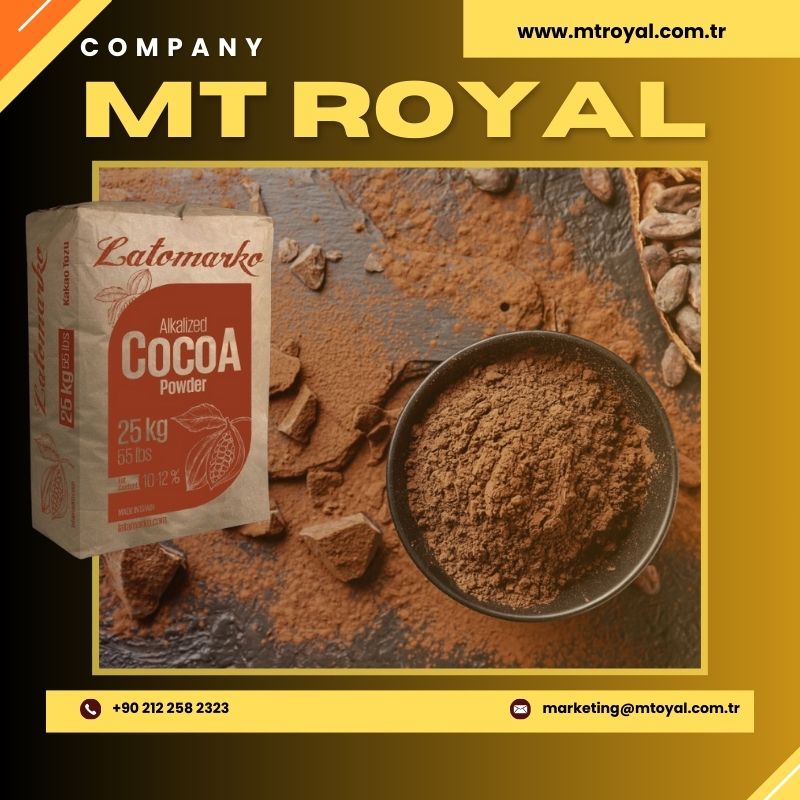
For industrial food manufacturers, cocoa powder is far more than a simple ingredient—it’s a cornerstone of product quality, operational efficiency, and consumer appeal. The choice between natural and alkalized cocoa powder can define the outcome of baked goods, confectionery, ice cream, and chocolate beverages.
One process stands out for its impact: alkalization, also known as Dutch processing. By adjusting the pH of cocoa powder, manufacturers can achieve deeper colors, smoother flavors, and more predictable performance in production. This article explores the science, benefits, and practical applications of alkalized cocoa powder, with insights from MT Royal and premium European brands like Latamarko.
Understanding Alkalization
What Is Cocoa Alkalization?
Alkalization is a controlled chemical treatment that neutralizes the natural acidity of cocoa powder. Typically, cocoa is treated with an alkaline solution—commonly potassium carbonate—raising its pH from around 5.0–6.0 (natural cocoa) to 6.5–8.0.
This pH adjustment has multiple effects:
- Color enhancement: Produces a richer, darker brown suitable for visually appealing products.
- Flavor improvement: Reduces bitterness and acidity, creating a smoother, more balanced taste.
- Functional benefits: Improves solubility and dispersibility in liquid and dough-based applications.
Why It Matters for Manufacturers
From a production perspective, alkalization ensures consistency across batches—a critical factor for large-scale operations. It allows facility managers to predict how cocoa interacts with leavening agents, dairy, and emulsifiers, reducing trial-and-error adjustments in formulas.
How Alkalization Impacts Flavor
Alkalization modifies the chemical composition of cocoa, notably by reducing the acidity caused by organic acids. This has several key effects on flavor:
- Reduced bitterness: Alkalized cocoa provides a milder chocolate taste.
- Smoother flavor profile: Essential for products like chocolate milk, ganache, or ice cream, where aggressive acidity can overpower subtle ingredients.
- Enhanced flavor stability: Maintains taste over shelf life, even under variable storage conditions.
In practical terms, manufacturers using alkalized cocoa experience fewer consumer complaints about off-flavors and achieve more predictable sensory results.

How Alkalization Enhances Color
Color is often the first sensory cue for consumers. Alkalized cocoa powder delivers:
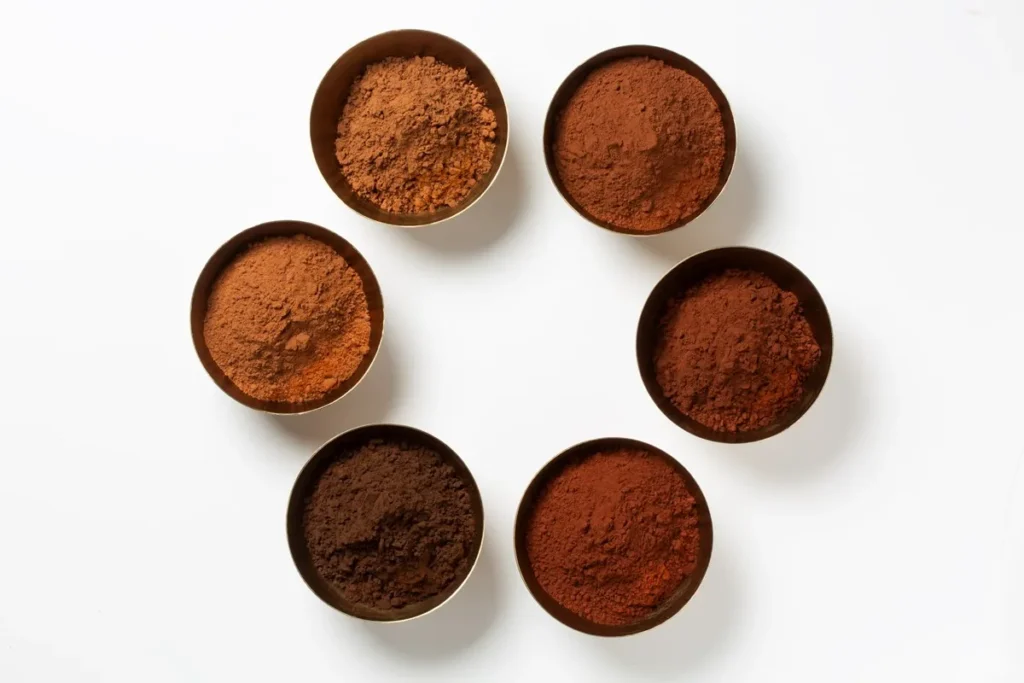
- Uniform dark brown hue: Ideal for cakes, cookies, beverages, and coatings.
- Reduced fading: Color remains consistent during baking, mixing, and storage.
- Brand consistency: When using premium European brands like Latamarko, color variations are minimal, supporting premium product positioning.
The difference may seem subtle, but in high-volume industrial production, even small color inconsistencies can trigger quality control issues.
Industrial Advantages of Alkalized Cocoa
Beyond flavor and color, alkalization contributes to operational efficiency:
1. Improved Solubility and Dispersibility
Alkalized cocoa dissolves faster in liquid mixes, reducing clumps and speeding up mixing times. This is especially beneficial in ice cream production or beverage applications.
2. Predictable Interactions with Ingredients
Unlike natural cocoa, which can unpredictably react with baking soda or acids, alkalized cocoa behaves consistently, minimizing failed batches.
3. Enhanced Shelf Life
Alkalized cocoa maintains its color and flavor stability over time, reducing waste and ensuring reliable production schedules.
At MT Royal, we’ve observed that factories sourcing premium brands like Latamarko benefit from reduced downtime and higher product uniformity across multiple production lines.
Comparing Natural and Alkalized Cocoa
| Feature | Natural Cocoa | Alkalized Cocoa |
|---|---|---|
| pH | 5–6 (acidic) | 6.5–8 (neutral/alkaline) |
| Flavor | Strong, slightly bitter | Smooth, mild, balanced |
| Color | Light brown | Dark brown, consistent |
| Solubility | Moderate | High, clump-resistant |
| Baking Interaction | Reacts with baking soda | Predictable, stable |
| Shelf Life | Sensitive | Stable color & flavor |
This comparison demonstrates why many industrial manufacturers choose alkalized cocoa for applications demanding consistency, visual appeal, and smooth flavor.
Practical Applications in Food Manufacturing
Bakeries
- Achieves uniform color in chocolate cakes, muffins, and cookies.
- Reduces batch variations caused by cocoa acidity.
Confectionery
- Ensures smooth chocolate fillings, coatings, and ganache.
- Maintains flavor stability during storage and transport.
Ice Cream and Frozen Desserts
- Rapid dispersion in dairy-based mixes.
- Smooth, rich chocolate flavor without acidity spikes.
Beverages
- Produces visually appealing chocolate drinks with balanced taste.
Common Misconceptions
- “Alkalized cocoa is just for color.”
While color is enhanced, flavor, solubility, and process predictability are equally important benefits. - “Natural cocoa is always better.”
Natural cocoa’s acidity is beneficial in some recipes, but alkalized cocoa provides smoother taste and industrial efficiency where acidity control is critical. - “All alkalized cocoa powders are equal.”
Quality varies. European brands like Latamarko offer precise pH, particle size, and moisture control, ensuring consistent results.
Tips for Industrial Procurement
- Evaluate Product Requirements: Determine whether flavor, color, or process stability is the priority.
- Test in Pilot Batches: Assess solubility, color retention, and flavor profile.
- Check Supplier Specifications: Ensure pH, moisture, and particle size meet industrial standards.
- Select Reliable Brands: MT Royal provides premium brands like Latamarko for consistent, high-quality performance.
- Monitor Quality: Implement batch testing to maintain uniformity in large-scale production.
Real-Life Manufacturing Insights
In our experience supplying production facilities, we’ve seen how switching to alkalized cocoa improves operational outcomes:
- A chocolate beverage manufacturer reduced mixing times by 20% after adopting Latamarko alkalized cocoa.
- A bakery reported more consistent color and fewer batch rejections in chocolate muffins.
These real-world examples underscore the tangible benefits of alkalization beyond theoretical chemistry.
Industry Considerations
Bulk Handling & Storage
- Cocoa powders are hygroscopic; moisture control prevents clumping.
- Alkalized powders generally flow better in silos, reducing production interruptions.
Regulatory Compliance
- Traceability and certification are essential for food safety.
- MT Royal ensures all premium cocoa brands meet international quality standards.
Cost vs Value
- Alkalized cocoa may be more expensive upfront, but lower waste, reduced downtime, and consistent quality provide long-term value.
Frequently Asked Questions
Q1: Does alkalization affect nutritional value?
A: Minimal impact. Flavor and color benefits are achieved without significant nutrient loss.
Q2: Can alkalized cocoa replace natural cocoa in all recipes?
A: Mostly, but recipes relying on acidity for leavening may need adjustments.
Q3: Why choose Latamarko for industrial cocoa?
A: Premium European engineering ensures precise pH, moisture control, and consistent particle size for reliable industrial performance.
Closing Thoughts
Alkalization is a game-changer for food manufacturers. By enhancing color, flavor, and operational efficiency, alkalized cocoa powder elevates product quality and supports reliable production.
Selecting premium brands like Latamarko through trusted suppliers such as MT Royal ensures that your chocolate products consistently meet both consumer expectations and production goals.



No comment