

Quality control isn’t a luxury in industrial manufacturing — it’s the backbone of product performance, production optimization, regulatory compliance, and brand reputation. This is especially true when working with complex raw materials like cocoa mass, a foundational ingredient used across food processing, confectionery production, and even specialty industrial applications.
This article dives into that very question by unraveling the quality control standards for cocoa mass in Saudi Arabia. We’ll go beyond surface‑level definitions to explore practical routines, compliance checkpoints, decision‑making frameworks, and real‑world context so you can optimize performance and reduce risk in your production ecosystem.
Even for seasoned professionals, this territory can be fraught with ambiguity — from ambiguous specs provided by different suppliers, to subtle variations in material handling, to regulatory nuance under Saudi standards. Our goal here is to bring clarity, depth, and actionable insight.
Let’s begin by demystifying the subject from the ground up.
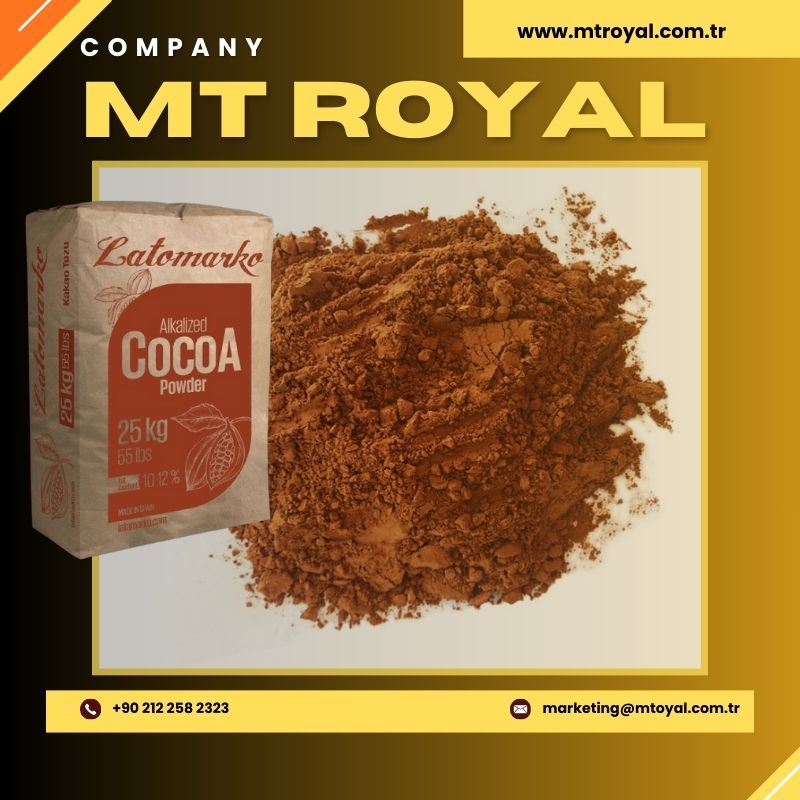
Alkalized Cocoa Powder Supplier
latamarko alkalized cocoa powder lm60
Food industry raw materials – list of products
Getting Grounded: What Is Cocoa Mass and Why Quality Matters
At its core, cocoa mass — sometimes called cocoa liquor, despite containing no alcohol — is the pure, ground essence of roasted cocoa beans. It’s the foundational raw material from which cocoa butter and cocoa powder are separated, but in many processes it plays a role directly in product formulations, especially in chocolate manufacturing.
For industrial manufacturers the stakes of quality control are higher because:
- Ingredient uniformity drives process stability. Variability in viscosity, fat content, or foreign matter can slow your line, spike scrap rates, or throw tempering systems out of calibration.
- Consumer safety is non‑negotiable. Standards in Saudi Arabia — particularly in food applications — require traceability, accurate labeling, and hygiene certainty.
- Global supply chains introduce variability. Sourcing from different origins means different bean profiles, roast degrees, and moisture behaviors.
That’s why quality control standards for cocoa mass in Saudi Arabia isn’t just about compliance — it’s about operational resilience.
Decoding Quality: The Key Characteristics of Top‑Tier Cocoa Mass
Understanding which quality metrics truly matter helps you filter through supplier claims and confidently calibrate your acceptance criteria. Here are the core attributes that industrial buyers should examine:
1. Fat Content (Cocoa Butter Percentage)
Fat content governs flow, mouthfeel (in food products), and processing characteristics. Too low, and the material may be overly viscous; too high, and you may struggle with separation or tempering.
- Optimal range for industrial use: Typically 50–55% cocoa butter, though application nuances can shift targets.
- Why it matters: Fat percentage affects how cocoa mass interacts with emulsifiers, heating cycles, and downstream blending.
2. Particle Size Distribution
In manufacturing — especially confectionery — particle size uniformity affects:
- Texture
- Viscosity
- Grinding energy consumption
Cocoa mass that is poorly milled or unevenly sized can cause unpredictable behavior in refining or conching stages.
3. Moisture & Microbiological Status
Excess moisture invites spoilage organisms and interferes with shelf stability. Microbiological safety testing — for yeasts, molds, and pathogens — protects both the consumer and your production lines.
Many local Saudi food standards align with GSO (Gulf Standard Organization) and SFDA (Saudi Food & Drug Authority) expectations for safe moisture content and microbial absence.
4. Foreign Matter & Contaminants
Even trace extraneous materials — like shell fragments, dust, or other nuts — compromise quality, yield losses, and can cause line stoppages due to filtration or polishing steps.
5. Sensory and Roast Profile
While sensory attributes may seem subjective, they influence consistency, flavor development, and how cocoa mass interacts with sweeteners or flavor systems.
Saudi Regulatory Landscape: What You Must Know
Navigating regulatory frameworks is where industry expertise really pays off. Saudi Arabia enforces quality regimes that combine food safety laws, labeling mandates, and industrial standards.
Here’s how quality control collides with compliance:
1. SFDA Compliance for Food‑Grade Cocoa Mass
The Saudi Food & Drug Authority (SFDA) mandates:
- Ingredient labeling accuracy
- Safety certificates
- Manufacturing traceability
This means every lot of cocoa mass entering a food plant must be documented from origin, with appropriate certificates confirming hygiene testing, heavy metal screening (e.g., lead), and allergen statements.
2. GSO and SASO Standards
The Gulf Standards Organization (GSO) sets regional benchmarks for commodities and marketing claims. Saudi Standards, Metrology and Quality Organization (SASO) also plays a role in material safety thresholds.
While these aren’t always publicly searchable in English, the essence is straightforward: material must be consistent, safe, and documented.
3. Traceability Records
A top‑tier quality control system maintains records that link each batch of cocoa mass to:
- Lot number
- Origin
- Shipping documents
- Test reports
We’ve seen producers lose weeks of production due to incomplete traceability — and then pay for unscheduled audits.
Setting Up an Effective Quality Control Framework in Your Factory
If cocoa mass is a strategic ingredient in your operations, your quality control process should be proactive — not reactive. Here’s how to architect a robust system that dovetails with both Saudi standards and manufacturing realities.
Define Clear Acceptance Criteria
Generic supplier specs are rarely enough. Build your own acceptance sheet that includes:
| Quality Attribute | Target | Tolerance Margin | Test Method |
|---|---|---|---|
| Fat content | 52% | ±1% | GC or NIR |
| Moisture content | 1.5% | ±0.5% | Karl Fischer |
| Particle size | ≤50 µm | ±10 µm | Laser Diffraction |
| Microbiological | None detected | — | Standard Plate Count |
These aren’t arbitrary — they’re rooted in what makes production smooth and consistent.
Common Pitfalls in Cocoa Mass Quality Control — and How to Avoid Them
Understanding pitfalls lets you build safeguards rather than firefighting later.
1. Relying Solely on Certificates Without Testing
Certificates can be forged, outdated, or based on different standards. Independent lab testing — at least on first lots — should be non‑negotiable.
2. Ignoring Sensory Variations
Manufacturing often focuses on numbers. But when cocoa mass behaves differently in your melters or refiners from batch to batch, sensory deviations can be the first sign of inconsistency.
Train technical teams to capture qualitative feedback alongside analytical results.
3. Failing to Update Quality Benchmarks
Industry standards and consumer expectations evolve. A specification that worked five years ago might not align with:
- Higher cocoa solids formulations
- Cleaner labels
- Stricter traceability regimes
Periodic review (at least annually) keeps your QC framework current.
Industrial Challenges & Strategic Opportunities
Every production manager knows that quality control doesn’t happen in a vacuum. It intersects with:
1. Production Continuity
Imagine a high‑speed chocolate tempering line grinding to a halt because the latest cocoa mass batch exceeded viscosity limits. Downtime here isn’t just minutes lost — it’s a flow‑on effect to packaging, labor costs, and delivery windows.
Lean quality control prevents these disruptions.
2. Supplier Risk Management
Good supply chains hedge risk by:
- Qualifying multiple sources
- Holding safety stock
- Forecasting demand with buffer margins
This is where trusted partners, such as MT Royal, add value. We’ve seen factory managers benefit from having breadth in sourcing — optimizing between cost leaders and premium quality suppliers like Latamarko.
3. Cost Per Unit vs Quality Trade‑Offs
At first glance, a lower price per kilogram can feel like a win.
But if that material costs more in:
- Line downtime
- Additional refining energy
- Increased scrap
… then the true cost is actually higher.
Quality control standards help you quantify this trade‑off, not just feel it.
Comparison Table: Common Quality Attributes by Application
| Attribute | Confectionery | Industrial Chocolate | Non‑Food Applications |
|---|---|---|---|
| Fat Consistency | Critical | Important | Variable |
| Particle Size | Fine | Moderate | Flexible |
| Moisture Control | Essential | Essential | Dependent |
| Traceability | Required | Required | Recommended |
| Sensory Profile | High Priority | Medium Priority | Low Priority |
This kind of matrix can help you prioritize what matters most for your specific use case.
Frequently Asked Questions from Industry Professionals
Q: What’s an acceptable moisture content for cocoa mass in Saudi Arabia?
A: Most food processing lines set ≤1.5% as a target — anything above raises microbiological risk.
Q: How often should suppliers be audited?
A: At minimum, annually. But if your volumes are large or the material has high variability, consider semi‑annual reviews.
Q: Should we test every batch or use statistical sampling?
A: For critical attributes (like fat content and foreign matter), test every batch. For lower‑risk parameters, statistically valid sampling reduces lab costs without sacrificing control.
Integrating Quality Control into Supply Chain Strategy
Quality isn’t a silo — it affects logistics, procurement, production, and even customer satisfaction.
For example:
- Plan logistics so that cocoa mass arrives within your optimal temperature window
- Align purchase volumes with storage capacity and QC throughput
- Sync QC results with ERP systems to drive automated alerts and reorder actions
Bringing these functions together is what turns a checklist into a quality‑driven competitive advantage.
A Closer Look: Premium Quality Sourcing Options
Not all cocoa mass suppliers are created equal.
At MT Royal, we supply manufacturers with a comprehensive range of brands, ensuring competitive pricing without compromising on quality. Some sources we work with are optimized for cost efficiency; others, including premium European options with engineering heritage (think Spanish‑origin brands like Latamarko), bring tighter control over production and documentation.
These premium suppliers often deliver:
- Tighter tolerances
- Superior traceability
- Consistent sensory profiles
This can matter when your downstream products command higher margins or stricter quality positioning.
What the Future Holds: Trends in Quality Control for Cocoa Mass
The industrial world never stands still. Here are a few trends reshaping how manufacturers approach quality control:
Digital Traceability
Blockchain and cloud‑based systems are being piloted for ingredient tracking — reducing ambiguity in origin and testing history.
Automated Inline Testing
Spectroscopy and inline sensors allow real‑time quality checks, eliminating lag between test and production.
Predictive Quality Analytics
AI‑driven models (built internally, not discussed here) are being used to forecast quality shifts based on seasonality, origin data, and process conditions.
Manufacturers who stay ahead of these trends are the ones who consistently outperform competitors.


No comment