

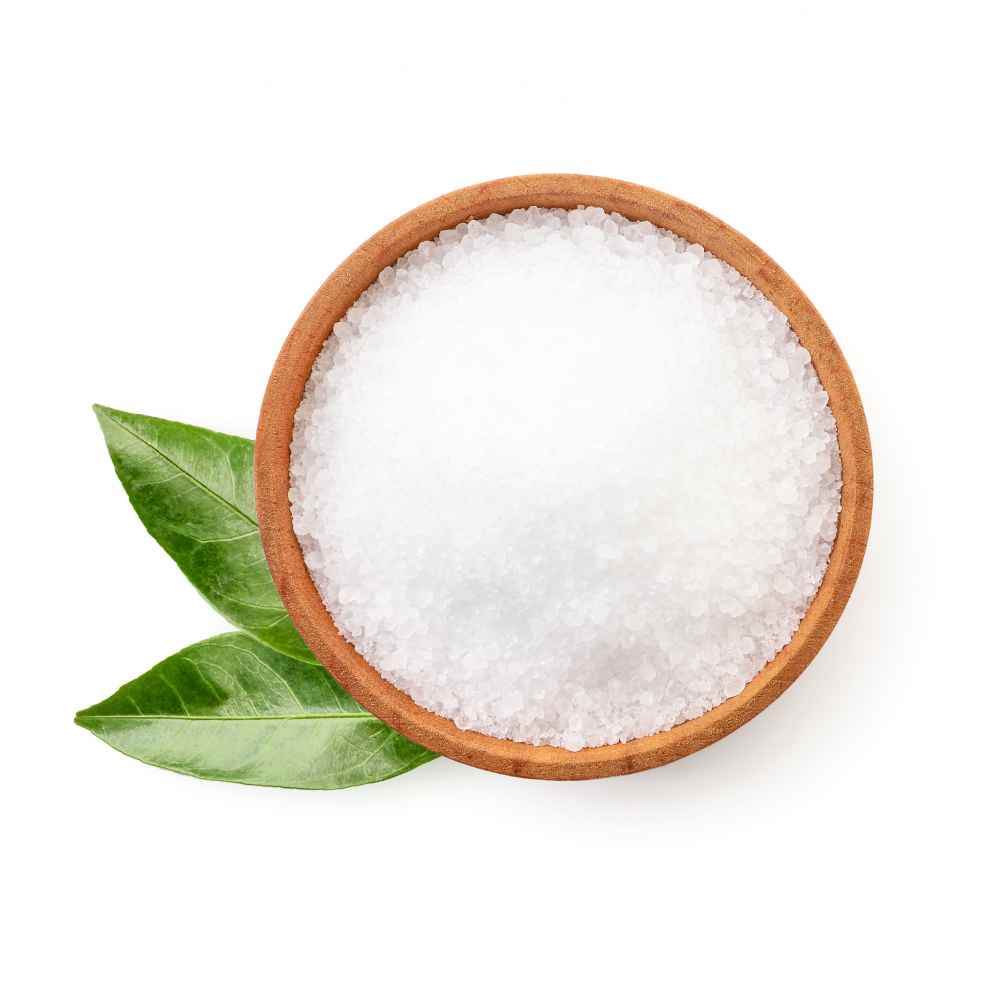
For beverage manufacturers in Egypt, Citric Acid for Beverage Factories Egypt is a cornerstone ingredient that ensures product stability, taste consistency, and regulatory compliance. Whether you produce soft drinks, fruit juices, energy beverages, or functional drinks, citric acid plays a critical role in flavor enhancement, pH adjustment, and microbial control. Selecting a reliable supplier like MT Royal is not just a matter of sourcing—it is a strategic decision that affects product quality, operational efficiency, and long-term market competitiveness.
Egypt’s beverage market is expanding rapidly, driven by urbanization, increasing disposable incomes, and consumer demand for high-quality drinks. Factories must therefore rely on ingredients that offer consistent performance, traceable quality, and technical support for industrial-scale production. Citric acid is more than a simple acidulant; it is a functional ingredient that interacts with sweeteners, preservatives, and flavors to deliver a balanced and appealing beverage.
This comprehensive guide explores the fundamental concepts of citric acid, common sourcing mistakes, practical comparisons, specialized industrial tips, frequently asked questions, and actionable strategies to optimize beverage production in Egypt.
Understanding Citric Acid in Beverage Manufacturing
Citric acid (C₆H₈O₇) is a naturally occurring organic acid found in citrus fruits. Industrially, it is primarily produced through microbial fermentation using strains of Aspergillus niger, resulting in a high-purity, food-grade crystalline product.
Key Functions in Beverage Production
- Acidulant: Adjusts pH to create a refreshing tartness while enhancing sweetness perception.
- Preservative Enhancer: Works synergistically with preservatives such as sodium benzoate to inhibit microbial growth.
- Buffering Agent: Stabilizes the pH during processing and storage, protecting flavors and color stability.
- Chelating Agent: Binds metal ions like calcium and magnesium to prevent off-flavors and cloudiness in beverages.
In our collaboration with various factories in Egypt, we have observed that the use of high-quality citric acid from trusted suppliers reduces batch variability, prevents microbial spoilage, and enhances both taste and shelf life.
Why a Reliable Supplier Matters
Sourcing citric acid from a dependable partner is essential for maintaining consistency, compliance, and operational efficiency.
1. Consistent Quality
Industrial beverage production demands consistent acidity and solubility. Suppliers like MT Royal ensure that every batch meets strict quality parameters for particle size, moisture content, and purity.
2. Technical Expertise
Citric acid must be integrated correctly with other ingredients. Experienced suppliers provide guidance on solubility, pH targets, and interactions with sweeteners, flavors, and preservatives, minimizing production errors.
3. Regulatory Compliance
Food-grade citric acid in Egypt must comply with local standards (EOS), as well as Codex Alimentarius guidelines for food additives. Reliable suppliers provide certified products with full traceability for audits and quality assurance.
4. Supply Chain Reliability
Consistent bulk deliveries prevent production interruptions, reduce stockouts, and enable factories to maintain high-speed filling and bottling operations.
Types of Citric Acid Used in Beverage Factories
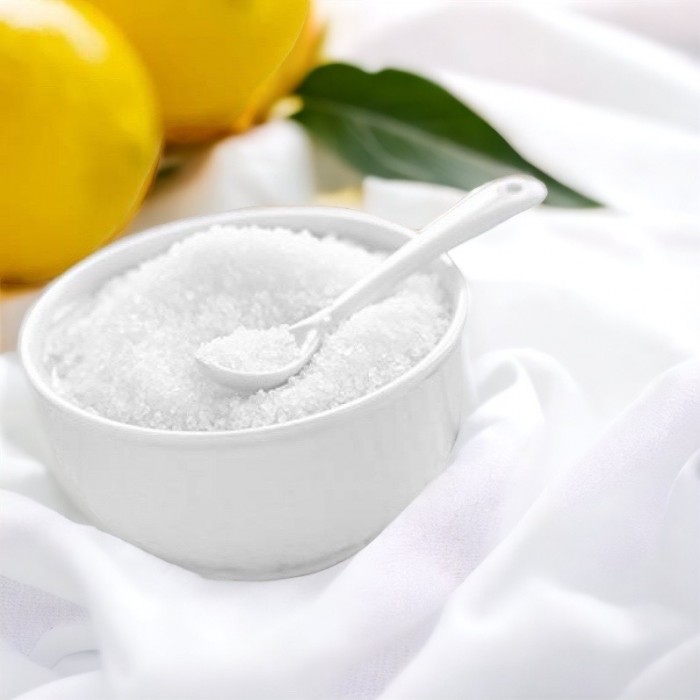
Understanding the types of citric acid helps manufacturers select the right product for their beverage formulations.
1. Anhydrous Citric Acid
- Properties: Pure, crystalline, low moisture content.
- Industrial Insight: Dissolves quickly, ideal for powdered beverage mixes and concentrated syrups.
2. Monohydrate Citric Acid
- Properties: Contains one molecule of water per citric acid molecule; slightly lower acidity.
- Industrial Insight: Commonly used in liquid beverage syrups where slower dissolution is acceptable.
3. Liquid Citric Acid
- Properties: Pre-dissolved, ready-to-use solution with specified concentration.
- Industrial Insight: Reduces handling time, ensures uniform distribution in large-scale mixing tanks, and simplifies process automation.
4. Food-Grade vs Industrial-Grade
- Food-Grade: Meets strict purity requirements, free from heavy metals, microbial contamination, and foreign matter.
- Industrial-Grade: Lower purity; may be suitable for cleaning or non-edible applications but not recommended for beverage production.
Common Mistakes in Sourcing Citric Acid
Even experienced procurement teams can encounter challenges. Avoiding these errors ensures production efficiency and product quality.
1. Prioritizing Cost Over Purity
Lower-priced citric acid may contain impurities that affect flavor, color, or shelf life. Always evaluate total operational cost, including quality impact.
2. Neglecting Solubility and Particle Size
Incorrect particle size can cause incomplete dissolution, inconsistent acidity, or cloudiness in the final beverage.
3. Ignoring Technical Support
Without supplier guidance on pH targets, synergistic preservative interactions, and dosing, factories may experience microbial contamination or flavor imbalance.
4. Inadequate Storage and Handling
Citric acid is hygroscopic, meaning it absorbs moisture from the air. Improper storage can lead to clumping, reduced solubility, and dosing inaccuracies.
Industrial Tips for Large-Scale Beverage Production
Optimizing citric acid integration in industrial processes requires attention to detail and process parameters.
- Dissolution Efficiency: Pre-dissolve citric acid in water or syrup at controlled temperature to ensure uniform distribution.
- pH Monitoring: Use inline pH meters to maintain target acidity during mixing and pasteurization.
- Temperature Control: High-temperature processing can accelerate acid degradation or alter flavor perception; monitor carefully.
- Batch Standardization: Maintain consistent specifications across production cycles to avoid flavor variability.
- Supplier Collaboration: Work with your supplier to test new formulations, adjust dosages, and troubleshoot process issues.
Factories following these practices maintain high product quality, reduce rework, and enhance shelf stability.
Practical Comparisons for Beverage Manufacturers
| Citric Acid Type | Key Considerations | Industrial Advantage |
|---|---|---|
| Anhydrous | High purity, low moisture | Quick dissolution, suitable for powders |
| Monohydrate | Moderate moisture content | Cost-effective for liquid syrups |
| Liquid Solution | Ready-to-use | Simplifies mixing and automation |
| Food-Grade | High purity, traceable | Safe for consumption, regulatory compliance |
Using these comparisons, beverage factories can align ingredient selection with production requirements, storage conditions, and desired beverage profile.
Frequently Asked Questions
Q1: How can I verify citric acid quality in Egypt?
A1: Request certificates of analysis, test for purity, moisture content, and particle size, and conduct small-scale pilot tests before full production.
Q2: Can citric acid interact with sweeteners or flavors?
A2: Yes. Citric acid influences pH, which can alter flavor perception and sweetener stability. Collaborate with suppliers to optimize formulation.
Q3: How should citric acid be stored in industrial facilities?
A3: Store in dry, cool areas, protected from moisture and light, and ensure airtight packaging to maintain solubility and stability.
Q4: Can suppliers provide bulk deliveries for large factories?
A4: Yes. Trusted suppliers like MT Royal provide bulk packaging and scheduled deliveries to meet high-volume production needs.
Strategic Insights for Long-Term Success
Supplier Collaboration
Engage suppliers in demand forecasting, formulation development, and process troubleshooting. Long-term collaboration ensures uninterrupted supply, consistent quality, and operational efficiency.
Data-Driven Procurement
Track batch performance, acidity consistency, and supplier reliability to optimize ordering, reduce waste, and mitigate supply chain risks.
Sustainability
Select suppliers that source ingredients responsibly and comply with environmental regulations to enhance brand reputation and future-proof operations.
Innovation
Collaborate on new beverage formulations, functional beverages, and preservative optimization to maintain a competitive edge in the Egyptian market.
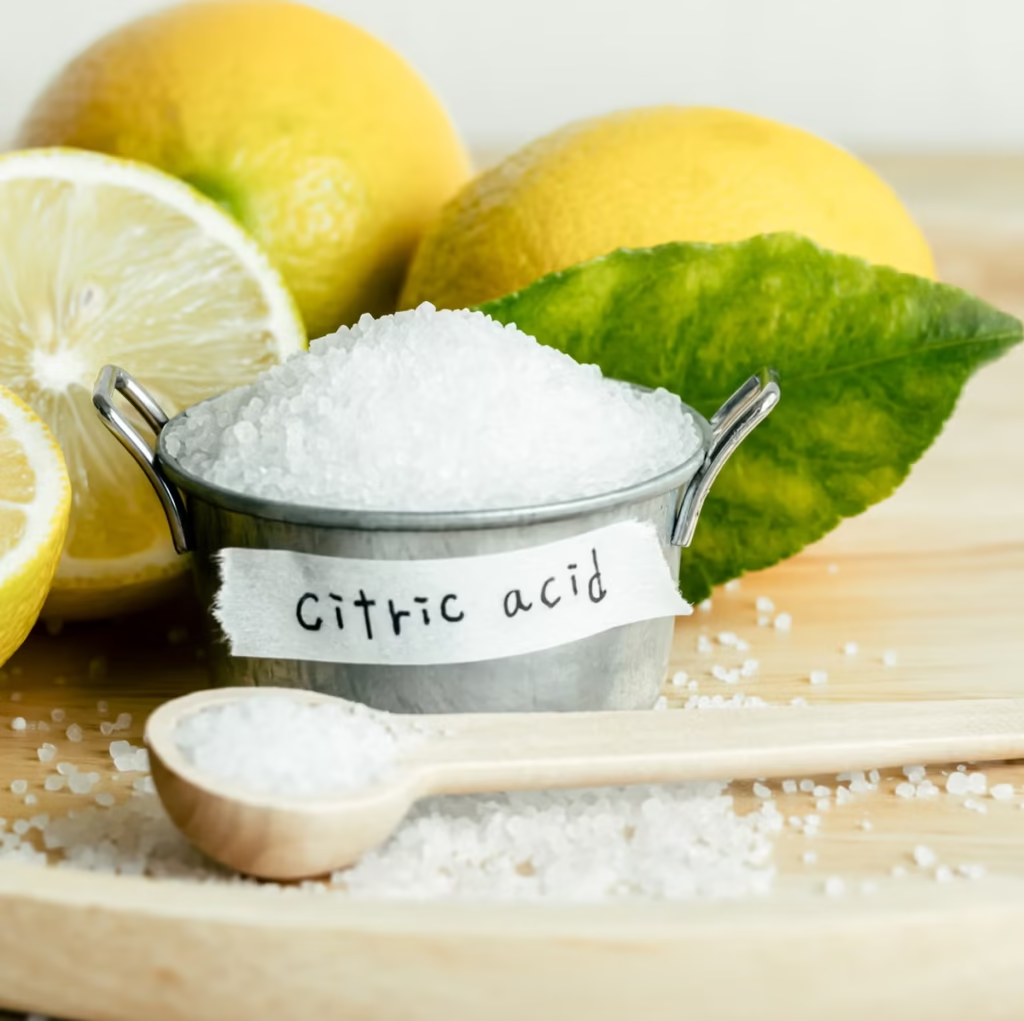
High-quality Citric Acid for Beverage Factories Egypt is not just a simple additive—it is a functional ingredient that ensures taste consistency, stability, and regulatory compliance. Partnering with experienced suppliers like MT Royal provides access to multiple brands, certified products, and technical guidance, allowing your factory to focus on efficient production and delivering high-quality beverages that meet market demands. Treat your citric acid supplier as a strategic partner, and your beverage lines will consistently achieve both quality and operational excellence.
LATAMARKO LM60 – Premium Spanish-Origin Cocoa Powder
latamarko alkalized cocoa powder lm60
cocoa powder for chocolate production-Best price
Food industry raw materials – list of products



No comment