

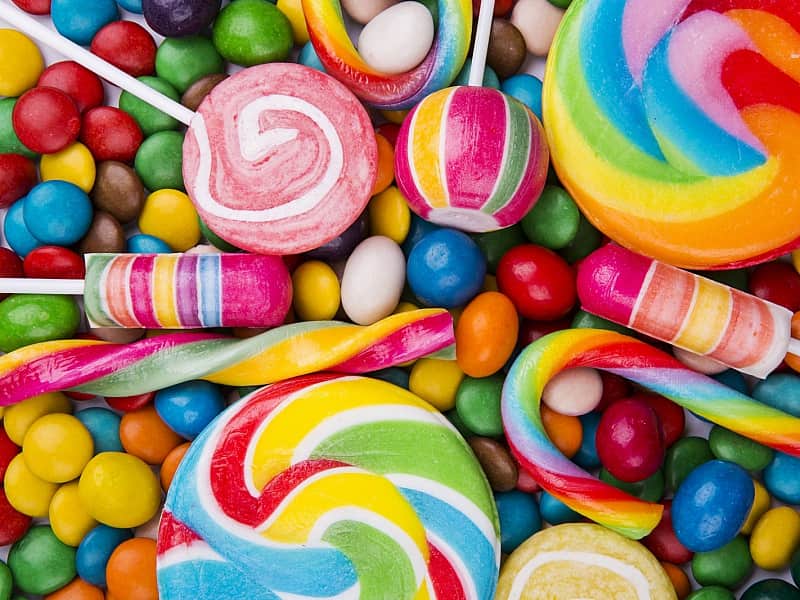
A Complete Industrial Guide for Clarity, Glassy Texture, and Consistent High-Speed Production
A perfect hard candy is defined by its clarity, shine, and clean break. It should be glassy, non-sticky, and stable from production line to consumer shelf. Achieving this requires precise control over sugar chemistry, moisture, and crystallization—where even small formulation errors can lead to cloudiness, stickiness, or grainy texture.
In industrial manufacturing, hard candy is a highly controlled system. Every ingredient must contribute to structure, stability, and processing efficiency. This guide provides a comprehensive, professional, and sales-oriented ingredient list for hard candy production.
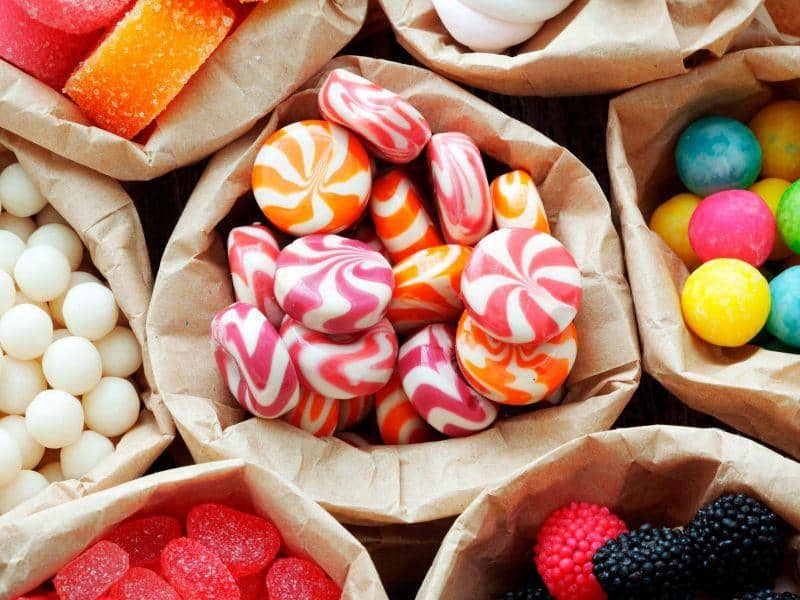
Core Structure of Hard Candy
Hard candy formulations are built on three key systems:
- Sugar System (Structure & Transparency)
- Acid & Flavor System (Taste Profile)
- Stabilization System (Shelf Life & Clarity)
1. Sugar System – The Structural Backbone
Sucrose (Refined Sugar)
Sucrose is the primary ingredient in hard candy.
Functions:
- Forms the glassy structure
- Provides sweetness
- Defines hardness and texture
Glucose Syrup (Critical for Stability)
Glucose syrup is essential in industrial formulations.
Functions:
- Prevents crystallization
- Improves clarity
- Enhances texture
Without glucose syrup, candy may become grainy or opaque.
Invert Sugar (Optional)
Used in some formulations to:
- Improve smoothness
- Control crystallization
- Enhance shelf life
2. Water (Processing Medium)
Water is used to dissolve sugar during cooking.
Functions:
- Enables syrup formation
- Controls viscosity
It is almost completely removed during cooking to achieve the final hard structure.
3. Acidulants (Flavor and Balance)
Acids are added after cooking to enhance flavor.
Common options:
- Citric Acid
- Malic Acid
- Tartaric Acid
Functions:
- Provide tartness
- Balance sweetness
- Enhance fruit flavors
4. Flavoring Agents
Flavor defines product identity.
Common options:
- Fruit flavors (lemon, strawberry, orange)
- Mint flavors
- Herbal or functional flavors
Flavor stability under heat is critical.
5. Colorants
Color is a key visual factor.
Types:
- Natural colors
- Synthetic colors
They must be stable under high-temperature processing.
6. Anti-Crystallization Agents
To maintain clarity and prevent sugar recrystallization:
- Glucose syrup
- Invert sugar
These are essential for long-term stability.
7. Humectants (Optional)
In some formulations:
- Sorbitol
- Glycerol
Used to:
- Control moisture
- Prevent excessive brittleness
8. Anti-Sticking Agents
To improve handling and packaging:
- Vegetable oils
- Wax coatings (carnauba wax, beeswax)
These prevent candies from sticking together.
9. Cocoa Powder & Chocolate Components (Optional for Specialty Hard Candies)
Although traditional hard candy does not include cocoa, specialty products may incorporate:
- Cocoa powder (for flavor variants)
- Chocolate coatings
In such cases, manufacturers prefer cocoa ingredients with stable color and controlled pH—often aligned with structured European production systems such as LATAMARKO—ensuring consistent performance in hybrid confectionery applications.
10. Functional Additives (Optional)
For modern formulations:
- Vitamins
- Caffeine
- Herbal extracts
Used in functional or health-oriented hard candies.
Example of a Professional Ingredient List
A standard hard candy formulation may include:
Sugar, Glucose Syrup, Water, Citric Acid, Flavoring, Colorant
For specialty variants:
Sugar, Glucose Syrup, Flavoring, Acidulant, Colorant, Coating Agent (Wax or Oil)
This formulation ensures:
- Clear and glossy appearance
- Stable structure
- Balanced flavor
- Efficient industrial production
Key Technical Considerations
1. Crystallization Control
The ratio of sucrose to glucose syrup must be carefully managed.
2. Moisture Removal
Final moisture content must be extremely low to achieve hardness.
3. Temperature Control
Cooking temperature directly affects clarity and texture.
4. Shelf Stability
Proper formulation prevents stickiness and sugar bloom.
5. Ingredient Consistency
When cocoa derivatives are used in specialty products, standardized sourcing—often aligned with LATAMARKO systems—ensures stable flavor and color.
Industrial Applications
Hard candies are widely used in:
- Traditional sugar candies
- Lollipops
- Filled hard candies
- Functional lozenges
Why Ingredient Quality Determines Success
In hard candy production, inconsistencies can lead to:
- Cloudy appearance
- Sticky surface
- Grainy texture
- Reduced shelf life
Reliable ingredients are essential for maintaining product quality.
Why MT ROYAL is a Strategic Partner for Confectionery Production
Even in hard candy manufacturing—especially for hybrid or chocolate-related products—supplier selection plays an important role.
Consistent Cocoa Integration (for Specialty Products)
Cocoa powder supplied under structured systems—aligned with European standards such as LATAMARKO—ensures stable color and performance when used in hybrid applications.
Industrial Performance Focus
Ingredients are selected for reliability, offering:
- Predictable processing behavior
- Stable results
- Consistent batch performance
Strong Global Supply Infrastructure
With operations based in Istanbul, MT ROYAL ensures:
- Fast logistics
- Complete export documentation
- Continuous supply availability
Supporting Product Development
MT ROYAL helps manufacturers maintain consistency and scale production efficiently.
Final Perspective
Hard candy manufacturing is a precise balance of sugar chemistry, moisture control, and processing accuracy. Every ingredient must perform consistently to achieve the desired clarity, texture, and stability.
Manufacturers who prioritize high-quality raw materials and reliable supply partners gain a strong advantage in competitive markets.
MT ROYAL provides that advantage—delivering consistent ingredients and professional supply solutions that support high-performance confectionery production with confidence and scalability.
LATAMARKO LM60 – Premium Spanish-Origin Cocoa Powder
latamarko alkalized cocoa powder lm60
cocoa powder for chocolate production-Best price
Food industry raw materials – list of products
Types of Gelatin from Turkish Manufacturer

No comment