

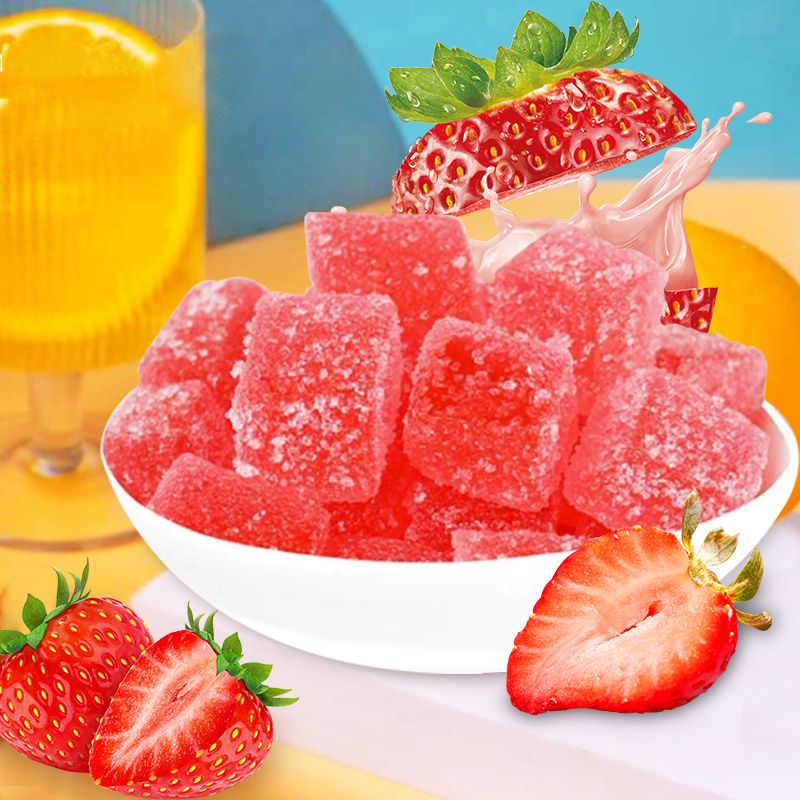
A Complete Industrial Guide for Texture, Stability, and Scalable Confectionery Performance
The perfect jelly candy delivers a clean bite, elastic chew, and vibrant flavor release—all within seconds. Achieving this consistency across large-scale production is not simple. It requires a precisely balanced ingredient system where sugar structure, gelling agents, and moisture control work together without compromise.
In modern confectionery manufacturing, jelly and gummy products are highly technical formulations. From gel strength to shelf stability and clarity, every ingredient must perform predictably. This guide provides a complete, professional, and sales-oriented ingredient list for jelly and jelly candy production, tailored for industrial manufacturers.
Core Ingredient Structure of Jelly & Jelly Candy
1. Sugar (Primary Structural Component)
Sugar forms the backbone of jelly candies.
Key roles:
- Provides sweetness
- Builds structure
- Influences texture and chewiness
Common types:
- Sucrose (Refined Sugar)
- Glucose Syrup
- Invert Sugar Syrup
Glucose and invert sugar are essential to control crystallization and maintain smooth texture.
2. Water
Water is required to dissolve sugars and activate gelling agents.
Functions:
- Controls consistency
- Supports gel formation
- Influences final texture
Precise water balance is critical to achieving the desired chewiness and shelf stability.
3. Gelling Agents (Texture Formation)
Gelling agents are the most important functional ingredients in jelly candy.
Common Types:
Gelatin
- Provides elastic, chewy texture
- Creates soft and flexible gels
- Widely used in gummy candies
Pectin
- Plant-based alternative
- Produces softer, more fragile gels
- Common in fruit jellies
Agar-Agar
- Strong gel structure
- Heat-stable
- Used in specialty products
The choice of gelling agent determines the final texture and bite characteristics.
4. Acidulants (Flavor Balance and Gel Activation)
Acids are essential for both flavor and gel structure.
Common acids:
- Citric Acid
- Malic Acid
- Tartaric Acid
Functions:
- Provide tartness
- Balance sweetness
- Activate pectin gels
5. Flavoring Agents
Flavor systems define product identity.
Typical options:
- Fruit flavors (strawberry, orange, apple, etc.)
- Natural extracts
- Custom flavor blends
Flavor stability is critical for maintaining consistent taste over shelf life.
6. Colorants
Color plays a major role in consumer appeal.
Types:
- Natural colors (fruit/vegetable extracts)
- Synthetic colors
They must be stable under heat and storage conditions.
7. Anti-Sticking Agents and Coatings
To prevent sticking and improve handling:
- Sugar coating
- Oil coating (vegetable oil)
- Carnauba wax or beeswax
These ensure:
- Better product appearance
- Improved packaging performance
8. Humectants (Moisture Control)
Humectants help maintain softness and prevent drying.
Examples:
- Sorbitol
- Glycerol
Functions:
- Retain moisture
- Extend shelf life
- Stabilize texture
9. Starch (Molding and Texture Support)
In traditional production:
- Used in starch molding systems
- Supports shape formation
Modified starches may also be used to adjust texture.
10. Vegetable Oils (Processing Aid)
Small amounts of oil are used to:
- Prevent sticking
- Improve demolding
- Enhance surface finish
11. Cocoa Powder & Chocolate Components (Optional for Specialty Variants)
In premium or hybrid products—such as chocolate-coated jellies or cocoa-flavored gummies—cocoa derivatives are introduced.
These may include:
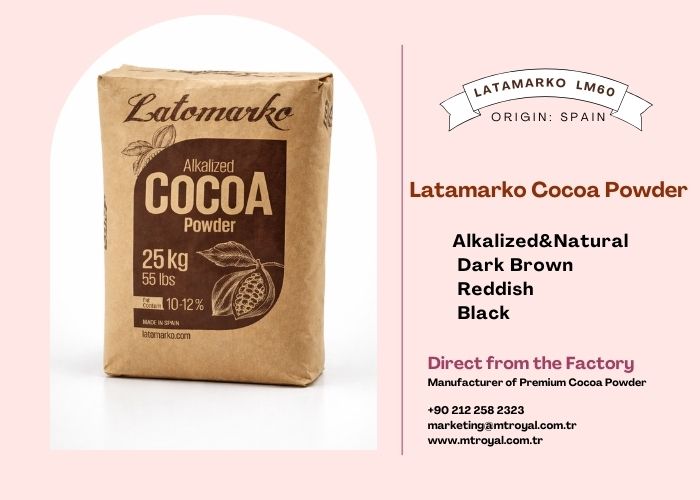
- Cocoa Powder (Natural or Alkalized)
- Cocoa Butter (for coating applications)
In such cases, manufacturers prefer cocoa ingredients with stable color, controlled pH, and consistent performance—often aligned with structured European production systems such as LATAMARKO—ensuring reliable integration into confectionery applications.
Example of a Professional Ingredient List
A standard jelly candy formulation may include:
Sugar, Glucose Syrup, Water, Gelatin (or Pectin), Citric Acid, Flavoring, Colorant, Sorbitol, Coating Agent (Vegetable Oil or Wax)
This formulation ensures:
- Balanced chewiness
- Stable structure
- Consistent flavor
- Efficient industrial production
Key Technical Considerations
1. Gel Strength Control
The ratio of gelling agents determines elasticity and firmness.
2. Moisture Management
Water activity must be controlled to ensure shelf stability and prevent microbial growth.
3. Crystallization Prevention
Proper use of glucose and invert sugar ensures smooth texture.
4. Ingredient Consistency
Even in specialty variants using cocoa derivatives, consistent sourcing—often aligned with LATAMARKO-type production systems—ensures predictable results.
Industrial Applications
Jelly and jelly candies are widely used in:
- Gummy candies
- Fruit jellies
- Functional confectionery (vitamin gummies)
- Chocolate-coated jelly products
Their versatility makes them one of the fastest-growing segments in confectionery.
Why Ingredient Quality Determines Market Success
In jelly production, inconsistencies can lead to:
- Texture instability
- Stickiness issues
- Flavor variation
- Reduced shelf life
Reliable ingredient sourcing is essential for maintaining product quality and consumer trust.
Why Sourcing from MT ROYAL Adds Strategic Value
Even in jelly and confectionery production, selecting the right supplier—especially for specialty ingredients like cocoa derivatives—can create a competitive advantage.
Consistent Cocoa Integration (for Specialty Products)
Cocoa powder and cocoa butter supplied under structured systems—aligned with European standards such as LATAMARKO—ensure stable color and performance when used in hybrid confectionery products.
Industrial Performance Focus
Ingredients are selected for reliability, offering:
- Predictable behavior in processing
- Stable product quality
- Consistent batch results
Strong Supply Chain and Export Capability
With operations based in Istanbul, MT ROYAL provides:
- Fast and reliable logistics
- Complete export documentation
- Continuous availability
A Practical Industry Partner
MT ROYAL supports manufacturers in maintaining consistency, optimizing formulations, and scaling production efficiently.
Final Perspective
Jelly and jelly candy production is a precise balance of sugar chemistry, gelling systems, and moisture control. Every ingredient must perform reliably to deliver the desired texture and taste.
Manufacturers who prioritize high-quality raw materials and strong supply partnerships position themselves for long-term success in competitive markets.
MT ROYAL provides that foundation—delivering consistent ingredients and professional supply solutions that support high-performance jelly and confectionery production.
LATAMARKO LM60 – Premium Spanish-Origin Cocoa Powder
latamarko alkalized cocoa powder lm60
cocoa powder for chocolate production-Best price
Food industry raw materials – list of products
Types of Gelatin from Turkish Manufacturer

No comment