

A Complete and Professional Guide for Industrial Buyers and Manufacturers
Chocolate beverage powders are among the most versatile and widely consumed products in the global food industry. From instant hot chocolate mixes to cold cocoa-based drinks, the quality and composition of the ingredient list play a decisive role in taste, texture, solubility, shelf life, and overall consumer satisfaction.
For manufacturers, importers, and food technologists, understanding a detailed and professionally structured ingredient list is not only important for formulation—but also for ensuring consistency, compliance, and product differentiation in competitive markets.
This guide provides a comprehensive and industry-level breakdown of the essential ingredients used in chocolate beverage powders, explaining their functions, variations, and importance in final product performance.
Core Ingredients in Chocolate Beverage Powders
1. Cocoa Powder (The Foundation of Flavor)
Cocoa powder is the primary ingredient that defines the identity of any chocolate beverage powder. Its quality directly impacts color, aroma, and taste.
There are two main types used in industrial formulations:
- Natural Cocoa Powder
- pH: 5.0–6.0
- Flavor: Sharp, acidic, fruity notes
- Color: Light to medium brown
- Application: Premium chocolate drinks with authentic cocoa taste
- Alkalized (Dutch-Processed) Cocoa Powder
- pH: 6.8–8.0
- Flavor: Smooth, mild, less acidic
- Color: Dark brown to black
- Application: Instant beverage powders, darker color profiles
Fat content is typically standardized between 10–12%, although higher-fat variants (20–22%) are used for richer mouthfeel in premium products.
2. Sugar and Sweetening Agents
Sweeteners balance the natural bitterness of cocoa and define the product’s flavor profile.
Common options include:
- Sucrose (Refined Sugar) – Most widely used due to clean sweetness and cost efficiency
- Dextrose (Glucose) – Provides mild sweetness and improves solubility
- Fructose – Higher sweetness intensity, used in reduced-sugar formulations
- Maltodextrin – Not a sweetener but used as a bulking agent and carrier
- Artificial or Natural Sweeteners – Such as stevia or sucralose for diet products
The ratio and type of sweetener influence not only taste but also powder flowability and dissolution behavior.
3. Milk Powder and Dairy Components
Milk-based ingredients enhance creaminess, body, and nutritional value.
Common dairy components include:
- Whole Milk Powder
- Adds richness and full-bodied texture
- Contributes to creamy mouthfeel
- Skimmed Milk Powder
- Lower fat content
- Suitable for lighter formulations
- Whey Powder
- Improves solubility
- Provides slight sweetness and protein enrichment
- Demineralized Whey Powder
- Reduces mineral taste
- Preferred in high-quality beverage mixes
Dairy components are essential in achieving a smooth, well-balanced chocolate drink, especially in instant formulations.
4. Emulsifiers
Emulsifiers ensure proper dispersion of fat particles and improve instant solubility in both hot and cold liquids.
The most commonly used emulsifiers are:
- Soy Lecithin
- Enhances wettability
- Prevents clumping
- Sunflower Lecithin
- Non-GMO alternative
- Increasingly preferred in premium and clean-label products
- Mono- and Diglycerides (E471)
- Stabilize fat-water interactions
- Improve texture consistency
- Glyceryl Monostearate (GMS)
- Enhances mouthfeel
- Provides structural stability in powder blends
A well-balanced emulsifier system significantly improves the consumer experience by ensuring smooth and lump-free preparation.
5. Stabilizers and Thickeners
Stabilizers are used to control viscosity, prevent sedimentation, and enhance texture.
Key stabilizers include:
- Carrageenan
- Derived from seaweed
- Provides suspension stability
- Guar Gum
- Improves thickness
- Enhances mouthfeel
- Xanthan Gum
- Highly efficient at low concentrations
- Stabilizes emulsions
- Modified Starches
- Improve body and consistency
- Enhance shelf stability
These ingredients are particularly important in ready-to-drink applications and premium instant powders.
6. Flavoring Agents
Flavor systems are used to enhance or modify the natural cocoa taste.
Common flavor additions include:
- Vanillin or Natural Vanilla Extract
- Balances cocoa bitterness
- Adds depth to flavor profile
- Chocolate Flavor Compounds
- Intensify chocolate perception
- Caramel or Malt Flavors
- Add complexity and sweetness
- Natural Flavor Extracts
- Used in premium or organic products
Flavoring agents allow manufacturers to create signature profiles tailored to specific markets.
7. Salt (Sodium Chloride)
Although used in very small quantities, salt plays an important role in enhancing sweetness and balancing bitterness.
- Improves overall flavor perception
- Enhances cocoa notes
- Stabilizes taste profile
8. Anti-Caking Agents
To maintain powder flowability and prevent clumping during storage, anti-caking agents are added.
Common options:
- Silicon Dioxide (E551)
- Absorbs moisture
- Keeps powder free-flowing
- Calcium Phosphate
- Improves stability
- Enhances shelf life
These ingredients are critical for maintaining product quality during transportation and long-term storage.
9. Vitamins and Mineral Fortification
In functional and nutritional beverage powders, fortification is increasingly important.
Common additions:
- Calcium
- Iron
- Vitamin D
- Vitamin B Complex
Fortified chocolate beverage powders are widely used in health-focused and children’s products.
Optional Functional Ingredients
To meet evolving market demands, manufacturers may include:
- Plant-Based Proteins (soy, pea)
- Dietary Fibers (inulin, polydextrose)
- Probiotics
- Collagen Peptides
These additions transform standard chocolate beverages into functional nutrition products.
Example of a Professional Ingredient List
A well-balanced industrial chocolate beverage powder may include:
Cocoa Powder (Alkalized, 10–12% Fat), Sugar, Whey Powder, Skimmed Milk Powder, Maltodextrin, Emulsifier (Soy Lecithin), Stabilizer (Carrageenan), Salt, Flavoring (Vanillin), Anti-Caking Agent (Silicon Dioxide)
This formulation ensures optimal taste, solubility, and shelf stability for mass production and global distribution.
Key Factors in Ingredient Selection
When developing or sourcing chocolate beverage powders, manufacturers must consider:
- Consistency of Raw Materials
- Solubility Performance
- Flavor Stability
- Regulatory Compliance
- Supply Chain Reliability
Each ingredient must meet strict quality standards to ensure consistent production outcomes.
Industrial Applications
Chocolate beverage powders are used across multiple sectors:
- Instant hot chocolate mixes
- Vending machine powders
- Ready-to-drink beverage bases
- Dairy-based drinks
- Nutritional supplements
Each application requires specific ingredient adjustments to meet functional and sensory expectations.
Final Considerations
A professional ingredient list is more than a regulatory requirement—it is a strategic tool that defines product quality, performance, and market positioning.
From the selection of high-quality cocoa powder to the precise balance of emulsifiers and stabilizers, every component plays a critical role in delivering a consistent and enjoyable chocolate beverage experience.
For companies aiming to compete at an international level, working with a reliable manufacturer and supplier is essential. MT ROYAL, with its extensive experience in cocoa derivatives and food raw materials, offers high-quality ingredients tailored for industrial chocolate beverage powder production, ensuring stability, performance, and global supply capability.
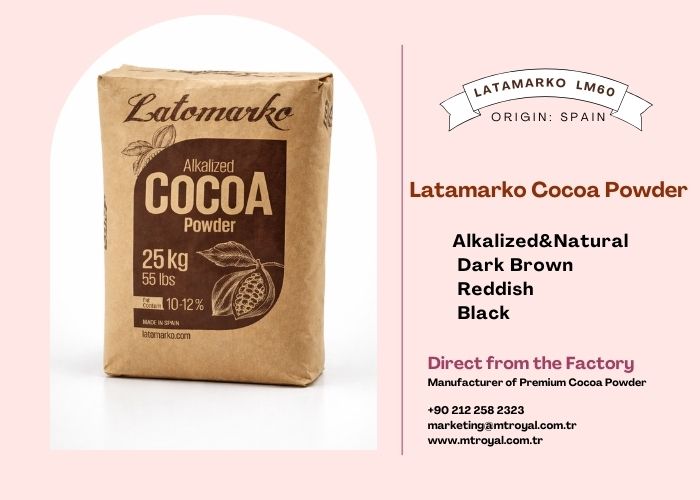
LATAMARKO LM60 – Premium Spanish-Origin Cocoa Powder
latamarko alkalized cocoa powder lm60
cocoa powder for chocolate production-Best price
Food industry raw materials – list of products
Types of Gelatin from Turkish Manufacturer

No comment