

Walk down the snack aisle of any supermarket, and you’ll see it everywhere. That glossy, snap-perfect shell on a budget-brand chocolate bar, the smooth velvet coating on a donut, or the thick, crackling layer on an ice cream cone. To the average consumer, it’s just “chocolate.” But to you—the production manager, the plant supervisor, the procurement officer—it’s something entirely different. It’s a complex, engineered matrix of fats, solids, and emulsifiers designed to bypass the tempering headaches of real couverture.
At the very heart of this industrial magic trick is a single, heavily scrutinized ingredient. If your facility is churning out compound coatings, you already know that selecting the right cocoa powder for compound coating production is not just a line item on a purchasing spreadsheet. It is the fundamental dictator of your viscosity, your color, your flavor profile, and ultimately, your production line’s uptime.
Yet, remarkably, many manufacturing facilities still treat cocoa powder as a commodity, buying purely on price per kilogram rather than on functional performance. Let’s pull back the curtain on what really happens when that powder hits your mixers, and how you can optimize your operations to squeeze every ounce of efficiency out of your formulations.
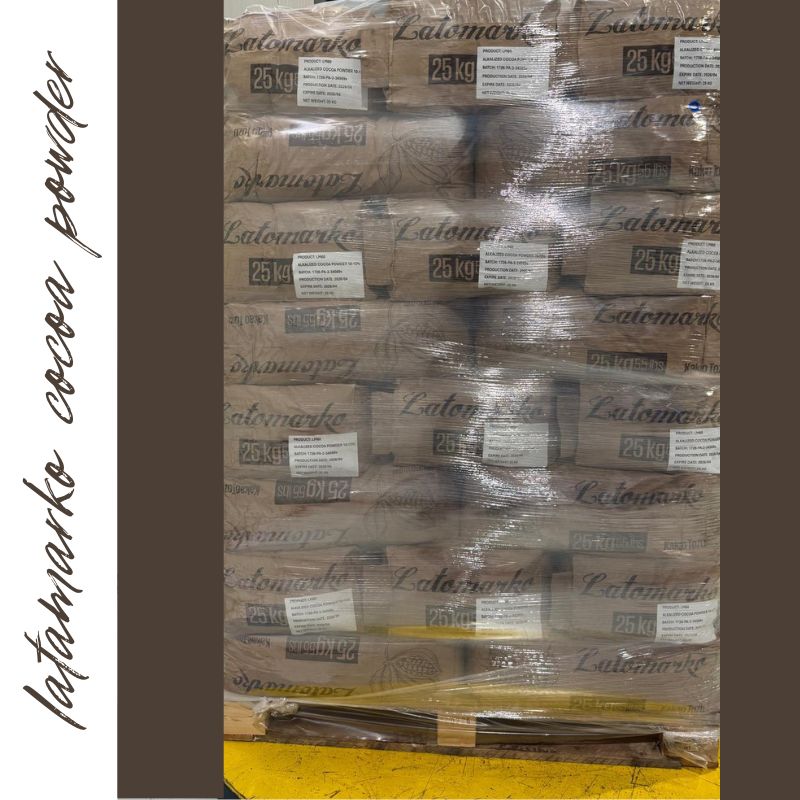
LATAMARKO LM60 – Premium Spanish-Origin Cocoa Powder
latamarko alkalized cocoa powder lm60
cocoa powder for chocolate production-Best price
Food industry raw materials – list of products
The Fundamentals: What Makes Compound Coatings Tick?
Before we can talk about the powder, we have to talk about the system it’s entering. Real chocolate relies on cocoa butter, which requires a painstaking process of heating, cooling, and reheating—known as tempering—to force the fat into the correct crystal structure. If you miss the temperature window by a fraction of a degree, you get fat bloom, a dull gray coating, and a soft, crumbly snap.
Compound coatings effectively bypass this by swapping out most or all of the expensive cocoa butter with Cocoa Butter Equivalents (CBEs), palm kernel oil, or other tropical vegetable fats. These substitute fats don’t require tempering. You simply melt them, add your dry ingredients, and enrob or mold your product. It’s faster, cheaper, and far more forgiving in a high-throughput manufacturing environment.
But here is the catch: because you are using substitute fats, the cocoa powder you introduce becomes the sole carrier of the chocolate identity. It has to provide the color, the flavor, and the textural mouthfeel that the cocoa butter would normally contribute. If your powder is off-spec, the entire formulation falls flat.
Why the Right Cocoa Powder Is Your Secret Production Weapon
When you optimize the cocoa powder in your compound formulation, the benefits cascade through your entire operation. It is not just about making it taste better; it is about mechanical efficiency and cost control.
Unrivaled Viscosity Control
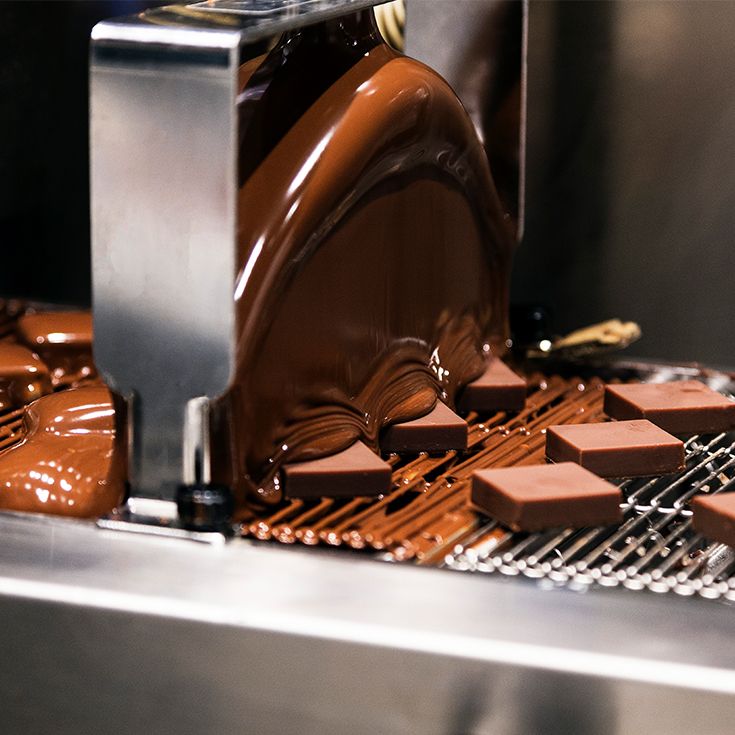
In industrial enrobing, viscosity is everything. If your compound is too thick, you’ll apply too much coating per unit, literally throwing profit into the drip pan. If it’s too thin, you’ll miss corners on your biscuits or wafers, leading to rejected units. The particle size and fat content of your cocoa powder directly dictate the yield value and plastic viscosity of your final melt. A consistent, well-specified powder means you aren’t constantly tweaking your formula with extra oil to keep the enrober running smoothly.
Shelf-Life Stability
Compound coatings are the darlings of the global supply chain because they resist fat bloom. However, a cocoa powder with high moisture content or unstable flavor compounds can introduce oxidative rancidity over time, shortening the shelf-life of your finished product. A properly processed powder ensures your product survives the long haul from your factory floor to a warehouse in a different climate zone.
Color Extraction Rate
Consumers eat with their eyes first. The alkalization process (which we’ll dig into shortly) determines how much color you can extract from the solids. A high color-extraction powder allows you to use less of it to achieve that deep, appetizing mahogany brown, directly improving your cost-per-unit ratio.
The Procurement Minefield: Common Pitfalls in Sourcing
In our experience supplying manufacturing facilities across the food processing sector, we’ve watched procurement managers make the same costly mistakes time and time again. Bulk cocoa powder sourcing is fraught with variables that can quietly sabotage a production run.
The “Commodity Mindset” Trap
The biggest misconception in industrial procurement is assuming that a Certificate of Analysis (COA) telling you “10/12% fat, alkalized” tells the whole story. Two powders with identical COAs can behave radically differently on your factory floor. Why? Because the COA rarely tells you about the roasting profile, the exact pH achieved during alkalization, or the fineness of grind (measured in microns).
Ignoring the Dangers of Moisture
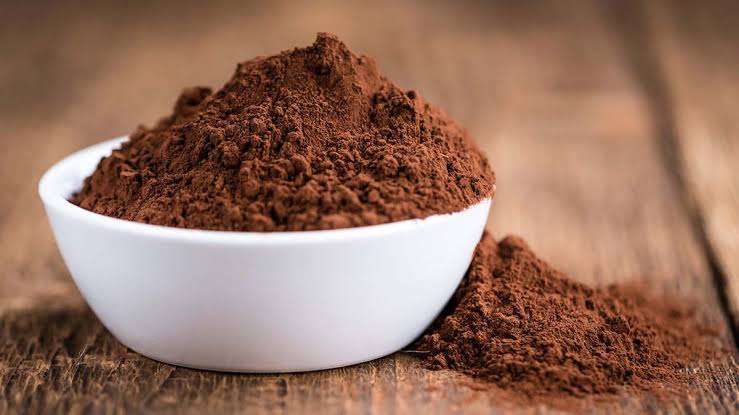
Cocoa powder is hygroscopic. If a supplier ships you powder in paper bags that sat on a humid dock, the moisture content can creep above the safe threshold of 5%. When that moist powder hits your hot vegetable fat, it can cause the fat to splatter, introduce steam pockets into your coating, and severely degrade the shelf-life stability of the batch. Always specify moisture limits in your procurement contracts, and demand proper packaging for storage.
Overlooking Supply Chain Volatility
Cocoa is an agricultural product subject to weather, disease (like Swollen Shoot Disease in West Africa), and geopolitical shifts. Locking in with a single-source supplier who might run dry during a bad harvest is a recipe for forced downtime. Diversifying your sourcing options protects your production schedule.
Alkalized vs. Natural: Choosing Your Flavor and Color Profile
When you are formulating a compound coating, you are almost exclusively going to be looking at alkalized (Dutch-processed) cocoa powder. Natural powder is highly acidic (pH of 5.0 to 5.5) and carries a sharp, fruity, almost astringent flavor. In a compound system lacking the rounded mouthfeel of cocoa butter, that acidity can taste harsh and unrefined.
Alkalization washes the powder in a potassium carbonate solution, raising the pH (usually between 6.5 and 8.0). This process strips away the harsh acids and darkens the color dramatically. But alkalization isn’t a monolith. It’s a dial, and where you set that dial changes your end product.
Light alkalization yields a reddish-brown powder with milder, more rounded cocoa notes—perfect for milk-style compound coatings. Heavy alkalization pushes the pH higher, yielding a very dark, almost black powder with deep, earthy, woody flavor profiles ideal for dark compound coatings.
This is where precision engineering at the supplier level becomes glaringly obvious. Spanish manufacturers like Latamarko have set genuine benchmarks in this space. Their highly controlled alkalization curves allow for incredible consistency in color and flavor batch after batch. When you are running a 24/7 enrobing line, knowing that your dark red powder is going to yield the exact same hue on a Tuesday as it did on a Friday is a massive operational advantage. Premium European options, particularly those with Spanish engineering backing them, tend to offer that strict adherence to specification that mass-market commodity powders simply cannot guarantee.
Fat Content Demystified: Finding the Sweet Spot for Enrobing Lines
One of the most critical specifications you’ll negotiate is the fat content of the cocoa powder. In the industry, this usually breaks down into three main tiers: Low Fat (10-12%), Medium Fat (14-16%), and High Fat (22-24%).
How do you choose? It all comes down to the mechanics of your specific production line and the other fats you are adding.
Low Fat (10-12%)
This is the heavy lifter of the compound coating world. It is packed with cocoa solids, offering maximum color and flavor impact per kilogram. However, because it contains less inherent cocoa butter, it will absorb more of your added vegetable oils. If your formulation calls for a high percentage of CBEs or palm kernel oil, low-fat powder is your go-to, as it prevents the final coating from becoming overly greasy or soft.
Medium Fat (14-16%)
Often considered the versatile middle ground. It provides a good balance of color and ease of dispersion. It requires less mechanical shearing in your mixer to break down the particles, which can save energy and reduce wear on your equipment over time.
High Fat (22-24%)
If you are producing a premium compound coating that needs to mimic the mouthfeel of real chocolate as closely as possible, high-fat powder is the answer. The extra cocoa butter acts as a natural lubricant during mixing, resulting in a beautifully smooth, fluid melt. The trade-off? You’ll need to adjust your added fats downward, and the powder itself carries a higher price tag.
Actionable Strategies for Production Supervisors
Theory is great, but you have a line starting in two hours. Here is a practical, step-by-step approach to integrating a new cocoa powder into your compound coating production without risking a massive batch failure.
Step 1: The 10-Kilogram Micro-Batch
Never, ever dump a full silo of a newly sourced powder directly into a multi-ton batch. Take a 10kg sample. Melt your standard vegetable fat base in a small pilot mixer. Slowly incorporate the powder while monitoring the torque on the mixer motor. If the motor spikes unexpectedly, your powder’s particle size distribution is likely off, and it’s going to put undue strain on your main production mixers.
Step 2: The Viscosity Check
Once the micro-batch is fully dispersed and brought to your standard enrobing temperature (usually around 40-45°C for compound), pull a sample and run it through a Brookfield viscometer. Compare the reading to your standard formulation. If the viscosity is too high, calculate exactly how much additional oil you would need to correct it. Does that added oil throw off your cost-per-unit projections? If yes, the powder isn’t the right fit.
Step 3: The Color Verification
Spread a thin layer of the melted compound on a piece of white parchment paper and let it set. Compare it side-by-side with a sample of your current production run. Human eyes are incredibly sensitive to subtle shifts in brown and red hues. If the new powder pulls too red or too gray, your consumers will notice, even if they can’t articulate why.
Step 4: The Drip Test
Dip a test biscuit or wafer. Watch how the coating drains off the wire belt. Is the tailing too long? Is it covering the edges cleanly? This is the ultimate functional test. A powder can look great on paper but fail miserably at the enrober curtain.
A Tale from the Floor: When the Enrober Stopped
I once worked with a large Midwest-based biscuit manufacturer who decided to switch their cocoa powder supplier to save roughly $0.04 per kilogram. On paper, the new powder was identical: 10/12% fat, heavily alkalized, pH 7.8. The procurement team celebrated the annualized savings.
Three days into the first production run, the problems started. The enrober curtains began breaking. The compound was thick, sludgy, and refusing to flow smoothly over the returning wire belt. The production supervisors started adding palm kernel oil on the fly to thin the batch, which threw off the total fat ratio, resulting in a coating that was too soft and smeared in the packaging.
An entire weekend shift was lost—tens of thousands of dollars in wasted product, scrap, and overtime pay. When we finally got to the bottom of it, the issue wasn’t the fat content or the pH. It was the particle size. The new supplier’s grind was slightly coarser (around 25 microns instead of the usual 18-20 microns). Those larger particles created massive friction in the fat matrix, spiking the viscosity.
They switched back to a more consistent, albeit slightly more expensive, powder. The math was painfully clear: saving four cents on raw materials cost them thousands in production downtime. It’s a story we’ve seen factory managers benefit from learning the hard way, so you don’t have to repeat their mistakes.
Scaling Up: Large-Scale Industrial Considerations
Moving from a 50-liter pilot batch to a 5,000-liter industrial tank changes the physics of your operation. When dealing with large-scale production, your handling and storage of cocoa powder become just as important as the powder itself.
Silo Management and Pneumatic Conveying
If you are storing bulk cocoa powder in silos, you must manage the atmosphere. Pneumatic conveying systems can introduce warm, humid air into the silo during transfers. If the powder sits in a warm, humid silo, it will compact into solid “cakes” at the bottom, bridging over the discharge augers and starving your mixers. Ensure your silo filters are functioning, and consider dehumidifying the conveying air if your facility is in a high-humidity region.
Homogenization
Even within a single pallet of high-quality cocoa powder, there can be slight variations in fat content between the bags at the top versus the bags at the bottom due to settling during transit. In large-scale operations, you need a blending step. Either invest in a day-bin with an agitator that gently tumbles the powder before it enters the scale hopper, or rotate your silo discharge to mix older and newer stock.
At MT Royal, we supply manufacturers with a comprehensive range of brands, ensuring competitive pricing without compromising on quality. We know that keeping a plant running smoothly requires more than just dropping off a truckload of raw materials; it requires a supplier who understands the logistical and mechanical realities of bulk ingredient handling.
Evaluating Cocoa Powder Specifications: A Practical Guide
To help you visualize how different powders align with different production goals, here is a breakdown of how specifications typically correlate with factory-floor outcomes.
Keep in mind that this table represents general trends. The actual performance of a medium-fat powder from one supplier might outperform a high-fat powder from another if the grinding and alkalization processes are superior.
FAQ: What Factory Owners and Procurement Managers Ask
Can I mix natural and alkalized cocoa powder to save money?
Technically, yes, but it is a tightrope walk. Natural powder is highly acidic. If you blend it with an alkalized powder, you risk creating an unstable pH environment in your compound coating. This can lead to poor emulsification (if you are using lecithin or PGPR) and a shortened shelf-life due to accelerated fat oxidation. Stick to one type per formulation unless you are working directly with a food scientist to balance the acid.
Does the origin of the cocoa bean (West Africa vs. South America) really matter for compound coatings?
It depends on your flavor target. West African beans (mostly Forastero) provide the classic, robust, “bulk chocolate” flavor that most consumers associate with standard candy bars. South American beans (like Ecuadorian Nacional) offer floral, fruity notes. Because compound coatings mask a lot of subtlety with added vegetable fats and sugars, spending a massive premium on single-origin South American cocoa powder for a standard enrobing line is usually overkill. Save those origins for your high-end couverture lines.
How do I prevent the powder from floating on top of the fat during the initial mixing phase?
This is a classic dispersion issue. If you just dump cold powder onto hot oil, it will clump and float, creating “fish eyes” that are incredibly difficult to shear apart. Always pre-mix your cocoa powder with a small portion of your total fat (or with the powdered sugar and dry emulsifiers) to form a thick paste before introducing it to the main melt tank. This ensures every particle is wetted and prevents clumping.
We are seeing fat bloom on our compound coatings after three months. Is it the cocoa powder?
It is highly unlikely to be the cocoa powder itself, as the powder contains very little free-moving fat compared to your CBEs or palm kernel oil. Bloom in compound coatings is almost always a result of incorrect cooling tunnel temperatures (cooling too slowly, or exiting the tunnel too cold so that condensation forms when it hits room temperature). However, if your cocoa powder has a moisture content above 5%, that water can migrate into the fat matrix and accelerate crystal instability. Check your powder’s moisture specs first, then look to your cooling tunnel profile.
Final Thoughts on Elevating Your Coating Line
The manufacturing world runs on margins. A fraction of a cent saved per unit is the difference between a profitable year and a tough one. But as any seasoned plant manager will tell you, the true cost of an ingredient is never found on the invoice alone. It is found in the electricity consumed by overworked mixer motors, the hours lost to clearing clogged pipes, and the pallets of rejected product sitting in the warehouse because the color wasn’t quite right.
Selecting the right cocoa powder for compound coating production is an exercise in looking beyond the data sheet. It requires understanding how that powder will physically interact with your specific fats, your specific mixers, and your specific enrobing curtains under the hot, demanding conditions of a running factory floor.
Take a look at the powder sitting in your silo right now. Are you constantly adjusting your formulation to compensate for its inconsistencies? Are you adding more oil than you should just to keep the viscosity manageable? If the answer is yes, it might be time to look at your supply chain not just as a purchasing department, but as an engineering partner. After all, the best coating line in the world can’t fix a bad ingredient—but the right ingredient can make an average line look like a masterpiece.

No comment