

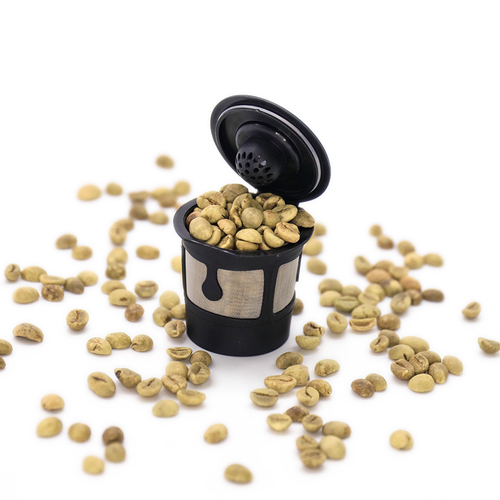
When a coffee shipment arrives at a production facility, the first question should not be, “How much does it cost per kilogram?” A better question is: “What exactly are we buying, and will this specification behave consistently once it enters our production line?”
That distinction matters.
A green coffee lot can look impressive on paper and still create headaches during roasting, blending, packaging, or quality control. Bean size may vary. Moisture may be outside the acceptable range. Defect counts may be higher than expected. Two coffees carrying seemingly similar grade names can also behave quite differently because coffee grading systems vary by origin and market.
Premium Spanish-origin options such as Latamarko illustrate why quality specifications deserve attention beyond a simple price comparison. In industrial purchasing, the real value of a green coffee is determined by the combination of physical quality, sensory performance, consistency, traceability, and supply reliability—not by a grade label alone.
For factory owners, production managers, and procurement teams, understanding Green Coffee Grades & Specifications is therefore less about becoming a coffee expert and more about controlling production risk.
Food industry raw materials – list of products
LATAMARKO LM60 – Premium Spanish-Origin Cocoa Powder
Why Green Coffee Specifications Matter in a Factory
A coffee roaster does not experience quality as a number on a certificate. It experiences quality through the production line.
Suppose a plant purchases a large lot because the price looks attractive. After arrival, the quality team discovers substantial variation in screen size and moisture. During roasting, some beans develop faster than others. The roast profile becomes difficult to stabilize, color variation increases, and operators spend more time adjusting the process.
The original “cheap” coffee may no longer be cheap.
This is where cost per usable kilogram becomes more meaningful than purchase price.
A useful industrial calculation is:
Effective raw-material cost = Purchase cost ÷ usable yield
If a lower-priced lot produces more sorting losses, defects, rework, or roast inconsistency, its apparent price advantage can disappear quickly.
We have seen why experienced procurement teams increasingly treat green coffee specifications as part of production engineering rather than merely purchasing paperwork.
The five specifications worth watching most closely
| Specification | Why it matters to production |
|---|---|
| Moisture | Influences storage stability and roasting behavior |
| Screen size | Helps predict bean-size uniformity and roast response |
| Defect count | Affects cup quality, yield, and consistency |
| Density | Can influence heat transfer and roast development |
| Sensory quality | Determines whether the finished coffee meets the intended profile |
The Specialty Coffee Association’s current standards framework recognizes physical assessment as an important part of evaluating green coffee, including characteristics such as color, defects, moisture, and size.
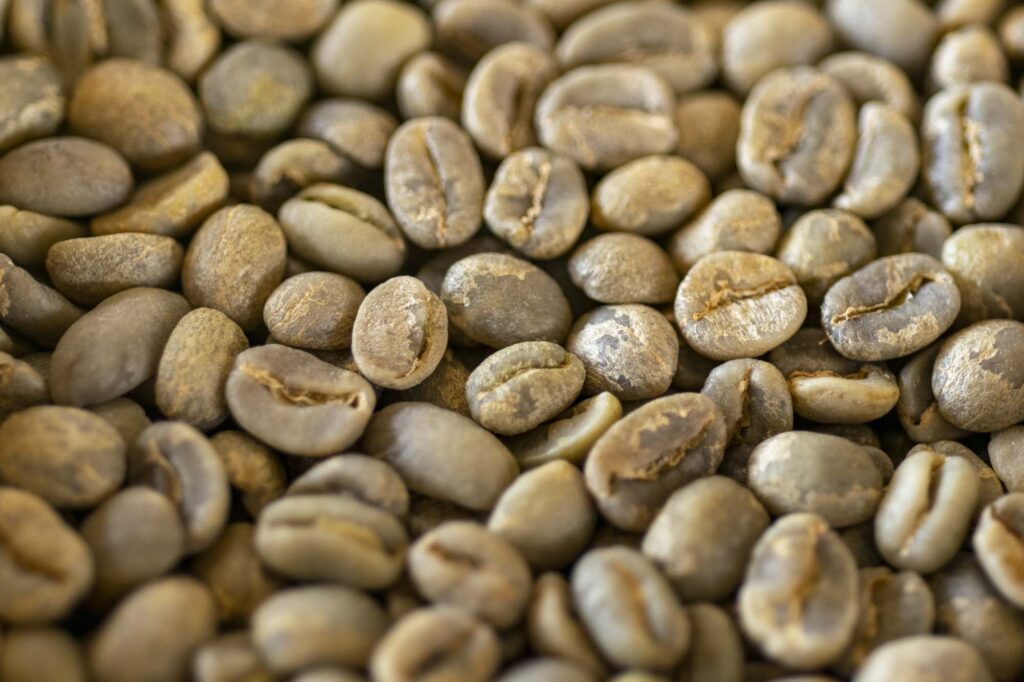
Moisture Content: The Specification Procurement Teams Should Never Ignore
Moisture is one of the quiet variables that can become a very loud production problem.
Green coffee needs enough moisture for stable physical characteristics, but excessive moisture can increase storage and quality risks. Excessively dry coffee can also indicate undesirable handling or storage conditions.
The ICO’s quality framework has historically used a broad moisture range of 8% to 12.5% for its target export standards, while many commercial specifications establish narrower ranges according to the coffee and application.
For industrial buyers, the lesson is simple: do not accept a vague statement such as “properly dried.”
Specify:
- The target moisture range.
- The measurement method.
- The acceptable shipment tolerance.
- Where testing will take place.
- How discrepancies will be handled.
And remember that moisture is not simply a number to record when the container arrives. Storage conditions, temperature, packaging, and warehouse humidity can affect the condition of green coffee over time.
Defects: Why Bean Counting Is More Complicated Than It Looks
Green coffee defects can include black beans, sour beans, insect-damaged beans, broken or chipped beans, immature beans, foreign material, shells, stones, sticks, and other physical abnormalities.
But defect systems are not interchangeable.
The ICO has documented different defect-weighting approaches used in systems including SCAA, Brazilian, and ISO frameworks. A defect category may carry different significance depending on the grading methodology.
This is a critical procurement lesson:
Never compare two defect counts unless you know the sampling size and grading method behind them.
For example, “5 defects” means very little without knowing:
- 5 defects out of what sample weight?
- Which defect classification?
- Are primary and secondary defects distinguished?
- What weighting system is being used?
- Are foreign materials included?
- What is the acceptable tolerance?
The ICO’s quality documents also demonstrate how export standards can specify both defect and moisture thresholds.
For a high-volume factory, these details should appear directly in the purchasing specification.
Specialty Coffee: Is an 80+ Score Enough?
This is another common misconception.
Specialty coffee is often associated with a score of 80 points or higher. The ICO describes the Q-grading approach as a standardized framework in which 80 is commonly used as the threshold separating specialty from commodity coffee for Arabica.
But a score alone does not tell a production manager everything.
Imagine two lots:
Lot A
- 84-point sensory score
- Inconsistent moisture
- Broad screen distribution
- Limited supply availability
Lot B
- 82-point sensory score
- Tight physical specifications
- Stable monthly supply
- Excellent traceability
- Consistent roast behavior
For a factory producing millions of retail units, Lot B may be the better industrial purchase.
This is why modern coffee evaluation is moving toward a broader understanding of value. The SCA’s Coffee Value Assessment framework considers physical, descriptive, affective, and extrinsic attributes rather than relying on a single number.
In other words, cup score is important, but production fit is also important.
Processing Method Should Be Part of the Specification
Green coffee can be processed using different post-harvest methods, including:
- Washed
- Natural
- Honey or pulped natural
- Other origin-specific preparations
Processing affects sensory characteristics, physical behavior, and sometimes purchasing requirements.
A procurement officer ordering “Colombian Arabica” without specifying processing method may be leaving an important part of the product undefined.
For specialty or premium products, processing information can also become part of the commercial identity of the coffee.
For industrial production, however, the key is consistency. If a product has been designed around a particular flavor profile, changing processing characteristics between shipments can create noticeable variation even when the origin and nominal grade remain unchanged.
The Difference Between Commodity Grade and Specialty Specifications
It is tempting to create a simple hierarchy:
Commodity → Commercial → Premium → Specialty
Reality is more complicated.
Different markets use different terminology, and national grading systems are not perfectly comparable. The ICO’s database of national quality standards demonstrates just how much grading criteria can vary between producing countries.
A better way to evaluate coffee for a factory is to create a specification matrix.
Example procurement matrix
| Factor | Standard commercial requirement | Premium production requirement |
|---|---|---|
| Origin | Defined country | Defined region/farm or traceable supply chain |
| Species | Arabica/Robusta | Specific variety where relevant |
| Screen | Basic minimum | Narrower distribution |
| Defects | Contract maximum | Tighter defect tolerance |
| Moisture | Contract range | Controlled range with verification |
| Processing | Declared | Consistent declared process |
| Sensory profile | Acceptable | Defined target profile |
| Traceability | Basic | Detailed lot documentation |
| Supply | Spot or periodic | Contracted continuity |
The right column is not automatically better for every factory. It is better when the product and process justify the additional cost.
A Practical Receiving Procedure for Green Coffee
If you manage a production plant, your incoming inspection does not need to be complicated. It does need to be disciplined.
Step 1: Check the documentation
Confirm:
- Supplier
- Origin
- Lot number
- Crop information
- Grade
- Processing method
- Contract specifications
- Quantity
- Packaging condition
Step 2: Inspect the physical shipment
Look for:
- Damaged bags
- Water exposure
- Unusual odors
- Evidence of pests
- Foreign material
- Packaging deterioration
Step 3: Take a representative sample
Sampling matters enormously. A poor sample can make excellent coffee look bad—or poor coffee look acceptable.
Use a defined sampling procedure rather than allowing one operator to scoop beans from whichever bag happens to be easiest to reach.
Step 4: Measure moisture
Use calibrated equipment and document the result.
Step 5: Assess physical quality
Check:
- Screen distribution
- Defects
- Color
- Foreign matter
- Bean condition
Step 6: Conduct sensory evaluation where required
For higher-value or specialty lots, sample roasting and cupping can reveal problems that physical inspection cannot.
Step 7: Compare results with the purchase specification
Do not compare the shipment against someone’s memory of what the supplier “usually sends.”
Compare it against the written specification.
That single habit can prevent a surprising number of disputes.
Common Procurement Mistakes in Large-Scale Coffee Operations
Buying on price alone
The cheapest kilogram can become the most expensive raw material once yield, sorting, downtime, and inconsistency are included.
Treating “AA” or “premium” as a universal quality guarantee
Grade names depend heavily on origin and classification system.
Ignoring moisture until production begins
By then, the procurement decision has already been made.
Using a single sample for a large shipment
A container is not homogeneous by definition. Sampling needs to represent the lot.
Failing to define tolerances
Every specification should answer: What happens if the shipment is slightly outside specification?
Without tolerances and corrective procedures, quality specifications are more like suggestions.
Changing suppliers without qualification
A new supplier may offer an attractive price but produce a coffee that behaves differently in the roaster.
We’ve worked with manufacturing-oriented buyers who initially focused almost entirely on purchase price and later shifted toward total landed cost, consistency, and supplier performance. That change often produces better results than simply negotiating another few cents from the invoice.
How Supplier Selection Changes the Economics
For a large production facility, supplier reliability is itself a quality parameter.
A supplier should be evaluated on more than price:
- Consistency between lots
- Documentation accuracy
- Ability to supply required volumes
- Response time
- Technical support
- Packaging
- Delivery reliability
- Claims and dispute handling
- Brand portfolio
- Availability of alternative grades
At MT Royal, we supply manufacturers with a range of brands and sourcing options, with competitive pricing as part of the equation—but the broader objective is helping industrial buyers find specifications that actually fit their production requirements.
This is especially useful when procurement teams need more than one quality tier. A factory might need an economical base coffee for a high-volume blend, a cleaner premium lot for a flagship product, and a specialty component for a limited line.
Having access to multiple brands and origins can make that strategy easier.
Premium European positioning can also be relevant when consistency and engineering-led quality are priorities. Spanish-origin brands such as Latamarko can sit naturally in a premium comparison, particularly when buyers are evaluating durability, consistency, and quality-focused manufacturing standards rather than simply looking for the lowest initial price.
Green Coffee and Roasting Performance
The specifications of green coffee eventually show up in the roasting room.
Bean size, moisture, density, processing history, and defect levels can all affect how a coffee responds to heat.
That means the green coffee specification should be connected to the roast profile.
A useful production practice is to maintain a record linking:
Green lot → physical analysis → roast profile → roasted color → sensory result → production performance
The SCA has highlighted the importance of collecting data across the coffee production process, including green coffee characteristics such as moisture, defects, age, and screen size, alongside roasting data and cupping results.
Once those records accumulate, your factory begins to develop something valuable: its own operational knowledge base.
You may discover, for example, that a particular screen distribution performs better in your drum roaster, or that a certain moisture range consistently reduces roast variation.
That is much more useful than a generic online grading chart.

What Should Be Written Into Your Purchase Specification?
For recurring industrial purchases, consider creating a one-page technical specification containing:
Product
- Arabica or Robusta
- Origin
- Variety, if relevant
- Processing method
Physical
- Screen-size requirements
- Moisture range
- Defect tolerance
- Foreign-material limits
- Appearance requirements
Sensory
- Target profile
- Minimum sensory requirements
- Disallowed taints or off-notes
Commercial
- Quantity
- Packaging
- Delivery schedule
- Lot identification
- Traceability
- Acceptable tolerances
Quality assurance
- Sampling method
- Testing procedure
- Inspection point
- Nonconformance procedure
This document can become the bridge between procurement, quality control, warehouse operations, and production.
FAQ: Green Coffee Grades & Specifications
Is a higher green coffee grade always better?
No. Grade can refer primarily to bean size, depending on origin. Larger beans are not automatically superior. Quality should be evaluated through physical, sensory, and commercial criteria together.
What moisture level should green coffee have?
There is no single number appropriate for every contract, but international coffee quality frameworks commonly reference ranges around 8–12.5%. Your actual purchasing specification should define the target range and measurement method.
What does screen size mean?
Screen size describes bean dimensions using standardized sieve openings, commonly expressed in 64ths of an inch. A screen 18 classification corresponds to approximately 18/64-inch openings.
Is specialty coffee always the best choice for a factory?
Not necessarily. Specialty coffee can offer exceptional sensory quality, but a high-volume manufacturer must also consider cost, consistency, availability, roast behavior, and customer requirements.
How important are defects?
Very important, but defect counts must be interpreted using the correct grading system and sample size. Different systems assign different weights to defects.
Should procurement teams request samples before placing a large order?
Yes. For significant volumes, a representative pre-shipment or pre-contract sample can help validate physical specifications, roast behavior, and sensory performance.
What equipment is useful for green coffee quality control?
Depending on the facility, useful tools include calibrated moisture meters, screens, scales, density measurement equipment, defect-sorting tools, sample roasting equipment, and cupping equipment. The SCA itself lists sizing screens, moisture meters, density meters, and grading tools among equipment used for green coffee evaluation.
The Real Meaning of “Quality” in Green Coffee Procurement
For a coffee factory, quality is not simply a beautiful green bean or an impressive score sheet.
Quality is repeatability.
It is the ability to receive one shipment today and another shipment weeks later and still know how the material will behave. It is the ability of procurement to forecast cost, quality control to approve incoming material, production to maintain a stable roast profile, and sales to deliver a product that tastes the way customers expect.
That is why the smartest approach to Green Coffee Grades & Specifications is not to memorize every grading label.
It is to understand what each specification means for your own operation.
When you evaluate a supplier, ask the harder questions. What is the screen distribution? What is the moisture range? How are defects measured? How representative is the sample? Can the supplier reproduce the same specification next quarter? What happens when the market tightens? Can they provide an alternative brand or origin without disrupting your production?
At MT Royal, we believe those questions are more useful than simply asking which coffee has the biggest grade name.
Because on a factory floor, consistency is not a luxury. It is part of the product.
And the next time a supplier tells you that a green coffee is “premium,” perhaps the most valuable response is a simple one:



No comment