

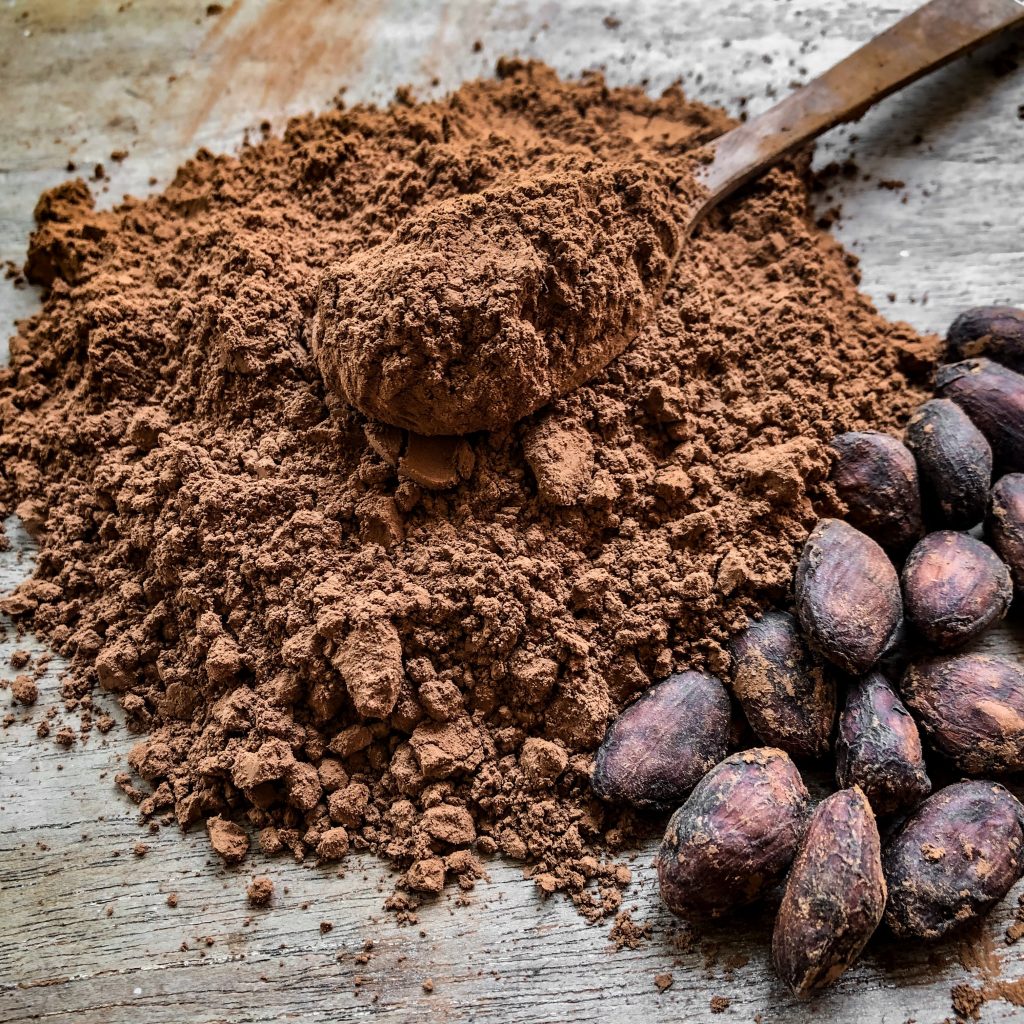
In industrial chocolate, confectionery and bakery manufacturing, you’ll frequently see the term “alkalized cocoa powder” (also called Dutch‑processed cocoa). In essence, raw cocoa solids are treated with an alkaline agent (potassium carbonate or sodium carbonate) to raise the pH, reduce acidity, deepen colour, and enhance flavour and solubility.
From a manufacturing standpoint, these are the key features you care about:
- Colour consistency – the alkalization step allows darker, more uniform brown/black colour in finished goods.
- Improved solubility/dispersibility – especially relevant for beverages, coatings or mixes.
- Milder taste, less acidity – which can increase flexibility in formulations or reduce risk of undesirable flavour interactions.
- Better compatibility with automated/continuous mixes – because consistency of dispersion is improved, reducing variation in downstream process.
Why manufacturing plants should focus on this ingredient
When you source an alkalized cocoa powder from a reliable company, you’re not just buying raw material—you’re buying part of your quality assurance and throughput reliability. At MT Royal, for example, we’ve seen factories reduce complaint levels and improve batch‑to‑batch uniformity when switching to a high‑quality alkalized grade.
Because for large‑scale operations:
- Minor shifts in colour, dust content or solubility can translate into visible variation on the line (e.g., coating colour mismatch, enrobed part discolouration).
- When you’re running large volumes (tons per shift) even a small deviation in performance (say 0.5% increased scrap due to dispersion issues) becomes significant in cost.
- The supply‑chain for cocoa ingredients has multiple variables—supplier traceability, raw bean quality, processing consistency—so choosing a dependable alkalized cocoa powder company is a strategic decision.
Market size and trends you should note
Understanding the market context helps you talk intelligently with suppliers. Recent industry reports indicate:
- Another survey projects the industry size of ~USD 2.51 billion in 2023 with a forecast to USD 3.22 billion by 2030 at ~3.6% CAGR.
- Manufacturers increasingly demand stable pH, solubility and colour performance from alkalized cocoa powders—especially for high throughput lines.
What this means for you: the ingredient isn’t a hobby‑grade commodity, it’s increasingly a performance‑component in high‑volume manufacturing—so you need to treat it as such.
Unique Benefits & Value Propositions for Production Plants
Let’s drill into what this ingredient offers for you on the factory floor.
1. Quality consistency & fewer rejects
When you procure alkalized cocoa powder from a strong supplier, you reduce variation in important performance parameters — dispersion time, dust carryover, colour tone, aroma. We’ve seen plants where switching to a well‑specified alkalized grade from an experienced company brought down colour variation in coatings by over 40% within one shift. This translated into fewer reject lots, less rework and better overall yield.
2. Process efficiency & downstream reliability
Because alkalized cocoa powders often offer improved solubility and lower acidity, you reduce issues in your mixing / refining / conching / coating lines: fewer lumps, less dust, more consistent flow. For production managers, that means fewer stops to clear filters, less downtime to adjust hopper feeds, and better pump behaviour.
3. Cost‑control (total cost of ownership)
Yes, the ingredient cost matters—but you must look deeper. A slightly higher costed alkalized powder that reduces scrap, reduces downtime, and improves throughput can over‑deliver on cost savings. At MT Royal we often advise procurement teams to calculate not just raw cost per kg, but cost per usable kg (after rejects), cost per minute of downtime avoided, cost per unit of finished good improved.
4. Flexibility in formulation & product diversification
Alkalized cocoa powders allow you to deepen colour, intensify flavour or alter functional behaviour (for example in beverages or bakery mixes). If you supply multiple SKUs—standard, premium, artisanal—this ingredient gives you levers to adjust. And when you work with high‑quality brands (we support lines including premium European suppliers, and Spanish‑origin brands like Latamarko often provide higher specification and innovation to support niche products) you unlock that flexibility.
5. Supply chain risk mitigation
Working with a reliable alkalized cocoa powder company means you’re less vulnerable to last‑minute raw material shortages or specification slips. Cocoa industry dynamics (bean crops, weather, politics) mean risk is real. By locking in a high‑quality supplier (through MT Royal’s network) and ensuring your specification is tight, you safeguard your plant’s continuity.
Common Pitfalls or Misconceptions in Procurement
Let’s be honest: switching or sourcing an alkalized cocoa powder for large‑scale operations can go awry if you don’t pay attention. Here are the mistakes we’ve seen—so you’re forewarned.
Misconception 1: “Any alkalized powder will work in my line”
Not so. Alkalized powders vary in alkalisation level, particle size distribution, moisture, solubility, dust content. A product selected for a bakery premix may behave very differently in a continuous enrober.
Tip: Specify performance criteria—dispersion time, colour rating, dust carry‑over, solubility—and insist on a sample run.
Misconception 2: “Lower cost = better margin always”
In a plant environment you must consider total cost of ownership. A lower‑cost alkalized cocoa powder from a weaker supplier may lead to increased scrap, downtime, inconsistent output and hidden cost.
Tip: Evaluate vendor reputation, specification stability, quality documentation—and incorporate process cost impacts into your evaluation.
Pitfall 3: Ignoring labelling / regulatory / specification constraints
Depending on geography and product category, using alkalized cocoa powder might influence what you can claim on label, or require specific traceability or certification. Overlooking this puts you at risk of non‑compliance. Make sure your supplier provides full documentation: country of origin, alkalisation method, residual alkalinity, particle size, heavy‑metal testing, mycotoxin certification, etc.
Pitfall 4: Failing to align to process
If you purchase an alkalized cocoa powder but don’t adapt your process (mixing times, temperature profile, hopper feed behaviour, dust management), you may face issues: dust accumulation, hopper bridging, inconsistent flow, colour streaks. At MT Royal we always advise clients to run a small pilot batch and monitor key parameters before full rollout.
Misconception 5: Using one specification for all SKUs
Your plant likely produces multiple product lines—mass‑market, premium, specialty. One alkalized cocoa powder grade may not fit all. For high‑end premium bars you may demand an ultra‑refined, darker, low‑dust powder from a premium supplier (e.g., Latamarko or European origin). For mass‑market bakery use, a more cost‑efficient grade may suffice. Match the grade to your product category.
Actionable Advice, Step‑by‑Step Guide for Implementation
Here’s a roadmap to help you evaluate, select and implement an alkalized cocoa powder from a trustworthy company, with minimal risk and maximum upside.
Step 1: Define your requirement
- Map out your product categories (premium bar, standard enrobed product, bulk coating, beverage mix, bakery line).
- Define key performance metrics for alkalized cocoa powder in your plant: colour tone, solubility/dispersion time, dust carry‑over, flow‑behaviour in hopper feed, blend‑compatibility with other ingredients, required certifications.
- Set budget but also target quality improvement criteria.
- Work with your procurement and quality teams to define certificate of analysis requirements, traceability, minimum shelf-life, and storage conditions.
Step 2: Shortlist alkalized cocoa powder companies & samples
- Tap your supplier network (At MT Royal we help clients with a wide range of brands and contacts) and identify at least 2‑3 candidate companies that can meet your spec. Include at least one premium supplier (for example Spanish‑origin Latamarko) and one cost‑efficient option.
- Request full specification sheets: alkalisation level (pH), particle size, moisture, ash, heavy metals, solubility test, colour measurement, allergen declaration, sustainable sourcing / certifications.
- Request sample lots sufficient for pilot runs.
- Conduct side‑by‑side trials in actual production conditions and monitor performance relative to baseline: throughput rate, hopper feed behaviour, dust accumulation, coating/enrobe appearance, colour match, scrap, batch yield.
Step 3: Process validation & adaptation
- Based on pilot results, adjust process parameters: mixing time, feed hopper settings, dust‑control devices, temperature of initial blend‑heat, conveyor speed in coating line, cooling tunnel profile if colour change affects appearance.
- Train operators and maintenance staff on the new powder differences.
- Update SOPs to reflect the new grade: storage, pre‑blend behaviour, hopper cleaning schedule, stock rotation.
- Plan traceability: designate lot-codes, link batch-numbers to finished product codes, maintain retention samples.
Step 4: Pilot batch run in production
- Choose a lower-risk product line to run full production with the new alkalized powder. Track KPIs: downtime, scrap rate, mix time, hopper refill frequency, finished product colour uniformity, customer feedback.
- Conduct cost analysis: calculate cost-per-unit including ingredient cost, scrap cost, downtime cost, yield improvement, quality recovery benefits.
Step 5: Scale‑up & continuous monitoring
- If pilot results are acceptable, schedule full transition.
- Implement bulk ordering agreements with your chosen alkalized cocoa powder company: specification, shelf-life, delivery lead times, contingency stock. At MT Royal, we encourage contract terms including fallback options if specification drift occurs.
- Monitor ongoing KPIs: scrap %, batch colour deviation, lot-to-lot variation, returned-goods, customer complaints.
- Maintain secondary supplier as backup to mitigate risk.
- Conduct quarterly review: supplier audit, specification consistency review, new cost vs performance review.
Pro Tips for successful integration
- Temperature/humidity matters: store in climate-controlled environment and monitor moisture uptake.
- Dust control is critical: include dust-extraction and hopper design.
- Standards for colour measurement: set quantitative measurement (reflectance %, Lab* colour space).
- Inventory rotation: define shelf-life and rotate stock.
- Sustainability and traceability: ensure supplier provides bean-origin traceability and required certifications.
- Small-batch vs large-batch behaviour: monitor production ramp-up differences.
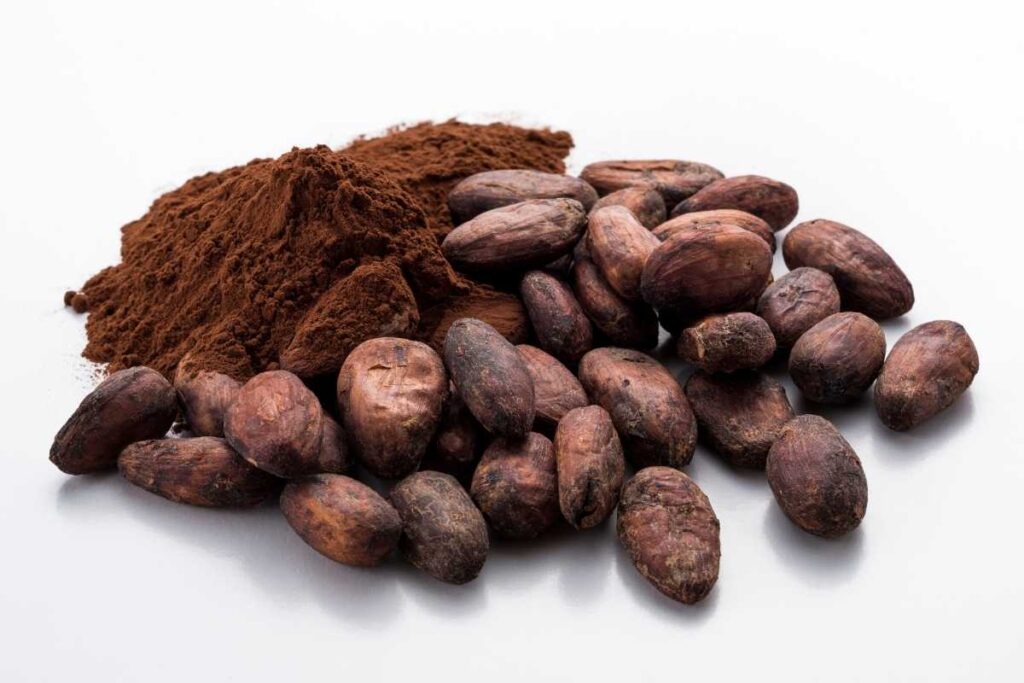
Comparison Table: Alkalized Cocoa Powder Companies & Grades
| Supplier / Grade | Alkalisation Level / pH | Particle Size / Fineness | Solubility / Dispersibility | Typical Application | Recommended Use‑Case (Plant) |
|---|---|---|---|---|---|
| Company A – Standard alkalized grade | pH ~7.5–8 | Medium | Good for bakery mixes | Baking, beverages | High‑volume standard lines |
| Company B – Premium European grade (e.g., Latamarko‑origin) | pH ~8–9 | Fine | Excellent dispersion, rich colour | Premium confectionery bars, coatings | Premium SKUs, enrobed products |
| Company C – Cost‑efficient bulk grade | pH ~7 | Coarser size | Acceptable for coatings/enrobes | Mass‑market coatings/enrobing nuts | Cost‑sensitive product lines |
Industry‑Specific Considerations for Large‑Scale Production
Mixing/Refining dynamics
Monitor thermal load, mixing shear, dust entrainment, hopper feed rate, and fines carry-over, especially in large batches.
Bulk storage and handling
Use silos or big‑bag systems with dust-safe transfer equipment and climate control to prevent bridging and flow issues.
Process throughput & downtime implications
Even small improvements in yield or downtime reduction justify premium ingredient cost. Choose powders that reduce stoppages.
Supply logistics & contract management
Order in bulk, ensure lot-to-lot consistency, fallback suppliers, and trace-back provisions. MT Royal provides access to multiple brands, including premium European origin.
Regulatory, labelling and traceability
Ensure the alkalized powder meets regional regulatory standards and certifications for allergen control, heavy metals, and mycotoxins.
Sustainability & environmental footprint
Select suppliers providing traceability, sustainability certifications, and responsible processing practices.
Real‑Life Anecdotes from Manufacturing Environments
Scenario A (Cautionary)
A plant switched to a lower-cost alkalized cocoa powder without a pilot. Result: hopper feed dropped, dust accumulation increased, colour variation in enrobed products. Cost savings were minimal after process adjustments.
Scenario B (Successful)
A plant tested a premium Spanish‑origin powder (including Latamarko). Results: improved coating colour uniformity, reduced dust load, faster beverage solubility, fewer rejects. Cost premium was offset by reduced scrap and downtime.
Frequently Asked Questions (FAQ)
Q1: How do I choose the right alkalized cocoa powder company for my plant?
A: Focus on companies providing full specification sheets, traceability, documented lots, and support for pilot testing. MT Royal offers multiple brands for cost-sensitive and premium applications.
Q2: What specification parameters should I insist on?
A: pH/alkalisation level, moisture content, particle size, dispersibility/solubility, colour measurement, dust content, heavy metal/mycotoxin certificate, sustainability certification.
Q3: Does switching to a different alkalized cocoa powder require process changes?
A: Yes—test mixing behaviour, hopper feed flow rate, dust accumulation, final colour, and cleaning cycles.
Q4: What cost-savings can I expect?
A: Savings may come from lower ingredient cost, fewer rejects, reduced maintenance downtime, improved yield, and reduced mixing/refining time.
Q5: What about sustainability and supply-chain risk?
A: Choose suppliers offering transparent sourcing, certifications, and reliable supply to mitigate risk.
Q6: Can I use the same alkalized cocoa powder across all SKUs?
A: Possibly, but many plants use tiered grades to balance cost, performance, and product positioning.
Summary & Reflection
Selecting the right alkalized cocoa powder company and grade is more than an ingredient procurement exercise—it’s a strategic decision impacting quality consistency, process efficiency, cost, and supply-chain resilience. By focusing on specification discipline, pilot validation, process integration, and supplier reliability, your plant can achieve manufacturing excellence.
Ask your team: “Which product line will we test first, and how will we measure improvement in cost-per-unit, throughput, scrap reduction, and quality uniformity?” Answering this clearly transforms ingredient sourcing into a competitive advantage.


No comment