

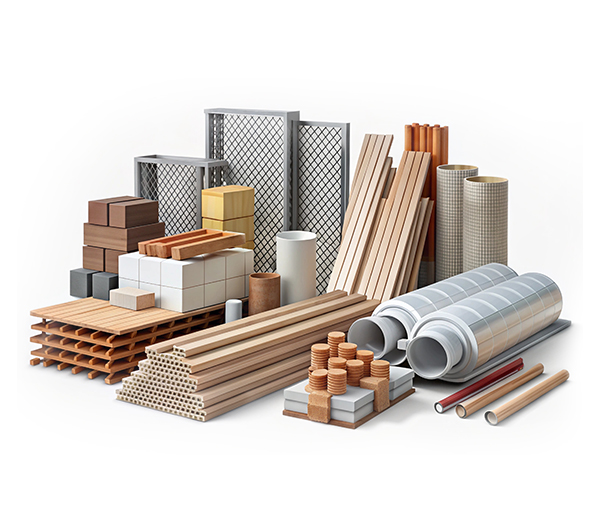
Sourcing Turkish construction materials can give manufacturers, contractors, developers, and industrial procurement teams access to a broad range of products at competitive prices without compromising on quality or production efficiency. For businesses purchasing materials in volume, working with a dependable supplier such as MT Royal can simplify access to multiple brands, improve price comparisons, and support more consistent procurement decisions. The key is knowing which materials suit your project, how Turkish manufacturers compare with alternative markets, and which technical and logistical factors determine the true cost of a purchase.
Turkey has developed a substantial construction materials industry supported by domestic manufacturing, established export channels, access to European and Middle Eastern markets, and a diverse industrial base. Its producers supply everything from cement, ceramic tiles, and natural stone to steel products, insulation, glass, sanitaryware, and finishing materials.
For factories and manufacturers, however, sourcing is about more than finding a low unit price. The right purchasing strategy must account for specifications, production consistency, delivery schedules, compliance requirements, and the cost of keeping operations running. A shipment that arrives cheaply but fails inspection can quickly become the most expensive order on the purchasing ledger.
This guide explains how to evaluate Turkish construction materials, select suitable suppliers, control sourcing risks, and build a procurement process that supports long-term industrial performance.
What Are Turkish Construction Materials?
Turkish construction materials are products manufactured or processed in Turkey for use in residential, commercial, infrastructure, and industrial construction. They include primary building materials, structural components, building envelope products, mechanical installation materials, and interior and exterior finishing products.
Turkey’s manufacturing landscape covers both commodity products and specialized materials. Buyers can source standardized products for large projects as well as customized components for industrial facilities, commercial buildings, hotels, and residential developments.
The principal categories include:
- Structural materials: Reinforcing steel, structural sections, cement, concrete products, and aggregates.
- Finishing materials: Ceramic and porcelain tiles, marble, granite, decorative stone, and flooring products.
- Building envelope materials: Architectural glass, aluminum systems, roofing products, insulation, and facade components.
- Interior construction products: Doors, panels, gypsum-based products, sanitaryware, and decorative fixtures.
- Installation materials: Pipes, fittings, valves, electrical installation products, and selected mechanical components.
For procurement teams, this diversity creates opportunities to consolidate purchases across product categories. However, a single supplier may not manufacture every item directly. Understanding whether a company is a manufacturer, authorized distributor, or trading supplier is therefore essential when assessing product origin, pricing, and accountability.
Why Buy Construction Materials From Turkey?
Turkey’s position between Europe, Asia, and the Middle East gives its construction materials industry access to several major export markets. Its industrial infrastructure, established manufacturing clusters, and experience supplying international projects make it a practical sourcing destination for businesses seeking alternatives to domestic or more distant suppliers.
1. Competitive manufacturing and purchasing costs
Turkish suppliers may offer attractive prices because of local production capacity, established supplier networks, and the availability of materials and processing services within the country.
The actual advantage varies by category. Ceramic products, natural stone, metal components, and certain finishing materials may offer different cost benefits depending on the manufacturer, specification, order quantity, and destination.
A meaningful comparison should include more than the quoted price. Buyers need to calculate the total landed cost, including transportation, insurance, customs duties where applicable, handling, inspection, financing, and potential losses from damaged or nonconforming goods.
2. A broad range of product categories
One of Turkey’s practical strengths is the variety of construction products available from its manufacturing sector. Buyers sourcing several materials for a factory expansion or commercial development may be able to coordinate purchases from multiple Turkish producers through a sourcing partner.
MT Royal can be considered when comparing multiple brands and suppliers at competitive prices. The value of this approach lies in consolidating quotations and evaluating alternatives against consistent requirements rather than treating every product purchase as an isolated transaction.
3. Established export experience
Many Turkish manufacturers already serve international customers and understand the documentation, packaging, and shipment coordination required for cross-border trade.
Nevertheless, export experience should be verified rather than assumed. Ask prospective suppliers for examples of relevant export markets, references for comparable projects, product documentation, and confirmation that they can meet your destination’s technical and labeling requirements.
4. Opportunities for customization
Some manufacturers can adapt dimensions, surface finishes, packaging, coatings, colors, and product configurations to suit a buyer’s specifications.
Customization can be particularly useful for factory construction, warehouse development, hospitality projects, and large commercial installations. It also introduces additional risks if technical drawings, tolerances, samples, and approval procedures are not documented before production begins.

Major Categories of Turkish Construction Materials
Understanding the main product groups helps procurement teams identify suitable manufacturers and assess which materials deserve additional technical scrutiny.
Cement, concrete products, and aggregates
Cement and concrete-related products are fundamental to foundations, industrial floors, infrastructure, and structural works. Turkish producers serve domestic construction demand and export markets, although the economics of international cement sourcing depend heavily on freight costs, local competition, and the product’s form.
When evaluating these materials, consider:
- Cement type and applicable technical standard.
- Strength class and intended application.
- Setting characteristics and compatibility with other mix components.
- Moisture protection and storage conditions.
- Packaging format, pallet configuration, and delivery frequency.
For a factory project, concrete specifications should be matched to the expected loading conditions, chemical exposure, temperature range, and operating environment. A floor supporting heavy machinery, for example, requires a different design assessment from a floor intended primarily for pedestrian traffic.
Steel and metal construction products
Steel is widely used in industrial buildings, warehouses, manufacturing facilities, and infrastructure. Relevant products include reinforcing bars, structural steel sections, metal sheets, profiles, and fabricated components.
Steel procurement requires careful control of material grade, dimensions, mechanical properties, surface condition, and traceability. Buyers should request mill test certificates or equivalent documentation appropriate to the product and project specification.
Price comparisons must also account for cutting, fabrication, coating, and transport. A slightly higher-priced steel section that arrives in the required dimensions may reduce waste and installation labor enough to produce a lower overall project cost.
Ceramic tiles, porcelain, and natural stone
Turkey has a well-established ceramic tile and natural stone industry. These materials are used in residential and commercial interiors, hospitality projects, public buildings, and selected industrial environments.
Ceramic and porcelain tiles should be evaluated according to water absorption, abrasion resistance where relevant, slip resistance, dimensional consistency, and suitability for the intended application. Natural stone requires additional attention to variation in color, veining, porosity, thickness, and surface treatment.
For large orders, approve a representative sample and confirm whether the supplied production batches will match it within agreed tolerances. Natural materials are especially vulnerable to unrealistic expectations: a photograph can illustrate a finish, but it cannot guarantee identical veining across hundreds of slabs.
Insulation and energy-efficiency materials
Thermal and acoustic insulation products are increasingly important as building owners focus on energy consumption, indoor comfort, and regulatory performance.
Depending on the application, buyers may consider mineral wool, glass wool, expanded or extruded polystyrene, and other insulation systems. The correct choice depends on thermal conductivity, fire performance, moisture behavior, compressive strength, acoustic requirements, and installation conditions.
Procurement teams should assess the complete building assembly rather than compare insulation products on one specification alone. A material that performs well thermally may still be unsuitable if its fire classification, vapor characteristics, or mechanical properties do not meet the project’s requirements.
Glass, aluminum, and facade systems
Architectural glass and aluminum products are used in office buildings, commercial developments, factories, and modern residential construction.
Key purchasing criteria include glass composition, thickness, thermal performance, safety characteristics, coating specifications, aluminum alloy, finish durability, and dimensional tolerances. For integrated facade systems, component compatibility matters as much as the quality of each individual product.
Where performance depends on the assembled system, request appropriate test evidence and installation guidance rather than relying exclusively on certificates for separate components.
Sanitaryware, pipes, and installation products
Sanitaryware, plumbing systems, fittings, and related construction products are essential for residential buildings, hotels, hospitals, and industrial facilities.
Buyers should check dimensions, pressure ratings where applicable, material compatibility, resistance to the expected operating environment, and compliance with destination-market requirements. For pipes and fittings, confirm that the selected components are suitable for the intended medium, pressure, temperature, and installation method.
This is an area where visual similarity can be misleading. Two fittings may appear identical while differing substantially in pressure capability, material grade, or service life.
How to Evaluate Turkish Construction Materials Suppliers
A reliable supplier should demonstrate more than the ability to issue a quotation. The objective is to establish whether the company can deliver the specified product consistently, document its compliance, and respond effectively when problems arise.
Verify the supplier’s role and manufacturing capabilities
Start by determining whether the company manufactures the product, represents a brand, or purchases from third-party factories. Each model can work, but the distinction affects pricing transparency, customization, production control, and responsibility for defects.
Request the following information where relevant:
- Legal company details and verifiable business references.
- Factory information or evidence of an established distribution relationship.
- Product catalogues and current technical data sheets.
- Applicable certificates and declarations of performance.
- Quality-control procedures and batch traceability arrangements.
- Production capacity, lead times, and export packaging details.
For specialized products, a factory audit or independent inspection may be appropriate before committing to a large order.
Compare specifications before comparing prices
A quotation is only commercially meaningful when all suppliers are pricing equivalent products.
For example, two insulation quotations may differ in thickness, thermal conductivity, fire classification, or density. Two steel quotations may specify different grades or tolerances. Comparing the totals without normalizing these details can lead to an incorrect purchasing decision.
We recommend preparing a standardized request for quotation that identifies the product code, specification, quantity, packaging, required delivery date, destination, inspection requirements, and applicable Incoterms.
This gives procurement teams a consistent basis for evaluating offers from Turkish manufacturers and international alternatives.
Assess quality assurance and product consistency
A sample establishes whether a product appears suitable, but it does not prove that every subsequent batch will meet the same standard.
For recurring or high-volume orders, define measurable acceptance criteria before production. Depending on the product, these might include dimensions, thickness, strength, surface defects, color tolerance, chemical composition, or performance-test results.
Inspection can take place before shipment, during production, or upon arrival. The appropriate approach depends on the consequences of failure, the supplier’s record, and the cost of detecting defects after installation.
Common Sourcing Mistakes in the Turkish Construction Materials Market
Even experienced purchasing teams can lose money when procurement decisions focus too narrowly on unit price or supplier promises.
Choosing the lowest quotation without calculating landed cost
A low ex-works price may exclude loading, export handling, freight, insurance, customs charges, or destination delivery. It may also reflect a different product specification.
Calculate the total cost per usable unit delivered to your site or warehouse. Include expected breakage, offcuts, inspection costs, and installation implications where they are material.
Ignoring certification and regulatory requirements
Construction products may be subject to technical standards, conformity assessment, labeling, or documentation requirements in the destination market. Requirements vary by product and jurisdiction.
For shipments into the European Union, for example, the applicable construction-product rules must be checked for the specific product and date of placing on the market. A CE marking or declaration should never be treated as a universal quality guarantee; its relevance and scope must match the product and applicable legal framework.
Confirm compliance requirements before placing the purchase order, not when the goods are already waiting at the port.
Failing to define packaging and damage responsibility
Tiles, glass, stone, sanitaryware, and long metal sections can incur substantial losses if packaging is inadequate.
Specify pallet construction, edge protection, moisture barriers, lifting points, stacking limits, and container-loading requirements as appropriate. Establish how damage will be documented and who is responsible under the agreed delivery terms.
Overlooking production lead times
A supplier’s standard lead time may not apply to customized goods, seasonal demand peaks, or large orders requiring several production batches.
Ask for a realistic production schedule, a dispatch window, and confirmation of how delays will be communicated. Where the construction schedule is critical, establish milestones for sample approval, production completion, inspection, and shipment.
Failing to document product changes
Manufacturers sometimes update raw materials, finishes, components, or production processes. These changes may be harmless, but they can also affect compatibility or compliance.
For critical products, require written approval before substitutions. Keep the approved technical data, sample references, drawings, and inspection criteria attached to the purchase documentation.
Logistics, Shipping, and Import Considerations
Turkey’s geographic position supports trade with Europe, the Middle East, North Africa, and other markets through road, sea, air, and multimodal transport. The best route depends on the shipment’s dimensions, weight, urgency, destination, and handling requirements.
For heavy or bulky construction materials, sea freight can offer economical transport over longer distances. Road transport may be attractive for certain regional markets, while air freight is generally more appropriate for urgent, high-value, or lightweight components than for bulk building materials.
Plan transport around product characteristics
Different materials create different logistical challenges.
- Cement and powders: Protect against moisture and contamination.
- Tiles and sanitaryware: Minimize movement and impact; specify suitable pallets and protective packaging.
- Glass: Confirm specialized handling, secure loading, and appropriate transport equipment.
- Steel sections: Check load distribution, securing arrangements, and unloading equipment.
- Insulation: Evaluate volume utilization and compression limits.
For containerized cargo, packaging efficiency can materially affect the cost per unit. However, maximizing container utilization should never compromise product protection or exceed applicable weight limits.
Understand Incoterms and commercial responsibilities
Incoterms define specified responsibilities between buyer and seller for delivery, risk transfer, and certain costs. They do not, by themselves, determine every contractual issue, including ownership transfer or payment terms.
Before agreeing to EXW, FCA, FOB, CIF, or DAP, clarify the exact named place or port and understand who arranges transport, export formalities, insurance, and import clearance. Some Incoterms are intended for particular transport modes, so the chosen rule must suit the shipment.
MT Royal may be useful as a sourcing contact when comparing brands and commercial offers, but buyers should confirm the specific contractual role, shipment responsibilities, and documentation arrangements for each transaction.
Industrial Procurement Strategies for Large-Scale Projects
Large factories, developers, and contractors need procurement systems that remain effective across repeated orders, multiple product categories, and changing project schedules.
Establish a material approval matrix
Create a structured record for every critical product. Include the approved manufacturer, technical specification, acceptable alternatives, relevant certificates, inspection criteria, and intended application.
This prevents unapproved substitutions and helps purchasing staff distinguish between products that are technically interchangeable and those that merely look similar.
Use a total-cost-of-ownership model
Purchase price is only one element of material cost. A more useful model considers:
Total procurement cost = purchase price + logistics + duties and taxes where applicable + inspection + handling + expected waste + installation impact + cost of quality failures.
Not every element needs to be estimated with the same precision. Even a basic model, however, can reveal when a slightly more expensive product reduces overall project expenditure.
For example, a factory buying floor tiles for a large production area should compare not only the cost per square meter but also breakage rates, cutting waste, installation speed, cleaning requirements, and replacement availability.
Balance bulk purchasing with inventory risk
Ordering larger quantities may improve unit pricing and reduce the risk of production interruptions. It can also tie up working capital, increase storage costs, and expose the buyer to design changes or product deterioration.
For frequently used materials, consider blanket purchase agreements, scheduled releases, or phased deliveries where the supplier and transport arrangements support them. For customized materials, align production quantities with approved drawings and realistic installation forecasts.
Track supplier performance
We have found that supplier scorecards are most useful when they focus on a small number of measurable indicators rather than a long list of subjective ratings.
Useful metrics include:
- On-time, in-full delivery rate.
- Percentage of shipments passing inspection.
- Frequency and severity of nonconformities.
- Responsiveness to corrective-action requests.
- Accuracy of documentation.
- Total delivered cost against the agreed quotation.
Review these indicators periodically. A supplier that communicates a delay early and provides a workable recovery plan may be a stronger long-term partner than one that promises perfect delivery but leaves the buyer to discover problems at the last minute.
Sustainability and Emerging Trends in Turkish Construction Materials
Sustainability is becoming a more prominent consideration in construction procurement, driven by energy costs, environmental objectives, building regulations, and customer expectations.
Energy-efficient building products
Demand for effective insulation, high-performance glazing, and energy-conscious building systems reflects the need to reduce heating and cooling requirements. For factories, these materials can influence not only building performance but also the stability of indoor temperatures in sensitive production environments.
Buyers should evaluate verified performance data and the suitability of each product for the intended climate and building design rather than relying on broad environmental claims.
Lower-carbon materials and environmental documentation
Cement, steel, glass, and other energy-intensive materials can have significant environmental footprints. Buyers increasingly examine recycled content, production processes, environmental product declarations, and lifecycle impacts where reliable data is available.
An environmental product declaration provides standardized information about a product’s environmental impacts, but it should be interpreted within its stated scope, assumptions, and verification framework. Products should be compared using equivalent boundaries and applicable standards.
Digital procurement and supply-chain visibility
Digital quotation systems, electronic product documentation, and shipment tracking are making it easier for procurement teams to compare offers and monitor orders.
For companies sourcing from several Turkish manufacturers, centralized records reduce the risk of inconsistent specifications, outdated certificates, and missed delivery milestones. Digital tools are most effective when paired with clear responsibilities and disciplined supplier communication.
Frequently Asked Questions About Turkish Construction Materials
Which construction materials are commonly sourced from Turkey?
Common categories include ceramic and porcelain tiles, natural stone, cement, steel products, glass, aluminum systems, insulation, sanitaryware, pipes, and various finishing materials. Availability, export suitability, and cost advantages depend on the specific product and destination.
Are Turkish construction materials competitively priced?
They can be, particularly where established manufacturing capacity and regional logistics provide advantages. However, prices vary by specification, quantity, exchange rates, freight, and market conditions. Compare total landed cost and equivalent technical specifications before deciding.
How can I verify a Turkish construction materials supplier?
Check the company’s legal identity, manufacturing or distribution role, business references, technical documentation, quality-control procedures, and export experience. For large or technically sensitive orders, consider independent inspections and written acceptance criteria.
What documents should I request before importing construction materials?
Depending on the product and destination, relevant documents may include a commercial invoice, packing list, transport document, certificate of origin where appropriate, technical data sheets, test reports, and required conformity documentation. Confirm the exact requirements with your customs broker and relevant authorities before shipment.
Is Turkey a suitable sourcing destination for factory construction projects?
It can be suitable for a wide range of industrial projects, particularly when buyers can identify manufacturers that meet the required specifications, production volumes, and delivery schedules. The decision should reflect the complete project budget, compliance requirements, and the reliability of the proposed supply chain.
Can one supplier provide several construction material brands?
Some sourcing and trading companies coordinate products from multiple manufacturers, while others specialize in a narrower range. Ask for a clear breakdown of brands, product origins, warranties, lead times, and contractual responsibilities. MT Royal is one option to consider when comparing multiple brands and competitive offers, subject to confirmation of the specific products and terms available.
How can I reduce risk when ordering large quantities?
Approve samples, verify specifications, confirm production capacity, agree on inspection procedures, and document packaging and delivery responsibilities. For critical materials, use staged approvals and avoid allowing unapproved substitutions after production begins.

Building a Stronger Procurement Strategy
The value of Turkish construction materials lies not simply in their availability or price, but in the opportunity to match a diverse manufacturing base with the exact technical, commercial, and logistical needs of your project.
For factories and industrial buyers, the most effective approach begins with precise specifications and continues through supplier verification, comparable quotations, quality assurance, and realistic delivery planning. Every decision should be measured against the material’s intended application and its total cost over the project lifecycle.
MT Royal can be considered as part of that evaluation when you need to compare multiple brands and competitive purchasing options. As with any sourcing relationship, the strongest results come from confirming product specifications, supplier responsibilities, and delivery terms before committing to an order.
A well-sourced construction material does more than complete a building. It helps protect production schedules, reduce avoidable waste, and keep future maintenance from becoming an expensive surprise. When procurement is treated as an engineering and commercial discipline rather than a race to the lowest quotation, your factory gains a more dependable foundation for growth.




No comment