

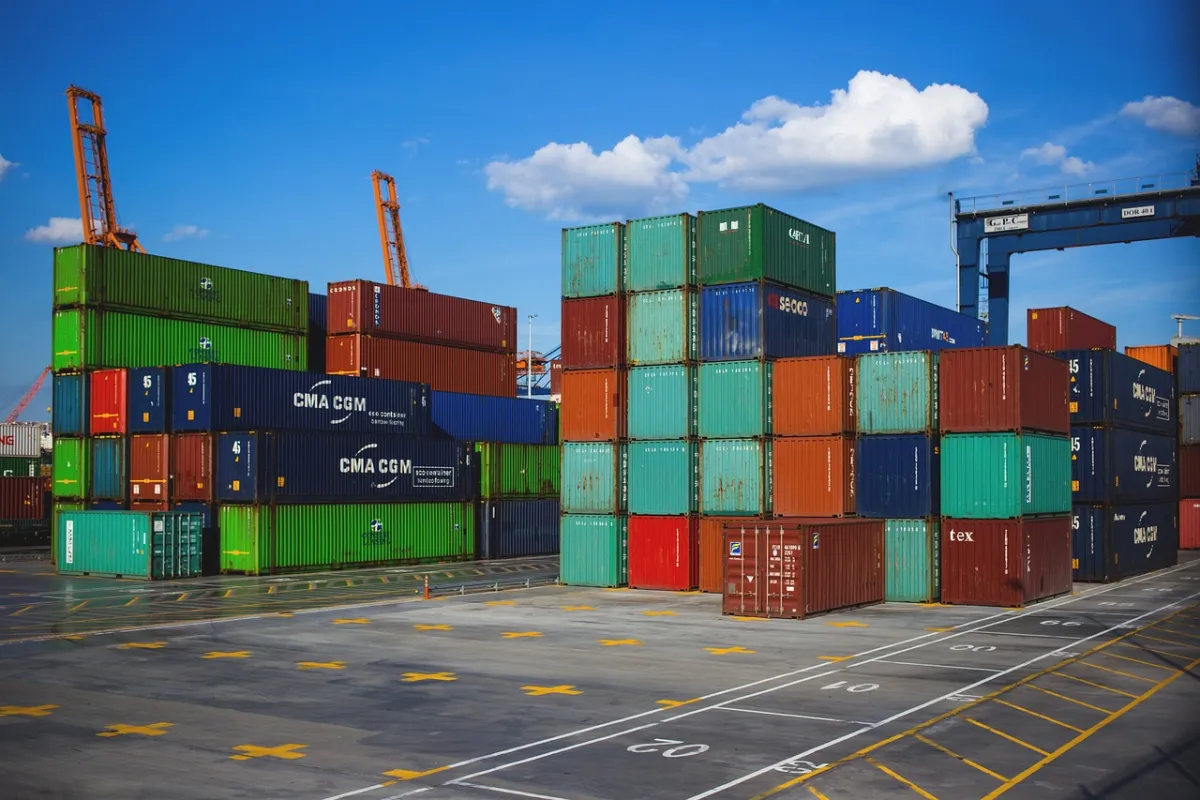
Turkey is an important manufacturing and trading hub connecting European, Asian, and Middle Eastern markets. Its strategic location creates opportunities for international businesses, but importing industrial goods requires careful attention to customs regulations, product classification, documentation, taxes, and technical compliance requirements.
For procurement managers, customs clearance is not simply a legal formality. It directly affects inventory availability, working capital, delivery schedules, and the total cost of acquiring equipment. A well-prepared import process helps your factory avoid unnecessary expenses and reduces the risk of production interruptions.
This guide explains how customs clearance in Turkey works, which documents importers need, how customs duties are calculated, what manufacturers should know about EU–Turkey trade, and how to prevent common sourcing and logistics problems.
What Is Customs Clearance in Turkey?
Customs clearance is the administrative and legal process through which goods entering or leaving a country are declared to customs authorities and assessed for compliance with applicable regulations.
In Turkey, customs procedures are primarily governed by Customs Law No. 4458 and its associated regulations, together with applicable tariff measures, trade agreements, product safety requirements, and import restrictions.
For businesses importing industrial products, customs clearance generally involves identifying the correct customs tariff classification, declaring the value and origin of goods, preparing the required documents, paying applicable duties and taxes, and obtaining authorization to release the shipment.
The exact process depends on the type of product, its country of origin, the import procedure, and any additional regulatory requirements.
For example, importing standard metal fasteners may involve relatively straightforward documentation. Importing industrial machinery, programmable logic controllers, electrical protection devices, or specialized sensors may require more detailed technical information and additional conformity checks.
It is important to understand that customs clearance and transportation are separate activities. A freight forwarder can arrange the movement of goods, but the shipment must still satisfy the relevant customs and import requirements before it can be released.

How Does Customs Clearance Turkey Work?
The customs clearance process typically follows several stages. Preparing each stage before the goods arrive is one of the most effective ways to reduce delays and avoid unexpected charges.
1. Verify Import Requirements Before Placing an Order
Before purchasing industrial equipment, confirm that the product can be imported under the applicable Turkish regulations and identify any permits, certificates, or conformity requirements.
This step is particularly important for machinery, electrical equipment, telecommunications products, chemicals, and goods subject to safety or environmental controls.
Your procurement team should obtain the manufacturer’s name, model number, product specifications, intended application, country of origin, and relevant technical documentation.
MT Royal offers access to products from multiple brands at competitive prices, allowing buyers to compare available options against their technical and commercial requirements. Before confirming an order, however, you should ensure that the selected model meets the regulatory and operational requirements of your factory.
A product that looks suitable in a catalogue may still require additional documentation before it can enter the Turkish market.
2. Determine the Correct HS Code
The Harmonized System, commonly known as the HS code system, is an international framework used to classify traded goods. Turkey applies its national tariff nomenclature, which builds on the international system and includes additional subdivisions.
The customs classification determines the applicable tariff treatment and can also influence import permits, trade restrictions, surveillance measures, and technical requirements.
Industrial products can be particularly challenging to classify because their technical characteristics and intended functions may affect the appropriate tariff heading.
For example, an electric motor, a variable-frequency drive, and a complete motor-driven machine are different products and may fall under different classifications. Similarly, a replacement component imported separately may be classified differently from the complete machine in which it is installed.
Before shipment, provide your customs broker with a detailed product description, technical datasheet, model number, photographs where useful, material composition when relevant, and information about the product’s function.
Do not rely exclusively on a tariff code supplied by a manufacturer or used for an earlier shipment. Classification should be verified against the applicable Turkish tariff rules.
3. Prepare the Required Customs Documents
Accurate documentation is essential for efficient customs clearance Turkey procedures. Errors or inconsistencies between documents can trigger additional questions, inspections, or corrections.
Commercial imports commonly require the following documents, although the exact requirements vary by shipment.
| Document | Purpose |
|---|---|
| Commercial invoice | Identifies the seller, buyer, products, quantities, prices, and commercial terms |
| Packing list | Details package counts, weights, dimensions, and packaging information |
| Bill of lading, air waybill, or road transport document | Records the transportation arrangement and shipment details |
| Customs declaration | Provides the formal information required for customs processing |
| Proof of origin, where applicable | Supports an origin claim under the relevant trade arrangement |
| Import permits or conformity documents, where required | Demonstrates compliance with product-specific regulations |
| Freight and insurance records | Supports customs valuation when relevant |
The information across these documents should be consistent. Product descriptions, quantities, weights, model numbers, and commercial values must accurately reflect the shipment.
For instance, if the invoice lists 50 industrial sensors but the packing list identifies 48, customs officials may request clarification before proceeding. Such discrepancies can delay the entire shipment even when the products themselves are acceptable.
A practical approach is to have the customs broker review the documents before the goods leave the supplier’s warehouse.
4. Calculate Customs Value Correctly
Customs valuation determines the value used to assess applicable import duties. The transaction value is generally the starting point when the relevant legal conditions are satisfied, but adjustments may be necessary depending on the transaction.
The customs value is not necessarily identical to the amount shown on the commercial invoice.
Depending on the circumstances, transport and insurance costs, certain commissions, royalties, assists, or other payments may affect the declared value. The treatment depends on applicable customs valuation rules.
Your purchasing team should therefore review the purchase price, shipping costs, insurance, payment terms, and delivery conditions before calculating the expected import charges.
Incoterms such as EXW, FCA, FOB, CIF, and DAP help establish responsibilities for delivery, costs, and risks between the seller and buyer. However, Incoterms do not independently determine customs classification, origin, or the legally applicable customs value.
Clear commercial terms make it easier for your customs broker to calculate the correct amount and reduce the likelihood of disputes.
5. Submit the Declaration and Obtain Customs Release
After the required documents and shipment details have been verified, the customs declaration is submitted through the applicable Turkish customs procedures, generally with the assistance of a customs broker.
Customs authorities may examine the declaration, review supporting documents, assess duties and taxes, or request a physical inspection.
The extent of examination depends on the shipment and the relevant risk controls. Some goods may require only documentary verification, while others may need a closer inspection of the packaging, labels, product specifications, or physical characteristics.
Once the applicable requirements have been satisfied and the assessed charges have been paid, the shipment can be released under the relevant customs procedure.
However, customs release does not automatically establish compliance with every separate product safety, labeling, tax, or market surveillance requirement. Importers must continue to meet any obligations that apply after clearance.
Customs Duties and Import Taxes in Turkey
Understanding import duties and taxes is essential when calculating the true cost of purchasing industrial products from international suppliers.
Depending on the product and transaction, importers may face customs duty, import value-added tax, additional customs duties, special consumption tax, customs brokerage fees, terminal handling charges, storage expenses, and inland transportation costs.
Not every charge applies to every product. The actual amount depends on tariff classification, origin, customs value, applicable trade measures, exemptions, and the relevant import regime.
Customs Duty
Customs duty is determined by the applicable tariff classification and the rules governing the product’s origin and importation.
Some goods may qualify for reduced or zero customs duty under an applicable trade arrangement. Other goods may be subject to additional duties or trade remedies, including anti-dumping measures.
The country from which goods are shipped does not automatically determine their customs origin. A product purchased from a supplier in Germany, for example, is not necessarily of German origin.
Import VAT
Value-added tax may apply to imported goods under Turkish tax rules. The applicable rate and taxable base depend on the product category and the circumstances of the import.
Eligible businesses may be able to recover import VAT, subject to the applicable requirements. Consequently, import VAT should be evaluated separately from nonrecoverable costs when calculating the long-term cost of a purchase, while still accounting for its potential effect on cash flow.
Additional Import Charges
Other expenses can include customs brokerage, port handling, inspections, storage, demurrage, and inland transportation.
These costs can become significant when documents are incomplete or a shipment remains at a port or border facility longer than expected.
For this reason, comparing supplier quotations solely by purchase price can produce misleading results.
How to Calculate Landed Cost
Landed cost represents the total cost of obtaining imported goods and delivering them to the intended destination.
A practical calculation includes:
-
Purchase price.
-
Freight and insurance.
-
Customs duties and nonrecoverable import taxes.
-
Customs brokerage and handling fees.
-
Inland transportation.
-
Other applicable import-related expenses.
Consider a hypothetical industrial purchase with a product value of €10,000 and freight and insurance costs of €800. Assume, purely for illustration, that the customs value is €10,800 and the applicable customs duty is 5%.
The estimated customs duty would be €540.
If import VAT were calculated at an illustrative rate of 20% on a base of €11,340, the VAT would be €2,268, before considering any additional adjustments required by the applicable rules.
These figures are examples rather than confirmed current Turkish rates or a definitive tax calculation for a specific product. Actual duty rates, VAT treatment, valuation adjustments, and other charges must be verified before importation.
For manufacturers, the main lesson is clear: the most competitive supplier is the one that offers the best overall value after all relevant costs and risks have been considered.
 EU–Turkey Customs Union and Industrial Imports
 EU–Turkey Customs Union and Industrial Imports
Turkey’s customs relationship with the European Union is particularly relevant for companies purchasing industrial machinery, electrical components, and other manufactured products.
The EU–Turkey Customs Union entered its final phase in 1996 and covers industrial goods and processed agricultural products, subject to its applicable rules. Certain agricultural products and coal and steel products are governed by separate arrangements.
The customs union facilitates trade in covered goods that satisfy the relevant requirements, but it does not eliminate every customs procedure or regulatory obligation.
What Is an A.TR Movement Certificate?
An A.TR movement certificate is used to demonstrate that goods meet the relevant free-circulation conditions under the EU–Turkey Customs Union.
It is important to distinguish an A.TR certificate from a certificate of origin. A.TR generally concerns the customs status of goods rather than establishing where the goods were manufactured.
For example, a product manufactured outside the EU may, under the applicable conditions, enter free circulation in an EU member state and subsequently qualify for movement to Turkey under the customs-union framework.
However, the treatment depends on the product’s scope, free-circulation status, applicable trade measures, and supporting documentation.
Does Purchasing From the EU Automatically Eliminate Customs Duty?
No. The fact that goods are dispatched from an EU country does not automatically mean that they qualify for every customs-union benefit.
Importers must verify the applicable product classification, customs-union scope, documentation, and any additional trade measures.
Where relevant, they should also confirm whether an A.TR certificate or other evidence is required and whether the goods satisfy the applicable conditions.
This is especially important for industrial products that may be subject to additional duties, surveillance measures, or other controls.
For manufacturers, verifying these details before shipment can prevent unexpected costs and help maintain predictable delivery schedules.
Common Customs Clearance Mistakes That Manufacturers Should Avoid
Even experienced procurement teams can encounter customs problems when documentation, product specifications, and shipping arrangements are not properly coordinated.
Incorrect Product Descriptions
Descriptions such as “industrial parts,” “electrical goods,” or “machine accessories” may be too vague to support accurate classification.
Use specific descriptions that identify the product’s function, model, and relevant technical characteristics. Where appropriate, include material composition, power rating, dimensions, or other information needed to distinguish the item from similar products.
Incorrect HS Codes
Using an incorrect tariff code can result in duty reassessments, penalties, additional inspections, and clearance delays.
The risk is particularly relevant for products with multiple functions, machinery imported in separate assemblies, and replacement components that resemble complete products.
Have the classification reviewed before shipment, especially when the financial or regulatory consequences of an error could be significant.
Missing or Incorrect Origin Documentation
A supplier’s address does not establish the origin of the goods. Similarly, an A.TR certificate is not a substitute for proof of origin where a preferential origin claim is required.
Confirm the appropriate documentation for the transaction and ensure that the supporting records match the shipment.
Understated Customs Value
Incorrectly declaring the value of imported goods can lead to reassessments, penalties, and prolonged clearance procedures.
Provide complete transaction details to the customs broker, including applicable freight charges, insurance, commissions, royalties, and relevant relationships between buyer and seller.
Never understate the value simply to reduce import charges.
Overlooking Product Compliance
Certain machinery and electrical equipment may be subject to technical regulations, conformity assessment, labeling requirements, or other controls.
Customs clearance and product compliance are related but distinct matters. A shipment’s release does not automatically establish that the equipment meets every requirement for its intended use in Turkey.
Verify the relevant obligations before ordering and shipping the goods.
Arranging Transport Too Early
Booking transportation before confirming documentation and import requirements can create avoidable storage and demurrage expenses.
Coordinate the customs broker, supplier, and freight forwarder before dispatch. This allows problems to be identified while there is still time to correct them without disrupting the delivery schedule.
Advanced Customs Strategies for Large-Scale Manufacturing
For factories with recurring imports, customs management should be integrated into procurement, inventory planning, engineering, and financial control.
Develop a Standardized Import Documentation System
Maintain a centralized record of imported products, including their descriptions, model numbers, tariff classifications, origin information, applicable certificates, and historical clearance records.
This information can reduce repetitive work for recurring purchases and help identify inconsistencies before new shipments are dispatched.
However, previous classifications and clearance outcomes should be reviewed when the product specification, supplier, origin, or applicable regulations change.
Coordinate Procurement With Engineering
Engineering teams should verify product specifications, while procurement confirms commercial terms and logistics validates shipping arrangements. The customs broker should review classification, valuation, and documentation requirements.
We recommend establishing a shared approval process for critical imports rather than treating customs clearance as a task that begins only when goods reach the border.
For example, a factory importing replacement drives or programmable controllers should verify model compatibility, technical documentation, and customs requirements before authorizing shipment.
This reduces the risk of receiving an unsuitable component or discovering a documentation problem during an urgent maintenance operation.
Manage Inventory According to Operational Risk
Not every industrial component requires the same level of safety stock.
A standard fitting available from multiple qualified suppliers may need only a modest inventory buffer. A specialized automation module with a long replenishment time may justify a different approach because a stockout could stop production.
Evaluate the criticality of each component, the likely replenishment period, supplier alternatives, customs lead-time variability, and the financial consequences of downtime.
A risk-based inventory policy helps manufacturers balance storage costs against the need for operational continuity.
Measure Customs Performance
Track customs-related performance indicators alongside purchasing and delivery metrics.
Useful indicators include average clearance time, the percentage of shipments requiring document corrections, storage costs per shipment, differences between estimated and actual landed cost, and the frequency of classification issues.
These measurements help identify recurring bottlenecks and demonstrate whether process improvements are producing meaningful financial benefits.
Plan for Urgent Spare Parts
Urgent replacement parts require careful coordination because expedited transportation cannot eliminate customs requirements.
Before dispatch, confirm the exact model, applicable import controls, documentation, and the readiness of the customs broker.
For critical machinery, consider qualifying alternative products and maintaining an appropriate stock of essential components. This can reduce dependence on emergency international shipments.
Emerging Trends in Turkish Customs and International Sourcing
International trade procedures continue to evolve as governments expand digital systems, strengthen product compliance requirements, and improve risk-based customs controls.
Digital Customs Documentation
Electronic declarations and digital document management can improve administrative efficiency and reduce repetitive paperwork.
However, electronic processing does not eliminate the need for accurate information. Product descriptions, declared values, origin evidence, and supporting records must still meet the applicable legal requirements.
Businesses should maintain reliable digital records and establish clear procedures for checking documents before submission.
Greater Focus on Product Traceability
Manufacturers and importers increasingly need to demonstrate where products originate, which specifications they meet, and whether they comply with applicable safety and environmental requirements.
This is particularly relevant for complex machinery, electrical products, and components used in regulated industrial applications.
Maintaining accurate supplier documentation can improve customs preparation while also supporting quality control and product traceability.
Changing Trade Policies and Compliance Obligations
Tariff measures, trade remedies, technical regulations, and international agreements can change over time.
Procurement teams should periodically review the rules affecting their most important product categories rather than relying indefinitely on an old duty estimate.
For manufacturers exporting products to the European Union, additional obligations may also apply depending on the product and the relevant environmental, safety, and trade regulations.
Monitoring these developments helps businesses avoid unexpected compliance costs and maintain reliable international supply arrangements.
Frequently Asked Questions About Customs Clearance Turkey
How long does customs clearance take in Turkey?
There is no single clearance time that applies to every shipment. Processing depends on documentation quality, product classification, applicable controls, customs workload, and whether additional inspections or approvals are required.
Prepare documents in advance and allow contingency time for unexpected requests or examinations.
What documents are required for customs clearance in Turkey?
Common documents include a commercial invoice, packing list, transport document, and customs declaration. Depending on the product and transaction, import permits, conformity documents, and origin evidence may also be required.
The exact requirements should be confirmed with a qualified customs broker before dispatch.
Can foreign companies import goods into Turkey?
Foreign companies may be able to import goods, but the appropriate importer arrangements, registration requirements, tax obligations, and authorizations depend on the transaction and applicable Turkish regulations.
Confirm who will act as the importer, who will arrange the declaration, and who is responsible for import taxes before shipping.
Are all imported products subject to customs duty?
No. Customs duty depends on classification, origin, applicable trade arrangements, exemptions, and other measures. Import VAT and other applicable charges must be assessed separately.
A qualified customs broker can help establish the correct treatment for a particular shipment.
Is A.TR the same as a certificate of origin?
No. A.TR generally demonstrates the relevant free-circulation status of goods under the EU–Turkey Customs Union. It does not, by itself, prove that the goods originate in Turkey or the EU.
Where origin determines eligibility for a preferential tariff treatment, the appropriate origin documentation must be identified separately.
Can customs clearance be prepared before goods arrive?
Yes. Many important steps, including classification review, document verification, valuation analysis, and permit checks, can be completed before arrival.
Whether formal declaration submission or processing can begin before arrival depends on the applicable procedures and shipment circumstances.
How can MT Royal support industrial purchasing?
MT Royal provides access to industrial products from multiple brands at competitive prices. Buyers can compare available products against technical specifications, operational requirements, and budget constraints.
For international purchases, confirm the product details, country of origin, delivery terms, and documentation requirements before dispatch so that the sourcing process and customs arrangements remain aligned.
Make Customs Clearance a Competitive Advantage for Your Factory
Customs clearance Turkey should be treated as an essential part of procurement planning rather than a last-minute administrative requirement. Correct classification, accurate valuation, complete documentation, and early regulatory checks help manufacturers control costs and reduce avoidable delays.
For factories that depend on imported machinery, electrical components, and replacement parts, the consequences of poor preparation can extend far beyond the border. A delayed component may interrupt production, an incorrect declaration may increase expenses, and an incomplete technical file may create problems even after the shipment has arrived.
MT Royal can support your purchasing strategy by offering access to multiple brands at competitive prices. Combining careful supplier selection with a disciplined customs process helps your business improve cost visibility, protect delivery schedules, and build a more resilient industrial supply chain.
The strongest sourcing strategy is not simply the one that secures the lowest purchase price. It is the one that brings the right product into your factory, with the right documentation, at a predictable total cost, when your production team needs it.




No comment