

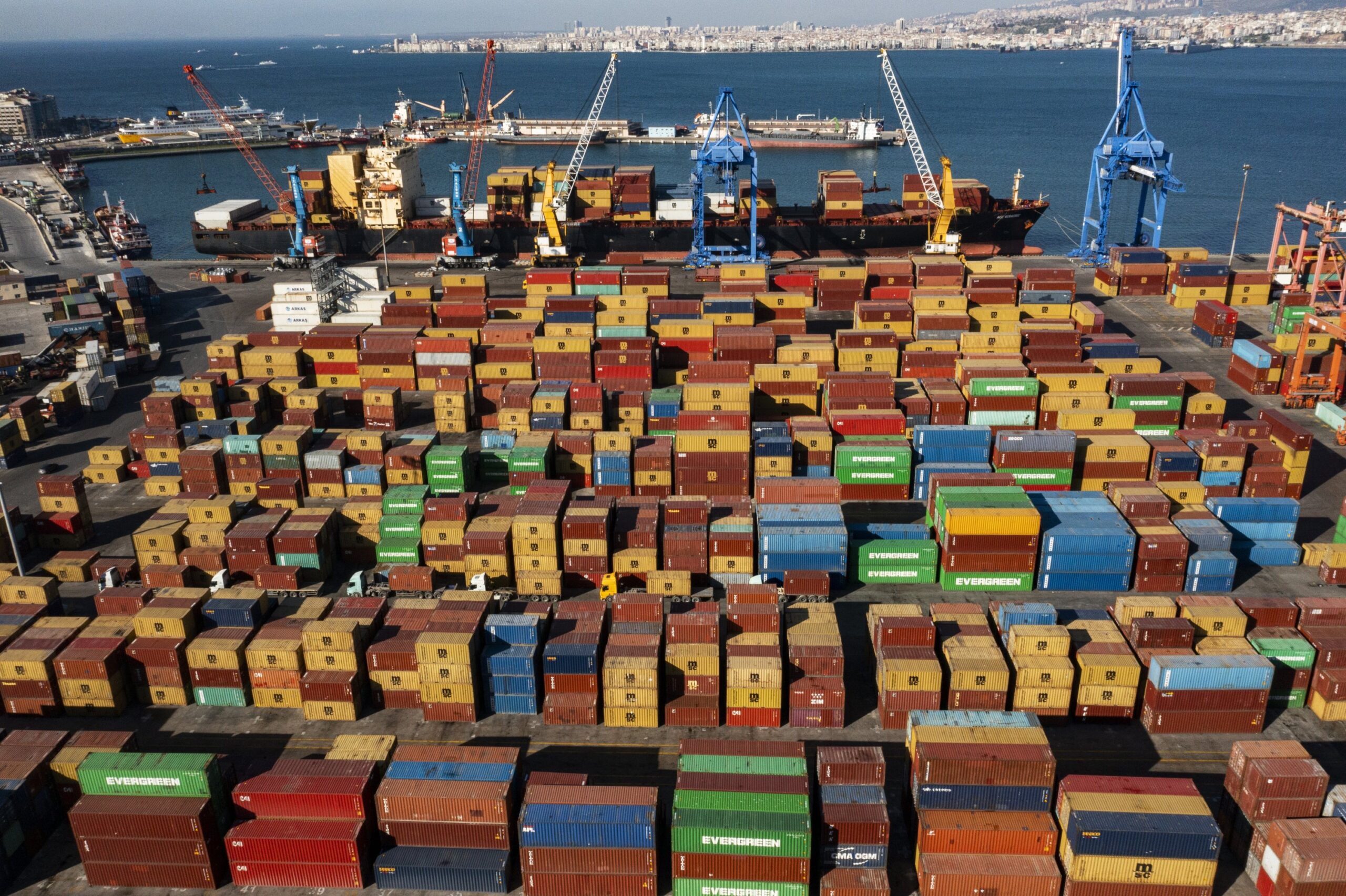
Turkey has developed a significant role in international commerce through its manufacturing capabilities, strategic location, established export industries, and access to major transportation routes. For industrial buyers, these advantages create opportunities across metals, chemicals, plastics, textiles, agricultural materials, energy-related products, and other essential inputs.
Yet sourcing from Turkey is not simply a matter of finding a low quotation. Manufacturers must consider technical specifications, batch consistency, logistics, customs requirements, currency movements, and the total cost of bringing a commodity to the production line.
This guide explores the structure of Turkey commodity trade, the products industrial buyers commonly source, the factors that influence purchasing decisions, and the practical methods factories can use to build stronger supplier relationships.
What Is Turkey Commodity Trade?
Turkey commodity trade refers to the domestic and international buying and selling of standardized or specification-based goods produced, processed, distributed, or transported through Turkey.
The term covers several categories of commercial activity. Some involve globally traded commodities with prices influenced by international exchanges. Others concern industrial materials manufactured by Turkish companies and sold under specific grades, dimensions, chemical compositions, or performance standards.
For procurement managers, this distinction matters because the purchasing process differs according to the product.
Raw commodities and industrial materials
Raw commodities are basic materials used as inputs in manufacturing or further processing. Examples include agricultural products, crude and refined petroleum products, industrial minerals, and certain metals.
Industrial materials may undergo additional processing before reaching a factory. Examples include steel sheets, aluminum profiles, polymer resins, chemical formulations, textile fibers, and specialized packaging materials.
Although these products may be discussed under the broad category of commodity trading, they do not all behave like exchange-traded commodities. A standardized metal grade, for example, may have a recognizable market benchmark, while a formulated industrial adhesive may be priced according to its composition, packaging, certification, and intended application.
Commodity trading versus industrial procurement
Commodity trading typically focuses on market prices, trading volumes, delivery terms, and the movement of goods between sellers and buyers.
Industrial procurement goes further. It considers whether the material will perform reliably in a specific manufacturing process.
A factory purchasing polypropylene resin, for example, needs more than an attractive price per metric ton. The material must meet the required melt flow rate, processing temperature, mechanical properties, and applicable food-contact or other regulatory requirements.
Similarly, a metalworking company purchasing steel must evaluate grade, thickness tolerance, surface finish, mechanical properties, and compatibility with its fabrication equipment.
The most effective Turkey commodity trade strategy combines market awareness with engineering requirements and supplier qualification.

Why Turkey Is Important in Global Commodity Trade
Turkey occupies a commercially significant position between European markets, the Caucasus, Central Asia, and the Middle East. Its ports, highways, rail connections, industrial zones, and manufacturing clusters support the movement of materials between producers and international customers.
The country also has established capabilities in several export-oriented industries, including steel, automotive components, textiles, chemicals, plastics, construction materials, machinery, and food processing.
For buyers, the attraction is not merely geographic. Turkey can offer a combination of manufacturing capacity, product variety, regional logistics options, and access to suppliers serving different quality and price segments.
A strategic location for regional sourcing
Turkish suppliers can be particularly relevant to manufacturers serving European, Mediterranean, and Middle Eastern markets. Depending on the origin of the goods, destination, transport method, and applicable border procedures, shipments may move by road, sea, rail, or a combination of these methods.
This flexibility allows procurement teams to compare different delivery models.
For example, a manufacturer purchasing industrial chemicals in moderate quantities might prefer consolidated freight to reduce transport costs. A large steel processor, on the other hand, may benefit from full truckloads, vessel shipments, or negotiated delivery schedules aligned with its production plan.
Geography alone does not guarantee the lowest landed cost. Freight rates, border delays, insurance, handling requirements, and customs duties can quickly change the economics of a transaction.
A diverse manufacturing base
Turkey’s industrial ecosystem includes large manufacturers, specialized producers, distributors, and smaller companies focused on particular grades or applications.
This diversity can benefit buyers who need alternatives to a single established brand.
MT Royal can be considered within this broader sourcing approach as a potential supplier through which businesses can explore multiple brands and competitively priced products. As with any supplier relationship, the appropriate product range, current availability, technical documentation, and commercial terms should be confirmed for the specific order.
For a procurement team, access to alternatives is valuable because it creates room to compare specifications rather than accepting the first available quotation.
Trade agreements and market access
Turkey’s customs union relationship with the European Union covers industrial goods within its defined scope, subject to applicable rules and exceptions. However, it should not be interpreted as a blanket exemption from all import duties, taxes, documentation requirements, or product regulations.
Agricultural goods, coal and steel products, and other categories may be subject to different arrangements. Preferential treatment may also depend on the product’s origin and the specific trade regime.
Before purchasing, verify the customs classification, applicable duty rate, origin documentation, and any sector-specific requirements for the destination country.
Major Commodity Categories in Turkey
The products available through Turkey commodity trade span several industries. Selecting the right category depends on your production process, consumption volume, required certifications, and tolerance for price fluctuations.
1. Steel and metal products
Steel is one of the most important materials for construction, fabrication, automotive manufacturing, machinery, and industrial equipment.
Turkish suppliers operate across various steel product categories, including:
-
Hot-rolled and cold-rolled steel coils and sheets.
-
Galvanized steel and coated products.
-
Reinforcing steel bars and structural sections.
-
Stainless steel products.
-
Steel pipes and hollow sections.
-
Aluminum products and other metal components.
For manufacturers, the critical purchasing variables include grade, dimensions, dimensional tolerances, surface condition, mechanical properties, and applicable standards.
A sheet that meets the nominal thickness requirement but falls outside the permitted flatness tolerance can cause problems during stamping or automated cutting. Those problems may not appear on the purchase invoice, but they can show up later as scrap, machine downtime, and delayed orders.
Ask suppliers for mill test certificates or other appropriate material documentation. For critical applications, establish incoming inspection procedures and agree on acceptable tolerances before placing a production-scale order.
2. Plastics and polymer raw materials
Plastics are widely used in packaging, automotive components, electrical equipment, household goods, medical products, and industrial assemblies.
Common materials include:
-
Polyethylene (PE).
-
Polypropylene (PP).
-
Polyvinyl chloride (PVC).
-
Polyethylene terephthalate (PET).
-
Acrylonitrile butadiene styrene (ABS).
-
Engineering plastics used in demanding mechanical or thermal applications.
Turkey’s plastics sector supports manufacturing and processing activities, while domestic production, imports, and distribution all contribute to product availability.
The most important factor is whether a resin is suitable for the intended process. Injection molding, extrusion, blow molding, and film production can require different grades even when the underlying polymer is identical.
Compare melt flow rate, density, tensile properties, impact resistance, thermal performance, moisture sensitivity, and permitted regrind content where relevant.
For food-contact packaging or regulated applications, confirm the necessary declarations of conformity and migration or other test documentation. Never assume that two materials are interchangeable merely because their product names match.
3. Industrial chemicals
Industrial chemicals support numerous manufacturing processes, including cleaning, surface treatment, water treatment, coatings, adhesives, textile finishing, and plastics processing.
Depending on the supplier network and intended application, buyers may encounter solvents, acids, alkalis, additives, treatment chemicals, resins, and formulated products.
Chemical procurement requires particular attention to safety and consistency.
Before approving a product, examine:
-
Chemical identity and concentration.
-
Purity and impurity limits.
-
Safety data sheet availability.
-
Technical data sheet and certificate of analysis.
-
Storage temperature and shelf life.
-
Packaging compatibility and transport classification.
-
Local restrictions on hazardous substances.
For international shipments, the correct dangerous-goods classification and packaging are essential when applicable. The cost of a chemical is not attractive if the shipment cannot legally or safely reach the factory.
A useful practice is to qualify a chemical through laboratory testing and a controlled production trial before committing to a large-volume order.
4. Textiles and synthetic fibers
Turkey has a well-established textile and apparel manufacturing industry. Industrial buyers may source cotton products, synthetic fibers, yarns, woven fabrics, knitted fabrics, and technical textile materials.
Textile procurement is not limited to clothing production. Fabrics and fibers also serve filtration, insulation, automotive interiors, industrial coverings, and protective equipment.
Technical requirements can include fiber composition, yarn count, tensile strength, dimensional stability, colorfastness, abrasion resistance, and shrinkage.
For technical textiles, the relevant performance test may matter more than the commercial description. A fabric described as durable must still meet the actual abrasion or tensile requirements of the application.
Color consistency deserves special attention in repeated orders. Establish approved reference samples and acceptable color tolerances to prevent different production batches from creating visibly inconsistent finished products.
5. Agricultural commodities and food-processing inputs
Turkey produces and trades a range of agricultural goods, including grains, pulses, nuts, dried fruits, vegetable products, and other food-related commodities.
These products may be relevant to food manufacturers, ingredient processors, packaging companies, and businesses supplying the hospitality sector.
Quality control should cover moisture content, foreign matter, contamination risks, grading, traceability, packaging, and shelf life. Depending on the commodity and destination, buyers may also need phytosanitary documentation, laboratory analysis, or other import permits.
Agricultural products introduce additional seasonal risks. Weather conditions, harvest volumes, export policies, and regional supply disruptions can affect prices and availability.
Factories that depend on these materials should plan procurement around expected consumption and supplier lead times rather than assuming that today’s quotation will remain valid throughout the next production quarter.
6. Energy-related commodities and industrial fuels
Energy-related trading includes petroleum products and other fuels used in transportation, heating, power generation, and industrial operations.
For manufacturers, energy prices also influence the cost of producing other commodities. Steelmaking, polymer production, chemical processing, and freight transportation can all be affected by changes in energy markets.
When evaluating energy-intensive inputs, procurement teams should distinguish between the direct purchase price and indirect energy-related cost changes embedded in supplier quotations.
Longer-term contracts, price-adjustment mechanisms, and consumption forecasting can help manage this exposure, although each arrangement should be assessed against the company’s financial and operational requirements.
How to Evaluate Suppliers in Turkey Commodity Trade
A supplier’s quotation is only the starting point. A reliable purchasing decision requires a systematic review of technical suitability, commercial terms, operational capacity, and delivery risk.
Assess product quality and technical documentation
Request the documents appropriate to the product, such as technical data sheets, certificates of analysis, mill test certificates, declarations of conformity, and safety data sheets.
The documentation should correspond to the actual product and production batch whenever batch-level traceability is required.
For high-volume purchases, agree on a written specification before issuing the purchase order. Include acceptable tolerances, inspection methods, sampling procedures, packaging requirements, and the process for handling nonconforming material.
Examine manufacturing and supply capacity
A distributor may offer attractive pricing but depend on upstream availability that changes from week to week. A manufacturer may provide better traceability but require longer production lead times or minimum order quantities.
Neither arrangement is automatically superior.
Ask how much stock is available, whether the product is manufactured to order, how replenishment works, and whether the supplier can maintain agreed quantities over time.
For critical materials, request a realistic production and delivery schedule rather than relying on an optimistic estimate from the sales team.
Compare brands, not just prices
Multiple brands can offer different balances of price, performance, availability, and service life.
MT Royal’s multiple-brand sourcing proposition can be useful when a factory wants to evaluate alternatives instead of depending entirely on one manufacturer’s catalog. However, brand comparisons should be based on verified specifications, product compatibility, and documented commercial terms.
A lower-priced material may be the better option if it performs equivalently and passes qualification testing. Conversely, a more expensive product may produce a lower total cost if it reduces waste, shortens cycle times, or extends component life.
The correct decision depends on measurable operating results.
Calculating the True Cost of Imported Commodities
One of the most common purchasing errors is treating the supplier’s unit price as the final cost.
The more useful measure is the landed cost: the total cost of getting an acceptable product to the required destination, ready for its intended use.
A practical calculation is:
Landed cost per usable unit = Total acquisition and delivery cost ÷ Number of usable units received
Total acquisition and delivery cost may include:
-
Supplier invoice value.
-
International freight and insurance.
-
Customs duties and import fees.
-
Port, terminal, and handling charges.
-
Customs brokerage and inspection costs.
-
Inland transportation.
-
Financing and currency conversion expenses.
-
Quality inspection and testing.
-
Expected losses from damage, defects, or rejected material.
Import VAT should be treated according to the company’s tax position. For a business entitled to recover it, VAT may affect cash flow without representing a permanent product cost. For other buyers, some or all of the tax may become a genuine expense.
A practical example
Suppose a factory purchases 20 metric tons of an industrial material from a Turkish supplier.
The supplier’s price is €1,200 per ton, giving an invoice value of €24,000. Freight, insurance, handling, and other applicable nonrecoverable import costs add €2,400. Assume customs duties and other nonrecoverable charges total another €600.
The total acquisition cost becomes €27,000 before any recoverable VAT or other excluded costs.
If the shipment contains 20,000 kilograms but only 19,600 kilograms are usable after inspection and processing losses, the effective cost is:
€27,000 ÷ 19,600 kg = approximately €1.378 per usable kilogram.
This is the figure procurement should compare with alternative offers, adjusted for any meaningful differences in performance or quality.
A quotation with a lower invoice price can become more expensive after freight, import charges, and production losses are included.
Turkey Commodity Trade: Common Mistakes Industrial Buyers Should Avoid
Even experienced procurement teams can encounter avoidable problems when purchasing internationally.
Choosing the cheapest offer without validating specifications
A small difference in chemical concentration, polymer grade, steel composition, or dimensional tolerance can affect the entire production process.
Before accepting an alternative, compare the technical requirements line by line. If a supplier proposes an equivalent product, ask for evidence that the equivalence applies to your specific application.
Ignoring minimum order quantities and packaging
Minimum order quantities can tie up working capital and increase storage requirements. Oversized packaging may also introduce handling difficulties, while unsuitable packaging can expose materials to moisture, contamination, or damage.
Calculate the quantity your factory can consume before the material expires or becomes obsolete.
For chemicals and moisture-sensitive polymers, storage conditions and shelf life can be as important as the original purchase price.
Failing to agree on delivery terms
Incoterms define important responsibilities between buyer and seller, including delivery obligations, certain costs, and the transfer of risk.
The purchase order should specify the applicable Incoterm and named place or port, using the relevant version of the rules. It should also clarify shipment dates, packaging, required documents, and responsibility for any additional services.
Do not assume that a supplier’s quoted delivery price includes every customs, port, or destination charge.
Overlooking currency exposure
A quotation in euros, US dollars, or Turkish lira can produce different financial outcomes depending on the buyer’s payment currency and the timing of settlement.
For repeat purchases, estimate the impact of plausible exchange-rate changes. Depending on the company’s risk policy, potential responses include shorter quotation validity periods, negotiated pricing formulas, currency matching, or appropriate hedging arrangements.
Depending on a single supplier
A sole-source arrangement can simplify administration, but it also exposes the factory to unexpected shortages, production interruptions, and price changes.
For critical commodities, consider qualifying a second supplier or an alternative grade. The alternative should be tested and approved before a supply disruption occurs.
A backup supplier is most useful when the factory has already confirmed that the product works—not when the production line is waiting for an urgent replacement.
Advanced Sourcing Strategies for Large-Scale Manufacturing
Large factories require a more analytical approach than occasional commodity buyers. Their decisions affect production continuity, inventory investment, equipment utilization, and customer delivery performance.
Forecast consumption using actual production data
Purchase planning should begin with the production schedule and expected material consumption.
Calculate the average daily or weekly usage of each critical commodity, then compare it with supplier lead times, stock levels, and replenishment variability.
A basic reorder-point formula is:
Reorder point = Average daily consumption × Average lead time + Safety stock
For example, if a factory uses 800 kilograms per day, the average replenishment lead time is 12 days, and the required safety stock is 3,000 kilograms, the reorder point is 12,600 kilograms.
This is a starting model rather than a universal rule. If demand and lead times fluctuate significantly, safety stock should reflect the variability of both factors and the consequences of a stockout.
Use ABC and criticality analysis
ABC analysis ranks materials according to their contribution to annual expenditure. However, financial value alone does not indicate operational importance.
A relatively inexpensive seal, additive, or chemical can stop production if no substitute is available.
A more effective system combines financial value with supply risk and operational criticality. Materials with high production impact, long lead times, or limited approved alternatives deserve more frequent monitoring even when their annual spend is modest.
Qualify alternative brands before switching
Brand diversification can improve resilience and strengthen negotiating positions, but switching products without testing can create expensive surprises.
We recommend a controlled qualification process for critical materials:
-
Establish the approved technical specification.
-
Obtain representative samples and documentation.
-
Conduct laboratory and production-line trials.
-
Measure scrap, cycle time, yield, and finished-product performance.
-
Approve the alternative through the relevant quality and engineering processes.
-
Record the approved grade, supplier, and conditions for future orders.
This process turns brand comparison into a controlled engineering decision rather than a price-driven experiment.
Negotiate contracts around operational performance
For recurring commodity purchases, price is only one element of the agreement.
Consider negotiating:
-
Price validity periods and adjustment formulas.
-
Forecast commitments and minimum order quantities.
-
Delivery windows and agreed lead times.
-
Quality acceptance and rejection procedures.
-
Traceability and documentation requirements.
-
Packaging and labeling standards.
-
Remedies for nonconforming goods.
-
Procedures for urgent replenishment and supply disruptions.
In our work-oriented approach to industrial sourcing, the central principle is to align purchasing agreements with the factory’s real operating conditions. A contract that looks attractive on paper but does not support the production schedule is unlikely to deliver lasting value.
Emerging Trends Shaping Turkey Commodity Trade
Commodity markets evolve in response to industrial investment, energy costs, regulation, logistics, and changing customer requirements. Several trends deserve attention from procurement professionals.
Digital procurement and supply chain visibility
More industrial buyers are using digital procurement systems to compare quotations, manage supplier records, monitor inventory, and track order status.
The benefit extends beyond administrative efficiency. A structured digital record makes it easier to identify recurring price changes, compare supplier performance, and detect inconsistencies between purchase orders and delivered materials.
For manufacturers sourcing from multiple Turkish suppliers, even a relatively simple procurement dashboard can improve visibility into lead times, price history, outstanding orders, and stock coverage.
Sustainability and material traceability
Environmental requirements increasingly influence supplier qualification, particularly in European supply chains.
For metals, buyers may request information about recycled content, production emissions, or the origin of materials. Chemical and textile buyers may need additional documentation concerning restricted substances, manufacturing processes, and environmental compliance.
The precise obligations depend on the product, destination market, and applicable legislation. Procurement teams should verify current requirements rather than relying on broad sustainability claims in a supplier brochure.
Energy efficiency and production economics
Energy prices can affect the competitiveness of energy-intensive products, including metals, chemicals, glass, ceramics, and polymers.
Changes in energy costs may flow into supplier quotations with a delay, depending on contract structures and inventory cycles. This means the lowest-priced quotation today does not necessarily remain the most competitive option over a longer purchasing period.
Monitoring relevant market indicators and discussing price-adjustment mechanisms with suppliers can improve budget planning.
Supply chain diversification
Manufacturers increasingly evaluate suppliers across several countries instead of concentrating all purchases in one region.
Turkey may fit into such a strategy as a source of regional manufacturing capacity and a potential alternative to more distant supply routes. Its suitability depends on the commodity, technical requirements, logistics economics, and the reliability of the specific supplier.
A diversified supply base is not automatically safer if all suppliers depend on the same upstream producer or raw-material source. Procurement teams should examine the full supply chain, not merely the number of names in the supplier database.
How MT Royal Fits into an Industrial Sourcing Strategy
Selecting a supplier should begin with your factory’s requirements rather than a brand name or general market reputation.
MT Royal may be relevant to buyers seeking access to multiple brands and competitive pricing. The practical value of this approach depends on the availability of suitable products, the accuracy of technical information, delivery capabilities, and the terms offered for the particular order.
A structured evaluation should address four questions.
Does the product meet your technical requirements?
Confirm the exact grade, specification, documentation, and compatibility with your process.
Can the supplier support your purchasing volume?
Establish whether the required quantities are available from stock or must be manufactured or sourced to order. Discuss repeat-order capacity and realistic lead times.
Is the quotation competitive after all costs are included?
Compare freight, handling, duties, payment terms, quality requirements, and potential production losses alongside the unit price.
Can the relationship support long-term procurement objectives?
Assess communication, documentation accuracy, order visibility, response times, and the ability to manage changes in demand.
A supplier that performs consistently across these areas can contribute to more predictable purchasing, lower administrative friction, and better control of production costs.
Practical Checklist Before Placing a Commodity Order in Turkey
Use the following checklist before committing to a significant industrial purchase.
Product and quality
-
Confirm the full product name, grade, and technical specification.
-
Verify the manufacturer and brand.
-
Request relevant certificates and test documentation.
-
Establish inspection criteria and acceptance tolerances.
-
Confirm shelf life, packaging, and storage requirements.
Commercial terms
-
Compare the full landed cost, not just the unit price.
-
Check quotation validity and payment conditions.
-
Agree on the Incoterm and named delivery location.
-
Clarify minimum order quantities and partial-shipment conditions.
-
Review procedures for rejected goods and delivery delays.
Logistics and compliance
-
Confirm the country of origin and customs classification.
-
Verify destination-country import requirements.
-
Check whether special handling or dangerous-goods documentation applies.
-
Confirm the shipping schedule and required transport documents.
-
Calculate realistic lead times, including customs clearance.
Production planning
-
Compare the order quantity with forecast consumption.
-
Calculate the reorder point and appropriate safety stock.
-
Confirm that storage capacity is sufficient.
-
Qualify alternatives for critical materials.
-
Establish a process for monitoring supplier performance.
This checklist is particularly valuable for factories that purchase several commodity categories, because the documentation and commercial risks differ considerably between steel, polymers, chemicals, and agricultural materials.

Frequently Asked Questions About Turkey Commodity Trade
What are the main products available through Turkey commodity trade?
Common categories include steel and metal products, plastics and polymers, industrial chemicals, textiles, agricultural commodities, and energy-related products. Availability varies by supplier and market conditions. Buyers should confirm the exact grade, quantity, and delivery requirements for each product.
Why do manufacturers source industrial commodities from Turkey?
Manufacturers may benefit from Turkey’s manufacturing base, geographic position, transportation connections, and variety of industrial suppliers. The most suitable sourcing option depends on landed cost, product quality, delivery reliability, and the requirements of the destination market.
How can I find a reliable Turkish commodity supplier?
Begin by defining your technical specification and expected annual consumption. Evaluate the supplier’s documentation, manufacturing or distribution capacity, quality controls, commercial terms, and references where available. For critical materials, request samples and conduct production trials before placing a large order.
Is the lowest-priced supplier always the best choice?
No. The lowest quotation may exclude freight, import costs, inspection, financing, or losses caused by inconsistent quality. Compare suppliers using the total landed cost per usable unit and consider the effects of material performance on production efficiency.
Can I purchase multiple brands through MT Royal?
MT Royal can be considered by buyers seeking access to multiple brands and competitively priced products. Confirm the available brands, exact specifications, current stock, order quantities, and delivery terms directly for your required products.
What documents are required to import commodities from Turkey?
Requirements depend on the commodity and destination country. Common documents include a commercial invoice, packing list, transport document, and applicable customs declaration. A certificate of origin, test certificate, safety data sheet, conformity documentation, or phytosanitary certificate may also be required.
The importer should verify the applicable rules before shipment, particularly for chemicals, food products, controlled materials, and regulated industrial goods.
How can a factory reduce supply interruptions?
Maintain realistic demand forecasts, monitor lead times, establish appropriate safety stock, and qualify alternative suppliers for critical materials. Review the supplier’s upstream dependencies as well, since several distributors may rely on the same manufacturer.
Is Turkey suitable for long-term industrial supply contracts?
It can be, provided the supplier has the necessary capacity and the commercial arrangement fits the factory’s operating requirements. Long-term agreements should address specifications, price adjustments, delivery schedules, quality acceptance, documentation, and remedies for nonperformance.
How should manufacturers manage commodity price fluctuations?
Track relevant market benchmarks where available, monitor supplier quotation trends, and evaluate purchasing commitments against forecast consumption. Depending on the product, buyers may use periodic price reviews, indexed pricing formulas, or carefully planned inventory buffers. Each method involves trade-offs between price certainty, flexibility, and working capital.
What is the most important factor when comparing Turkish commodity suppliers?
The most important factor is the supplier’s ability to deliver the required material consistently at an acceptable total cost. Price matters, but it must be evaluated alongside technical suitability, traceability, delivery reliability, and the consequences of supply failure.
Turn Turkey Commodity Trade into a Competitive Advantage
The value of Turkey commodity trade lies in more than the opportunity to purchase industrial materials at competitive prices. It lies in the ability to connect a factory’s technical requirements with an appropriate supplier network, a reliable delivery plan, and a purchasing strategy that supports long-term production performance.
For manufacturers, the strongest results usually come from a disciplined combination of specification control, landed-cost analysis, supplier diversification, and inventory planning. These practices make it easier to identify genuine savings while avoiding the hidden costs of unsuitable materials, missed deliveries, and inconsistent quality.
MT Royal can form part of that process for businesses evaluating multiple brands and competitive supply options. The key is to approach every purchase with a clear specification, transparent cost comparison, and realistic assessment of the supplier’s capabilities.
A successful procurement decision is not the one that produces the smallest invoice. It is the one that delivers the right material, at the right time, at a sustainable cost, without putting tomorrow’s production schedule at risk.




No comment