

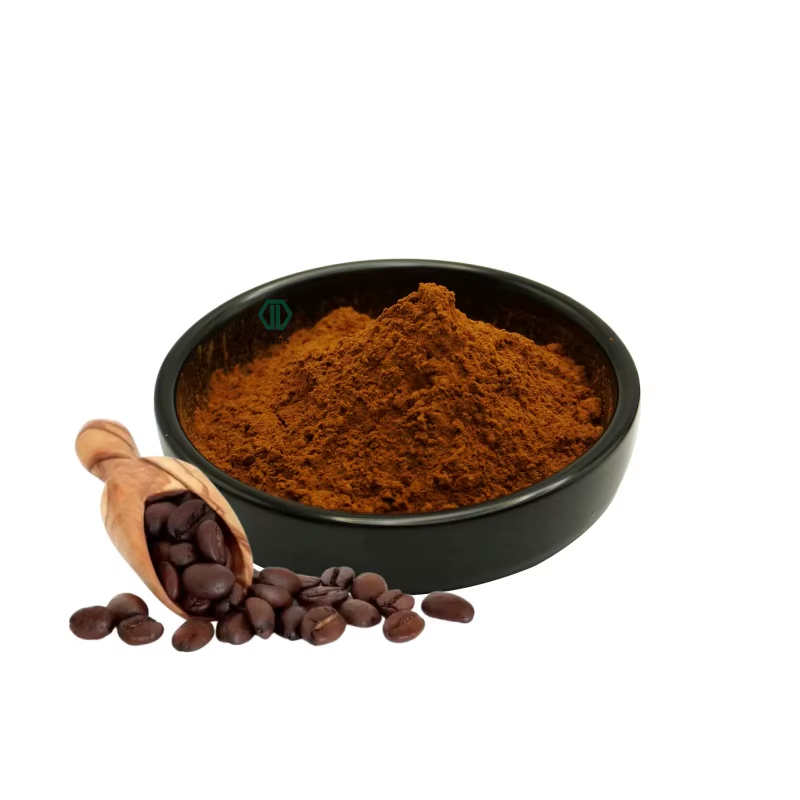
In the industrial world of confectionery, bakery, and beverage manufacturing, cocoa powder is not just a flavoring agent—it’s the foundation of taste, texture, and visual appeal. But not all cocoa powders are created equal. When it comes to performance, consistency, and process efficiency, alkalized cocoa powder stands out as the material of choice for professionals who understand that every gram impacts the end product.
For manufacturers and procurement officers, sourcing alkalized cocoa powder isn’t merely a purchase—it’s a strategic decision. The right supplier ensures stable performance across production runs, minimizes downtime, and supports product differentiation. The wrong one can lead to batch inconsistency, flavor deviations, or worse, halted production.
At MT Royal, we’ve seen this reality firsthand. Having supplied numerous manufacturing facilities across the food and confectionery industries, we know how much the sourcing decision impacts production efficiency and final product quality. In this article, we’ll break down everything a factory owner, production manager, or procurement officer needs to know about alkalized cocoa powder sourcing—from technical fundamentals and supplier selection to global supply dynamics and practical insights from the production floor.
Understanding Alkalized Cocoa Powder: More Than Just a Processed Ingredient
What Does “Alkalized” Mean in Cocoa Powder?
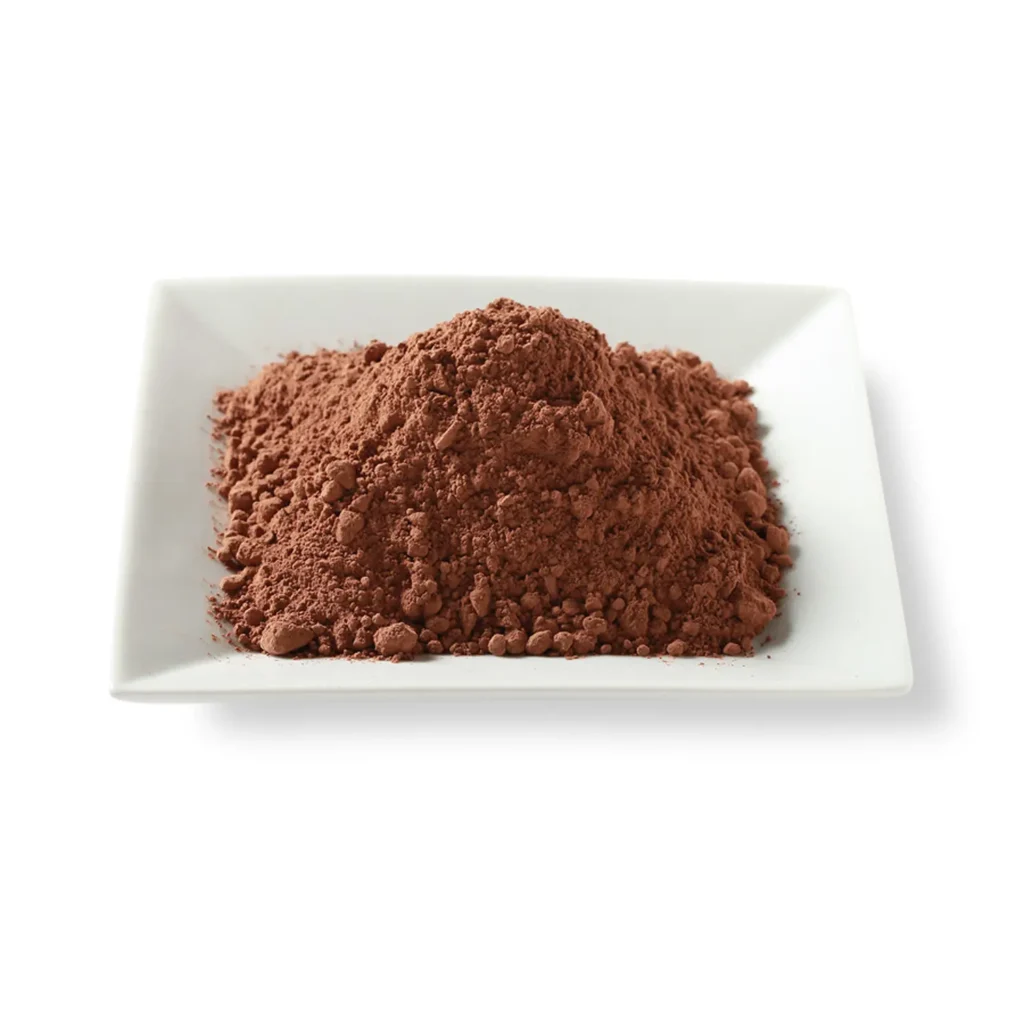
Alkalization, also known as the Dutch process, is a treatment that involves washing cocoa nibs or liquor with an alkaline solution (commonly potassium carbonate). This process neutralizes cocoa’s natural acidity and significantly modifies its sensory and functional profile. The result? A smoother flavor, darker color, and enhanced dispersibility—qualities that are critical for industrial applications.
Non-alkalized cocoa, by contrast, has a sharper, more acidic taste and lighter hue. It’s prized in certain niche recipes but often less forgiving in large-scale production where pH balance, solubility, and color consistency are essential.
The Industrial Value of Alkalization
In manufacturing environments, alkalized cocoa powder delivers measurable advantages:
- Improved flavor uniformity: Ensures consistent sensory results across batches.
- Enhanced color control: Supports color-specific product lines, from light milk chocolate tones to deep dark variants.
- Better solubility: Essential for beverages, instant powders, and liquid mixes.
- Neutralized pH: Reduces interaction issues with leavening agents in baked goods.
Each of these factors directly affects production stability and end-product marketability—key metrics that plant managers watch closely.
Why Sourcing Matters: The Hidden Complexity Behind a “Simple” Ingredient
Beyond Price: The Real Cost of Cocoa Powder Procurement
Procurement teams often start with unit cost comparisons. But the real equation goes deeper: quality consistency, batch traceability, origin reliability, and after-sales technical support often outweigh a small difference in cost-per-kilo. A cheaper supplier may save cents upfront but cause losses worth thousands due to rework, downtime, or rejected batches.
In our experience supplying manufacturing facilities, we’ve seen how a well-structured sourcing strategy can improve yield efficiency by up to 8% simply through better ingredient stability and supplier reliability.
Quality Starts at Origin
Alkalized cocoa powder inherits its characteristics from its beans. The terroir—soil, rainfall, and post-harvest fermentation—plays a major role in its final flavor.
Top industrial buyers usually evaluate sourcing regions such as:
- West Africa (Ivory Coast, Ghana): Strong cocoa intensity, cost-effective.
- Latin America (Ecuador, Peru): Distinct fruity notes, higher cocoa butter content.
- Southeast Asia (Indonesia, Malaysia): Consistent supply for large-volume buyers.
Spanish manufacturers like Latamarko often source from select origins, applying advanced alkalization techniques that deliver premium-grade cocoa powders ideal for high-end confectionery and dessert applications.
Evaluating Suppliers: What Manufacturers Should Look For
When choosing a supplier for alkalized cocoa powder, manufacturers should evaluate five core areas:
1. Product Consistency
Batch-to-batch variation is a critical concern. A reputable supplier provides documented proof of standardized alkalization levels, color intensity, and pH range.
Premium producers, such as Latamarko, maintain tight process control using European precision engineering—a standard that minimizes variation even across large-volume orders.
2. Technical Support
Industrial buyers don’t just need ingredients—they need collaboration. The best suppliers provide formulation support, solubility testing, and process compatibility documentation, helping manufacturers integrate cocoa powders seamlessly into existing production lines.
3. Certifications & Compliance
Look for suppliers certified under ISO, HACCP, FSSC 22000, and Halal/Kosher standards. For exporters, compliance with EU and FDA regulations ensures global market access.
4. Supply Chain Transparency
Procurement officers increasingly demand full traceability—from origin farms to final shipment. Transparent documentation builds long-term trust and simplifies audits.
5. Cost Predictability
With cocoa markets being volatile, reliable suppliers offer forward contracts or volume-based pricing stability, helping plants control cost-per-unit and budget effectively.
At MT Royal, we emphasize these parameters because we’ve learned that long-term partnerships built on consistency and trust create real manufacturing advantages. We supply a range of brands—including European options like Latamarko—so buyers can balance cost efficiency with quality performance.
How Alkalized Cocoa Powder Impacts Production Efficiency
1. Process Compatibility
Alkalized cocoa’s pH neutrality ensures smoother performance in industrial recipes, especially in high-speed mixing systems or automated dosing setups.
Its superior dispersibility prevents clumping—a small but significant advantage that reduces line interruptions and manual intervention.
2. Color Control in Automated Systems
Modern production facilities often rely on spectrophotometric color control. Alkalized cocoa’s predictable shade stability ensures minimal recalibration and lower waste during changeovers.
3. Product Uniformity Across Lines
Factories running multiple SKUs (e.g., dark vs. extra-dark chocolate) can benefit from using graded alkalized cocoa powders to maintain visual and sensory consistency across production batches.
Common Procurement Pitfalls to Avoid
Even experienced sourcing managers can fall into these traps:
- Over-focusing on short-term price: Ignoring quality and consistency costs more in the long run.
- Neglecting origin traceability: Risk of supply disruption during geopolitical or climatic events.
- Ignoring storage and handling specs: Cocoa powder is hygroscopic—improper warehousing can ruin entire lots.
- Failing to validate alkalization data: Always verify supplier claims with actual lab test results.
A procurement plan without these checks often leads to costly surprises mid-production.
Pro Tips: Building a Robust Cocoa Powder Supply Strategy
- Standardize specs internally – Define acceptable pH, color (L* a* b* values), and fat content ranges.
- Establish dual sourcing – Have one premium (e.g., European) and one cost-effective regional supplier.
- Negotiate long-term contracts – Lock in supply stability amid volatile cocoa futures.
- Run periodic comparative tests – Benchmark batches from different suppliers to track performance drift.
- Integrate supplier audits – Evaluate not only certificates but also on-site process consistency.
These steps separate professional procurement management from reactive buying.
Real-World Example: How a Confectionery Plant Improved Efficiency
A mid-sized dessert manufacturer we worked with struggled with inconsistent flavor and color in its cocoa-based fillings. Their previous supplier sourced from multiple origins, creating variation between shipments.
After switching to a Latamarko alkalized cocoa powder through MT Royal, they recorded:
- 11% reduction in rejected batches
- 20% faster blending times
- Noticeable improvement in flavor stability
This simple sourcing adjustment allowed them to align their quality standards with export expectations—and improve overall profitability.
Global Supply Trends: What Factory Buyers Should Know
1. Cocoa Market Volatility
Global cocoa prices are at multi-year highs due to weather disruptions in West Africa. Strategic buyers mitigate this risk through volume commitments and diversified sourcing.
2. Sustainability Pressures
Manufacturers are increasingly expected to demonstrate responsible sourcing. Ethical suppliers provide documentation on deforestation-free and fair trade-certified origins—an emerging procurement requirement in the EU market.
3. Regional Processing Hubs
European manufacturers, particularly in Spain and the Netherlands, lead in advanced alkalization methods. Brands like Latamarko leverage this expertise to supply high-quality powders to global producers seeking reliability and uniformity.
Frequently Asked Questions
Q1. What’s the ideal fat content for industrial alkalized cocoa powder?
Most factories prefer 10–12% fat cocoa powder for versatility, though 20–22% is used for richer dessert profiles.
Q2. How should alkalized cocoa powder be stored?
Store in a cool, dry environment (<25°C, <65% RH) with sealed packaging to prevent moisture absorption and flavor degradation.
Q3. Does the alkalization level affect color intensity?
Yes. Higher alkalization yields darker hues. Manufacturers often choose mild or medium alkalization for balanced color and flavor.
Q4. How can I ensure supplier reliability?
Prioritize certified suppliers with traceable origin documentation and historical consistency in delivering industrial-grade cocoa.
Final Thoughts
In manufacturing, sourcing is strategy. Choosing the right alkalized cocoa powder supplier isn’t just about fulfilling ingredient specs—it’s about ensuring your production lines run efficiently, your flavor profiles remain stable, and your brand maintains consistency batch after batch.
At MT Royal, we’ve seen how informed procurement transforms operations. Our approach is simple: deliver reliability, diversity of brands, and technical insight that supports industrial performance—not just transactions. Whether you’re sourcing cost-efficient West African-origin powders or premium European options like Latamarko, success lies in understanding that every kilogram counts toward quality, reputation, and profitability.
latamarko alkalized cocoa powder lm60
cocoa powder for chocolate production-Best price
Food industry raw materials – list of products
Types of Gelatin from Turkish Manufacturer
Alkalized Cocoa Powder Bulk Supplier


No comment