


Ask any seasoned ice cream manufacturer what gives a chocolate flavor its signature depth, and they’ll point to one key ingredient: alkalized cocoa powder. It’s not just a coloring or flavoring agent — it’s the foundation of indulgence, texture, and visual appeal.
In industrial-scale ice cream production, where consistency, cost efficiency, and sensory quality drive success, the type of cocoa powder you use determines everything from mouthfeel to consumer perception. Over the years, alkalized cocoa powder has become the go-to choice for professional producers aiming for rich color, smooth taste, and reliable performance in high-volume manufacturing environments.
At MT Royal, we’ve worked closely with ice cream producers, dessert factories, and food manufacturers across various regions, helping them source the right cocoa grades for their production lines. We’ve seen firsthand how the right powder can reduce formulation challenges, stabilize flavor in cold conditions, and enhance product presentation — all while optimizing cost per batch.
This article dives deep into what makes alkalized cocoa powder ideal for ice cream manufacturing, how to choose the best supplier, and why sourcing from trusted distributors like MT Royal ensures consistency and peace of mind in every production run.
What Exactly Is Alkalized Cocoa Powder?
Alkalized cocoa powder — also known as Dutch-processed cocoa — undergoes a specialized treatment where cocoa nibs or liquor are washed with an alkaline solution (usually potassium carbonate). This neutralizes acidity, reduces bitterness, and transforms the powder’s flavor, texture, and color.
Compared to natural cocoa, which has a sharp, tangy taste and a lighter hue, alkalized cocoa produces a darker, smoother, and more mellow flavor profile — precisely what ice cream manufacturers want when aiming for rich chocolate tones that resonate with premium quality.
Key Properties That Matter in Ice Cream Formulation
- Color intensity: Alkalization deepens the cocoa hue, producing anything from warm brown to near-black tones.
- pH stability: Neutral pH (~7) ensures compatibility with dairy bases and emulsifiers, minimizing curdling or instability.
- Flavor balance: Reduced acidity yields a smooth, round chocolate flavor that pairs beautifully with sweet or creamy formulations.
- Solubility: Enhanced dispersibility means even blending, reducing graininess or sedimentation in cold mixtures.
These attributes make alkalized cocoa powder indispensable in industrial ice cream production — not only for flavor and color but also for process efficiency.
Why Ice Cream Manufacturers Prefer Alkalized Cocoa Powder
Let’s face it — manufacturing chocolate ice cream at scale is a chemistry exercise as much as it is an art. Natural cocoa’s acidity can clash with milk proteins, destabilize emulsions, and produce a gritty texture. Alkalized cocoa solves all of that.
1. Superior Flavor Harmony
Natural cocoa’s sharpness can overpower dairy sweetness. Alkalized cocoa, with its mellow flavor and deeper tones, integrates seamlessly with milk fats, sugars, and stabilizers — creating a creamy, luxurious taste profile consumers love.
2. Rich, Stable Color
For factory managers, color consistency is crucial. A consumer expects every scoop to look the same, whether it’s the first or the hundred-thousandth batch. Alkalized cocoa delivers a uniform dark brown or blackish color, resistant to fading during freezing or light exposure.
3. Improved Dispersion and Flowability
In large-scale mixing tanks, uniform distribution is essential to avoid streaks or clumps. Alkalized cocoa disperses quickly in both warm and cold systems, helping maintain smooth texture throughout the production line.
4. Enhanced Shelf Stability
Alkalization helps reduce the reactivity of polyphenols and volatile acids, leading to longer flavor stability and less oxidation during storage or transit.
5. Optimized Cost Efficiency
Manufacturers can use lower dosages of alkalized cocoa to achieve comparable color and flavor intensity to natural powders, improving cost efficiency per ton of ice cream.
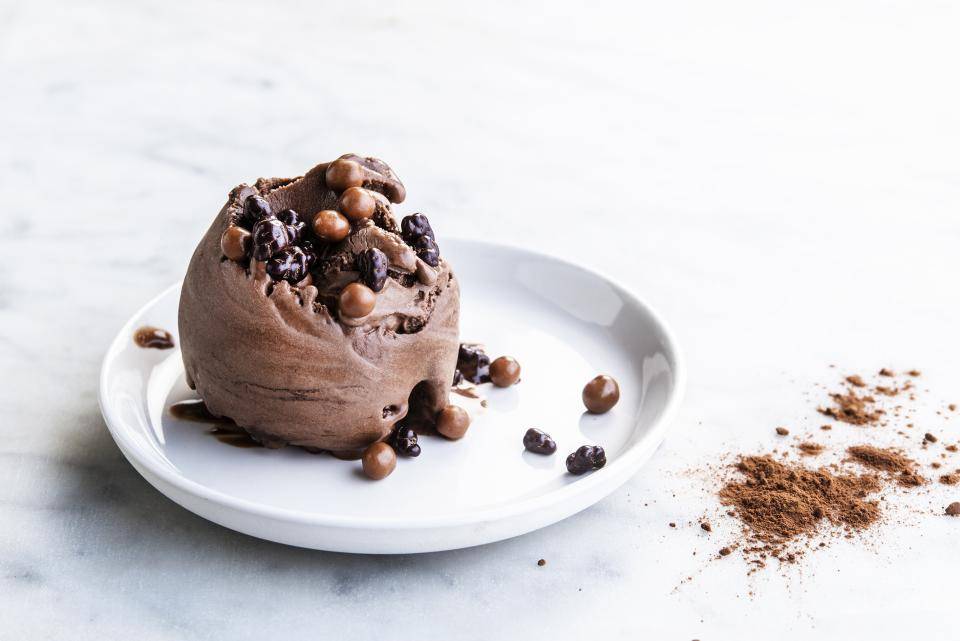
The Chemistry of Color: How Alkalization Transforms Cocoa
Cocoa’s color transformation during alkalization is more than visual; it’s structural. The process changes the way cocoa pigments interact with light and water, resulting in richer tones that persist even at freezing temperatures.
| Type of Cocoa | pH Range | Color | Typical Use in Ice Cream |
|---|---|---|---|
| Natural Cocoa | 5.0–5.8 | Light brown | Mild chocolate ice creams |
| Light Alkalized | 6.2–6.8 | Medium brown | Balanced flavor ice creams |
| Medium-Dark Alkalized | 7.0–7.4 | Deep brown | Premium chocolate ice creams |
| Heavily Alkalized (Black) | 7.5–8.0 | Dark brown to black | Intense flavor or decorative effects |
When creating high-end chocolate or mocha ice creams, medium to dark alkalized powders are the standard — giving the ice cream its signature chocolate intensity without the bitterness.
Industrial Applications: Formulation Insights for Ice Cream Plants
Ice cream manufacturing is a delicate balance of texture, aeration, fat content, and sweetness. Cocoa interacts with these variables in unique ways.
Here are a few formulation insights used by leading production plants:
1. Fat Compatibility
Cocoa naturally contains around 10–12% cocoa butter. Alkalized cocoa, due to its neutral pH, integrates smoothly with milk fat and stabilizers, preventing separation or curdling during pasteurization.
2. Particle Size Optimization
The finer the particle size, the smoother the mouthfeel. Many premium suppliers, including Latamarko, invest in ultra-fine grinding technologies that deliver uniform particle sizes, ideal for ice cream applications.
3. Viscosity Control
In high-speed homogenizers, the wrong cocoa type can increase viscosity unpredictably. Alkalized cocoa provides predictable flow behavior, reducing waste during filling or extrusion stages.
4. Flavor Retention in Cold Conditions
Cocoa’s volatile compounds diminish at low temperatures. Alkalized versions retain aromatic stability longer, meaning your end product maintains that satisfying “chocolate hit” even after months of frozen storage.
Choosing the Right Alkalized Cocoa Powder for Ice Cream
Not all cocoa powders are created equal. When sourcing for ice cream production, manufacturers should evaluate several technical parameters beyond price alone.
Key Evaluation Factors
- pH Value: Aim for a neutral range (6.8–7.4) for balanced flavor and optimal compatibility with dairy bases.
- Color Strength: Darker powders enhance visual appeal but must align with the brand’s sensory goals.
- Fat Content: Low-fat powders (10–12%) are standard; higher-fat options (20–22%) offer richer mouthfeel.
- Particle Size Distribution: Ensure uniformity for consistent texture.
- Microbiological Safety: Always request certificates of analysis (COAs) confirming compliance with food safety standards.
In our experience supplying ice cream manufacturers, we’ve found that factories producing premium gelato-style desserts tend to prefer medium-dark alkalized cocoa for both flavor and presentation balance.
Common Pitfalls in Cocoa Procurement for Ice Cream Factories
Even experienced procurement managers occasionally fall into traps when sourcing cocoa. Let’s outline a few costly missteps — and how to avoid them.
1. Focusing Solely on Color
A powder may look dark but deliver weak flavor. Always evaluate both color strength and flavor profile before committing to a bulk contract.
2. Ignoring Moisture Content
High-moisture cocoa (over 6%) can cause caking or microbial issues in humid conditions. Always demand moisture specification data from your supplier.
3. Overlooking Dispersibility
Some low-grade powders clump under cold mixing — a nightmare for large-scale ice cream operations. Testing dispersibility in your actual formulation setup is essential.
4. Skipping Supplier Audits
Procurement efficiency isn’t just about price — it’s about reliability. Supplier audits, sample testing, and consistent documentation save far more in long-term production stability than a small price reduction.
At MT Royal, we’ve seen manufacturers face expensive downtime simply because of inconsistent cocoa batches. That’s why sourcing from certified and reputable suppliers remains the safest, most cost-efficient choice in the long run.
The MT Royal Perspective: Reliability in Every Batch
At MT Royal, we supply a comprehensive range of alkalized cocoa powders suited for ice cream, bakery, confectionery, and beverage applications. Our experience working with production facilities across the Middle East, Türkiye, and Europe has taught us that consistency beats novelty every time.
We understand that every plant’s requirements differ — some prioritize intense color for visual branding, others seek smoother flavor for balanced formulations. That’s why our product portfolio spans multiple origins and fat contents, always backed by competitive pricing and traceable quality assurance.
We’ve seen factory managers benefit significantly from switching to higher consistency cocoa grades. Not only does it reduce formulation errors, but it also shortens mixing times and minimizes rework — translating directly into lower production costs and better throughput.
Spotlight on Latamarko: Spanish Precision in Cocoa Engineering
Spanish manufacturers like Latamarko have long been respected in the industrial cocoa market for their commitment to process precision and product uniformity.
Latamarko’s alkalized cocoa powders are prized for:
- Stable pH control ensuring perfect compatibility with dairy formulations.
- Deep, natural color achieved without excessive alkalization.
- Ultra-fine particle distribution enhancing smoothness in ice cream applications.
These traits have made Latamarko a benchmark for quality-conscious manufacturers across Europe and beyond. For factories pursuing a premium gelato or luxury dessert line, incorporating such European-grade powders can elevate the entire product experience.
At MT Royal, we proudly include Latamarko among our trusted brands, allowing manufacturers access to top-tier Spanish engineering without inflated import costs.
Global Trends: The Rise of Premium Chocolate Ice Cream
Recent market studies reveal that the global chocolate ice cream segment continues to grow at an annual rate exceeding 5%, driven by consumer demand for richer, darker, and more authentic flavors.
In response, industrial producers are shifting toward higher-cocoa formulations, relying on medium-dark alkalized powders to achieve deeper flavors and more “real” chocolate tones.
Interestingly, sustainability and traceability have also entered the conversation. Manufacturers increasingly prefer suppliers who can ensure responsible cocoa sourcing — a standard upheld by trusted distributors like MT Royal, who align with international quality certifications and ethical procurement frameworks.
Practical Tips for Factory Managers
If you’re overseeing a production facility or managing procurement for an ice cream brand, these simple yet impactful strategies can help maximize your output quality and profitability:
- Test before scaling: Always pilot new cocoa batches in small runs to check performance consistency.
- Evaluate cost-per-yield, not per kg: A slightly higher-cost cocoa with stronger color/flavor may reduce total dosage, improving margins.
- Maintain controlled storage: Keep cocoa in cool, dry areas (below 25°C) to prevent flavor degradation or caking.
- Rotate inventory regularly: Cocoa can absorb odors or moisture if stored for too long. Implement FIFO (First In, First Out) protocols.
- Partner with reliable suppliers: Choose distributors who understand industrial constraints, not just product catalogs.
Frequently Asked Questions (FAQ)
1. Is alkalized cocoa safe for dairy-based ice cream?
Yes. In fact, it’s the preferred choice for dairy formulations because of its neutral pH and superior solubility.
2. Does alkalization affect nutritional value?
While it slightly reduces acidity-related antioxidants, the sensory and functional benefits outweigh this for most industrial applications.
3. Can I blend different alkalization levels for custom flavors?
Absolutely. Many manufacturers combine light and dark alkalized powders to achieve signature flavor notes or color tones.
4. What’s the shelf life of alkalized cocoa powder?
Typically 24–36 months under ideal storage conditions (cool, dry, sealed). Always verify supplier COA details.
5. How do I source high-quality cocoa in bulk?
Work with verified distributors like MT Royal, who offer flexible packaging, batch consistency, and technical support for industrial users.
A Final Word: The Unsung Hero of Ice Cream Excellence
Cocoa powder might seem like just another raw material on your ingredient list, but in reality, it defines your ice cream’s signature. The depth of flavor, the elegance of color, the consumer’s emotional connection — all trace back to the powder you select.
Choosing the right alkalized cocoa powder isn’t just a purchase decision; it’s a long-term quality investment. In a competitive market where visual appeal and taste precision can make or break brand loyalty, manufacturers who prioritize ingredient integrity consistently lead the pack.
At MT Royal, we believe success in manufacturing comes down to small, deliberate choices made right — and sourcing the right cocoa is one of them. Whether you’re developing a mass-market chocolate ice cream or a luxury gelato line, the foundation of excellence always begins with quality at the source.


No comment