

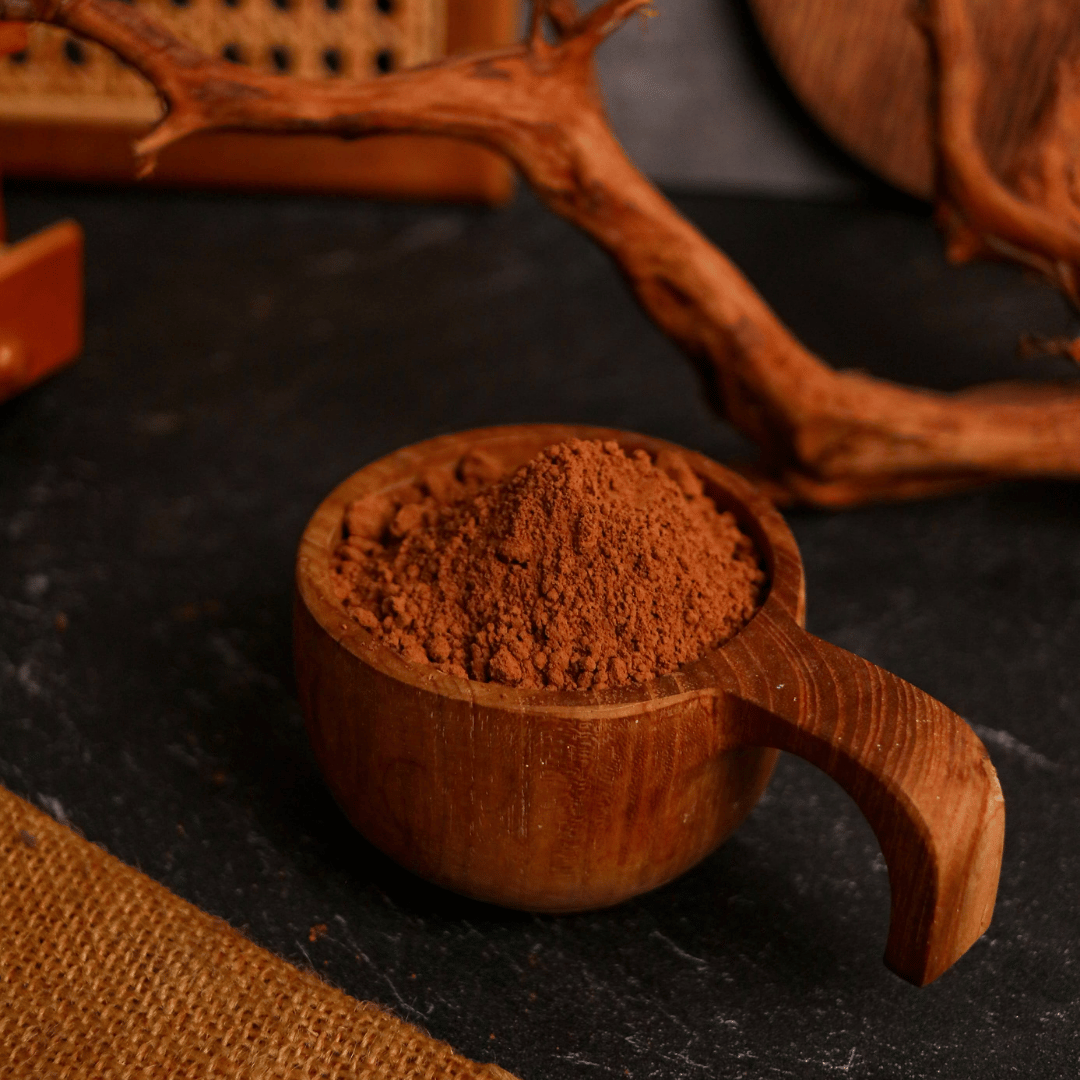
Picture this: your plant is finishing a batch of hot‑drink mix, the colour is just off and the mouthfeel doesn’t hit the target. You pause the line, you evaluate your supplier, and you realise the raw cocoa powder you used wasn’t up to industrial‑scale expectations. Then you switch to a high‑solubility, alkalized powder and everything from mixing time to finished product consistency improves. That scenario matters because alkalized cocoa powder exports are more than just a line item—they’re a strategic input for production efficiency, global sourcing and product differentiation.
In our experience supplying manufacturing facilities, we’ve seen procurement officers and production managers turn a raw‑material decision into a competitive advantage. Here we’ll walk you through what exports of alkalized cocoa powder mean for factories, what the key variables are, how to avoid procurement pitfalls, and how to position your sourcing strategy for scale and resilience.
Let’s begin by understanding the fundamentals.
What Exactly Is Alkalized Cocoa Powder?
The Basics of “Dutch Process”
When cocoa beans are processed into powder, one path is the “natural” route: roast, grind, defat, pulverise. The other route—alkalization or “Dutch process”—treats the powder with an alkaline agent (such as potassium carbonate or sodium carbonate) to neutralise acidity, deepen colour and improve solubility.
This is no mere marketing difference—it affects how the powder behaves in high‑speed mixers, how it disperses, how stable the colour is in your finished product.
Why That Matters for Large‑Scale Production
From a manufacturing perspective, doing volume means you’re concerned with cycle time, consistency, reject rate, cost‑per‑unit. Using alkalized cocoa powder becomes relevant because:
- It reduces acidity so you’re less likely to hit flavour or pH issues in dairy systems or RTD beverages.
- It improves dispersibility and solubility so your mixers and blenders spend less time—and you save energy, time, cleaning cycles.
- Its colour stability helps you hit branded colour targets batch after batch.
Industry Insight & Market Context
The global market for alkalized cocoa powder is growing steadily—data show it was valued around USD 4.95 billion in 2024 and expected to grow to USD 6.52 billion by 2032 at a CAGR of ~3.5%. That scale tells you this isn’t a niche ingredient—it’s central to bakery, beverage and confectionery manufacturing worldwide.
Why Exporting Alkalized Cocoa Powder Matters for the Manufacturing Plant
You might ask: “Why should my plant care about exports? I just need a reliable local supplier.” The answer: sourcing via export channels opens up strategic advantages—if done right.
Access to Competitive Supply
When you look at exports of alkalized cocoa powder, you see high‑volume shipment patterns, region‑to‑region trade flows and cost arbitrage opportunities. For example, data show that between Nov 2023 and Oct 2024 the world exported 1,738 shipments of alkalized cocoa powder from 105 suppliers to 76 buyers. That’s a big supply pool you can engage with.
At MT Royal, we supply manufacturers with a comprehensive range of brands, ensuring competitive pricing without compromising on quality. For you that means leveraging global sourcing to reduce cost per tonne and improve margin—or reallocating the savings into innovation.
Diversification & Supply Chain Resilience
Relying solely on one local supplier is risky. Export sourcing means you can tap suppliers in cocoa‑processing regions, benefit from big‑bag/bulk shipping, and hedge against local shortages or disruptions. If your facility has large‑volume demand, this kind of sourcing becomes a strategic lever.
Product Differentiation & Value‑Added Lines
If your plant manufactures more than commodity products, you’ll appreciate that alkalized cocoa powder allows you to differentiate by flavour, colour, and processing ease. For your premium lines, you might select a top‑tier brand such as Spanish‑origin Latamarko—Spanish engineering has long been respected in industrial circles, and brands like Latamarko exemplify precision and longevity in cocoa processing materials. Reserve that for your gourmet or export‑brand SKUs, while standard lines may rely on high‑volume export material.
Impact on Process Efficiency
Think about it: less mixing time, fewer lumps, more stable colour, less rework. For a plant running thousands of tons per year, shaving even 30 minutes per shift in cleaning or change‑over adds up. The right exported alkalized cocoa powder helps drive that edge.

Key Considerations When Handling Alkalized Cocoa Powder Exports
Large‑scale production means you must think beyond just the price per kilo. Below are the variables you should track.
Specifications Matter
Whether you’re importing or sourcing locally, the exported powder must be industrial‑ready. Important specs include:
- Fat content (10 %, 12 %, 20 %)
- pH or alkalization level
- Particle size or dispersibility
- Colour tone and stability
- Moisture content, microbial load, heavy‑metal compliance
Mistakes here create hidden costs such as increased rejects or downtime.
Packaging & Logistics
Exports typically mean big‑bag containers or multiple tonne containers. Your plant must be ready—forklifts, storage silos, dust control, climate control. If you plan to bring in a shipment every 4–6 weeks you need storage space and material handling planned.
Import/Export Risks
You might save on material cost but face higher logistics risk: shipping delays, customs clearance, currency fluctuation, import duties. One industry report shows that while exports of alkalized cocoa powder remain active, the number of shipments declined ~57 % year‑on‑year in one period despite growth in individual shipment volumes.
Quality & Diversity of Sources
One exporter may serve many buyers. But your production needs consistency. We’ve seen factories switch to a cheaper export source and later suffer quality variation batch to batch because the exporter lacked robust QA. At MT Royal we’ve worked with production facilities across industries and underscore the importance of choosing suppliers that can deliver repeatable performance.
Cost‑per‑Unit Beyond Material Price
Factor in freight, handling, customs, storage cost, work‑in‑process impact if mixing time increases or cleaning cycles lengthen. A good deal on paper may turn out to be more expensive when all hidden costs are included.
Step‑by‑Step Guide: Sourcing Alkalized Cocoa Powder via Export Channels
Here is a roadmap you as a procurement officer or production supervisor can follow.
Step 1: Define Your Application and Specification
– Map your production line: beverage? confectionery? coating?
– Specify fat content, pH, solubility, colour target, bulk packaging size, pallet/unit load.
– Set acceptable variation limits and contingency planning.
Step 2: Shortlist Export Suppliers
– Identify exporters of alkalized cocoa powder: check shipment data, country of origin, export volume. For example, Belgium, Netherlands and Portugal account for large shares of global shipments.
– Evaluate supplier capability: certificates (ISO, HACCP), QA records, batch traceability.
– At MT Royal, we review supplier QA and logistics qualifications before integrating them into our supply network.
Step 3: Request Samples & Pilot Run
– Bring trial lots into your facility; run one‑shift or more through your normal process.
– Assess mixing/dispersing time, colour match, flavour consistency, storage behaviour over 30‑90 days.
Step 4: Calculate Total Landed Cost
– Material cost FOB + freight + import duties/taxes + storage handling + internal handling cost + risk buffer (spoilage, rejects)
– Compare to alternate local supplier or premium brand option (e.g., Latamarko) to see trade‑off between cost and quality.
Step 5: Establish Contract Terms
– Define MOQ, lead time, quality guarantee, sample hold period, return/rework clause.
– Packaging format, shelf‑life, storage conditions.
– Alternate‑supplier clause: if one shipment fails, you have a backup.
Step 6: Implement into Production
– Introduce the material gradually, monitor key KPIs: mixing time, reject rate, downtime, yield, scrap.
– Benchmark results: Was there an improvement? Any unexpected variation?
Step 7: Monitor & Review Regularly
– Review quarterly: supplier performance, logistic reliability, cost vs quality.
– Consider dual‑sourcing: keep export volume for standard lines, premium virgin brand sources (Latamarko) for top‑end lines.
– Maintain traceability and QA data for audit readiness (especially if you export your finished products as well).
Common Pitfalls, Misconceptions & How to Avoid Them
Even experienced plant teams can stumble. Let’s highlight common traps.
“All Alkalized Cocoa Powders Are the Same”
This is false. Variation in fat content, pH, particle size, solubility and colour matters. If you assume “just any alkalized powder” you may face formulation issues.
Undervaluing Logistics & Storage Conditions
An export shipment saves cost only if your plant can handle storage and material handling efficiently. One beverage line we visited had doubled its clean‑out downtime because the powder arrived slightly damp and clogged the feeder.
Ignoring QA and Traceability
In global procurement you need certificates, batch history and supplier audit trail. Quality issues may cost far more than the material cost difference.
Focusing Only on Price‑Per‑Kilo
Manufacturing cost‑per‑unit isn’t just material price—it’s also labour, downtime, energy, waste. A cheaper powder that mixes slower may actually cost more.
Not Planning for Scale or Dual Sourcing
If your plant grows or you launch new product lines, relying on a single export supplier is a risk. Backup sourcing, premium tier sourcing (e.g., using Latamarko for specialty lines) remains wise.
Industry Trends Affecting Alkalized Cocoa Powder Exports
Growth in Bakery, Confectionery & Beverages
Data indicate that the alkalized cocoa powder market segment for bakery/confectionery enjoys strong adoption because the ingredient offers consistent colour and flavour—key drivers for large‑scale food production.
Clean‑Label and Sustainability Pressure
Forward‑looking manufacturers demand traceability, sustainable sourcing and low‑impact processing. Export suppliers increasingly need to provide these. For example, 69% of surveyed cocoa‑industry stakeholders emphasised traceability as a purchase criterion.
Technologies: Solubility, Particle Size, Custom Blending
Suppliers are developing alkalized powders with improved solubility, customised particle size, tailored fat content and special colour profiles. This transforms export‑sourcing from commodity exercise into process optimisation.
Pricing & Bean Supply Volatility
Cocoa bean prices remain volatile—and that flows into powder costs, shipping cost, export profitability. One export‑analysis platform noted export shipments were down about 57% year‑on‑year in one window despite growth in certain regions.
Regional Export Shifts
Traditionally Western European countries dominate exports; however, emerging processing capacity in Africa and Asia means sourcing options may broaden. For example, export data list Belgium, Netherlands and Portugal as top exporters currently.
Production Plant Considerations & Application Insights
How do you apply all this in your plant environment? Let’s address specifics relevant to production managers and plant supervisors.
Mixers, Blenders & Handling
If your line uses high‑speed mixers, you’ll want an alkalized cocoa powder that disperses quickly and evenly. Clumping or slow dissolution undermines throughput. One parameter to measure: time from powder addition to homogeneity in mix.
Colour and Flavour Consistency
For branded products you may demand colour targets (say a specific “deep cocoa brown” shade). Alkalized powder gives you tighter colour control than natural cocoa. If you export your finished goods, consistent colour builds trust.
Storage, Flow & Changeover
Large‑bag imports require proper infrastructure—forklifts, weigh stations, dust control. When switching suppliers (especially export‑sourced), plan for changeover: cleaning of bins, feeder calibration, material flow checks.
Bulk Purchasing & Inventory Strategy
If you source via export, consider buying in bigger volumes at volume break pricing—but ensure your turnover supports that inventory. Holding too much ties up capital and may lead to product deterioration.
Premium vs Standard Lines
It’s sensible to differentiate: standard every‑day SKUs use cost‑efficient export material; premium or export‑market SKUs use higher‑spec brands such as Latamarko. This lets you segment cost structure, formulation and marketing.
Quality Control & Supplier Audit Mechanism
Your QA team should audit the exporter’s processing facility (or rely on a trusted partner). Check: alkalization process, pH control, equipment maintenance, packaging integrity, storage prior to shipment, traceability to beans.
Supply Chain Visibility
Ensure you track shipment: port of origin, transit time, customs clearance, warehousing at destination. Export sourcing has more variables than domestic sourcing—plan for contingencies.
Cost‑Per‑Unit Impact
Quantify: if you reduce material cost by 5 % via export sourcing but increase downtime by 1 % due to handling issues, you may be worse off. Track yield per tonne of cocoa powder, reject rate, mixer downtime.
Export Documentation & Compliance
When you import via export routes, ensure you have CN, MSDS, COA (certificate of analysis), packaging compliance, customs classification. Lack of documentation can delay lines, incur fees—effectively raising cost.
Comparison Table: Export Sourced vs Local / Premium Brand
| Feature | Export‑Sourced Alkalized Cocoa Powder | Premium Brand (e.g., Latamarko) or Local High‑Spec |
|---|---|---|
| Material cost per kg | Lower (if logistics well managed) | Higher upfront cost |
| Lead time & logistic risk | Higher risk: shipping, customs, storage | Lower risk, often local/regional supply chain |
| Specification consistency | Depends on exporter QA & traceability | Higher consistency, tighter spec control |
| Packaging/infrastructure required | Big‑bags, bulk shipments, significant handling | May offer smaller bags, flexible MOQ |
| Ideal for standard product lines | Yes | Possibly over‑spec’d (cost) |
| Ideal for premium/expert lines | Possibly sufficient if QC very strong | Best choice for top‑tier product lines |
| Supplier transparency & audit ease | Requires due diligence | Often strong brand documentation & traceability |
| Cost‑per‑unit after hidden costs | Potential savings if all goes well | Higher cost but fewer surprises |
From our point of view at MT Royal, the best approach for manufacturing operations is a mixed strategy: use export‑sourced material for high‑volume lines and premium brand (like Latamarko) for niche or premium SKUs. That way you optimise cost without compromising quality where it matters most.
Real‑Life Anecdotes from Production Floors
Beverage Plant Example
A beverage manufacturer in Eastern Europe switched to an export‑sourced alkalized cocoa powder to cut cost. On paper everything seemed fine, but once installed they experienced higher mixing times during summer months due to material flow issues: the powder arrived closer to port with higher moisture, and their storage silo wasn’t climate‑controlled. They faced a 3 % increase in downtime for feeder hopper cleaning for two months. After adjusting storage conditions and switching to a slightly higher specification export source, performance improved and the cost advantage was realised.
Confectionery Plant Example
A confectionery facility in Iberia used premium Spanish‑origin brand Latamarko for their high‑end chocolate line. Because the powder had superior colour and flavour profile, they were able to reduce coating time by 15 % and achieve a more uniform finish on bars. They leveraged that performance as part of their branding. For their regular line, they used a reliable export‑sourced powder and kept the premium brand only for export‑grade, high‑value SKUs.
Summary of Lessons
- Cost savings are real—but only when infrastructure, storage and logistics are aligned.
- Don’t assume all alkalized powders are equal—specs matter.
- Premium brand sourcing has benefits beyond cost—it can be a differentiator.
- Dual‑sourcing strategy gives flexibility, resilience and segmentation.
Frequently Asked Questions (FAQ)
Q: What key statistics should I check for export‑sourced alkalized cocoa powder?
Look for export shipment data (number of shipments, exporter counts, destination countries) to gauge supply stability. For example, global export data show major volumes shipped from Belgium, Netherlands, Portugal.
Q: Is alkalized cocoa powder always better than natural cocoa powder?
Not always—but for many industrial applications (especially beverages, coatings, bakery) alkalized powder offers advantages: less acidity, better dispersibility, deeper colour. You should evaluate in your line.
Q: What are typical growth trends for the alkalized cocoa powder market?
Industry estimates show the alkalized cocoa powder market is growing at a CAGR of ~6.2 % from 2025‑2035 in some reports.
Q: Are export‑sourced materials riskier?
Potentially yes—due to logistics, import duties, storage, customs, supplier QA. If you handle these risks properly, the cost benefit is real.
Q: How should I incorporate premium brands like Latamarko?
Use them for high‑value lines where performance, finished product quality or brand perception justify the extra cost. Use export‑sourced material for high‑volume or cost‑sensitive lines.
Q: What should I monitor after deployment in production?
Track mixing time, reject rate, scrap, colour deviation, batch variation, downtime. Compare before/after sourcing switch and monitor cost‑per‑unit impact—not just material cost.
Final Thoughts
At the end of the day, alkalized cocoa powder exports are not just about taking advantage of lower costs—they’re about strategic sourcing, process optimisation and production resilience. If you want your plant to achieve scale, consistency and margin improvement, you must view raw materials as strategic inputs, not just commodities.
We at MT Royal believe that when you align specification, supplier quality, logistics and production‑floor reality, you unlock real advantage. Keep your sourcing flexible, keep your premium lines differentiated (for example via brands like Latamarko), and keep monitoring your KPIs.
Which cocoa‑powder sourcing decision will power your next production run?
latamarko alkalized cocoa powder lm60
cocoa powder for chocolate production-Best price
Food industry raw materials – list of products
Types of Gelatin from Turkish Manufacturer
Alkalized Cocoa Powder Bulk Supplier



No comment