

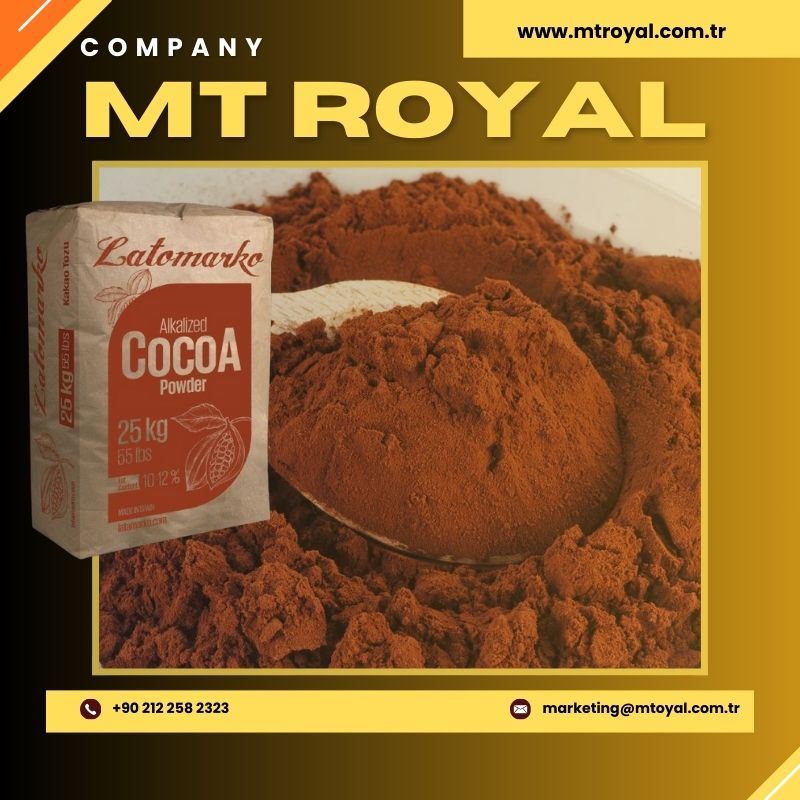
In the fast-paced world of industrial dessert production, ingredient selection is far more than a culinary choice — it is a strategic decision that shapes texture, flavor, stability, and profitability. Among these ingredients, alkalized cocoa powder stands out as a versatile and highly functional material. From ice cream bases to baked desserts and chocolate sauces, its properties can dramatically influence product quality, manufacturing efficiency, and consumer appeal.
If you’ve ever wondered:
- How does alkalized cocoa powder influence ice cream texture and flavor stability?
- What makes it preferable over natural cocoa in industrial dessert formulations?
- Which sourcing and quality control measures ensure consistency at scale?
…you are about to discover a deep dive into the subject, blending technical insight, industrial experience, and practical guidance for factory managers, production supervisors, procurement officers, and plant operators.
We’ll also explore real-world considerations for sourcing, handling, and applying alkalized cocoa powder — highlighting premium suppliers, including European brands like Latamarko, while showing how MT Royal supports manufacturers with competitive, reliable options.
Understanding Alkalized Cocoa Powder
To fully leverage alkalized cocoa powder in industrial dessert production, it’s essential to understand its chemistry and functional differences compared to natural cocoa powder.
1. The Basics
Cocoa powder originates from roasted cocoa beans, with most cocoa butter removed to yield a fine solid. When treated with an alkaline solution — commonly potassium carbonate — the powder undergoes a process called Dutching. This process:
- Neutralizes acidity
- Deepens color for more appealing visual profiles
- Alters functional behavior in water and fat-based systems
This chemical adjustment affects how cocoa interacts with dairy, sugars, emulsifiers, and stabilizers, which is critical for ice cream bases, mousses, and chocolate-flavored dessert sauces.
2. Functional Advantages in Ice Cream and Desserts
Industrial users choose alkalized cocoa powder for several reasons:
- Flavor Consistency: Smooth, rich chocolate notes without the sharp acidity of natural cocoa
- Color Uniformity: Darker, visually appealing desserts with predictable appearance
- Improved Solubility: Enhances dispersibility in cold or hot liquids, important for industrial mixers
- pH Adjustment: Helps optimize Maillard reactions in baked desserts and texture stability in frozen desserts
In ice cream production, for example, the alkalization can reduce grittiness and enhance creaminess — a critical factor in high-throughput production lines.
Industrial Applications in Ice Cream Production
Alkalized cocoa powder’s influence extends beyond flavor. Its functional properties are crucial for achieving consistent quality across large-scale production.
1. Base Mix Formulation
Ice cream bases rely on precise ratios of milk, sugar, fat, and stabilizers. Alkalized cocoa powder:
- Dissolves uniformly in dairy matrices
- Prevents acidity from destabilizing emulsions
- Enhances color consistency, which is key for visually uniform batches
2. Flavor and Texture Development
The smoother flavor profile reduces the need for additional flavor enhancers, while its interaction with milk proteins supports stable emulsions that improve mouthfeel and creaminess.
3. Stability and Shelf Life
Higher pH and modified chemistry can help reduce fat bloom and color fading during storage, crucial for industrial ice cream distributed across multiple regions.
4. Cold Processing Efficiency
In continuous freezers and industrial batch mixers, alkalized cocoa powder’s solubility improves throughput by reducing clumping and improving mix homogeneity — minimizing downtime and cleaning cycles.
Applications in Other Desserts
Beyond ice cream, alkalized cocoa powder finds industrial use in:
- Chocolate Sauces and Ganaches: Enhanced color and smooth texture without acidity-induced curdling
- Baked Goods: Uniform browning and controlled Maillard reactions in cakes, brownies, and mousse bases
- Ready-to-serve Puddings and Creams: Improved water dispersibility for smooth, lump-free textures
In each application, consistency is critical: slight variations in alkalization or particle size can affect texture, color, and mouthfeel at industrial scale.

Key Quality Parameters for Industrial Use
To ensure optimal performance in large-scale dessert production, manufacturers should specify alkalized cocoa powder across several dimensions:
| Parameter | Target / Notes |
|---|---|
| pH (degree of alkalization) | 6.5–8.0, depending on product and process |
| Particle size | Fine and uniform, typically <50 μm |
| Moisture content | ≤1.5% for stability and flowability |
| Residual fat | 10–12%, affects mix viscosity and mouthfeel |
| Microbiological standards | Free from pathogens, low yeast/mold count |
| Color uniformity | Dark brown, visually consistent across batches |
These parameters are not merely cosmetic — they directly influence production efficiency, texture, and flavor consistency.
Common Pitfalls and Misconceptions
Even experienced operators sometimes face challenges:
- Assuming All Alkalized Powders Behave the Same
Different suppliers produce powders with varying alkalization levels and particle distributions. Industrial trials are essential before full-scale adoption. - Overlooking Solubility in Cold Mixes
In ice cream bases, incomplete dispersion can cause clumps or grittiness, affecting sensory quality. - Ignoring Supplier Traceability
Food safety audits increasingly demand full batch traceability. Suppliers without robust documentation can introduce risk.
At MT Royal, we provide manufacturers with traceable, high-quality brands and facilitate batch documentation, minimizing these pitfalls. Premium suppliers like Latamarko offer additional assurances in particle uniformity and consistent alkalization.
Industrial Handling and Storage Considerations
Alkalized cocoa powder is hygroscopic — moisture can compromise flowability and functional performance. Key storage best practices include:
- Controlled humidity and temperature in storage areas
- FIFO inventory rotation to maintain freshness
- Proper sealing of containers to avoid contamination
Proper handling ensures consistent performance in ice cream and dessert production lines.
Procurement Strategies for Large-Scale Operations
Industrial buyers should consider both operational and strategic factors:
1. Supplier Qualification
Audit potential suppliers for:
- Quality certifications (ISO, HACCP)
- Laboratory testing capacity
- Delivery reliability
Premium suppliers, including European brands like Latamarko, often exceed minimum industrial requirements, providing confidence for high-volume production.
2. Volume Forecasting and Supply Stability
Ice cream and dessert production often operate at fixed schedules. Consistent supply and pricing protect operational efficiency and profit margins.
3. Quality Audits and Batch Testing
Even trusted suppliers should be validated through:
- Incoming inspection for particle size and color
- Solubility testing in actual product matrices
- Verification of batch certificates and microbial analysis
This ensures that your production quality remains uncompromised.
Process Integration: Tips for Factory Managers
- Pre-dissolve cocoa powder in a portion of warm milk or water to improve uniformity before combining with full base mix.
- Monitor pH if combining with acidic ingredients — even alkalized powder can shift balance if other acids are introduced.
- Use pilot-scale trials when switching suppliers or grades to identify adjustments needed in freezing, mixing, or cooking times.
- Document ingredient behavior in process logs to support consistent scaling and troubleshooting.
Real-World Anecdotes
- Ice Cream Line Optimization: A factory producing 50,000 liters/day faced inconsistent chocolate intensity. Switching to a controlled alkalized cocoa powder with verified particle size improved color uniformity and reduced downtime for mix adjustments.
- Dessert Sauce Production: In continuous sauce kettles, natural cocoa caused sedimentation issues. Alkalized cocoa with better dispersibility solved the problem, increasing throughput and reducing cleaning cycles.
These examples demonstrate the tangible benefits of specification, supplier selection, and functional understanding.
Comparison: Alkalized Cocoa vs Natural Cocoa in Dessert Applications
| Attribute | Natural Cocoa | Alkalized Cocoa Powder |
|---|---|---|
| Flavor | Acidic, sharp | Smooth, mellow |
| Color | Light brown | Dark brown |
| Solubility in cold mixes | Moderate | High |
| Effect on pH | Low | Raises pH |
| Stability in frozen desserts | Lower | Higher |
| Maillard reactions in baking | Slower | Faster, more uniform |
This comparison helps guide formulation decisions and production adjustments.
Frequently Asked Questions from Industrial Buyers
Q: Can alkalized cocoa powder fully replace natural cocoa in ice cream?
A: Functionally, yes, but pH, solubility, and flavor must be considered. Pilot testing is recommended.
Q: How should storage conditions be managed?
A: Maintain <65% relative humidity and store in sealed containers away from heat and moisture.
Q: Do European suppliers like Latamarko offer measurable quality advantages?
A: Yes — consistent particle size, strict alkalization control, and traceable batch documentation support large-scale industrial reliability.
The Strategic Takeaway
In large-scale ice cream and dessert production, alkalized cocoa powder is more than an ingredient — it’s a functional variable that influences texture, color, flavor, and operational efficiency. By understanding its properties, selecting reliable suppliers, and implementing robust quality control, you can transform ingredient choice into a competitive advantage.
At MT Royal, we supply a broad range of cocoa powders, offering competitive pricing and consistent quality. Premium European brands like Latamarko exemplify the reliability and precision that help manufacturers maintain performance across high-volume production lines.

No comment