

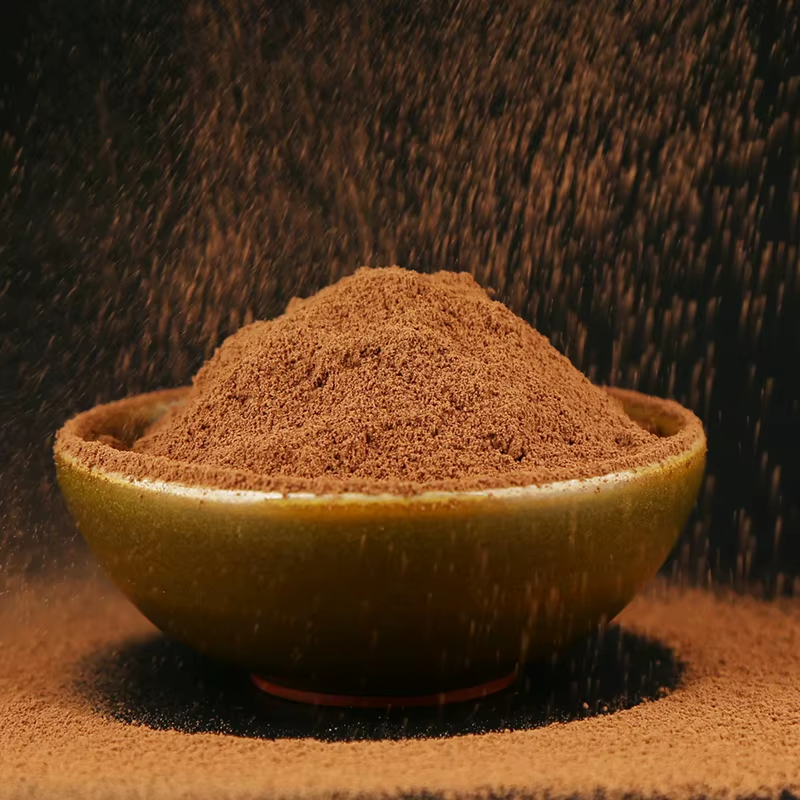
The world of cocoa is more than just a beloved flavor in desserts or beverages—it is a complex, highly technical industry that demands precision, consistency, and strategic sourcing. Among the varieties of cocoa, alkalized cocoa powder—often referred to as Dutch-processed cocoa—plays a pivotal role in industrial food production. Its unique properties make it indispensable for manufacturers, yet its production and certification require careful understanding.
For factory managers, production supervisors, and procurement officers, staying informed about the alkalized cocoa powder industry is not just beneficial—it’s essential. This guide explores the fundamentals of alkalized cocoa powder, its industrial applications, sourcing best practices, and market trends, while integrating practical insights from our experience at MT Royal. We’ll also highlight premium European suppliers, including Spanish-origin brands like Latamarko, which have set benchmarks for quality and consistency.
Understanding Alkalized Cocoa Powder: Definitions and Fundamentals
Alkalized cocoa powder is produced by treating natural cocoa powder with an alkalizing agent—commonly potassium carbonate. This Dutched cocoa undergoes chemical adjustment to neutralize its natural acidity, creating a smoother, milder flavor and a darker color. Unlike natural cocoa powder, which is more acidic and tangy, alkalized cocoa is preferred in industrial applications for several reasons:
- Consistent Flavor: Reduced bitterness ensures predictable taste profiles across batches.
- Enhanced Color: Darker, more uniform color improves visual appeal in baked goods, chocolates, and beverages.
- Improved Solubility: Alkalized cocoa mixes more readily with liquids, crucial for mass-produced drink powders and chocolate formulations.
In industrial environments, understanding the pH level, solubility, and particle size of cocoa powders is critical. Variations can impact texture, viscosity, and overall product quality, which in turn influence production efficiency and customer satisfaction.
The Industrial Significance of Alkalized Cocoa Powder
In a factory setting, ingredients are more than raw materials—they are the backbone of product consistency and operational efficiency. Certified alkalized cocoa powder offers:
- Production Consistency: Batch-to-batch uniformity reduces variations in flavor and color.
- Regulatory Compliance: Certified powders meet international food safety standards, crucial for global distribution.
- Operational Efficiency: Reliable solubility and reduced acidity minimize downtime and product rework.
- Supply Chain Reliability: Partnering with trusted suppliers like MT Royal ensures continuous availability and technical support.
We’ve seen firsthand how industrial facilities benefit from using certified alkalized cocoa. For example, one large-scale beverage manufacturer reduced downtime caused by inconsistent cocoa solubility by switching to a certified supplier, streamlining both production and quality control.
Key Certifications and Standards in the Industry
Sourcing alkalized cocoa powder without verifying certification is a common pitfall. Important certifications to consider include:
| Certification | Purpose | Industrial Benefit |
|---|---|---|
| ISO 22000 / HACCP | Food safety and management | Guarantees safe production and traceability |
| Kosher / Halal | Religious compliance | Expands market accessibility |
| Organic Certification | Pesticide-free, non-GMO | Appeals to premium markets |
| EFSA Approval | European market compliance | Required for EU distribution |
| Heavy Metals Testing | Safety assurance | Ensures compliance with lead/cadmium limits |
These certifications not only ensure regulatory compliance but also serve as a benchmark for consistent quality. In our experience at MT Royal, manufacturers sourcing certified powders experience fewer QC interventions and enjoy higher predictability in large-scale production.
Industrial Advantages of Certified Alkalized Cocoa Powder
1. Predictable Flavor and Color
Industrial recipes depend on uniformity. Certified alkalized cocoa ensures consistent pH and color, which translates to predictable baking and mixing results, reducing the need for recipe adjustments.
2. Reduced Production Downtime
Uncertified powders often lead to clumping, uneven mixing, or flavor inconsistencies. Certified powders reduce troubleshooting, allowing machinery to operate efficiently.
3. Extended Shelf Life
Microbial testing included in certification protects against spoilage, enhancing the longevity of both raw materials and finished products.
4. Streamlined Procurement
Sourcing from reliable suppliers like MT Royal simplifies the procurement process, providing access to multiple certified brands at competitive prices.
5. Premium Product Differentiation
For high-end applications, European brands such as Latamarko deliver exceptional quality with stable pH, richer color, and nuanced flavor—ideal for specialty chocolates and confectioneries.
Common Misconceptions in Industrial Sourcing
Even experienced procurement officers can fall into traps:
- “All Dutched cocoa is the same.” Only certified powders guarantee consistent quality across batches.
- pH variability is negligible. Small deviations can significantly impact taste and product appearance.
- Supplier price is the most important factor. Uncertified or unreliable powders often increase production costs indirectly.
- Natural and alkalized cocoa are interchangeable. Each requires different handling and recipe adjustments.
Recognizing these misconceptions helps avoid production inefficiencies and quality issues.

Actionable Tips for Factory Managers
Step 1: Define Your Production Requirements
Identify your product needs: flavor profile, color, solubility, and batch size. The clearer the requirements, the more precise your supplier recommendations.
Step 2: Vet Suppliers
Request certifications, review batch testing protocols, and examine the supplier’s experience with industrial clients. MT Royal provides a broad range of brands, including premium options like Latamarko, ensuring reliability without compromise.
Step 3: Batch Testing
Even certified powders should undergo in-house testing to verify solubility, pH, and flavor consistency.
Step 4: Staff Training
Proper handling, storage, and processing are essential to preserve cocoa quality, especially in humid or high-temperature environments.
Step 5: Continuous Evaluation
Track batch consistency, production downtime, and QC metrics. Open communication with suppliers ensures proactive problem-solving.
Real-World Industrial Examples
In a chocolate beverage plant, switching to certified cocoa powder eliminated a 40% variance in color and viscosity previously seen with non-certified batches. Production speed increased, and customer complaints dropped dramatically.
A confectionery facility utilizing Latamarko’s premium cocoa for specialty chocolates found that while the per-unit cost was higher, reduced waste and enhanced product appeal justified the investment. This illustrates the balance between upfront cost and long-term operational efficiency.
Comparing Cocoa Powder Options for Industrial Applications
| Feature | Standard Certified Cocoa | Premium European (Latamarko) |
|---|---|---|
| pH Consistency | Moderate | Highly uniform |
| Color Depth | Standard dark | Rich, visually striking |
| Flavor Profile | Mild | Complex and nuanced |
| Solubility | Adequate | Superior, mixes effortlessly |
| Certification Coverage | ISO, HACCP | ISO, HACCP, EFSA, heavy metals, optional organic |
| Cost per Metric Ton | Competitive | Premium tier |
Choosing between standard and premium powders depends on your production goals and quality benchmarks.
Industry Trends and Market Insights
The alkalized cocoa powder industry is evolving due to global demand for consistent, high-quality cocoa products. Key trends include:
- Sustainable Sourcing: Manufacturers increasingly prioritize ethically sourced and environmentally responsible cocoa.
- Premiumization: Consumer demand for high-end chocolate drives interest in European-origin powders like Latamarko.
- Automation and Large-Scale Production: Facilities require powders with predictable solubility and flow characteristics to optimize automated processes.
- Global Supply Chain Challenges: Reliable suppliers with multi-regional logistics capabilities are essential to maintain uninterrupted production.
Manufacturers aligning with these trends gain competitive advantage and resilience against supply disruptions.
FAQ for Procurement Officers
Q1: How often should I check certification?
A: Every batch—batch-specific documentation ensures consistency.
Q2: Can I substitute alkalized cocoa for natural cocoa directly?
A: No. Recipes often require adjustments to leavening, sugar, and liquids.
Q3: How should I store alkalized cocoa?
A: Cool, dry, away from strong odors and moisture. Follow supplier guidelines.
Q4: How to choose between standard and premium brands?
A: Consider production goals, desired product quality, and cost efficiency.
Q5: Why work with MT Royal?
A: We provide multiple certified brands, competitive pricing, and deep industrial experience, ensuring your sourcing aligns with operational goals.
Large-Scale Production Considerations
- Bulk Ordering: Certified suppliers ensure uninterrupted supply.
- Traceability: Certification supports audit readiness.
- Downtime Reduction: Uniform solubility and pH minimize corrective interventions.
- Cost Efficiency: Less waste from QC failures.
- Technical Consultation: Partner with suppliers like MT Royal for specification alignment.
Strategic Takeaways
Certified alkalized cocoa powder is far more than just another ingredient on your production floor—it represents a strategic asset that can directly influence every stage of your manufacturing process. From ensuring consistent flavor profiles and visual quality to reducing production downtime, the choice of cocoa powder impacts not only the end product but also operational efficiency, cost management, and long-term brand reputation. In modern industrial settings, where margins are tight and consumer expectations are high, even small inconsistencies in raw materials can cascade into major production challenges.
By selecting certified alkalized cocoa powders, manufacturers can guarantee batch-to-batch uniformity in pH, color, and solubility, significantly reducing the need for constant adjustments during mixing, baking, or beverage formulation. This predictability enables production teams to plan with confidence, optimize equipment utilization, and minimize waste, which ultimately lowers the cost per unit while maintaining high-quality standards.
Equally important is the aspect of regulatory compliance. Certified powders adhere to international food safety standards, including ISO 22000, HACCP, and other industry-specific certifications. For factories that export products or aim to operate in multiple regions, these certifications are not optional—they are essential. Using certified ingredients helps manufacturers avoid legal complications, product recalls, and reputational damage, which can be far more costly than the initial investment in quality raw materials.
From a strategic sourcing perspective, leveraging suppliers like MT Royal offers tangible advantages. By accessing a broad portfolio of certified brands at competitive pricing, procurement officers can balance cost efficiency with operational reliability. Additionally, suppliers with extensive industry experience can provide valuable technical guidance, assisting plant managers in aligning ingredient selection with specific production requirements, optimizing batch sizes, and mitigating supply chain risks.
latamarko alkalized cocoa powder lm60
cocoa powder for chocolate production-Best price
Food industry raw materials – list of products
Types of Gelatin from Turkish Manufacturer
Alkalized Cocoa Powder Bulk Supplier



No comment