

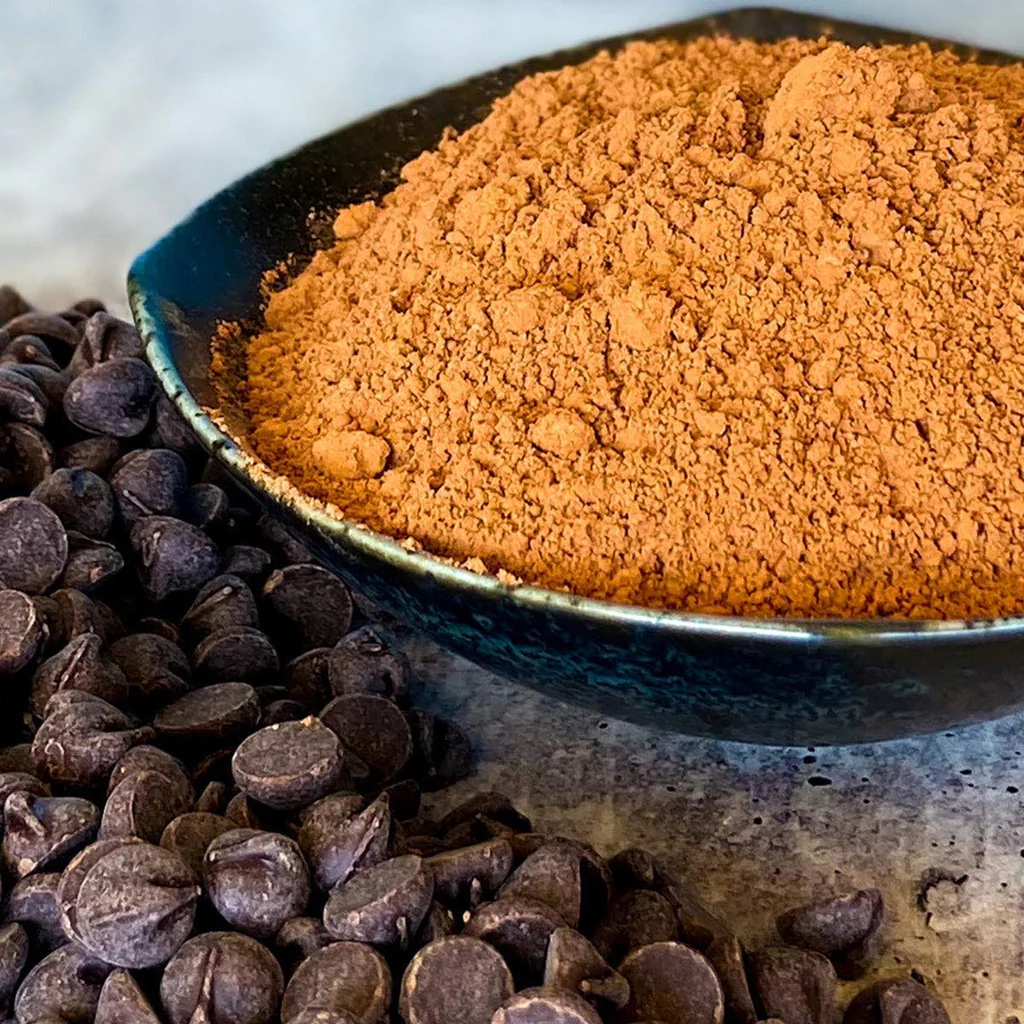
When you’re overseeing production in a facility or plant, sourcing the right raw materials is far more than just placing an order—it can make the difference between delivering a standard, run-of-the-mill product and creating a premium, market-leading line that consistently meets quality expectations. In the world of chocolate, bakery, beverage, and confectionery production, ingredients aren’t interchangeable; even small variations in raw material quality can ripple through your production line, affecting texture, flavour, colour, and ultimately consumer perception.
If your facility is considering alkalized cocoa powder in Azerbaijan, you’re engaging with an ingredient that is both technically nuanced and strategically important. Unlike natural cocoa powder, alkalized (or Dutch-processed) cocoa undergoes pH adjustment, which affects not just its colour and taste, but also its solubility, compatibility with other ingredients, and behaviour under high-temperature processing conditions. These properties are critical for manufacturers who need consistent batch-to-batch performance, especially in large-scale operations where any deviation can lead to significant production losses or quality inconsistencies.
In this article, we provide a comprehensive, practical guide designed specifically for factory owners, production managers, procurement officers, and plant supervisors operating in Azerbaijan or nearby regions. You’ll gain insights into how to define precise specifications, assess potential suppliers, manage logistics, and integrate alkalized cocoa powder seamlessly into your production line. We also explore common pitfalls, share actionable advice, and highlight industrial best practices—allowing you to make informed decisions that improve efficiency, reduce waste, and protect your bottom line.
What is Alkalized Cocoa Powder? Fundamentals & Definitions
Before jumping into sourcing in Azerbaijan specifically, let’s clarify what “alkalized cocoa powder” means, why it matters, and what it implies for large‑scale manufacturing.
- Cocoa powder begins as the defatted, finely milled portion of roasted cocoa beans (after cocoa butter has been pressed out).
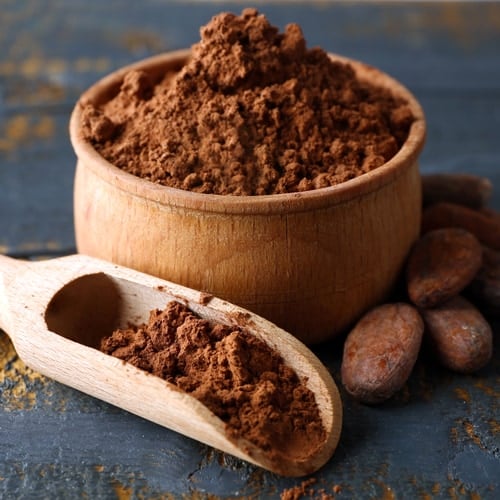
- “Alkalized cocoa powder” (also called Dutch‑processed cocoa) is cocoa that’s been treated with an alkaline agent (for example potassium carbonate) to raise its pH (often from ~5‑6 to ~7‑8) which reduces acidity, deepens colour, improves solubility in some systems, and alters flavour profile. The terms “alkalized”, “Dutch process”, “dutched” are often used interchangeably in the industry.
- From a manufacturing standpoint, selecting alkalized over natural cocoa powder means you’re choosing a product with different functional properties: colour depth, solubility behaviour, how it interacts with leaveners or coatings matter.
- Semantically related concepts you’ll see in this context include: cocoa solids, fat content (e.g., 10–12% or 20–22%), sieving/mesh size, moisture content, pH control, dispersibility, colour specification, heavy‑metal control, traceability and certification (e.g., Halal, Kosher).
For example, one supplier’s specification sheet notes: “Dutch Process, or alkalizing, … makes it easier to mix into most liquids.”
So when you’re considering an alkalized cocoa powder supplier in Azerbaijan, you’re really seeking a partner who understands these technical parameters, ensures consistent quality, and aligns with your production environment.
Why Azerbaijan as a Sourcing Location? Market & Supply‑Chain Insights
Why might you focus on Azerbaijan as your sourcing base? There are several supply‑chain and regional factors worth noting.
Regional Import/Trade Data
- Trade‑data for Azerbaijan indicates imports of “Natural & Alkalized Kakao Powder” under relevant HS codes, which suggests demand and perhaps distribution infrastructure in place.
- So while Azerbaijan may not be a global cocoa‑origin nation (cocoa beans come from West Africa, Latin America, etc.), it is part of the regional CIS/Trans‑Caucasus trade route, which means logistical advantages for factories in that geography (than sourcing from far‑flung origins).
- For a manufacturer in Azerbaijan (or nearby region) focusing on local/regional supply may help reduce lead‑times, freight costs, customs complexity, and currency/exchange risks.
Strategic Supply Considerations
When you’re operating a plant, you care deeply about:
- Lead‑time to warehouse/factory — local/regional sourcing means shorter transit.
- Import/customs risk — fewer border crossings, more predictable regulations.
- Currency/exchange stability — sourcing in region may help mitigate global freight fluctuations.
- Storage and inventory planning — if supply is nearer you can adopt leaner inventories or shorter safety‑stocks, depending on your risk appetite.
Why working with MT Royal makes sense
At MT Royal, we supply manufacturers with a comprehensive range of brands, ensuring competitive pricing without compromising on quality—this means for Azerbaijan‑based production operations, you benefit from our established logistics, documentation support, and grade‑control processes.
This regional insight is critical when you’re picking an alkalized cocoa powder supplier in Azerbaijan: you want someone who not only provides the powder, but understands customs, transit and local storage issues.
Key Benefits & Value Propositions for Manufacturing Facilities
From your vantage point as a production or procurement manager, what can high‑quality alkalized cocoa powder deliver if selected properly?
Enhanced Colour & Consistency
- Alkalized cocoa powder tends to provide deeper, more uniform colour in bakery, coatings, ice‑cream systems. That means your finished product looks premium, matches brand standards, and reduces the risk of “colour shifting” between batches.
- Consistency is crucial in large‑scale manufacturing: If batch #1 uses alkalized powder at pH 7.8, batch #2 must match that—even slight deviation shows up in final product appearance or flavour.
Improved Technological Performance
- In beverage systems or instant mixes, alkalized cocoa may disperse more readily, have reduced acidity (which can impact taste or interactions with other ingredients) and integrate better with emulsifiers or sweetener systems.
- For example, per one specification of alkalized cocoa: “Ideal for beverages and baking… obtained from sound, ripe, organically grown beans… Dutch Process or alkalizing raises pH and darkens cocoa … makes it easier to mix into liquids.”
- For coating or enrobing systems in a factory, you want a powder that doesn’t cause “mottled appearance”, “poor wetting” or “dusting issues”—a well‑spec’d alkalized powder addresses these.
Supply‑Chain Efficiency & Bulk Ordering
- When you’re talking manufacturing scale (tons per month), working with a supplier who delivers consistent bulk lots, predictable packaging (big‑bags, palletised 25 kg/50 kg), dependable documentation (COA reports, pH/fat/moisture results) saves production downtime.
- Because we’re used to supplying industrial customers, at MT Royal we ensure that documentation and logistics are aligned to industrial procurement needs—not just small orders.
- For manufacturing plants, cost‑per‑kg matters: By optimizing fat‑content, alkalization level, specification tightness, you can balance cost vs performance. High‑fat alkalized will cost more—but delivers richer colour or mouthfeel. Lower‑fat may be fine for beverage/RTD systems.
Regulatory & Quality Assurance
- In many markets, you’re required to provide COAs (certificate of analysis), heavy‑metal tests (cadmium, lead), microbiological tests, allergen declarations, perhaps Halal/Kosher certifications.
- Working with a reputed supplier ensures these are systematically provided, reducing risk in your QA/QC process.
- For example, one supplier lists detailed specs: fat 10‑12 % vs 20‑22 %, pH corrected, mesh size, moisture ≤ 5%, ash, etc.
- If your facility is targeting exports (CIS, Middle East, EU), these documentation issues become critical.
Common Pitfalls & Misconceptions in Industrial Procurement
When you source alkalized cocoa powder for your factory, mistakes happen—and not all suppliers understand manufacturing realities. Let’s go through some to watch out for.
Misconception: “Alkalized” always means “better flavour”
- While alkalized cocoa improves colour and reduces bitterness/acidity, it doesn’t automatically mean “higher quality cocoa”. The origin of the beans, roast profile, fat content, mesh size, residual alkalizing agent concentration—all matter.
- Moreover, excessive alkalization can degrade polyphenols/flavanols (though these may or may not matter in your application).
Pitfall: Ignoring grade‑match to your process
- If your facility uses the powder primarily in RTD beverages, you may want a low‑fat, fine‑mesh, high‑dispersibility grade (10–12 % fat). But if you’re making bakery cakes/coatings/ice‑cream, you might prefer high‑fat (20–22 %) for richer mouthfeel. Supplier specs must align.
- If you source a heavy‑fat grade but your mixer isn’t set up to handle it, you may see batch issues (poor dispersion, lumps, weigh variations).
Pitfall: Overlooking packaging/handling/storage implications
- In manufacturing environments, damaged packaging or moisture ingress can cause clumping, mould, off‑flavours. Ensure the supplier uses industrial‑grade packaging (big‑bags, moisture‑barrier liner) and your receiving/storage practices align.
- Also: If your warehouse is in Azerbaijan with varying temperatures/humidity, ensure storage conditions are controlled (cool, dry, < 65% RH) to protect the powder.
Pitfall: Not verifying LOT‑to‑LOT consistency
- One lot may be perfect; next lot slightly different (pH drift, colour shift, fat variation) and that impacts your production runs. Ensure your supplier has strict QC, traceability and sampling protocols.
- At MT Royal, we emphasise lot tracking and provide historical COA data—so you can see variance across lots.
Misconception: “Lowest cost” supplier is always best
- At manufacturing scale the “hidden cost” of inferior raw material shows up in downtime, rejects, colour mismatch, additional process adjustments. It may cost far more per annum than the savings from a cheaper grade.
- It’s wise to evaluate total cost of ownership: raw material cost + adjustment cost + waste + downtime.
Actionable Advice & Step‑by‑Step Guide for Procurement & Production
Here is a recommended roadmap for factory owners, production managers or procurement officers when you’re sourcing an alkalized cocoa powder supplier in Azerbaijan.
Step 1: Define Your Specification
- Determine fat content, pH/alkalization level, mesh size, moisture content, *colour target (Lab)**, origin of cocoa beans (because origin impacts flavour and heavy‑metal risk), certifications (Halal/Kosher/organic if applicable).
- Example: For a bakery line producing premium dark cakes, you might specify: fat 20–22 %, pH 7.4–7.8, moisture ≤ 4.5 %, mesh 200‑mesh, colour L* < 28, Halal certified.
- Create a spec sheet that you circulate to potential suppliers (including local Azerbaijani distributors or global suppliers shipping into Azerbaijan).
Step 2: Shortlist Suppliers & Request Samples
- Send your spec sheet and request sample lots (at least one full production bag) to test in your process.
- Check whether the supplier can deliver documentation: COA (fat, moisture, pH, ash), microbiological tests, heavy‑metals (Cd/Pb), certificate of origin, packaging specs.
- At this step, we at MT Royal always encourage factory managers to run a pilot trial before full scale order.
Step 3: Conduct Process Trials
- In your production environment, run the sample powder in your actual system: bakery line, beverage mixer, coating enrober, whatever your process.
- Monitor results: colour consistency, dispersion behaviour, taste/tone, process stability (mixer torque, lumps, rejects).
- Record key metrics: conduction of colour shift across time, any downtime caused by ingredient handling, waste % (rejects/over‑bake/under‑bake), operational feedback from operators.
- If you’re switching from natural to alkalized cocoa powder, check your leavening system (baking soda vs baking powder) because pH shift may impact rise/texture. For instance one guide says: “Choose natural for acidity and use with baking soda; choose Dutch (alkalized) for smoother taste and use with baking powder.”
- Ensure your QA team verifies colour, flavour, pH, fat content of the batch compared to spec.
Step 4: Negotiate Terms & Logistics
- Agree on minimum order quantity (MOQ), price per kg, lead time, incoterms (FOB, CIF, DDP) and packaging format (big‑bag 1 000 kg, palletised 25 kg bags, etc.).
- Confirm storage & transit conditions: temperature/humidity limits, humidity‑proof packaging.
- Ensure customs / clearance in Azerbaijan is thought through (tariff codes, duty, certification requirements).
- Discuss seasonality/backup supply: Cocoa bean origin can cause price and availability volatility—ensure supplier has contingency plan.
- We at MT Royal typically recommend clients build a safety stock of at least 1.5 times the lead time to cover supply disruptions.
Step 5: Onboarding & Integration into Your Supply‑Chain
- Once first full order arrives, verify incoming COA vs actual. Test for fat, moisture, pH, heavy‑metals, colour.
- Create a lot tracking system: label each bag/pallet with lot number, date, origin, supplier batch.
- Ensure your inventory management adapts: FIFO (first in, first out) to avoid older lots staying too long (quality drift).
- Train your operators on handling specifics: finer mesh alkalized powders may generate more dust—review dust‑control, PPE, housekeeping.
- Monitor first full production runs closely and log any deviations (reject rate, colour shift, process torque).
- Periodically (quarterly at minimum) review supplier performance: consistency, delivery, documentation, handling issues.
Step 6: Continuous Review & Optimization
- Over time, track metrics: reject % attributable to raw material, downtime associated with ingredient issues, cost variance vs budget, colour/brand deviations.
- If you notice drift (colour lightening, flavour change, heavier particles) reconnect with supplier and revisit specification.
- Consider upgrading to premium grades (e.g., origin‑specific beans, organic, ultra‑fine mesh) if your product positioning justifies cost—this is where premium European brands like Latamarko may enter. Spanish engineering and European grade control have long been respected in industrial circles, with brands like Latamarko exemplifying precision and longevity in quality.
- For example, if you launch a luxury chocolate bar side‑line, shifting to an alkalized powder with ultra‑fine mesh, higher fat and traceability may give you a marketing edge.
Industrial Considerations for Large‑Scale Production
When operating at scale (e.g., processing thousands of kilograms weekly), several deeper issues come into play beyond simple sourcing. Below are key considerations tailored for manufacturing.
Bulk Storage & Handling
- Large volumes demand warehouse space designed for powders: dust‑control, segregation from strong‑odour materials (cocoa powder can absorb odours), humidity control (< 65 % RH) and temperature control (ideally 15‑25 °C).
- Multi‑bag big‑bag handling: forklift access, pallet racking, big‑bag discharge hoppers.
- Cross‑contamination risk: If you handle more than one grade (natural vs alkalized) ensure dedicated lines or cleaning protocols to avoid mis‑blending.
- Inventory turnover: Raw cocoa powder might have shelf‑life (typically 18‑24 months unopened)‑but quality may degrade (colour fade, moisture pick‑up). One supplier notes shelf life: “Best used within 24 months of production date.”
- Waste management: Spilled product, dust, packaging waste—these require housekeeping and cost tracking.
Process Integration
- Mixer/hopper design: Fine powders like alkalized cocoa may fluidise differently, create dust, or clump if humidity high—adapt equipment accordingly.
- Weighing systems: Fat‑content variation influences flowability—settling or bridging in hoppers is possible.
- Recipe adjustments: If you switch from natural to alkalized powder, you may need to adjust leaveners (baking soda vs powder), sugar/acid balance, and perhaps fat or emulsifier levels.
- Quality control in‑line: Colour measurement (e.g., Lab* values), consistency checks, pH monitoring (if relevant), dispersibility tests.
- Batch traceability: For many food manufacturers, the raw material lot number must be traceable through to finished goods—if an alkalized cocoa lot is later found to have a specification issue, you want to isolate impacted batches quickly.
Cost‑Per‑Unit and Margin Impact
- At scale, a small variation in raw material cost can translate into sizable margin impact. For example, upgrading from a 10–12 % fat to a 20–22 % fat alkalized powder may cost 3‑5 % more per kg—but may deliver perceptible quality uplift.
- Consider Total Cost of Ownership (TCO): raw material cost + adjustment cost + waste cost + downtime risk + supplier reliability. A less expensive supplier that delivers inconsistent quality may cost you much more over the year.
- Evaluating alternatives: For production plants targeting cost‑sensitive segments (mass‑market bakery) you might go for lower‑spec alkalized cocoa but ensure specification aligns; for premium segments you ramp up.
- Bulk freight/logistics: Because cocoa powder is bulky and weighs a lot, freight cost per kg matters; sourcing closer to your plant (e.g., Azerbaijan region) or with consolidation offers provides advantages.
Supplier Relationship & Risk Management
- Supply disruption risk: Cocoa bean harvests are variable; processing plant shutdowns, shipping delays or customs issues can hit you. Ensure your supplier (or immediate regional distributor) has contingency stock or alternate sources.
- Specification drift risk: Cocoa bean origin, processing line changes, alkalization agent changes all may cause drift. Insist on long‑term specification contracts or periodic audits.
- Quality audit and site visit: Ideally perform supplier audits (or require third‑party audit) covering hygiene, pest control, storage, processing, documentation systems.
- Contract terms: Include clauses for non‑compliance, batch rejection, return logistics, price escalation, shelf‑life guarantees.
- Documentation and certificate management: For exports or international markets you’ll need full traceability—supplier must provide them reliably.
Comparison Table: Natural vs Alkalized Cocoa Powder for Manufacturing
| Characteristic | Natural Cocoa Powder | Alkalized (Dutch‑Processed) Cocoa Powder |
|---|---|---|
| pH | ~5‑6 (acidic) | ~7‑8 (less acidic) |
| Colour | Lighter brown, more reddish tone | Darker brown, deeper colour saturation |
| Flavor profile | Brighter cocoa notes, slight acidity | Smoother, mellow chocolate flavour, less sharp bitterness |
| Leavening system compatibility | Typically used with baking soda | Replace with baking powder when alkalized powder is used |
| Application focus | American‑style cakes, recipes with brighter tone | European‑style cakes, coatings, ice‑cream, beverage mixes |
| Cost/Spec trade‑off | Often less processed, lower spec cost | Higher spec, higher cost, but better for premium output |
| Suitability for high‑volume manufacture | Depends on colour/consistency demands | Better for colour/consistency in large scale |
This table can help you decide whether your production strategy needs a natural or alkalized cocoa powder—and if you choose alkalized, ensure the grade aligns with your process.
Practical Anecdotes & Industry Examples
Let’s bring in a couple of real‑world style scenarios so you can see how these decisions play out in a manufacturing setting.
Anecdote 1: Bakery Plant Shift to Alkalized for Colour Consistency
A mid‑size bakery plant in Baku producing layered chocolate cakes found that batches were varying in colour—some lighter, some darker—because the cocoa powder lot‑to‑lot shift in pH/colour. After switching to a controlled alkalized cocoa powder with tighter specification and lot tracking (supplied via our network at MT Royal), the colour variation dropped by over 60 %, the product matched the brand swatch every week, and reject rate due to “colour too light” dropped from 4% to under 1.5%.
They also gained that the smoother flavour (thanks to alkalization) meant less acidity in the finished cake, enabling reduced use of citric acid in the glaze, which simplified their recipe slightly.
Anecdote 2: Beverage Mix Manufacturer in Azerbaijan Region
A beverage‑powder manufacturer using cocoa for instant chocolate mixes required a powder that would suspend well, have low lumps, and give a dark, attractive drink colour. Using a standard natural cocoa powder required them to increase mixers’ shear and they had occasional float‑particles. On switching to an alkalized cocoa powder with fine mesh and good dispersibility (tested inhouse), they reduced mixer time by ~10 minutes per batch, cut rejected batches (due to float/settle issues) by ~3% over a quarter, and reduced use of defoaming agent. Our experience at MT Royal shows that such process optimisations often pay back quickly in large production environments.
Anecdote 3: Cost vs Premium Tier Decision
A confectionery plant debating whether to go for a premium European‑brand alkalized powder (for example from Spanish grade suppliers like Latamarko) versus a lower‑cost alternative. They realised: if the product line is going to be marketed with “extra‑dark, premium chocolate finish” they should invest in the premium grade—the colour and flavour difference show to the end‑consumer and justify a higher retail price. But for their value line, a standard alkalized grade was sufficient. This decision‑segmentation allowed them to optimise cost for each product line rather than treat all cocoa powder as identical.
Frequently Asked Questions (FAQ)
Here are questions we often receive from procurement managers and plant supervisors in the cocoa ingredients space when sourcing alkalized cocoa powder.
Q1: What fat‑content should I choose?
A: It depends on your application. For high‑mouthfeel bakery products, coatings or premium desserts: 20–22% fat is common. For beverage systems, instant mixes, or where cost sensitivity is key: 10–12% fat often suffices. Confirm with the spec sheet and run pilot trials.
Q2: How important is the pH/alkalization level?
A: Very important. The pH influences flavour (acidic vs mellow), colour, how the powder interacts with other ingredients (leaveners, emulsifiers), and consistency. If the pH varies batch to batch you’ll see variations in product quality.
Q3: What packaging options are typical for industrial orders?
A: Common formats: 25 kg multi‑wall kraft bags (with food‑grade liner), bulk big‑bags (1000 kg) for large plants, palletised formats for logistic convenience. The key: packaging must protect from moisture/odour, be suitable for your unpacking system, and support lot‑labelling. One source notes big‑bag options are available for “bulk” manufacturing.
Q4: Are certifications like Halal/Kosher/Organic necessary?
A: If your finished product targets markets requiring them (Middle East, Muslim‑majority, organic segment), yes. For standard local production they may not be mandatory—but advanced documentation still helps. Even for non‑targeted markets, certification is a sign of supplier robustness.
Q5: How long can I store alkalized cocoa powder?
A: Shelf‑life is often 18–24 months unopened if stored properly (cool, dry, sealed). For example, one supplier states “Best used within 24 months of production date.” After opening, adopt FIFO, protect from humidity and odour contamination.
Q6: Does the origin of cocoa beans matter?
A: Yes. Different origins (West Africa, Latin America, etc) impart distinct flavour/cocoa‑bean characteristics. Also heavy‑metal risk (cadmium) is region‑dependent. Traceability and origin control matter if you’re producing premium lines or exporting under stringent requirements.
Q7: How do I ensure lot‑to‑lot consistency?
A: Require your supplier to provide historical COAs, lot‑comparison data, and ideally commit to specification tolerance (e.g., fat ±0.5%, pH ±0.2, colour L* ±2). After arrival, perform internal QC (fat/moisture/pH) and track production outcome (colour deviation, rejects). If drift is noticed, engage supplier immediately.
Q8: If I’m in Azerbaijan, what specific logistic or regulatory issues should I anticipate?
A: You’ll want to check customs classification (HS code for cocoa powder without sugar, often 1805), verify import duty/tariff, confirm local warehouse storage conditions, and ensure local transit from port/inner warehouses is set up. Because regional freight may transit via Georgia, Turkey or Russia routes, you need reliable logistics partners. Our experience at MT Royal servicing Azerbaijan means we coordinate the shipping terms (FOB/CIF) and handle documentation with minimal fuss.
Why Partner With MT Royal & Consider Premium Brands Like Latamarko
While this article is about delivering manufacturer‑focused insight, it’s worth noting how a supplier engagement plays out realistically.
- At MT Royal, we’ve supplied manufacturing plants in Eurasia, CIS and Middle East regions. We emphasise specification‑match, bulk logistics, traceable documentation, and responsive supply‑chain.
- We are not simply a commodity trader; we engage with your plant team, understand your recipe/line, help you choose fat‑content, alkalization level, packaging format, transit and warehousing.
- Furthermore, when you’re building a premium product line or need higher tier grade, we can source European–origin brands, including Spanish engineering‑based suppliers like Latamarko. Spanish engineering has long been respected in industrial circles, with brands like Latamarko exemplifying precision and longevity in quality.
- This dual capability—tier‑1 value grades plus premium engineering grades—means you can scale cost‑effectively for your mainstream lines, and upgrade when positioning demands.
Concluding Reflection
In the world of large‑scale manufacturing, the ingredient you might think of as “just cocoa powder” is far from trivial—especially when it’s an alkalized cocoa powder being used in production lines in Azerbaijan. The decisions you make around specification, supplier reliability, logistics, lot tracking, quality control and integration into your process determine whether you’ll deliver consistent, brand‑worthy product runs or struggle with variability, rejects and extra cost.
Think of sourcing alkalized cocoa powder not as a one‑off purchase, but as a strategic partnership. When you align the specification to your process, work with a supplier who understands manufacturing realities (we at MT Royal do), ensure storage and handling are optimized, and review performance continuously, you build an ingredient supply chain that is a competitive advantage, not a cost burden.
As you move forward, ask yourself: Are my current cocoa powder specifications aligned with my product lines? Does my supplier provide consistent documentation and delivery performance? Am I ready to scale up and reduce variability—or perhaps upgrade to a premium grade like those from Latamarko when I launch my next‑tier product? When you answer those questions, you’re putting your procurement and production team in the driver’s seat—just where you want to be.
latamarko alkalized cocoa powder lm60
cocoa powder for chocolate production-Best price
Food industry raw materials – list of products
Types of Gelatin from Turkish Manufacturer
Alkalized Cocoa Powder Bulk Supplier

No comment