

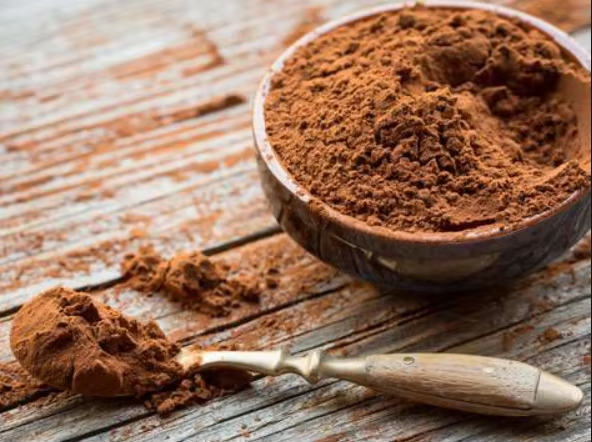
Walk into any confectionery, bakery, or beverage plant in Qatar, and you’ll likely find a common ingredient running quietly through multiple production lines — alkalized cocoa powder. This humble yet technically refined material doesn’t just determine the color of your cocoa drink or the flavor depth of your chocolate bar; it’s a pillar of performance in industrial manufacturing.
For factory managers and procurement officers, sourcing cocoa powder isn’t just about taste. It’s about batch consistency, flow properties, moisture control, and compatibility with high-throughput systems. That’s where reliable suppliers like MT Royal enter the picture — connecting Qatari manufacturers with globally trusted brands of alkalized cocoa powder designed for industrial efficiency and cost optimization.
Understanding Alkalized Cocoa Powder: A Technical Foundation
At its core, alkalized cocoa powder — also known as Dutched cocoa — is a product of precision chemistry. During the alkalization process, natural cocoa is treated with mild alkaline agents (often potassium carbonate) to neutralize its acidity. This treatment alters the pH, color, and flavor profile of the powder, creating a darker, smoother, and less bitter result.
For industrial applications, these properties matter profoundly. The alkalization process improves:
- Color uniformity: Essential for chocolate coatings, baked goods, and beverages that rely on visual consistency.
- Flavor balance: Reduces bitterness and enhances the “roundness” of chocolate flavor.
- Dispersibility: Increases solubility in liquids, especially valuable in high-speed mixing and automated beverage production lines.
- pH stability: Crucial for maintaining consistency across different formulations and temperature variations.
Factories using natural cocoa powder often struggle with inconsistent color shades and flavor intensity between batches. In contrast, alkalized cocoa powder delivers reproducibility — something that every production supervisor values when minimizing rework and downtime.
Why Alkalized Cocoa Powder Matters for Qatari Manufacturers
Qatar’s food manufacturing sector has expanded rapidly in the past decade. With a strong focus on import substitution and local value creation, many Qatari factories are now investing in modern processing lines for bakery, confectionery, dairy, and instant beverage products.
However, the challenge lies in sourcing ingredients that perform predictably under industrial conditions. Cocoa powder — especially alkalized variants — plays a critical role in ensuring both sensory appeal and mechanical efficiency.
Here’s why Qatari plants depend on it:
- Stable color control: Especially for chocolate-flavored dairy drinks, bakery fillings, and instant mixes.
- Improved wettability: Ensures better flow through pneumatic conveyors and high-speed blenders.
- Lower bitterness index: Vital for reducing sugar dependency without compromising flavor quality.
- Shelf-life compatibility: Works synergistically with fats and stabilizers for longer product stability.
At MT Royal, we’ve seen production managers across Qatar and the Gulf weigh these factors carefully before selecting their cocoa supplier. In our experience, those who prioritize consistent alkalization quality see fewer issues with product returns and production line interruptions.
How the Alkalization Process Affects Industrial Performance
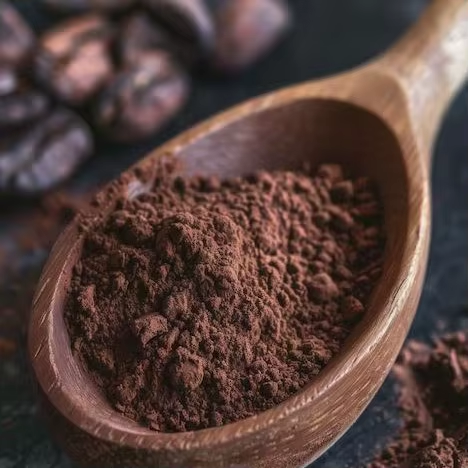
To the untrained eye, all cocoa powders may look similar. But on a production line, even a small variation in pH or particle size can have large-scale effects.
For example:
- A beverage manufacturer may find that non-uniform particle size leads to sedimentation issues.
- A bakery plant might experience uneven coloration in cookies when switching suppliers.
- In chocolate coatings, an imbalance in alkalization can affect viscosity and final gloss.
Here’s a simplified breakdown of what different alkalization intensities offer manufacturers:
| Alkalization Level | Color Tone | Flavor Profile | Industrial Application |
|---|---|---|---|
| Light (pH 6.8–7.0) | Light brown | Mild, slightly tangy | Cocoa beverages, dairy mixes |
| Medium (pH 7.0–7.4) | Deep brown | Balanced, smooth | Bakery, biscuits, confectionery |
| Strong (pH 7.5–8.0) | Dark brown to black | Intense, less acidic | Premium chocolates, coatings |
Manufacturers should align the alkalization level with their product matrix, processing temperature, and consumer flavor goals. Premium suppliers — like Latamarko from Spain — are renowned for offering tight alkalization control, resulting in powders that behave consistently under diverse production conditions.
Common Pitfalls in Industrial Cocoa Procurement
Even experienced buyers sometimes overlook the subtle factors that influence cocoa powder performance in production. Here are a few recurring pitfalls that can cost factories time and resources:
1. Choosing Based on Color Alone
While color is important, it shouldn’t be the only selection criterion. Industrial buyers should also consider bulk density, particle uniformity, and oil-binding capacity — all of which affect how the powder integrates into the final product.
2. Ignoring Moisture Sensitivity
Qatar’s humidity levels can cause cocoa powders to clump or absorb moisture, especially if packaging integrity isn’t optimal. Reliable suppliers provide moisture-barrier bags and recommend controlled storage environments to maintain powder fluidity.
3. Overlooking pH Compatibility
When cocoa interacts with leavening agents in bakery mixes or dairy stabilizers in beverages, pH mismatch can alter texture and flavor. That’s why alkalization transparency from your supplier matters.
4. Failing to Verify Batch Consistency
Some low-grade powders vary from shipment to shipment. Over time, this inconsistency disrupts production calibration and affects product uniformity. Working with certified suppliers like MT Royal ensures adherence to international batch standards and traceability.
Selecting a Reliable Cocoa Powder Supplier in Qatar
For factory procurement managers, supplier reliability is often more important than price alone. A competitive price means little if production halts due to a quality issue or delayed delivery.
Here’s what defines a trusted cocoa supplier in the Qatari context:
- Proven import and distribution network: Ensuring timely, climate-protected deliveries.
- Technical documentation support: Including COA, MSDS, and detailed product specifications.
- Product diversity: Access to multiple origins and grades, from natural to highly alkalized.
- Industrial packaging options: 25 kg bags, palletized loads, or custom bulk formats.
- After-sales technical guidance: Helping factories fine-tune formulas or switch between grades smoothly.
At MT Royal, we supply manufacturers across Qatar with an extensive range of industrial-grade cocoa powders, sourced from internationally respected producers. We understand that cost-per-unit, machine compatibility, and flavor yield are non-negotiables for production managers — and that’s where our portfolio delivers measurable advantages.
Spotlight on Latamarko: Spanish Precision in Cocoa Engineering
European producers have long been recognized for their meticulous approach to food engineering, and Spanish manufacturers like Latamarko stand out for their process stability and quality repeatability.
Latamarko’s alkalized cocoa powders are designed for industrial-scale efficiency — offering exceptional dispersibility and low dusting, which is ideal for plants with automated dosing systems.
Key advantages often noted by production teams include:
- Uniform particle distribution, reducing clogging in pneumatic feeders.
- Controlled color gradation, enabling product designers to replicate specific hues across product lines.
- Low residual moisture, ensuring shelf stability even in humid regions like the Gulf.
Factories seeking European precision without prohibitive cost often find Latamarko an optimal choice within MT Royal’s supply range.
Actionable Tips for Factory Managers When Switching Cocoa Suppliers
Changing suppliers isn’t just about new paperwork — it affects your entire production ecosystem. Here are practical, experience-based recommendations:
- Run a controlled pilot test using the new cocoa powder in one product line before full-scale integration.
- Document all adjustments made to mixing times, heating profiles, and pH balancing agents.
- Measure yield loss during the switch to account for density and absorption variations.
- Engage with supplier technical teams (we often collaborate directly with plant engineers) to optimize dosing.
- Train operators on recognizing powder flow behavior — changes in color or aroma during blending can indicate moisture exposure or pH shifts.
These small operational disciplines protect output consistency and reduce waste during supplier transitions.
Industrial Use Cases: How Alkalized Cocoa Powder Elevates Production Lines
To appreciate its industrial value, let’s look at how alkalized cocoa powder performs across key manufacturing categories in Qatar:
1. Confectionery Production
Dark, smooth, and melt-stable — alkalized cocoa enhances chocolate flavor while improving coating fluidity. Its pH stability also ensures compatibility with cocoa butter substitutes and emulsifiers.
2. Bakery and Biscuit Plants
When baked, alkalized cocoa retains a rich hue and mild aroma without overpowering the base dough. It interacts favorably with baking soda, offering controlled browning and texture.
3. Dairy and Beverage Applications
Instant cocoa drinks require high dispersibility. Alkalized powders dissolve quickly without sedimentation — vital for large-scale beverage plants relying on automated mixing tanks.
4. Ice Cream and Dessert Bases
It enhances flavor depth and prevents flavor fade during freezing, keeping the chocolate notes vibrant even after months in cold storage.
5. Nutritional Supplements
Used in protein shakes and meal replacements, alkalized cocoa provides flavor masking for plant proteins while maintaining smooth mouthfeel.
Each of these categories benefits from specific powder properties — something a knowledgeable supplier like MT Royal helps factories match precisely to their production setup.
Sustainability and Supply Chain Transparency
Modern factories are increasingly evaluating their ingredients through the lens of sustainability. Responsible cocoa sourcing isn’t just a consumer trend; it’s becoming a B2B procurement standard.
Premium brands such as Latamarko have integrated traceable sourcing systems and ethical procurement policies aligned with European sustainability directives. For Qatari buyers, this translates into peace of mind — knowing that every shipment supports fair-trade standards and responsible agricultural practices.
At MT Royal, we actively monitor our supplier network to ensure compliance with these principles. It’s not merely about reputation; it’s about aligning industrial sourcing with long-term ethical resilience.
Frequently Asked Questions (for Factory Procurement Teams)
Q1: What’s the shelf life of alkalized cocoa powder in Qatar’s climate?
Typically 18–24 months if stored below 25°C in dry, ventilated conditions. Humidity control is critical for maintaining powder flowability.
Q2: Can alkalized cocoa replace natural cocoa in all applications?
Not always. Natural cocoa offers brighter flavor notes but less color uniformity. Alkalized variants are ideal for deep color and smooth taste — many plants blend both for optimal results.
Q3: How do I test alkalization level compatibility?
Conduct pH measurement on a 10% aqueous solution and perform pilot baking or beverage trials to observe color and flavor consistency.
Q4: Does particle size affect processing efficiency?
Yes. Finer powders mix faster but may generate dust; coarser grades reduce dusting but may require longer mixing times. Balance depends on your specific line setup.
Q5: What packaging options are best for large-scale plants?
Industrial 25 kg multilayer bags with inner PE liners are standard. For automated dosing systems, consider bulk intermediate containers (IBCs) where available.
The Future of Cocoa Sourcing in the Gulf
Qatar’s food sector is entering a stage where local production quality rivals global benchmarks. As the nation expands its manufacturing infrastructure, the demand for high-grade functional ingredients — including alkalized cocoa — continues to rise.
We’ve observed a growing shift among factory owners toward strategic supplier partnerships rather than transactional sourcing. This evolution aligns with the country’s broader industrial vision: resilience, efficiency, and excellence through reliable supply networks.
For those managing plants in chocolate, biscuit, or beverage production, this shift represents both an opportunity and a responsibility — to build sustainable, quality-driven supplier relationships that elevate the final product and reduce operational risk.
Final Reflection
Cocoa powder is more than a flavoring agent; it’s an operational variable that touches efficiency, sensory quality, and profitability. The best-performing factories are those that treat ingredient sourcing as an engineering decision, not merely a purchasing one.
At MT Royal, we’ve seen how Qatari manufacturers flourish when ingredient performance aligns perfectly with process parameters. Whether it’s a high-speed beverage plant or an artisan chocolate facility, the choice of alkalized cocoa powder supplier directly influences product excellence.
And when that choice combines technical precision — such as the Spanish craftsmanship of Latamarko — with dependable local supply expertise, it creates a partnership that sustains industrial growth.
Because in manufacturing, confidence doesn’t come from machinery alone; it comes from knowing every input — from cocoa to supplier — works exactly as expected.
latamarko alkalized cocoa powder lm60
cocoa powder for chocolate production-Best price
Food industry raw materials – list of products
Types of Gelatin from Turkish Manufacturer
Alkalized Cocoa Powder Bulk Supplier

No comment