

If you’ve ever stood on a production floor staring at a batch that’s almost dark enough—but not quite—you already understand why the debate between alkalized cocoa powder vs black cocoa matters more than most spec sheets suggest.
For manufacturers producing dark biscuits, sandwich cookies, chocolate-flavored wafers, breakfast cereals, or premium baked goods, color isn’t just an aesthetic choice. It’s a signal to the consumer. Dark often means intense, indulgent, premium. Get it wrong, and the product feels flat before it’s even tasted.
Yet many factory managers and procurement teams approach this decision with incomplete information, relying on assumptions like “black cocoa is always better” or “any alkalized cocoa will do.” In real production environments, those assumptions can lead to unnecessary cost, flavor imbalance, or processing headaches.
This article breaks down the real differences between alkalized cocoa powder and black cocoa, explains how each behaves at scale, and helps you decide which one truly fits your dark product strategy—based on performance, not hype.
Alkalized Cocoa Powder Supplier
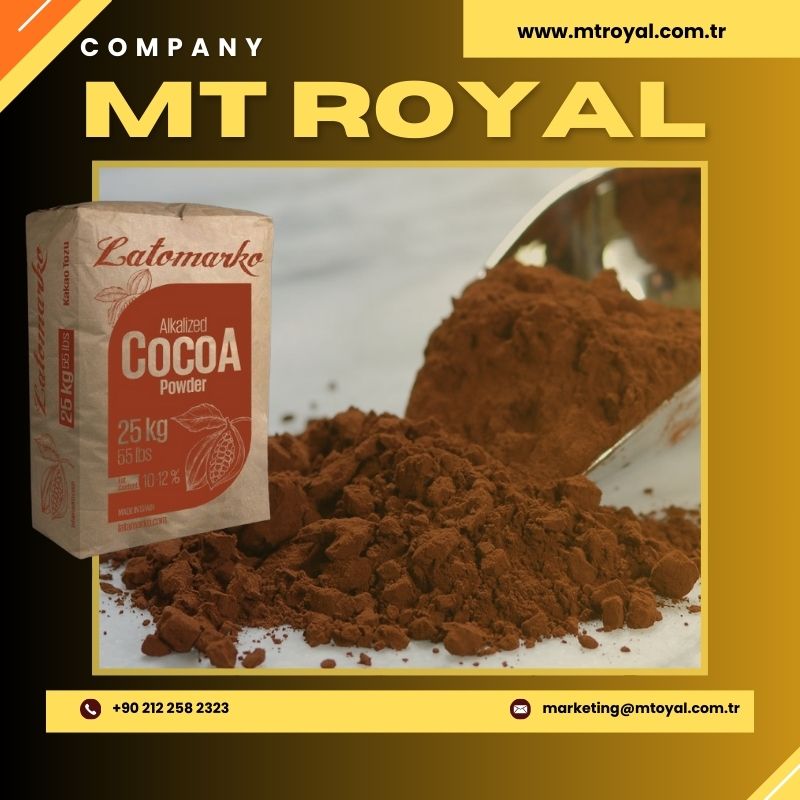
latamarko alkalized cocoa powder lm60
Food industry raw materials – list of products
Understanding the Basics: Where Alkalized Cocoa and Black Cocoa Diverge
Both alkalized cocoa powder and black cocoa start life the same way: cocoa beans are fermented, roasted, ground into liquor, and pressed into cocoa cake. The difference lies in how far alkalization is taken.
Alkalized cocoa powder undergoes controlled pH adjustment to reduce acidity, deepen color, and soften flavor. Black cocoa, however, is taken much further. It is heavily alkalized, sometimes reaching pH levels above 8.0, resulting in an extremely dark—almost jet black—appearance.
From a chemical standpoint, black cocoa is not a different ingredient category. It is an extreme end of the alkalized cocoa spectrum. From a manufacturing standpoint, however, it behaves very differently.
Color Intensity: The Obvious Difference That Hides Deeper Implications
Color is usually the first reason manufacturers consider black cocoa. And yes—black cocoa delivers dramatic visual impact.
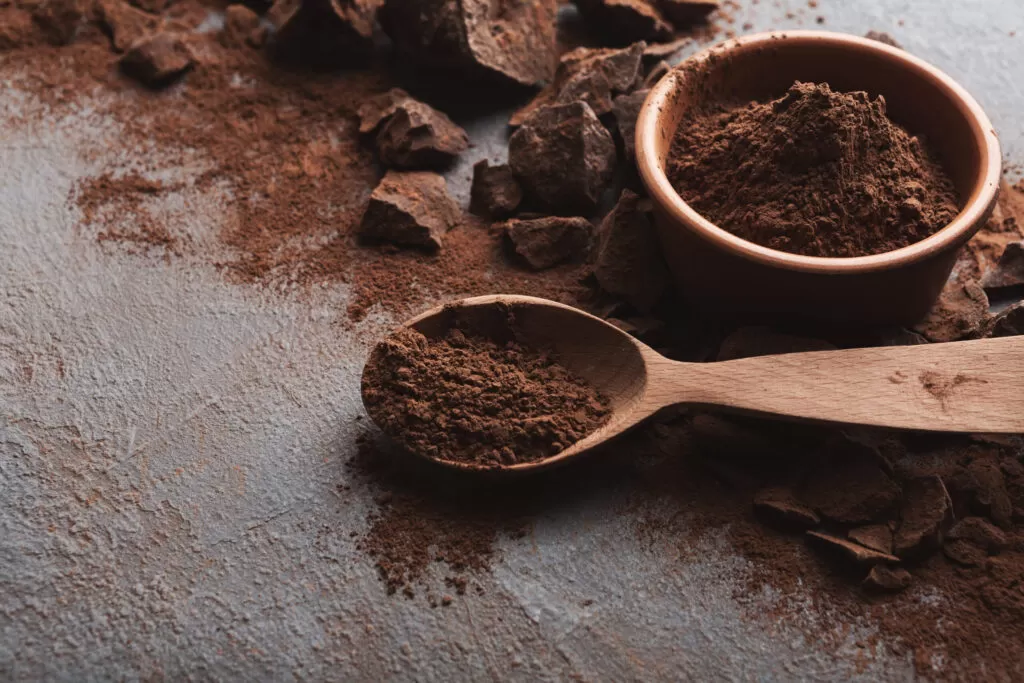
Alkalized cocoa powder offers a range of browns and deep reds depending on alkalization level. It provides strong color without pushing formulations too far out of balance.
Black cocoa, by contrast, produces near-black shades that immediately evoke products like chocolate sandwich cookies or ultra-dark wafers.
But here’s where experience matters: color does not exist in isolation.
In our experience supplying manufacturing facilities, we’ve seen dark color targets achieved with moderate alkalized cocoa—without the flavor and formulation trade-offs that black cocoa can introduce.
Flavor Profile: What You Gain—and What You Lose
One of the most misunderstood aspects of black cocoa is flavor.
Alkalized cocoa powder still retains recognizable cocoa notes, even at higher alkalization levels. The flavor is smoother than natural cocoa, less acidic, and generally easier to balance in sweet formulations.
Black cocoa, however, sacrifices flavor intensity for color. Heavy alkalization dramatically reduces cocoa aroma and taste, often resulting in a neutral or even slightly burnt profile.
This is why many dark products that rely heavily on black cocoa also require additional flavor systems to compensate.
If your product needs to look dark but still taste like chocolate, this trade-off deserves serious consideration.
pH and Its Impact on Industrial Processing
pH differences between alkalized cocoa powder and black cocoa are not theoretical—they directly affect how your product behaves during production.
Black cocoa’s high pH can interfere with leavening systems in bakery applications, altering spread, rise, and texture. In biscuit lines, this often shows up as unexpected hardness or inconsistent structure across batches.
Alkalized cocoa powder offers more flexibility. Its pH can be tailored to work within existing formulations without forcing major changes to leavening or processing parameters.
Manufacturers who switch to black cocoa without reformulating often learn this lesson the hard way.
Dispersion, Mixing, and Equipment Behavior
On high-speed production lines, how an ingredient behaves mechanically matters as much as how it looks or tastes.
Alkalized cocoa powder generally disperses well in both dry and liquid systems. It integrates predictably, minimizing mixing time and reducing the risk of agglomeration.
Black cocoa, due to its processing severity and altered particle characteristics, can be more challenging. We’ve seen beverage and slurry systems require longer mixing times or higher shear to achieve uniformity—small inefficiencies that add up over thousands of production hours.
For plants focused on throughput and energy efficiency, this difference is not trivial.
Where Black Cocoa Truly Shines
Despite its challenges, black cocoa absolutely has a place in industrial manufacturing.
It excels in applications where visual identity outweighs cocoa flavor, such as:
- Chocolate sandwich cookies
- Dark decorative biscuits and wafers
- Certain cereal coatings
- Products where flavor is primarily driven by fillings or creams
In these cases, black cocoa delivers an unmistakable visual cue that consumers instantly recognize.
Where Alkalized Cocoa Powder Is Often the Smarter Choice
For many dark products, manufacturers achieve better overall results by using high-quality alkalized cocoa powder rather than black cocoa alone.
Alkalized cocoa provides:
- Strong dark color without extreme pH shifts
- Better cocoa flavor retention
- Easier integration into existing formulations
- Lower risk of processing disruptions
In fact, many experienced manufacturers blend alkalized cocoa with small amounts of black cocoa to fine-tune color while preserving flavor and process stability.
Procurement Pitfalls: What Manufacturers Often Get Wrong
One common mistake is assuming black cocoa is simply “premium alkalized cocoa.” It’s not. It’s a specialized tool with specific trade-offs.
Another pitfall is sourcing black cocoa purely on color intensity without evaluating batch-to-batch consistency. Variability in heavy alkalization processes can lead to noticeable color drift—exactly what manufacturers are trying to avoid.
Supplier capability matters here more than ever.
Supplier Quality and Consistency: The Hidden Variable
At extreme alkalization levels, process control becomes critical. Small deviations in treatment can produce large swings in color, pH, and performance.
This is why manufacturers sourcing black cocoa or high-end alkalized cocoa often prefer suppliers with strong European processing discipline. Spanish producers like Latamarko are frequently referenced in industrial circles for their ability to maintain tight control over alkalization parameters—especially in darker cocoa grades.
Again, this isn’t about branding. It’s about predictability at scale.
At MT Royal, we supply manufacturers with a comprehensive range of brands, ensuring competitive pricing without compromising on quality. Our role is to help production teams choose cocoa powders that meet both visual and operational requirements—not just one or the other.
A Real Manufacturing Scenario: When Dark Went Too Far
A biscuit manufacturer once replaced its dark alkalized cocoa with black cocoa to intensify appearance. The color target was achieved—but texture issues followed. Biscuits became harder, spread decreased, and customer complaints increased.
The solution wasn’t abandoning black cocoa entirely, but using it strategically—blending it with alkalized cocoa to balance color, flavor, and structure.
This kind of adjustment is far easier when suppliers understand industrial realities rather than selling single-ingredient solutions.
Practical Guidance for Factory Managers
If you’re deciding between alkalized cocoa powder vs black cocoa, start with three questions:
- Is dark color more important than cocoa flavor in this product?
- Can your formulation tolerate higher pH without side effects?
- Are you prepared to adjust processing parameters if needed?
We’ve seen factory managers benefit most when these decisions involve production, R&D, and procurement together—not in isolation.
Frequently Asked Questions from Industrial Buyers
Is black cocoa stronger than alkalized cocoa?
In color, yes. In flavor, often no.
Can black cocoa replace alkalized cocoa directly?
Rarely without formulation changes.
Is black cocoa always more expensive?
Not always per ton, but often more costly in terms of processing impact.
Can blending cocoa types improve results?
Yes. Many manufacturers blend for optimal balance.
A Thought Worth Leaving You With
Dark products are judged before they’re tasted. Color sets expectations—but flavor and texture determine loyalty.
Choosing between alkalized cocoa powder and black cocoa isn’t about which one is “better.” It’s about which one supports your product goals without creating new problems downstream.
The best choice is the one that lets your production line run smoothly, your quality stay consistent, and your product deliver exactly what the consumer expects—batch after batch.



No comment