

The confectionery industry has always been a field where precision, consistency, and ingredient performance determine the quality of the final product. Whether you manage a large-scale biscuit facility, operate an industrial baking line, or supply dough-based confectionery to the market, the ingredients you choose define your brand’s reliability. Among these ingredients, ammonium bicarbonate for confectionery use stands out as one of the most overlooked yet essential leavening agents in industrial baking.
When we talk with confectionery manufacturers at MT Royal, one recurring insight is clear: the right ammonium bicarbonate can significantly improve product volume, texture, crispiness, and shelf stability. Many factories underestimate how much a small deviation in purity, particle size, or moisture content can affect production efficiency. That’s why choosing a trusted supplier becomes just as important as choosing the right formulation.
This article gives you a deep, comprehensive, and practical guide to ammonium bicarbonate in confectionery. If you’re responsible for production, R&D, procurement, or quality assurance, you’ll find every detail you need—technical, operational, economic, and supply-chain related—to make smarter decisions for your factory.
What Is Ammonium Bicarbonate?
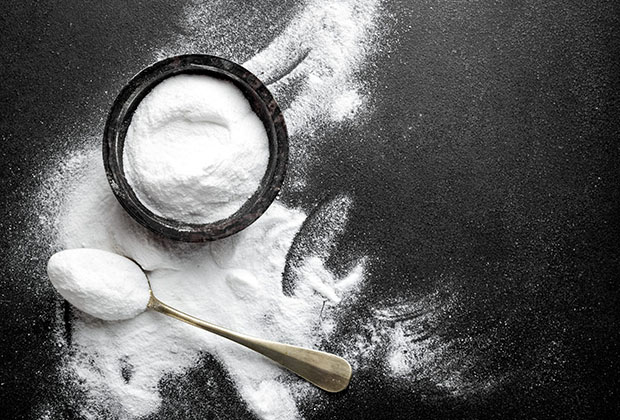
Ammonium bicarbonate (NH₄HCO₃) is a white crystalline leavening salt widely used in the food industry, especially in dry bakery and confectionery. It decomposes upon heating, producing carbon dioxide, water vapor, and ammonia—all gases that help dough rise, expand, and develop an airy internal structure.
Unlike sodium bicarbonate or baking powders, ammonium bicarbonate fully decomposes without leaving residual salts. This makes it ideal for products that must remain dry, crisp, light, and free from alkali taste—features critical in biscuits, wafers, crackers, and traditional baked treats.
Why It Is Preferred in Confectionery
- It produces rapid gas release, perfect for thin baked goods.
- It leaves no aftertaste or salt residue once baked correctly.
- It improves crispiness more effectively than sodium-based leavening agents.
- It preserves the clean flavor profile, essential in subtle-flavored biscuits or cookies.
- It enhances the lightness and uniform texture of wafers and crackers.
These characteristics make ammonium bicarbonate a cornerstone leavening agent for factories that target high-quality, cost-efficient, and shelf-stable confectionery products.
How Ammonium Bicarbonate Works in Confectionery Dough
The mechanism behind ammonium bicarbonate’s effectiveness is straightforward yet powerful. When heated above 60°C, it decomposes entirely into three gases. During baking, these gases create air pockets that build volume and structure. Because there is no residual mineral component left behind, the final product retains maximum crispness and lightness.
In industrial baking tunnels, controlled heat application results in clean decomposition. However, in thicker dough products, incomplete release of ammonia may cause undesirable smell or taste. This is why ammonium bicarbonate is not suitable for breads or cakes, where higher moisture and thickness trap gases inside. For dry, thin, and low-moisture confectionery, however, it performs exceptionally well.
latamarko alkalized cocoa powder lm60
cocoa powder for chocolate production-Best price
Food industry raw materials – list of products
Types of Gelatin from Turkish Manufacturer
Alkalized Cocoa Powder Bulk Supplier
Applications of Ammonium Bicarbonate in the Confectionery Industry
Factories use ammonium bicarbonate in a wide variety of products, including:
1. Industrial Biscuits
From semi-sweet biscuits to crisp digestive types, ammonium bicarbonate ensures a uniform crumb structure and enhanced spread.
2. Crackers and Wafers
Its fast gas release and salt-free breakdown help maintain the delicate flakiness wafers require.
3. Gingerbread and Traditional Confectionery
Its high-temperature decomposition supports traditional recipes rooted in European baking.
4. Extruded or Sheet-Baked Snacks
Ammonium bicarbonate helps reduce density, making baked snacks lighter and more appealing.
5. Dry Industrial Pastries
Where sodium bicarbonate may alter taste, ammonium bicarbonate maintains flavor neutrality.
At MT Royal, we regularly work with factories producing high-volume baked goods. We’ve seen that even a small improvement in leavening consistency can save manufacturers substantial time, reduce rework batches, and improve overall yield.
Key Advantages for Large-Scale Production
Choosing ammonium bicarbonate for confectionery use is not only about product quality. It also supports operational efficiency.
1. High Gas Yield
Industrial manufacturers appreciate its ability to deliver strong leavening effect at low dosages, optimizing both cost and performance.
2. Predictability in Automated Production Lines
In modern continuous baking tunnels, predictable decomposition is essential. Ammonium bicarbonate offers stable thermal behavior, especially when sourced from high-purity suppliers.
3. No Residual Sodium
Avoiding sodium residue helps maintain crispness and prevents product softening during storage.
4. Cleaner Labels
For brands seeking simpler ingredient statements, ammonium bicarbonate is often preferred over synthetic mixes.
5. Lower Production Costs
Given its strong leavening capability, it requires less input per batch compared to mixed baking powders.
These practical advantages make it a smart option for cost-driven and quality-driven production environments alike.
Common Mistakes Factories Make When Sourcing Ammonium Bicarbonate
Across the supply chain, we’ve observed several recurring issues that lead to production challenges. Understanding them can save your factory from costly errors.
Mistake 1: Buying Based Only on Price
Lower-cost suppliers may offer inconsistent purity, leading to unpredictable gas release, off-odors, or issues with dough elasticity.
Mistake 2: Ignoring Moisture Levels
High-moisture ammonium bicarbonate clumps easily and disrupts mixing uniformity.
Mistake 3: Not Checking Particle Size Distribution
Fine vs. medium particles behave differently in dough. Factories that don’t match particle size to their production method often face problems with texture or spread.
Mistake 4: Using Multi-Purpose Grades Instead of Food-Grade
Technical-grade material can introduce contamination risks. Food-grade certificates such as FCC, E503, or E500 compliance ensure safety.
Mistake 5: Inadequate Storage Conditions
Ammonium bicarbonate requires dry, cool storage. Poor storage leads to premature decomposition.
Factories partnering with MT Royal often share that once they switched to consistent, high-quality food-grade material, they experienced a notable improvement in batch repeatability and reduced production downtime.
Comparing Ammonium Bicarbonate with Other Leavening Agents
Different leavening agents work differently in confectionery, so choosing the right one depends on product type.
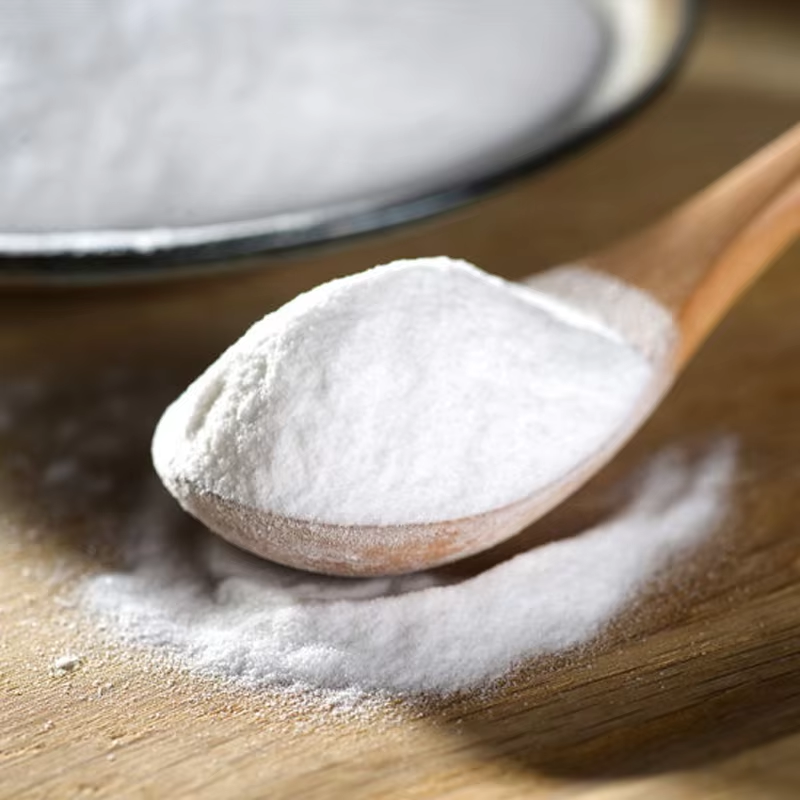
Ammonium Bicarbonate vs. Sodium Bicarbonate
- Ammonium bicarbonate leaves no salty residue.
- Sodium bicarbonate affects flavor if not neutralized.
- Sodium bicarbonate is better for moist products, while ammonium bicarbonate excels in dry, thin products.
Ammonium Bicarbonate vs. Baking Powder
- Baking powder contains starch and acids, leaving residues after baking.
- Ammonium bicarbonate decomposes completely.
- Baking powder works in cakes; ammonium bicarbonate works in biscuits and crackers.
Ammonium Bicarbonate vs. Yeast
- Yeast is biological and requires fermentation time.
- Ammonium bicarbonate is chemical and works instantly.
- Yeast creates soft, airy textures, while ammonium bicarbonate makes crisp, light textures.
Understanding these distinctions helps manufacturers avoid formulation errors and choose the ideal leavening system for each product line.
Industrial Considerations for Large-Scale Use
If your facility produces thousands of kilograms of baked goods daily, a few operational points can significantly enhance results.
1. Accurate Dosage Control
Because ammonium bicarbonate decomposes rapidly, small dosage changes can produce noticeable texture differences.
2. Uniform Dispersion in Dough
Pre-mixing with dry ingredients ensures even distribution.
3. Temperature Monitoring in Baking Tunnels
Incomplete decomposition causes ammonia odors. Consistent heat avoids this.
4. Efficient Ventilation Systems
Proper exhaust ensures full gas release during baking.
5. Integration with Other Leavening Agents
Many factories use ammonium bicarbonate alongside sodium bicarbonate for balanced lift and texture.
Through our collaborations, we have seen that factories achieving precise control in these areas consistently outperform competitors in product quality.
Procurement Insights for Factory Purchasing Managers
Purchasing ammonium bicarbonate for confectionery use is more complex than simply ordering a leavening agent. Managers must evaluate supplier reliability and material specifications.
What to Consider When Buying
- Certificate of food-grade compliance
- Purity levels (purity above 99% preferred)
- Particle size options
- Moisture content
- Packaging type
- Stability during transport
- Supplier reputation
- Cost consistency
At MT Royal, we’ve noticed that factories sourcing from inconsistent suppliers encounter issues like production waste, rejected batches, and flavor problems. Reliable supply chain partners reduce these risks and provide stable quality throughout the year.
Frequently Asked Questions from Factory Managers
1. Can ammonium bicarbonate be used in all confectionery?
It works best in low-moisture, thin products such as biscuits, crackers, and wafers.
2. Will it leave any ammonia smell?
If baked properly with adequate heat, no ammonia remains.
3. How much should be added to dough?
Dosage varies by formulation, but typically ranges between 0.2–1.0% of flour weight.
4. Is it safe for food use?
Yes, food-grade ammonium bicarbonate complies with global safety standards when sourced from certified suppliers.
5. How should it be stored?
In airtight packaging, away from heat and moisture.
6. Does it reduce production costs?
Its strong leavening properties can reduce overall ingredient usage, improving cost-efficiency.
7. Can it be used with other leavening agents?
Yes, many industrial formulations combine it with sodium bicarbonate.
8. What happens if the product is thick?
Thicker products may trap ammonia, affecting flavor. It is most effective for thin baked goods.
These questions reflect real concerns we have encountered during our work with food manufacturers. Providing accurate answers ensures better production outcomes.
How MT Royal Supports Industrial Confectionery Manufacturers
Factories rely on MT Royal not only for supplying raw materials but also for technical guidance and sourcing reliability. Because we collaborate with a wide range of manufacturing plants, we understand the recurring challenges in large-scale baking.
We supply food-grade ammonium bicarbonate from reputable producers, ensuring:
- consistent purity
- stable gas release behavior
- optimized particle sizes
- competitive pricing
- reliable logistics
The goal is to help your production team maintain consistency, reduce waste, and create confectionery products with superior texture and crispness.
Our approach is consultative rather than promotional. We focus on understanding your formulation challenges, process limitations, and desired product characteristics. This enables us to recommend the right grade and packaging format for long-term efficiency.
A Final Thought That Stays With the Reader
Every successful confectionery brand is built on attention to detail—texture, aroma, crispiness, color, and uniformity. Ammonium bicarbonate is a small ingredient with an outsized impact on these characteristics. When chosen wisely and supplied consistently, it becomes a silent driver of product excellence.
Factories that invest in reliable raw materials don’t just produce better confectionery; they build a reputation for quality that strengthens their position in a competitive market. With the right knowledge and the right supplier, your production line can achieve efficiency, consistency, and a final product that consumers trust.



No comment