

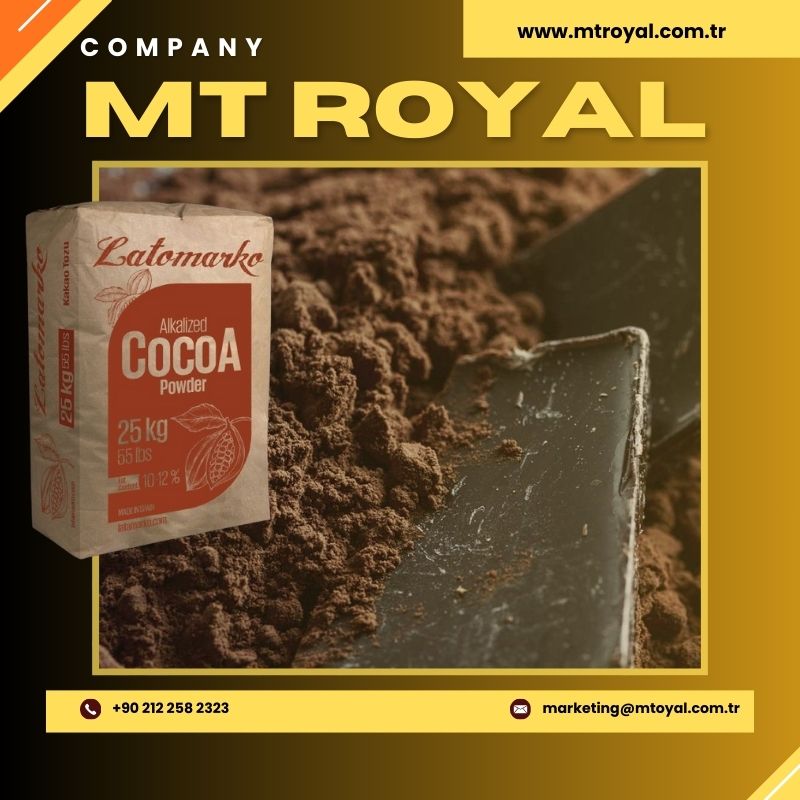
When most production teams think of cocoa powder, they think of baked goods or candy. But in modern dairy, ice cream, and beverage manufacturing, alkalized cocoa powder plays a far more strategic role. Whether you’re fine‑tuning a creamy chocolate milk base, optimizing a high‑capacity ice cream line, or engineering a stable flavored beverage blend, the choice and performance of cocoa powder can significantly influence product quality, process efficiency, and overall yield.
As manufacturing professionals, you understand that ingredients aren’t just line items on a bill of materials—they are process inputs with functional profiles that affect:
- Rheology and texture
- Thermal stability
- Solubility and dispersion
- Flavor consistency
- Shelf life and microbiological resilience
In our experience supplying manufacturing facilities across dairy and beverage sectors, we’ve seen alkalized cocoa powder evolve from a commodity ingredient into a performance driver for high‑volume production. This guide explores why that evolution matters, how to make informed procurement decisions, and ways to align production realities with formulation goals.
What Is Alkalized Cocoa Powder — A Functional Overview
Before we dive into applications, it’s essential to understand what alkalized cocoa powder is and how it differs from natural cocoa.
Alkalization—also known as Dutch processing—involves treating cocoa solids with alkaline agents such as potassium carbonate or sodium carbonate. The goal is not simply color enhancement. It’s functional:
- It reduces acidity, smoothing bitterness.
- It improves solubility and dispersibility.
- It imparts a richer, more stable color.
- It affects particle surface chemistry.
These changes make alkalized cocoa powder particularly suited to liquid systems like dairy beverages and ice creams, where dispersion and flavor uniformity are critical to sensory quality and process stability.
In contrast, natural cocoa (un‑alkalized) retains a more acidic profile, which may be beneficial in some cookie or cake formulations, but rarely delivers the stability required for fluid matrices at scale.
Unique Benefits in Dairy Manufacturing
The dairy industry—ranging from chocolate milk to flavored yogurts—faces specific challenges. High‑speed mixers, pasteurization, and cold storage all demand ingredients that reliably deliver:
- Consistent color
- Stable flavor over time
- Controlled interaction with proteins and stabilizers
Flavor and Acidity Balance
For drinkable dairy products, flavor stability is paramount. Alkalized cocoa powder’s muted acidity makes it easier to match flavor profiles across batches. This is not just about taste—it’s about predictability. When acidity fluctuates, formula adjustments often spill over into costly rework cycles at the pilot line.
In contrast with natural cocoa, which can present a pH in the acidic range (around 5‑6), alkalized versions usually sit higher (often between 6.5 and 8.0 depending on grade). For beverage and dairy technicians, this translates to:
- Better compatibility with milk proteins
- Decreased risk of destabilizing casein micelles
- Cleaner flavor integration
Solubility — A Key Production Parameter
Dispersion equipment in dairy lines works hard. Poor solubility can result in clumping, increased mixing time, and inconsistent mouthfeel—especially at high throughput. The surface chemistry of alkalized cocoa typically enhances wetting and dispersion, reducing downtime and improving cycle efficiency on high‑speed mixers.
Thermal Behavior With Pasteurization
Pasteurization introduces heat that can alter dairy ingredient interactions. Alkalized cocoa’s stability in these environments reduces phase separation and supports uniform viscosity profiles post‑thermal treatment.
When dairy teams partner with a supplier that prioritizes functional metrics—not just commodity specs—they avoid the inefficiency of reactive troubleshooting and instead plan proactively for process integration.

Alkalized Cocoa Powder in Ice Cream — Function Over Form
Ice cream manufacturing is a perfect storm of physics and flavor. Here, ingredient functionality determines:
- Overrun control
- Ice crystal size
- Flavor intensity
- Heat shock resistance
Alkalized cocoa powder plays into each of these.
Texture and Ice Crystal Control
Ice cream texture is largely a function of ice crystal formation and stabilization. Flavors with cocoa introduce particulates into the mix. If those particles are uneven or poorly wetting, ice crystal size distribution can widen, resulting in a less smooth product and greater risk of heat shock recrystallization.
The surface properties of alkalized cocoa powder encourage:
- Uniform dispersion in emulsions
- Finer particle suspension
- More predictable cryo‑behavior
This means better mouthfeel and extended shelf life in retail conditions.
Flavor and Color Consistency
Consumers expect reliable sensory experiences. The dark, rich color associated with chocolate ice cream comes not just from pigment, but from consistent alkalization across lots. This is where controlled pH and standardized color metrics—rather than subjective labels like “dark” or “premium”—matter.
Interactions With Stabilizers and Emulsifiers
Ice cream formulas often include gums, proteins, and emulsifiers to regulate viscosity and melting profiles. Alkalized cocoa powder’s functional surface chemistry affects:
- Hydration rates
- Viscosity adjustments
- Emulsion stability
Aligning these interactions with production line expectations requires careful selection and validation of ingredient performance.
Comparing Cocoa Powder Types — Functional vs. Commodity Grades
Here is a practical way to think about cocoa powder options:
| Attribute | Commodity Grade | Performance Grade (Industrial) |
|---|---|---|
| Functional Data | Minimal | Detailed (pH, PSD, solubility) |
| Batch Consistency | Variable | Tight tolerances |
| Documentation | Basic | Comprehensive CoA & traceability |
| Process Suitability | Limited | Engineered for beverage/dairy |
| Risk of Rework | Higher | Lower |
| Supplier Support | Transactional | Collaborative |
In industrial environments, the cost of downtime, rework, or product variation far outweighs a modest price difference at the raw material level.
Common Pitfalls in Industrial Procurement — Avoiding Hidden Costs
It’s tempting to source on price or superficial specs. But some pitfalls can impose substantial indirect costs:
1. Relying on Subjective Descriptors
Terms like “premium dark” or “high flavor” mean different things across suppliers. Without numeric specifications, you can’t predict how the powder will behave in your process.
2. Failing to Validate on Process Conditions
Lab analysis can mislead if it isn’t paired with pilot or full‑scale evaluation. Temperature, shear, and shear duration on your line interact with cocoa functionality in unique ways.
3. Ignoring Seasonal Variability
Cocoa bean origin and processing conditions vary. Without performance data over time, you can be caught by surprise when quality deviates slightly—but enough to affect product attributes.
Manufacturing teams that invest in robust specification frameworks reduce these risks and avoid reactive troubleshooting.
Actionable Advice for Production Managers
Here are steps seasoned industrial teams follow:
Step‑by‑Step Enhanced Validation
- Define Functional Metrics First
Establish pH, PSD, solubility, moisture, and color parameters based on your process requirements. - Request Functional Data from Suppliers
Don’t accept basic ingredient sheets; ask for full analytical profiles. - Pilot Test Under Real Operating Conditions
Lab results matter, but real mixers, pasteurizers, homogenizers, and cooling tunnels reveal performance behavior. - Collect Cross‑Lot Data
Validate performance across multiple batches to understand variability trends. - Adjust Process Parameters Once, Not Every Run
Stable ingredients should reduce the need for constant recipe tweaks.
Real Industry Examples — What Happens When It Works
Case: Dairy Cocoa Beverage Line
A large dairy producer was struggling with settling and inconsistent flavor in their cocoa beverage base. After switching to a higher‑performance alkalized cocoa powder with tighter solubility and controlled pH specifications, the manufacturer saw:
- Reduced mixing time
- Stable suspension in cold storage
- More consistent flavor across shifts
The result? Less product rejection and smoother quality audits.
Case: Ice Cream Manufacturer
An industrial ice cream plant found that ice crystal size varied between batches, affecting texture. By moving to an alkalized cocoa powder with a refined particle distribution and improved surface wetting, the plant achieved:
- More consistent overrun
- Improved mouthfeel
- Better thermal stability (fewer heat shock effects)
The Role of Suppliers — Beyond Just Selling Ingredients
A reliable supplier does more than ship product:
- Provides data you can trust
- Understands industrial process requirements
- Helps align specifications with performance expectations
- Offers traceability and support for audits
At MT Royal, we supply manufacturers with a comprehensive range of brands, ensuring competitive pricing without compromising on quality. We’ve worked with production facilities across dairy, beverage, and frozen dessert sectors and understand that ingredients must function, not just arrive.
Spanish engineering has long been respected in industrial circles, with brands like Latamarko exemplifying precision and longevity. Premium options from European suppliers often deliver tighter control over functional parameters—a difference you feel not only on the line, but in the final product.
Frequently Asked Questions from Industrial Buyers
Q: Is alkalized cocoa powder always better for dairy and beverages?
A: Not always. It depends on the process and sensory goals. But for many applications, especially fluid systems where solubility and acidity influence stability, alkalized varieties offer functional advantages.
Q: Should we rely on color grade descriptors?
A: Color descriptors are a start, but they must be backed by objective metrics and aligned with your finished product goals.
Q: How often should we revalidate supplier performance?
A: Ideally quarterly and after any process adjustments or supplier changes.
Q: Can different cocoa origins affect performance?
A: Yes. Cocoa bean origin affects flavor precursors and particle behavior. Premium sourcing with performance data helps mitigate variability.
Final Thought — Turning Raw Materials into Production Assets
For manufacturers, ingredients are more than commodities; they are process inputs that can accelerate reliability or introduce variability. By understanding how alkalized cocoa powder functions in dairy, ice cream, and beverage applications, you gain an advantage that goes beyond flavor and color — into predictable quality, efficient processes, and fewer production surprises.
Ask your suppliers better questions. Specify performance, not promises. And imagine a production line where every batch behaves as expected — not in theory, but every shift, every run.



No comment