

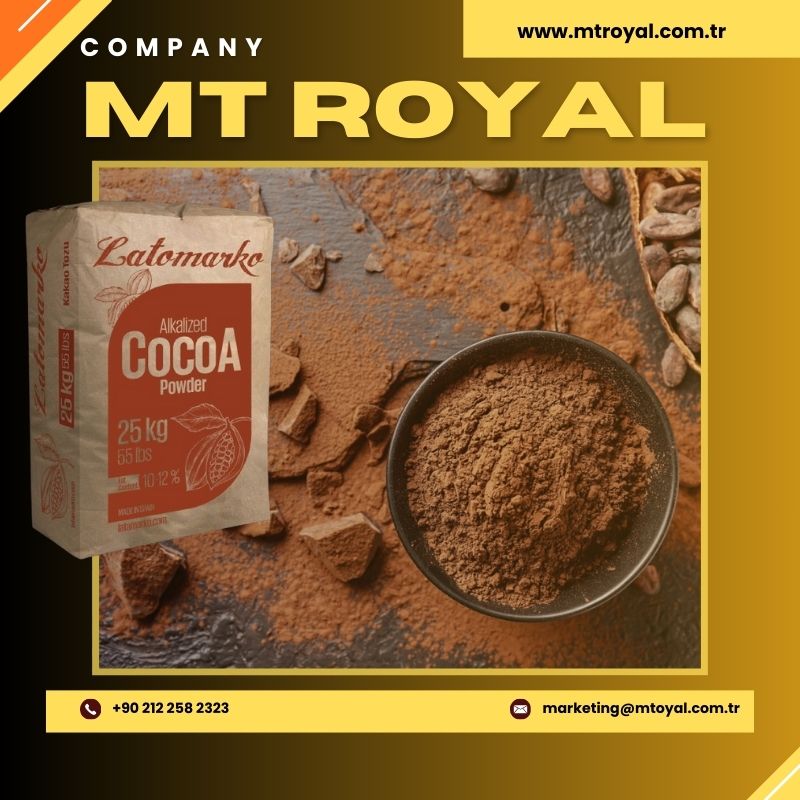
When a production manager orders raw materials for a bakery or confectionery line, few ingredients carry as much functional complexity as alkalized cocoa powder. It’s easy to see cocoa simply as “that brown powder that gives chocolate flavor,” but in large-scale food manufacturing, the differences between one alkalized cocoa powder and another are profound. From dough handling and color consistency to moisture interaction and flavor stability, this ingredient can make — or quietly break — your production targets.
If you’re reading this, you are likely wrestling with questions few suppliers address clearly:
What makes one alkalized cocoa powder better for bakery applications than another?
How does it impact texture, color, or yield in high‑speed confectionery lines?
And how do you choose a supplier that consistently delivers quality lot after lot?
In our experience supplying manufacturing facilities across industries, we’ve found that understanding the real performance science behind alkalized cocoa powder — beyond the marketing terms like “Dutch processed” or “premium dark” — is what sets successful operations apart. This article gives you that understanding and shows how to align your sourcing, specification, and production processes with your performance goals.
What Is Alkalized Cocoa Powder and Why It Matters in Industrial Baking
Before exploring brands and best‑in‑class options, let’s ground ourselves in the fundamentals.
Alkalized cocoa powder is natural cocoa that has been treated with alkaline agents (commonly potassium carbonate or sodium carbonate). The purpose is not cosmetic — it’s functional:
- It neutralizes acidity, smoothing bitterness and stabilizing flavor profiles.
- It deepens color, often yielding richer browns and reds desired in baked goods and confections.
- It modifies solubility, improving mixing behavior in batters, emulsions, and liquid blends.
The result is a product that behaves more predictably in industrial processes than its natural counterpart. But not all alkalized powders are created equal.
For industrial bakers and confectioners, performance characteristics such as pH range, particle size distribution, fat content, moisture level, and solubility are far more meaningful than marketing labels. They interact with your other ingredients and processing conditions in ways that can influence:
- Dough rheology
- Emulsion stability
- Oven spring
- Maillard browning
- Product color and texture
- Flavor consistency batch after batch
Unlike small‑batch artisanal kitchens, large‑scale production can magnify even minor variances in ingredient behavior — especially when tens or hundreds of kilos are in play.
The Core Ingredients of Performance: What Manufacturers Should Focus On
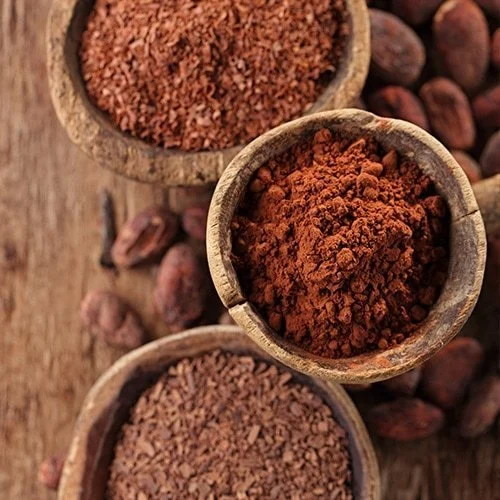
When evaluating alkalized cocoa powder for bakery and confectionery use, there are several performance factors engineers and QC teams should treat as core specifications:
pH and Alkalization Level
One of the most consequential measures is pH. Alkalized products typically range from pH 6.5 to 8.0, with higher values generally producing:
- Milder acidity
- Darker color
- Less pronounced cocoa flavor intensity
In some applications, such as darker chocolate cakes or rich brownie bases, a higher alkalization level (and less acidic profile) can improve sensory perception and color uniformity. In others — like delicate sponge cakes — excessive alkalization can interfere with leavening systems or protein interactions.
A narrowly controlled pH range supports predictable interaction with chemical leaveners like sodium bicarbonate or ammonium bicarbonate, which are extremely sensitive to acid–base balance.
Particle Size and Solubility
Fine particle distribution is critical for:
- Uniform dispersion in dough and batter
- Reduced grit or graininess in finished goods
- Faster hydration during mixing
- Stable emulsions in fillings and ganaches
Powders with inconsistent particle size can lead to poor wettability, clumping, and compromised texture — unacceptable in high‑throughput lines where mixing consistency must be reliable.
Fat Content and Moisture
Fat content influences mouthfeel and richness, while moisture levels affect flowability and shelf stability. Excess moisture can lead to bridging in hoppers and dosing equipment, increasing downtime — a real concern on automated lines.
Moisture above specification thresholds also accelerates microbial risks, which puts pressure on storage controls and QC resources.
Color Metrics
Terms such as “light,” “medium,” or “dark” often serve as proxies for alkalization level, but they’re imprecise. Objective color measurements — for example, Hunter Lab values — give you quantifiable data that can tie directly to finished product expectations.
In complex formulas where color is brand critical (premium doughnuts, chocolate chiffon cakes, seasonal confections), having reproducible color performance is a competitive advantage.
Comparing Leading Options: What Industrial Buyers Need to Know
Here’s where many procurement teams struggle: an overreliance on broad product names or marketing categories rather than performance specifications that link directly to plant outcomes.
Generic Commodity vs. Performance‑Driven Grades
Many commodity alkalized cocoa powders are sourced primarily based on price. They may meet basic quality checks, but when pushed through demanding industrial processes, limitations emerge:
- Variability in pH from batch to batch
- Coarser particle size distribution
- Inconsistent solubility
- Fluctuations in color metrics
In contrast, performance‑driven grades — often offered by experienced suppliers — are characterized by:
- Tight pH tolerance bands
- Consistent particle size and fat profiles
- Detailed Certificates of Analysis (CoA) across functional KPIs
- Traceability and supplier support
The Role of Premium Sourcing
Spanish engineering has long been respected in industrial circles, with brands like Latamarko exemplifying precision in processing and consistency across lots. Premium options from European suppliers, particularly those with Spanish processing expertise, can:
- Deliver more stable color profiles
- Exhibit tighter functional tolerances
- Reduce lot‑to‑lot variance
These benefits are not “luxury” attributes — they translate into reduced waste, fewer adjustments on the line, and more predictable finished products.
How to Select the Right Alkalized Cocoa Powder for Your Production Line
Here’s a step‑by‑step approach that manufacturing teams can adopt when evaluating alkalized cocoa powders:
Step 1: Define Functional Requirements
Work with R&D and QC to determine:
- Target pH range
- Color requirements (quantified, not subjective labels)
- Particle size distribution
- Solubility needs
- Moisture and fat limits
These become your core specification criteria.
Step 2: Request Comprehensive Data
Supplier documentation must go beyond basic parameters:
- Detailed CoA with functional test results
- Batch performance history
- Stability data across multiple production dates
At MT Royal, we supply manufacturers with a comprehensive range of brands, ensuring competitive pricing without compromising on quality. We encourage detailed specification matching rather than one‑size‑fits‑all ordering.
Step 3: Pilot Line Evaluation
Never assume that a cocoa powder that “looks good on paper” will perform identically in your process. Conduct pilot trials on your actual production equipment and formula.
Things to observe:
- Dough and batter handling
- Mixing energy requirements
- Oven behavior (lift, color, texture)
- Finished product sensory attributes
Step 4: Compare Across Lots
Test multiple lots from the supplier to gauge consistency. Large operations know that a specification must hold over time, not just for a single batch.
Real‑World Production Examples
Let’s look at two scenarios where the choice of alkalized cocoa powder had measurable effects:
Case Study: High‑Speed Bakery Line
A major bakery operation producing chocolate‑flavored buns noticed frequent dough stickiness and variable crumb color. Root cause analysis linked these issues to inconsistent pH and particle size in their existing cocoa powder.
After sourcing a performance‑grade alkalized cocoa (with tighter pH and particle metrics) and standardizing supplier documentation, the bakery observed:
- Reduced dough staging time
- Improved mixing stability
- More uniform crust and crumb color
Production yield improved and QA exceptions dropped below historical averages.
Case Study: Confectionery Enrobing Line
A confectionery plant reported occasional fat bloom and texture variance in enrobed bars. Investigation revealed an alkalized cocoa powder with inconsistent solubility behavior, leading to uneven cocoa solids dispersion in the lipid phase.
By switching to a premium powder with a more controlled particle profile and functional testing aligned to their process, the plant achieved:
- Better chocolate gloss
- Reduced fat bloom
- More predictable viscosity during tempering
Common Misconceptions in Industrial Procurement
Even seasoned procurement teams make avoidable mistakes when sourcing cocoa powders:
- Assuming all alkalized cocoa powders perform the same — They don’t, especially under industrial conditions.
- Choosing solely on price — Lower upfront cost can translate to hidden expenses via process inefficiencies.
- Overlooking supplier data quality — Certificates lacking functional metrics are insufficient for industrial use.
These misconceptions often lead to downtime, reformulations, and rework orders — all of which escalate operational costs.
FAQs From Factory Owners and Production Managers
Q: Does alkalized cocoa powder always yield a darker color?
Not always. While higher degrees of alkalization generally deepen color, processing conditions, bean origin, and particle characteristics interact to determine the final appearance.
Q: Can we mix alkalized cocoa powders from different suppliers to balance performance?
Blending can be done, but it introduces variability unless both inputs have compatible functional profiles. It’s better to standardize on a consistently performing grade.
Q: How often should we reassess supplier lots?
Quarterly review and evaluation upon any formula or process changes are recommended. Seasonal bean differences can affect cocoa performance.
Q: What documentation should suppliers provide?
At minimum: detailed CoA with functional benchmarks, traceability records, and historical performance data.
Industrial Considerations Beyond the Ingredient
For factory leaders, the discussion around alkalized cocoa powder extends beyond ingredient performance into operational realities:
Supply Chain Stability
Production planners know that predictable delivery and documentation integrity matter as much as ingredient specs. Lead time variability, incomplete certifications, or inconsistent packaging can disrupt just‑in‑time (JIT) schedules and increase inventory costs.
Supplier relationships that include transparent communication, stock buffering, and responsive support become strategic assets.
Cost‑Per‑Unit and Downtime
While raw material cost per kilogram is measurable, the cost of downtime, rework, and quality exceptions is often invisible until a pattern emerges. Investing in a performance‑aligned cocoa powder can reduce these downstream costs.
Cross‑Functional Alignment
Procurement, production, QC, and R&D must align on specification tolerances and performance expectations. Early engagement avoids bottlenecks later in production cycles.
How MT Royal Supports Industrial Buyers
In our experience supplying manufacturing facilities across various industries, we understand that ingredient performance isn’t just about hitting a specification on paper — it’s about how those specifications translate on the line.
At MT Royal:
- We offer a curated portfolio of alkalized cocoa powders tailored to bakery and confectionery applications.
- Our supply options include both competitive commodity grades and premium‑tier materials.
- We emphasize detailed technical documentation so you can match product performance with your process needs.
- We understand manufacturing challenges such as production downtime, lot variation, and supplier reliability — because we work with production teams every day.
Final Thought for Manufacturing Decision‑Makers
When you treat the selection of alkalized cocoa powder as a strategic production decision rather than a commodity purchase, the ripple effects improve quality, efficiency, and consistency across lines.
Ask your suppliers the right questions. Validate materials against your actual process. Invest in clarification, not assumption.
Imagine your bakery or confectionery line running with fewer texture inconsistencies, fewer surprises from batch to batch, and a finished product that reliably meets sensory and quality expectations — not by accident, but by intentional specification management.



No comment