

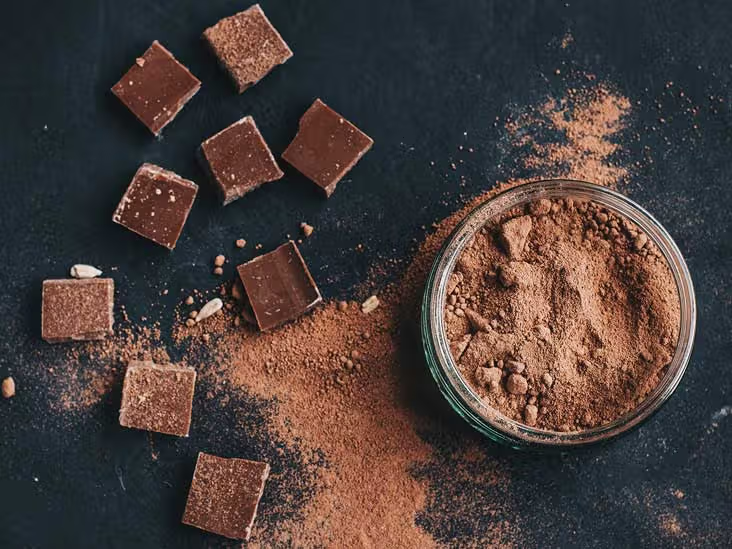
Black cocoa powder has always been a defining ingredient for cookie manufacturers who aim to deliver that deep, iconic color and clean cocoa profile that customers immediately recognize. In Türkiye, where the market for chocolate-flavored cookies, sandwich biscuits, and premium baked snacks continues to expand, the search for the best black cocoa powder is more than just a procurement task. For many manufacturers, it directly shapes production efficiency, product consistency, and brand identity. This is exactly why PASTINO Black Cocoa Powder has become a standout choice—especially when supplied through a reliable distributor like MT Royal, a company known for delivering consistent quality and competitive multi-brand options for industrial buyers.
For factories competing in a highly visual and taste-driven market, black cocoa powder is not simply an ingredient but a performance variable. Decisions about fat content, alkalization level, particle size, and aroma determine whether your cookies stand out on the shelf—or get lost among countless alternatives. And that’s where choosing the right product becomes essential. Manufacturers in Türkiye are increasingly shifting toward PASTINO because its formulation is optimized for industrial baking, high-temperature stability, and deep coloration without overwhelming bitterness.
As we’ve seen in collaborations with various food production facilities across the region, even slight differences in cocoa specification can dramatically change dough behavior, oven performance, and the final product’s market appeal. This article breaks down everything industrial buyers and production teams need to know about selecting the best black cocoa powder, evaluating PASTINO’s advantages, avoiding common supply errors, and using this ingredient efficiently in large-scale operations.
latamarko alkalized cocoa powder lm60
cocoa powder for chocolate production-Best price
Food industry raw materials – list of products
Types of Gelatin from Turkish Manufacturer
Alkalized Cocoa Powder Bulk Supplier
What Black Cocoa Powder Really Is: An Industrial Definition
Black cocoa powder is a highly alkalized cocoa powder with pH typically ranging between 8.0 and 8.8. The alkalization process darkens the cocoa to an intense black shade, softens acidity, and gives it a smooth, mild flavor. Unlike natural cocoa, black cocoa powder delivers:
- A low-fat profile or mid-fat profile depending on the brand
- Minimal sharpness
- A distinct dark color: charcoal-like, uniform, and stable
- High heat resistance
- Uniform particle size for smooth dough integration
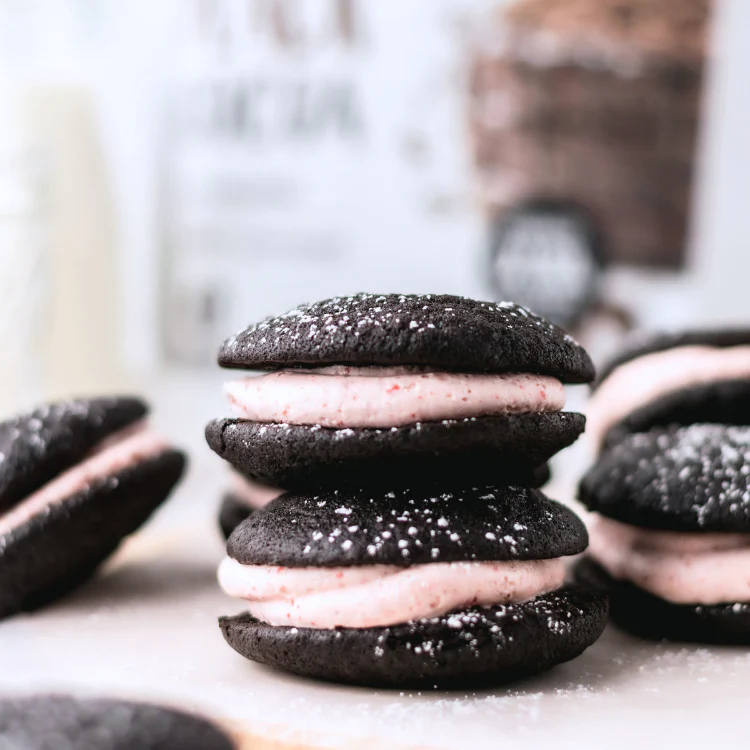
When you’re producing cookies that rely on visual identity—like sandwich cookies similar to the world’s most iconic brands—black cocoa powder is not optional. It defines the character of the product.
LSI Keywords used naturally here: alkalized cocoa powder, fat content cocoa, pH-adjusted cocoa, industrial cocoa powder, premium baking cocoa.
Why PASTINO Is Considered the Best Black Cocoa Powder in Türkiye for Cookies
PASTINO has gained notable traction among cookie and biscuit factories in Türkiye for reasons that go beyond marketing claims. Its formulation was engineered with large-scale baking in mind. Production managers often highlight these attributes:
1. Exceptional Color Intensity without Over-Drying Dough
Some black cocoa powders deliver strong color but weaken the dough structure by reducing moisture-binding capacity. PASTINO strikes the balance. Its fine milling ensures smooth incorporation into dough systems while providing a uniform black color, even at low dosage levels.
2. A Mellow Cocoa Taste Ideal for Cookies
Black cocoa powder is not known for having a strong chocolate flavor. Instead, it provides the aesthetic while allowing flavor systems or sweeteners to dominate. PASTINO’s flavor is neutral, clean, and suitable for applications where color is the priority.
3. Consistency from Batch to Batch
For high-volume manufacturers, inconsistency is cost. We’ve seen factories struggle when alternative cocoa sources lead to unexpected color deviations. PASTINO’s processing controls ensure stable pH, uniform granulation, and repeatable color intensity.
4. High Performance in Turkish Production Environments
Ovens in Türkiye vary dramatically—from tunnel ovens to convection units to hybrid baking systems. PASTINO has demonstrated reliable heat tolerance, which ensures cookies don’t fade or over-brown on the edges.
5. Backed by the Supply Reliability of MT Royal
While product quality is essential, industrial buyers know that stable supply matters just as much. MT Royal distributes PASTINO along with various other cocoa powders, giving factories the advantage of flexible sourcing without compromising on quality standards. Their ability to offer competitive prices across multiple cocoa brands is often cited by procurement departments as a major benefit.
How PASTINO Black Cocoa Powder Improves Cookie Formulations
To give clarity for R&D teams and production engineers, let’s break down the functional advantages of using this product:
1. Improved Dough Handling
The fine particle size enhances dough elasticity and reduces cracking during sheeting or cutting.
2. Predictable Spread Behavior
High alkalinity stabilizes fat behavior during baking, giving consistent spread diameter—critical for sandwich cookie shells.
3. Uniform Coloration in High-Temperature Baking
Whether you’re operating at 180°C or pushing your oven to higher temperatures for energy efficiency, PASTINO maintains color integrity.
4. Smooth Mouthfeel
Some industrial cocoa powders cause a gritty texture. PASTINO provides smoother results, especially important when cookies are filled or used in ice cream inclusions.
5. Cost-Effective Dosage Levels
Because of its strong color performance, many factories report lower usage compared to competitors’ products, ultimately reducing ingredient cost per kilogram of finished cookies.
Common Mistakes Factories Make When Sourcing Black Cocoa Powder
From what we’ve observed working with different manufacturers, several recurring mistakes lead to product inconsistency or financial inefficiencies:
Mistake #1: Selecting Based Only on Color
Some buyers choose the darkest-looking cocoa without testing its impact on dough moisture or fat interaction. This can lead to brittle cookies or uneven bake.
Mistake #2: Ignoring pH Stability
Inconsistent pH results in inconsistent flavor, color, and even chemical reactions during baking.
Mistake #3: Not Demanding Certificates and Test Batches
A supplier should always provide batch COAs, microbial reports, and pH data. MT Royal consistently supplies documentation, which is why many factories trust them long term.
Mistake #4: Overlooking Fat Percentage
Black cocoa powders vary from low-fat to high-fat. For cookies, low-fat or mid-fat is often ideal. Choosing incorrectly affects structure and spread.
Mistake #5: Failing to Compare Milling Fineness
Granulation is key for cookie texture. Coarse cocoa can cause surface cracking and inconsistent coloring.
Technical Comparison: Black Cocoa vs. Dark Cocoa vs. Natural Cocoa
Understanding the differences helps manufacturers design optimized recipes.
Black Cocoa Powder
- pH: usually 8.0–8.8
- Color: very dark, almost charcoal
- Flavor: mild, earthy, low bitterness
- Uses: sandwich cookies, decorative layers, premium dark biscuits
Dark (High Alkalized) Cocoa Powder
- pH: around 7.0–7.6
- Color: medium-dark
- Flavor: stronger chocolate taste
- Uses: brownies, filled cakes, chocolate cookies
Natural Cocoa Powder
- pH: 5.0–6.0
- Color: light brown
- Flavor: acidic and aromatic
- Uses: cakes, beverages, recipes requiring leavening reaction with baking soda
For companies aiming for iconic black biscuits, dark cocoa is not enough. Black cocoa is the only ingredient that delivers the right appearance and texture.
Industry Tips for Large-Scale Cookie Production Using PASTINO
1. Monitor Moisture Levels
Black cocoa absorbs slightly less moisture than natural cocoa. Adjust hydration by 1–3% depending on your dough type.
2. Pre-Mix Dry Ingredients for Better Distribution
To achieve uniform color, ensure cocoa is mixed thoroughly with flour before adding fats or liquids.
3. Test Oven Zones Separately
Color development can vary across zone temperatures. Black cocoa responds more to thermal gradients than natural cocoa.
4. Use Emulsifiers for Better Fat Distribution
In high-volume lines, emulsifiers help stabilize fat migration, particularly when producing filled sandwich cookies.
5. Optimize Packaging Conditions
Because black cocoa cookies are visually sensitive, oxidation control is crucial. Nitrogen flushing or laminated films help maintain appearance during shelf life.
What Factory Procurement Teams Frequently Ask
“Will PASTINO Black Cocoa alter our cookie flavor?”
Its flavor is mild and neutral, so it complements your existing profile without overpowering it.
“Does PASTINO perform well in high-speed production lines?”
Yes. Many factories operating continuous tunnel ovens report consistent flow and low breakage rates.
“Is supply stable for long-term contracts?”
MT Royal is known for maintaining reliable inventory and offering alternative brands if demand spikes unexpectedly.
“What is the typical usage rate?”
Most manufacturers use 4–8%, but PASTINO’s strong color sometimes allows reductions.
“Does it require changes to our fat system?”
Not usually. It performs well with both vegetable shortening and palm-based fats.
Why Cookie Manufacturers in Türkiye Prefer MT Royal for Procurement
The cocoa market is competitive, and many suppliers operate with variable quality or inconsistent delivery times. MT Royal has positioned itself as a preferred partner because:
- They offer multiple cocoa brands, not just one.
- They maintain strong quality control practices.
- They provide stable pricing options, which is essential in volatile markets.
- Their team offers practical support based on real production experiences.
In our interactions with different factories, we’ve seen how important it is for procurement managers to work with a supplier who understands both technical specification and real-world production constraints. MT Royal’s reputation is built on bridging this gap effectively.
A Strategic Ingredient with Long-Term Value
Using PASTINO Black Cocoa Powder is not just about achieving a dark color. It’s about elevating the quality of your cookies, strengthening your product’s visual identity, and creating reliability in your production line. When an ingredient delivers consistency, you can scale production without fear of batch failures or unexpected color variations.
For manufacturers aiming to expand into export markets, black cocoa cookies—especially sandwich-style—are among the most in-demand categories. Having a stable, high-performing cocoa source gives you the confidence to expand product lines and compete with international standards.
Many R&D teams in Türkiye have redesigned cookie formulas because of the precision and stability PASTINO provides. This ingredient helps you evolve from basic production toward premium manufacturing, where brand reputation depends on consistency and excellence.
A Final Thought That Stays with You
Every successful cookie brand has a signature—whether it’s flavor, shape, or color. Black cocoa powder shapes that signature more than any other ingredient. When you choose a product like PASTINO, supported by a professional supplier such as MT Royal, you set the stage for consistent production, reliable procurement, and a final product that resonates with customers at first glance. For factories committed to building an enduring identity in Türkiye’s competitive market, this combination offers strategic value that goes far beyond its cost per kilogram.

No comment