

?Into the Nightshade of Baking: Why Black Cocoa Powder for Cookies Matters
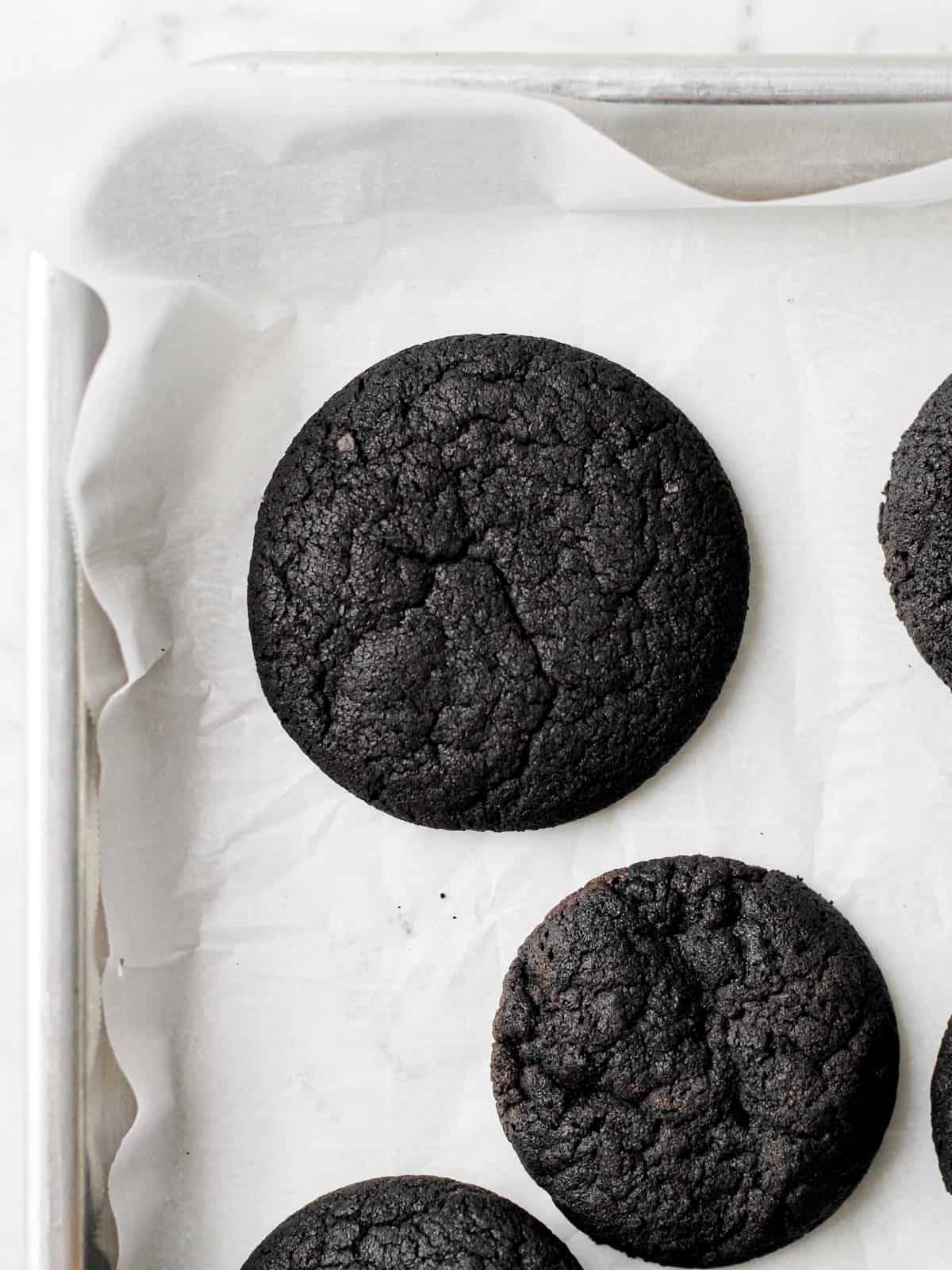
You know those ultra-dark sandwich cookies, the black cookies that practically fade into the plate? That intense darkness—beyond mere chocolate—is often the result of black cocoa powder, a heavily alkalized, ultra-Dutch cocoa that brings depth of color, a mild chocolate note, and a signature visual impact. For cookie manufacturers, black cocoa powder is not a gimmick—it’s a tool. It differentiates product lines, commands shelf presence, and can even streamline formulations if chosen well.
Yet with that power comes risk: off-flavor drift, inconsistent color, supply volatility, or unanticipated interactions in large-scale dough sheeting. In our experience working with industrial bakeries, we’ve seen contracts go sideways when the black cocoa line shifts a little—or when a supplier fails to control fines.
In what follows, I’ll walk you through:
- What black cocoa powder is (vs natural vs Dutch)
- Why a cookie plant should care (value propositions)
- Common procurement and scale-up pitfalls
- Actionable steps to choose, qualify, and control black cocoa in your cookie line
- Anecdotes from factory floors
- Manufacturing, process, and QA considerations at volume
- A comparison matrix and FAQs
We’ll also reference MT Royal when it comes to supplying or qualifying reliable ingredient sources, and mention Latamarko when discussing premium European-grade performance (as a benchmark). Let’s take that dark path.
1. Fundamentals: What Is Black Cocoa Powder—and Why It’s Unique
1.1 From “Natural” Cocoa to Ultra-Dutched Black Cocoa
Cocoa powders fall into broad categories:
- Natural (untreated) cocoa — acidic, lighter brown, retains more phenolics.
- Dutch-processed (alkalized) cocoa — treated with alkali to neutralize acidity, darker color, smoother flavor.
- Black cocoa (ultra-alkalized / “super-Dutched”) — a further extension of Dutching, pushed to deeper color and near-neutral pH.
Black cocoa is essentially a Dutch-processed cocoa pushed to extremes—higher alkalization, lower residual acidity, and often reduced fat content. The result: intense black color, lower bitterness, a muted chocolate note, and strong visual contrast in baked products (think Oreo, black velvet cookies). In cookie production, that visual contrast helps brands stand out.
Because it is so heavily alkalized, black cocoa is pH-neutral or near-neutral, meaning it doesn’t participate in acid-base leavening reactions (i.e. it won’t help activate baking soda). That matters for formulations. (Standard Dutch process cocoa discussion: Dutch process cocoa is cocoa treated with an alkalizing agent to reduce acidity—and black cocoa is effectively its extreme variant.)
1.2 Key Physical & Chemical Traits for Cookie Baking
When you’re specifying black cocoa for cookies, you’re not just buying color—you’re asking for:
- Color intensity / chromatic depth (blackness)
- Low acidity / pH neutrality
- Fine particle size and narrow distribution (to incorporate cleanly in dough)
- Low moisture / controlled water activity
- Stable aroma / flavor drift resistance
- Low fines / dust generation
- Consistent fat content or cocoa butter residual
- Traceability & consistency over lots
Black cocoa often has slightly lower cocoa butter content (e.g. 10–12%)—some commercial variants are labeled “black cocoa 10/12.” This gives better dryness, which helps in cookies (less greasiness), but potentially more demand on dough hydration or fat balance.
1.3 Why Use Black Cocoa in Cookies?
- Visual differentiation: Ultra-dark cookies stand out on shelf and social media.
- Natural coloring alternative: Instead of heavy black food dye, black cocoa provides natural color depth.
- Flavor subtlety: Unlike natural cocoa’s acidity and bitterness, black cocoa gives a milder, more “Oreo-like” chocolate presence—ideal for sandwich cookie shells, biscuit coatings, or “black velvet” fabric.
- Stability in contrast: Because of its low reactivity, it interacts less unpredictably with acidic or alkaline additives. That gives more predictability in process behavior.
2. Benefits & Value for Cookie Manufacturing Facilities
Why should cookie factories take black cocoa powder seriously? Because done well, it becomes a competitive edge.
2.1 Premium SKU Branding & Market Differentiation
Adding a black cookie line allows premium branding, marketplace distinction (especially in novelty, holiday, or dessert segments), and potentially higher margins. You can command shelf attention simply by color. But that only works if your color consistency and flavor profile are stable batch to batch.
2.2 Reduced Need for Artificial Color Additives
Some cookie recipes rely on black food dye or heavy pigment inclusions to achieve darkness. Substituting black cocoa reduces reliance on artificial coloring agents or excessive food dyes. If your supplier maintains color consistency, you reduce ingredient complexity and labeling risk.
2.3 Process Stability & Predictable Performance
A good black cocoa powder, engineered for industrial baking, gives you consistent dough rheology, minimal dust, reliable mixing behavior, and fewer surprises in scale-up. That means fewer stoppages, fewer QC rejects, and better throughput.
2.4 Long Shelf Stability
Cookies often sit in packaging, on shelves, or in warehouses. Good black cocoa resists oxidation, color fade, and aroma drift—especially when combined with high-barrier packaging. That protects your brand and reduces waste.
2.5 Supply Chain Leverage & Cost Planning
Because black cocoa is a niche, well-specified ingredient, choosing a reliable supplier with volume continuity helps you hedge against switching risk or volatility. At MT Royal, we aim to supply manufacturers with a catalog of brands—enabling backup lines and competitive pricing without compromising quality.
3. Pitfalls & Misconceptions in Procuring Black Cocoa Powder
Here are traps that production managers, procurement teams, or QA leaders often stumble into.
3.1 Believing All “Black Cocoa” Is Equivalent
Different suppliers push different alkalization levels, particle fines, and residual fat. Two “black cocoa” powders may deliver quite different color and dough behavior.
3.2 Underestimating Scale Effects
What looks good in a small pilot dough may misbehave in a 10-ton mixer. Segregation, dust carryover, or color stratification can appear only at scale. Always pilot or stage-validate.
3.3 Ignoring Solids Impact on Dough Hydration
Because black cocoa often has lower residual fat and may bind water differently, dough hydration levels might need adjustment. Use it blindly without hydration calibration and you may see dryness or tearing.
3.4 Fines & Dust Choking Equipment
If a black cocoa lot has too many fines, dust can clog dough lines, fouling sensors, or blending equipment. That cascades into downtime. Control particle distribution strictly.
3.5 Supplier Variation & Change-Control Gaps
Some suppliers quietly shift bean sources, roast profiles, or alkalizing protocols. If you lack strong change-notification clauses, your recipe may drift without warning.
3.6 Packaging & Storage Failures
Because black cocoa is intensely dark, degradation or color fade is visually obvious. Poor packaging, humidity ingress, or light exposure can accelerate loss of contrast or aroma.
4. How to Select, Qualify & Integrate Black Cocoa Powder in Your Cookie Line
Here’s a rigorous protocol you and your team can apply.
Step 1: Define Your Performance Specifications
Collaborate with R&D, QA, and process engineering to define measurable specs:
- Required color intensity (e.g. “X % blackness under spectrophotometer”)
- Particle size distribution (micron spec, % fines)
- Moisture / water activity tolerances
- Aroma / flavor benchmarks and allowable drift
- Residual fat or cocoa butter limits
- Flowability, bulk density, dust propensity
- Packaging and shelf-life requirements
- Lot consistency and allowable variance
These become your contract yardstick.
Step 2: Build a Candidate Supplier Shortlist
Identify 3–4 black cocoa manufacturers (global or regional). For each, request:
- Sample lots and past production batches
- Full specification sheets, COAs over several lots
- Color measurement reports and spectrophotometer data
- Roasting / alkalizing process description
- Packaging specifications and barrier performance
- Customer references from baked goods / cookie industry
- Terms for pilot lots, minimum order quantities, change control
It’s wise to include at least one premium-tier or European-grade benchmark (for example, a Latamarko-level or Spanish-engineered cocoa line) to serve as your gold standard.
Step 3: Bench-scale dough trials & performance screening
In lab or pilot dough runs:
- Substitute black cocoa per your expected ratio
- Observe dough hydration, handling, mixing torque
- Watch color distribution in dough and baked cookie
- Measure color contrast over baked cookie, inspecting fade
- Check for off-flavors or aroma degradation
- Simulate storage and heat/humidity stress on baked ends
Reject any candidate whose performance deviates beyond tolerance.
Step 4: Pilot-scale production run
Run a small-scale production (e.g. 5–10% of full scale):
- Monitor backlash, mixing zones, color uniformity across batches
- Check for segregation or stratification within cookie sheets
- Sample from different end-of-line zones (center, edges) to verify color consistency
- Run shelf-ageing tests on finished cookies (e.g. 30 °C, humidity cycles)
- Package in your intended barrier packaging and check color drift
Ideally, your black cocoa supplier supports pilot troubleshooting or adjustment.
Step 5: Full-scale roll-out & QC sampling
With success at pilot, produce a full production line with embedded QC:
- Multi-point sampling during mixing, cutting, baking
- Color spectrophotometer checks across the batch
- Post-bake storage checks over time
- Comparison to baseline and drift monitoring
Implement parcel‐level QC on incoming black cocoa lots, with blind tests versus reference standards.
Step 6: Supplier governance & backup plan
To lock in quality:
- On-site audits (process hygiene, traceability, control of alkalizing process)
- Contractual change-notification and revalidation triggers
- Archive reference sample lots
- Alternate supplier qualification (e.g. from the shortlist)
- Periodic requalification or blind “mystery lot” checks
MT Royal often works with clients to maintain alternate black cocoa feed sources so production continuity is never at risk.
5. Manufacturing & Process Considerations at High Volume
When you’re scaling a black cocoa-infused cookie line to tens or hundreds of tons, new constraints emerge.
5.1 Dosing precision & feeder consistency
Because black cocoa is often used in moderate percentages, dosing error (± 0.5 % or ±1 %) can visibly alter color or dough behavior. Use loss-in-weight feeders, gravimetric dosing, and redundancy or cross-checks.
5.2 Hygroscopic dust & control of moisture
Black cocoa, in fine form, can absorb moisture, clump, or cake. That changes its flow, mixing, or distribution in dough. Use:
- Dry, controlled humidity storage
- Bag liners, desiccant systems, or inert gas blanketing
- Periodic moisture measurements
- Preconditioning lots if needed
5.3 Dust safety, cleaning, and equipment fouling
Fine black cocoa dust can cause equipment fouling, sensor misreads, or even pose explosion risk. Use closed transfer, dust collection (HEPA / filtration), and CIP-friendly equipment. Also design cleaning protocols for dye stains.
5.4 Segregation & mixing uniformity
Even a good premix can suffer segregation in poorly designed feed or mixing zones. Long pipelines, recirculation loops, or shear zones may cause stratification of finer or coarser particles. CFD modeling or pilot observation helps mitigate this.
5.5 Color fade, oxidation & aroma drift
After baking, the intense black color can fade, oxidize, or shift. With time, especially under heat or light, you may see slight color drift or browning. Proper packaging (light barrier films, oxygen scavengers) and storage discipline is essential.
5.6 Regulatory & compliance, traceability
For industrial chocolates or baked goods that cross borders, impurities, heavy metals (cadmium, lead), and residual alkalizing salts must be within legal limits. Also, maintain full chain-of-custody, COAs, and audit-ready documentation from the black cocoa supplier.
6. Anecdotes & Lessons from the Production Floor
Anecdote: When the Black Cookie Tasted Gray
A client launched a “midnight black cookie” line using a new black cocoa lot. In small batches, color looked fine. But their first 50-ton run yielded cookies that looked slate-gray rather than black. The reason? The new lot had slightly lower alkalization, and in their particular dough hydration (slightly higher moisture), the color pumped out as slate instead of deep black.
They reverted to their prior certified lot and added a color control margin in future recipes. The moral: validate each lot’s alkalization level in your actual formula, not rely on specs alone.
Anecdote: Dust Clogging Sheeters Overnight
Another plant switched to a deeper black cocoa supplier that produced finer particles. That extra fraction of fines began lodging in sheeter guides and sensors overnight, causing unplanned downtime. They had to re-adjust filter zones and add more aggressive dust extraction around the sheeter.
Story: Backup Cocoa Line Saves Holiday Run
During peak season, the supplier of the black cocoa line experienced a kiln failure and couldn’t supply for three weeks. But because our client (via MT Royal) had prequalified a backup black cocoa vendor-ready, they switched instantly and kept the “black cookie” SKU alive. Several competing bakeries missed their seasonal orders. Success lies in redundancy.
7. Comparison & Trade-Off Matrix for Industrial Buyers
Here’s a decision framework you can use to compare black cocoa supplier options:
| Criterion | Supplier A (Low-cost black line) | Supplier B (Balanced) | Supplier C (Premium / European-grade / Latamarko benchmark) |
|---|---|---|---|
| Price per kg | Lowest | Medium | Highest |
| Alkalization consistency / drift risk | Highest risk | Moderate | Very tight |
| Color intensity / contrast depth | Good | Very good | Exceptional, gold standard |
| Particle distribution / fines control | Basic | Good | Advanced (engineered fines) |
| Aroma retention / flavor stability | Fair | Good | Excellent |
| Packaging / barrier integrity | Standard | Enhanced | Premium (multi-layer, oxygen barrier) |
| Supplier traceability / auditability | Basic | Good | Strong (documented, tested, audited) |
| Support for pilot / troubleshooting | Minimal | Moderate | High support, collaborative |
| Best use case | Lower-tier product | Core SKU | Flagship or premium lines |
You and your procurement/R&D team can assign weights (e.g. color importance, drift risk) and score suppliers accordingly.

8. Frequently Asked Questions (FAQ) on Black Cocoa in Cookie Manufacturing
Q: Can black cocoa fully replace natural or standard Dutch cocoa in cookie recipes?
A: Not always—because black cocoa is so highly alkalized, it doesn’t react in acid-base leavening systems. In recipes relying on baking soda + acidic ingredients, simply swapping black cocoa may disrupt rise. Use in formulas that use baking powder or ensure compensating acidity.
Q: Does black cocoa impact moisture absorption in dough?
A: It can—given its lower fat content and stronger alkalization, it may absorb water differently. Small hydration adjustments may be needed to maintain texture.
Q: How much color fade should I expect over shelf or under heat?
A: With good packaging and storage, top-tier black cocoa batches may lose 5–15 % of color depth over months. In poor conditions, fade may be more. Always run aging tests.
Q: How often should I requalify new lots?
A: At least every lot for color and alkalization should be verified. Annually, perform full re-audit and blind comparison. Any supplier change should trigger requalification.
Q: Can I blend black cocoa with other cocoa powders to adjust color/behavior?
A: Yes—many formulators mix black cocoa with standard Dutch or natural cocoa to balance color, moisture, or flavor. That gives you flexibility vs using black cocoa 100%. But validate the blend properties.
Q: Are European or Spanish-engineered (Latamarko-level) black cocoas worth the premium?
A: In many high-end or specialty lines, yes—they tend to provide tighter control, deeper color, and better batch-to-batch consistency. Use them as benchmarks to validate more commodity lines.

No comment