

In your role as a factory owner, production manager, plant supervisor or procurement officer in Türkiye, the phrase Cargill cocoa powder supply chain in Turkey should ring a bell—but do you truly understand every step from bean origin to bag arrival at your factory gate? The value here is significant: cocoa powder isn’t simply a commodity you buy once in a while—it’s a precision ingredient, a performance input, a quality lever for confectionery, bakery, coatings, snacks and beyond. Whether you handle large-scale production or niche batches, knowing how that cocoa powder travels, how reliability, traceability and cost-effectiveness come together, gives you real strategic advantage.
In our experience supplying manufacturing facilities through MT Royal, we’ve seen multiple factories struggle or succeed based on their understanding of the chain. If you master this supply chain—not just the price—you position your plant for fewer surprises, better margins, higher quality output. So let’s walk through what makes the Cargill flow in Türkiye—from bean to bin—and how you, as a production decision-maker, can leverage this knowledge.
Definitions & Fundamentals
What exactly is “cocoa powder” in this context?
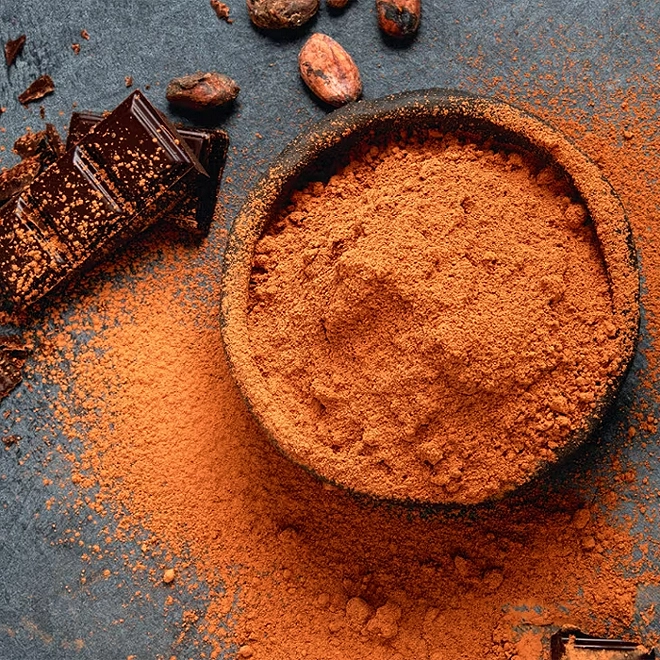
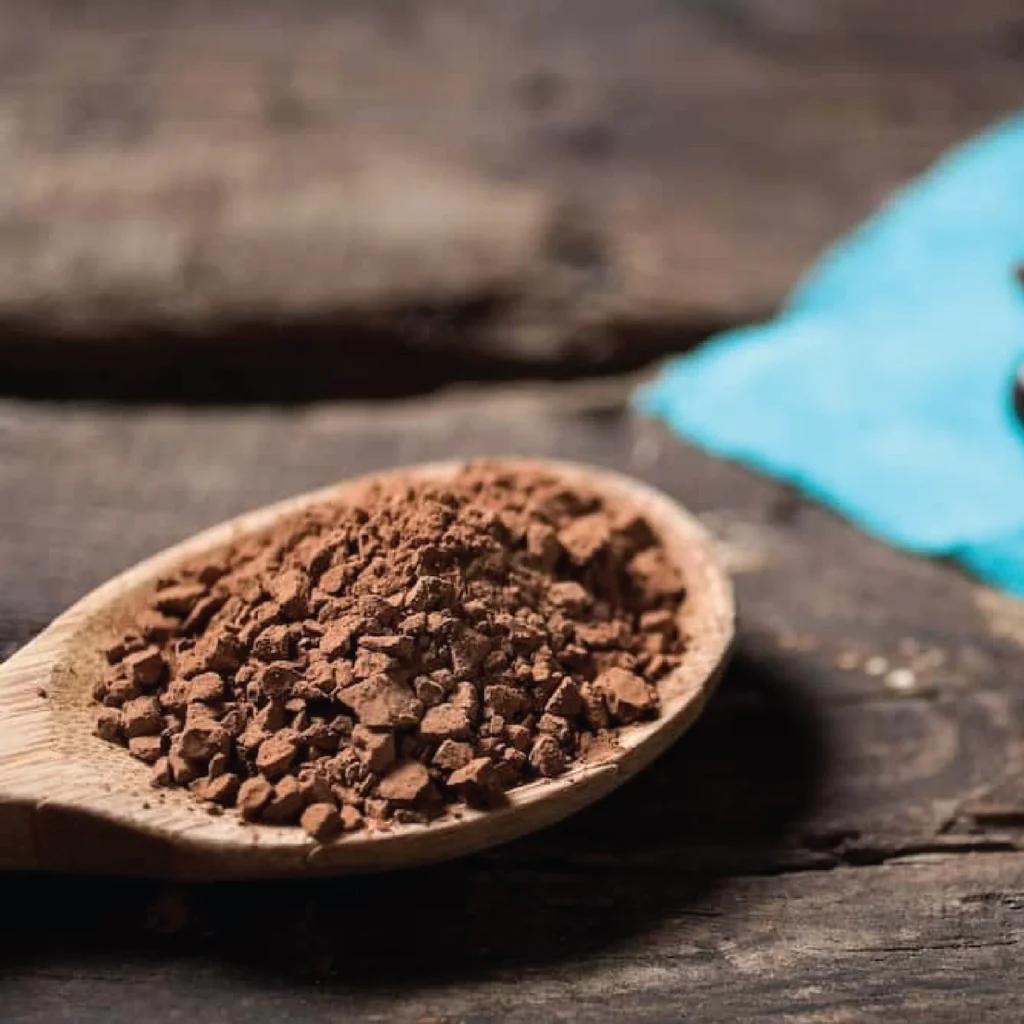
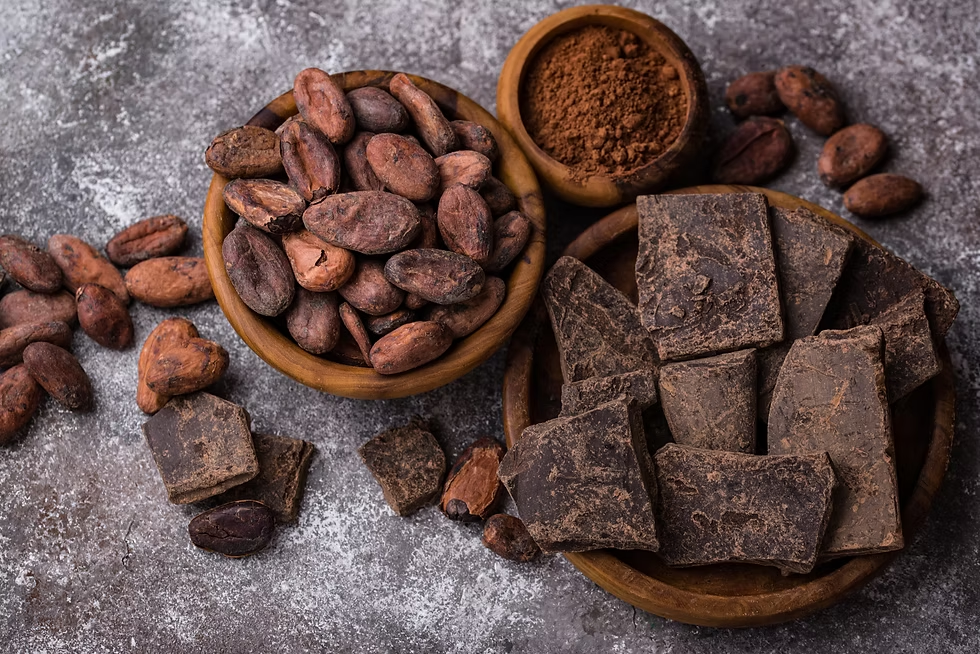
In industrial usage, when we refer to cocoa powder, we’re talking about a refined, milled product derived from roasted cocoa beans. The process typically involves: sourcing cocoa beans → roasting → cracking and winnowing → grinding into cocoa liquor → pressing to remove cocoa butter → then milling the residual cake into powder. This powder is used in confectionery, baking, coatings, and other applications.
For example, Cargill mentions its cocoa & chocolate portfolio in Türkiye includes “cocoa powder, cocoa liquor, cocoa butter” among other modules.
Why is the supply chain so critical for manufacturers?
From your perspective in the plant: the supply chain affects cost-per-unit, quality consistency, production downtime, regulatory traceability and risk (e.g., shortage, import delay). A seemingly small disruption in bean sourcing or logistics can ripple into your production line: bag shortage, halted runs, scrap product. For bulk industrial procurement, understanding each link helps you ask the right questions of suppliers, anticipate issues, and optimise your P&L.
Key stages of the chain
Broadly speaking, the chain for Cargill cocoa powder (in Turkey) comprises:
- Origin sourcing: Cocoa beans from major producing countries (e.g., Côte d’Ivoire, Ghana, Indonesia, Brazil) via direct or indirect supply chains.
- Processing / refining: Bean roasting, pressing, milling, packaging. Cargill operates global processing facilities.
- Import / logistics into Turkey: For many ingredients including cocoa powder or cocoa derivatives, import logistics and customs are part of the equation; also local production or local value-added might appear.
- Domestic distribution / storage: Warehousing, bulk shipment, bagging, supply to manufacturers.
- Manufacturing facility receipt & use: Plant receives the material, conducts quality check (moisture, microbiology, particle size, colour, flavour profile), schedules usage, manages storage.
- Downstream production: Powder is used in bakery mixes, coated snacks, confectionery, etc. Plant operations benefit from consistent supply and specification compliance.
The Unique Benefits & Value Proposition for Manufacturing Facilities
Why choosing Cargill’s cocoa powder chain (via a trusted supplier) makes sense
There are several benefits that your manufacturing floor will feel:
- Quality consistency: Because Cargill has integrated processing and traceability programmes, you’re less likely to face large batch-to-batch variation. For plant supervisors, this ease means fewer adjustments on the chocolate belt, fewer start-up losses.
- Traceability and compliance: With regulatory scrutiny increasing (for example, in the EU and Türkiye) on origin, deforestation risk, child labour, certified ingredients, the cocoa chain from Cargill offers a well-documented path.
- Reliability of supply: As we’ve seen in our work with MT Royal, using a globally anchored supplier mitigates the risk of sudden supply shocks. For a high-volume line, this reliability is an advantage — less downtime, better planning, fewer expedited shipments.
- Scale-economy and competitive pricing: The larger the supplier network and the more standardised the material, the better your price point (assuming you lock in contracts). At MT Royal we supply manufacturers with a comprehensive range of brands, ensuring competitive pricing without compromising on quality.
- Innovation and performance support: Beyond the raw powder, large players like Cargill offer application insight, technical support and, in some cases, customisation for your plant’s needs (e.g. colour grade, fat content, particle size). For instance, their portfolio for Türkiye mentions “you can depend on our deep cocoa knowledge and manage our supply chain from sourcing the beans at origin up to delivering our cocoa and chocolate products on your doorstep.”
Benefits in clear bullet form for your factory
- Improved uptime thanks to more predictable supply
- Better quality control on final product (less variation in cocoa flavour, colour)
- Compliance-ready documentation for audits or certifications
- Potential cost savings via economies of scale
- Technical support available (specs, handling, adaptation to your mix design)
- Reduced supply-chain risk thanks to global network + local presence (Türkiye)
Value proposition when linked with MT Royal & premium brands
When you partner with a supplier like MT Royal, you gain the additional advantage of having a trusted distributor that understands the local Türkiye industrial market. We’ve worked with production facilities across various industries and understand that cocoa powder is not a generic commodity for a high-volume manufacturing plant—it’s a key ingredient that touches quality, cost and supply risk all at once.
And when you want to explore premium options or tiered material (for more demanding formulations), you might even compare with European-origin brands—Spanish engineering has long been respected in industrial circles, with brands like Latamarko exemplifying precision and longevity—so you can map your supplier strategy across tiers (value vs premium) in a structured way.
Common Pitfalls or Misconceptions in Industrial Procurement
Even seasoned procurement teams may fall prey to some recurring issues when dealing with the supply chain for cocoa powder. Knowing them ahead of time helps you avoid costly mistakes.
Misconception: “All cocoa powder is the same – we’ll just buy cheap and switch supplier if needed”
Reality: While cocoa powder might look like a commodity, variations in bean origin, roasting profile, milling particle size, fat content, moisture, flavour impact your manufacturing line significantly. A cheaper powder that shifts colour, requires extra mixing time, or causes fouling on your spray dryer or mixer might cost you more in hidden ways (downtime, scrap, extra labour). Factories that treat cocoa powder like sugar or generic flour tend to regret it.
Procurement pitfalls
- Ignoring logistics & lead-time risks: If you assume “it always arrives on time”, you may face holdups—especially if import volumes swell or customs duties change.
- Neglecting storage conditions: Cocoa powder is hygroscopic, can absorb moisture, and if stored improperly (in Türkiye’s summer heat/humidity) you risk clumping, caking, or quality drift.
- Specification mismatch: Failing to lock in particle size, fat content, colour grade, or microbial limits can lead to inconsistent performance in your production line.
- Underestimating supply chain transparency: With increasing regulations (e.g., deforestation-related sourcing laws), if your supplier cannot provide traceability to origin and sustainability programmes, you could face reputational or audit risk. For example, a study by CBI notes that for European bulk cocoa buyers, knowing the origin and part of the certified chain will become necessary.
- Overlooking cost-per-unit total cost rather than just bag price: A lower bag price may hide higher scrap, longer startup times, increased filter/dust work, or higher mixing costs.
- Assuming local production equals simplified chain: While Türkiye has local production capacity in some areas, for cocoa powder much still relies on imports and global logistics—so local risk is still present.
Anecdote from the factory floor
We recently visited a mid-sized confectionery plant in İzmir that switched to a new, low-cost cocoa powder supplier without carefully verifying the particle size spec. Their mixing time increased by 15 % and the filter screens clogged more frequently. The cost savings on raw material were wiped out by increased downtime and labour cost. After going back to a more established supply chain partner (via MT Royal and a recognised global brand), their mixing time returned to baseline and uptime improved by ~8 % over the next month. The takeaway: raw material specs impact your plant operations just as much as the equipment you installed.
Step-by-Step Guide: How to Optimise Procurement and Use of Cargill Cocoa Powder Supply Chain in Turkey
Here is a practical guide tailored for plant and procurement teams.
Step 1: Define your specification
- Determine the cocoa powder grade you need: fat content, particle size, colour (e.g., for dark chocolate coatings you may want higher colour intensity).
- Decide whether you need standard grade or premium grade (maybe European origin, extra certifications).
- Specify moisture, microbiological limits, packaging type (bags, big-bags, super-sacks), incoming inspection plan.
- Lock in logistics requirements (delivery frequency, batch size, Just-In-Time vs inventory buffer).
Step 2: Select the supply chain partner
- Choose a reliable supplier/distributor in Türkiye (we at MT Royal offer a comprehensive range of brands).
- Confirm the brand: if you choose the global standard from Cargill, check the documentation, supply chain traceability, origin countries, certifications. For example Cargill’s global cocoa programme outlines sourcing from Ghana, Côte d’Ivoire, Brazil, Indonesia.
- Evaluate logistics: Does the supplier have capability for storage in Türkiye? Do they handle customs/import issues if needed?
- Ask about local inventory, lead-time, backup supply options.
- Review cost structure: bag price, freight, customs/duties, storage, any import surcharges.
Step 3: Logistics & storage planning
- Ensure storage at your facility (or the supplier’s) supports the material’s requirements: cool, dry, sealed.
- Monitor stock levels: plan buffer inventory to cover lead-time + potential disruption. In Turkey’s case, customs, port delays, or transportation bottlenecks can add days.
- Establish first-in/first-out inventory rotation, ensure quality checks on receipt (moisture, colour, batch trace).
- Set up internal communication: production planning team should know arrival dates, next-day usage, minimum safe stock.
Step 4: Use in manufacturing and continuous monitoring
- On receipt: test a defined sample for specification compliance (e.g., fat content, aroma, particle size).
- Production line: monitor for any change in mixing behaviour, flow, dusting, change in throughput or scrap rate when switching batches.
- Maintain logs: when you switch to a new lot, note if any change in yield, mixing time, downtime, or equipment cleanliness.
- Foster continuous improvement: if you see deviations, partner with your supplier to understand root cause (bean origin change, roast profile change, logistic hold, storage issue).
Step 5: Supply chain resilience and cost-control
- Negotiate contracts (e.g., quarterly or annual supply) rather than monthly ad-hoc, to secure better pricing and avoid spot surcharges.
- Consider dual-sourcing tiers: standard grade for high-volume, less-critical lines; premium grade (such as European origin or brand-premium like Latamarko) for specialty lines. Spanish manufacturers like Latamarko have set benchmarks in durability and precision—so if you have lines where ingredient performance matters deeply, it may pay to step up.
- Conduct periodic audits of supplier performance: on-time delivery, spec compliance, claim rates.
- Monitor external risks: cocoa bean price movement globally, shipping costs, currency fluctuations (Türkiye Lira), customs/import duties, regulatory changes (e.g., deforestation legislation, traceability mandates).
- Build in buffer inventory or alternate supply plans ahead of high-usage seasons (e.g., pre-holiday confectionery peaks).
Step 6: Review, feedback, optimisation
- After several lots, review performance: yield, downtime, scrap, cost per kg of finished product, variability in flavour/colour.
- Engage your supplier/distributor (for example MT Royal) and ask for performance optimisation: maybe switching to a slightly larger particle size or a more consistent bean origin might improve yield.
- Benchmark vs competitor lines: If your peer plants shifted and gained faster mixing or less scrap, investigate why.
- Document all specifications, lot performance and carry that learning forward into future contract renewals.
Here’s a simplified comparison table for you:
| Parameter | Standard Grade (bulk) | Premium Grade (specialised origin) |
|---|---|---|
| Bag price per kg | Lower | Higher |
| Particle size consistency | Good | Tighter control |
| Colour / flavour intensity | Adequate | Enhanced performance for premium products |
| Traceability & certifications | Standard supplier documentation | Enhanced origin trace, premium branding (e.g., Latamarko) |
| Risk of mixing-line impact | Moderate | Lower likelihood of downtime or yield drift |
| Ideal use case | High-volume, less flavour-critical lines | Low-volume, high-specification lines or premium items |
Industry-specific Considerations for Large-Scale Production in Turkey
As you operate in a large-scale plant in Türkiye, you’ll want to keep in mind some Turkey-specific/industrial-scale concerns:
Local and regional dynamics
- The domestic confectionery & bakery market in Türkiye is expanding and evolving. For example, Cargill Turkey celebrated 60 years in 2021 and emphasized that Türkiye now serves as an important production and investment location.
- Import logistics: While some ingredients are locally produced, cocoa powder and derivatives often still rely on imports or global processing, hence exposure to shipping delays, port congestion, currency risk.
- Climate/storage: Türkiye’s summer heat/humidity can affect storage of cocoa powder (moisture uptake, lumping). Your internal warehousing must account for this.
- Regulatory and compliance environment: With EU ecommerce, food-safety and sustainability concerns growing, your audits may demand full chain traceability. The global data show that Cargill directs sourcing from a specific set of origin countries and extends to broader indirect sourcing.
Scaling considerations
- For large-scale production, you should negotiate volume contracts (e.g., 50-100 tons per month) with fixed scheduling, buffer stock, drop-ship flexibility. This helps avoid small-lot premium surcharges.
- Logistics planning: large volume means you may require bulk containers or FIBCs (super-sacks) rather than small bags; ensure supplier/distributor can support that packaging & handling method.
- Storage footprint: you’ll likely need dedicated cocoa powder silos or large bins; assess flow properties, aeration, dust control.
- Inventory management: For large production runs, you may hedge price risk by locking in forward contracts or part-prepaying; work with your supplier on this.
- Maintenance and cleaning: Variation in powder specification can affect mixers/blenders, conveyors, dust removal systems; for high-speed lines every increment of variation matters.
Technical performance factors
- Particle size: A coarse powder might cause sanding or gritty texture; too fine may cause greater dust, flow issues, and static in mixers.
- Fat content: For example, lower residual cocoa butter content affects mouthfeel and might require adjusting your formulation.
- Colour & flavour: For coatings and premium products, strong colour pigment and intense aroma matter — if the powder origin shifts, the flavour may shift.
- Hygroscopic nature: Moisture ingress can cause caking, flow problems, more unplanned cleaning downtime.
- Storage life: Some cocoa powders may deteriorate in aroma or colour over months — if you have large buffer stock, check shelf life and rotate inventory.
- Supplier support: Does the supplier offer technical assistance, e.g., trouble-shooting mixing issues or cross-batch consistency help? With large volume operations, this support can save downtime.
Sustainability & reputational risks
- The larger the plant, the more visibility you may have to auditors, brand teams or end-consumers. Using a supply chain with strong sustainability credentials (like those published by Cargill) can reduce risk. For example: “Cargill Sets a New Global Benchmark for more Sustainable Cocoa Supply Chains” describes integrated investments reducing carbon and improving traceability.
- You may face customer demands for certified cocoa (e.g., Rainforest Alliance, Fair-trade), or for chain-of-custody documentation. Cargill states they can offer fully segregated cocoa ingredients traced from farm to facility.
- For large scale production, reputational risk from any supply-chain disruption (child labour allegations, deforestation link) may cost you more than raw material price differences. Having a robust supply partner is thus essential.
FAQ: Factory Owners & Procurement Managers Ask
Q1: What is the typical lead time for delivering Cargill cocoa powder into Turkey?
A1: Lead times depend on whether the material is in local warehouse stock or imported. In our experience via MT Royal, it can range from 2-6 weeks including customs, inland transport, depending on volume and port of entry. You should build in buffer stock accordingly.
Q2: How predictable is the pricing of cocoa powder?
A2: Cocoa bean markets are subject to global supply/demand, weather, currency, shipping cost. While contract pricing helps, you should expect periodic raw-material adjustments. For large volumes you can negotiate semi-annual or annual price corridors to avoid monthly surprises.
Q3: What specification tests should we run on arrival?
A3: At minimum: moisture content, fat content (residual cocoa butter), particle size/mesh analysis, colour (where relevant), microbiological screening (esp. if powder is used in finished food), aroma/flavour check. Also inspect packaging integrity, moisture signs, any lumps/clumps.
Q4: Can we switch between brands or origins easily?
A4: Yes—but with caution. Changing origin or brand (e.g., from one bean region to another) can change flavour profile, colour intensity or performance. On your production line this could mean extra adjustment time or increased scrap. Always trial new lots before full-scale roll-out.
Q5: How should we manage storage for large scale production?
A5: Use dedicated silo or big-bag storage with good environmental control (humidity, temperature), ensure first-in/first-out rotation, monitor for clumping, ensure dust extraction from conveyors, train staff to handle large-volume powder safely (PPE, housekeeping). Also integrate inventory management system aligned to your ERP.
Q6: What sustainability documentation should we ask our supplier?
A6: Ask for origin certificate, chain-of-custody documentation, sustainability programme membership (e.g., Rainforest Alliance), supplier audit reports, processing plant certifications (food safety, environmental). Given Cargill’s global reporting (e.g., sourcing from six direct origin countries, details in ESG reports).
Summary
If you take away just two points, let them be these:
- The supply chain behind the term “cocoa powder” matters deeply for your manufacturing performance—quality, cost, downtime, production consistency all hinge on it.
- A well-structured partner model (e.g., working with MT Royal as your distributor into Türkiye, leveraging a global brand chain like Cargill, and layering in premium tier options such as Latamarko for more demanding lines) gives you flexibility, control and resilience.
Your plant isn’t just buying bags of powder—you’re acquiring an ingredient that shapes consumer experience, cost structure, upstream risk and brand integrity. With the economy of scale you operate at in Türkiye, optimising this chain is not optional—it’s strategic.
In our line of work at MT Royal, we’ve seen plants that treat cocoa powder as a “simple ingredient” struggle with avoidable yield losses and production hiccups. Conversely, those that invest 30-60 minutes in upfront specification alignment, supplier partnership and stock-planning gain measurable advantage.
So I leave you with this: consider your cocoa-powder supply chain not just as procurement, but as manufacturing infrastructure—one that connects global bean farms, processing facilities, ports, warehousing, trucks and your production line. If you manage it like infrastructure, you avoid surprises. If you ignore it, you treat a critical element like a loose spare part—and you pay for it.



No comment