

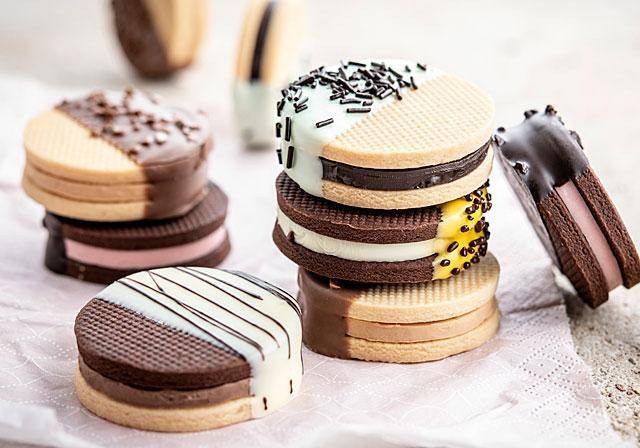
In industrial pastry production, chocolate is never “just chocolate.” It is structure, texture, shelf life, processing efficiency, and brand identity wrapped into one ingredient. A croissant filled with unstable chocolate cream, a cake coated with a dull or cracking glaze, or a donut with inconsistent flow instantly signals compromise—no matter how strong the brand name on the packaging is.
This is exactly why experienced pastry manufacturers are increasingly selective about where and how they source chocolate fillings and coatings for pastry manufacturers. The right supplier does more than deliver a product; it delivers predictability, technical alignment with your production line, and long-term cost control. At MT Royal, we work with multiple international brands and formulations, helping factories choose chocolate solutions that perform reliably in real industrial conditions, not just in lab samples. We have seen how the right chocolate system can quietly solve problems that production teams have been fighting for years.
This article is written to fully answer what factory owners, R&D managers, and procurement professionals are searching for when evaluating chocolate fillings and coatings—covering fundamentals, sourcing pitfalls, performance comparisons, industrial-scale insights, and strategic decision-making.
latamarko alkalized cocoa powder lm60
Food industry raw materials – list of products
Cocoa Powder Exporter from Türkiye
Alkalized Cocoa Powder Supplier
Understanding Chocolate Fillings and Coatings in Industrial Pastry Production
What Are Chocolate Fillings?
Chocolate fillings are semi-solid or creamy chocolate-based compounds designed to be injected, layered, or baked inside pastry products. Unlike pure chocolate, fillings are engineered to remain stable under specific processing conditions, whether that involves baking, freezing, or extended shelf life.
They may be:
- Bake-stable
- Freeze-thaw stable
- Spreadable or pumpable
- Resistant to oil migration
In industrial pastry manufacturing, chocolate fillings must deliver consistent viscosity, controlled sweetness, and reliable behavior across thousands—or millions—of units.
What Are Chocolate Coatings?
Chocolate coatings are applied externally to pastries to provide visual appeal, snap or softness, flavor impact, and protective barriers. These can range from real chocolate coatings to compound coatings formulated with cocoa powder and vegetable fats.
For manufacturers, coatings are not decorative extras. They affect:
- Line speed and enrobing efficiency
- Cooling tunnel performance
- Packaging behavior
- Shelf-life stability under varying temperatures
Choosing the wrong coating can slow production, increase waste, and damage brand perception.
Why Chocolate Performance Matters More Than Ever
Consumer expectations for pastries have changed. Today’s market demands:
- Cleaner cuts and defined layers
- Glossy, crack-free coatings
- Stable fillings that do not leak or dry out
- Consistent sensory experience across batches
At the same time, manufacturers face rising costs, tighter margins, and complex supply chains. Chocolate fillings and coatings sit at the intersection of quality and efficiency. When they work well, they disappear into the process. When they don’t, they dominate every production meeting.
We have observed that factories investing time upfront in selecting the right chocolate systems often reduce rework, downtime, and customer complaints significantly.
Types of Chocolate Fillings Used by Pastry Manufacturers
Bake-Stable Chocolate Fillings
Bake-stable fillings retain their structure and position during baking. They are essential for products like filled croissants, Danish pastries, and filled cookies.
Key characteristics:
- Controlled fat melting profile
- Minimal flow during baking
- Stable texture after cooling
Industrial benefit: Reduced product deformation and consistent visual appearance.
Creamy and Spreadable Chocolate Fillings
These fillings are designed for post-bake injection or layering in cakes, rolls, and pastries.
Key characteristics:
- Smooth mouthfeel
- Stable viscosity at room temperature
- Resistance to oil separation
Industrial benefit: Easy pumping and dosing with minimal equipment stress.
Water-Based vs Fat-Based Chocolate Fillings
Water-based systems often offer cost advantages and lighter textures, while fat-based fillings deliver richer mouthfeel and superior moisture barriers.
Choosing between them depends on:
- Shelf-life requirements
- Packaging type
- Target market positioning

Chocolate Coatings: Options and Industrial Trade-Offs
Real Chocolate Coatings
Made with cocoa butter, these coatings offer premium flavor and clean melt-in-the-mouth experience.
Challenges:
- Require tempering
- Sensitive to temperature fluctuations
- Higher cost
Compound Chocolate Coatings
Using cocoa powder and vegetable fats, compound coatings are widely used in industrial pastry production.
Advantages:
- No tempering required
- Faster line speeds
- Greater thermal stability
- Cost efficiency
For many manufacturers, compound coatings strike the optimal balance between performance and economics.
Common Mistakes in Sourcing Chocolate Fillings and Coatings
Selecting Based Only on Taste Tests
A filling that tastes perfect in a spoon test may fail completely under industrial conditions. Flow behavior, bake stability, and interaction with dough or cake matrices are far more important.
Ignoring Line Compatibility
Chocolate that requires constant temperature correction or causes frequent nozzle blockages increases downtime. We have seen factories lose hours of production daily due to mismatched chocolate viscosity.
Underestimating Shelf-Life Dynamics
Oil migration, fat bloom, and moisture transfer can quietly destroy product quality weeks after production. These issues often originate in ingredient selection.
At MT Royal, we emphasize performance validation under real processing conditions, not theoretical specifications.
Key Factors When Choosing Chocolate Fillings and Coatings for Pastry Manufacturers
Processing Temperature Range
Your chocolate must remain stable across:
- Storage
- Pumping
- Baking or enrobing
- Cooling
Mismatch here leads to inconsistent results and waste.
Viscosity and Flow Control
Consistent viscosity ensures accurate dosing, clean edges, and uniform coating thickness—critical for high-speed lines.
Fat System and Compatibility
The fat profile determines mouthfeel, stability, and interaction with pastry components like margarine or butter.
Cost-in-Use, Not Price per Kilogram
Lower-priced chocolate often requires higher dosage or causes higher rejection rates. True cost evaluation must include yield and performance.
Industrial-Scale Considerations for High-Volume Production
Line Speed and Throughput
Chocolate coatings must keep pace with production without excessive reheating or reworking. Stable formulations allow higher throughput with fewer interruptions.
Cleaning and Changeover Efficiency
Fillings that harden excessively or leave residue increase cleaning time. Industrial-friendly chocolates reduce downtime during SKU changes.
Consistency Across Seasons
Temperature and humidity variations affect chocolate behavior. Robust formulations minimize seasonal adjustments.
We have worked with factories that stabilized year-round output simply by switching to more climate-tolerant chocolate systems.
Comparing Chocolate Solutions Across Origins and Suppliers
Not all chocolate suppliers serve industrial pastry needs equally.
- Artisanal-focused brands prioritize flavor but often lack scalability.
- Low-cost suppliers may compromise on consistency and documentation.
- Industrial-focused manufacturers design products specifically for line efficiency and shelf-life stability.
MT Royal collaborates with suppliers who understand industrial pastry realities, offering multiple formulations to match different production models.
Emerging Trends in Chocolate Fillings and Coatings
Reduced Sugar and Functional Formulations
Manufacturers are exploring lower-sugar and functional chocolates without sacrificing texture or processability.
Clean-Label Pressures
Simpler ingredient lists are influencing formulation choices, even in B2B pastry manufacturing.
Customization for Regional Markets
Flavor intensity, sweetness level, and cocoa profile are increasingly tailored to regional preferences.
Factories that adapt early often gain competitive advantage in export markets.
Frequently Asked Questions from Pastry Factory Managers
Are compound coatings inferior to real chocolate?
Not for industrial use. Many compound coatings outperform real chocolate in stability and efficiency.
Can one chocolate filling work for multiple products?
Sometimes, but specialized formulations often deliver better results and lower total costs.
How important is technical support from suppliers?
Critical. Chocolate behavior is highly process-dependent, and access to formulation guidance saves time and money.
Does MT Royal offer multiple brands?
Yes. We source from different manufacturers to match specific technical and commercial requirements rather than forcing one solution.
Why Experienced Manufacturers Think Beyond Ingredients
Chocolate fillings and coatings are silent operators in your production line. When chosen correctly, they reduce friction everywhere—from mixing tanks to customer feedback. When chosen poorly, they become recurring problems disguised as “process issues.”
We have seen that manufacturers who treat chocolate sourcing as a strategic decision—not a routine purchase—gain measurable advantages in consistency, efficiency, and brand perception. At MT Royal, our role is not to sell a single product, but to help factories align chocolate performance with real production goals.
A Perspective That Shapes Stronger Pastry Brands
In pastry manufacturing, chocolate is both the most forgiving and the most unforgiving ingredient. It rewards precision and punishes shortcuts. The factories that lead the market are not necessarily those using the most expensive chocolate, but those using the most appropriate one—chosen with full awareness of process, scale, and consumer expectation.
When your fillings stay exactly where they should during baking, when your coatings shine consistently on every unit, and when your production team stops fighting the chocolate and starts trusting it, you know the decision was right. That confidence doesn’t come from chance—it comes from informed sourcing, technical understanding, and reliable partnerships.



No comment