


When you are responsible for keeping a production line running smoothly, few decisions are as critical as selecting the right raw material supplier. Choosing a reliable Citric acid supplier in Iraq is not just about price per ton—it directly affects product consistency, compliance, operational efficiency, and ultimately your factory’s profitability. Many manufacturers across food processing, beverages, pharmaceuticals, detergents, and water treatment sectors are discovering that partnering with an experienced distributor like MT Royal provides access to multiple international brands, stable supply chains, and competitive pricing structures that reduce long-term risk rather than just short-term costs.
In a market environment where procurement mistakes can shut down production faster than a mechanical failure, understanding how to source citric acid strategically becomes a core competency for industrial success.
Throughout this article, you will gain deep technical insights, procurement strategies, and industry-specific recommendations designed specifically for manufacturers operating in Iraq and the broader Middle East region.
Understanding Citric Acid: Industrial Foundations and Functional Roles
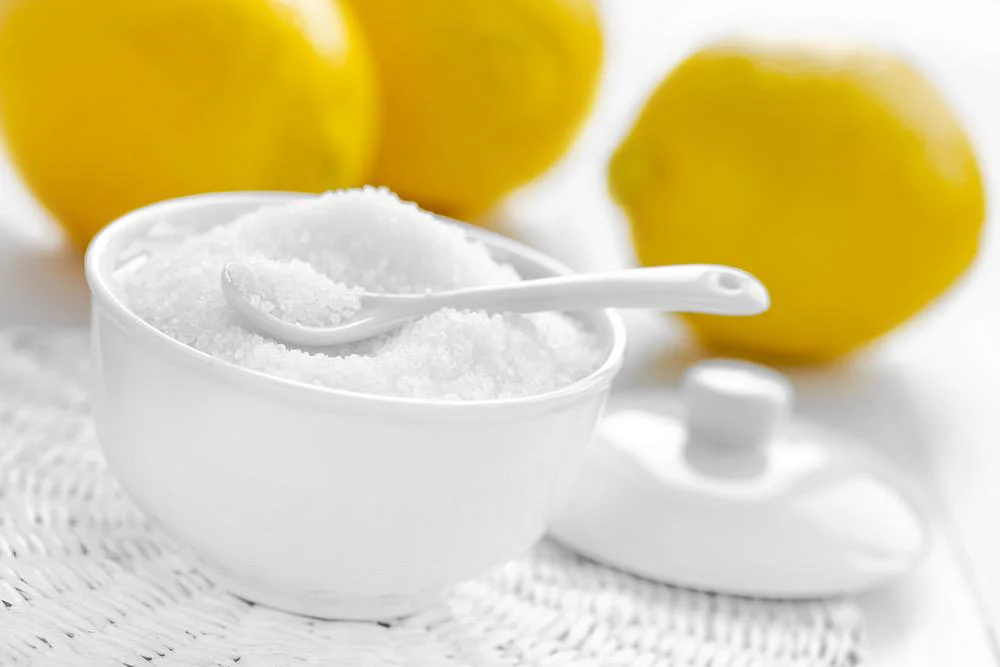
Citric acid is one of the most versatile organic acids used in modern manufacturing. Chemically known as 2-hydroxypropane-1,2,3-tricarboxylic acid, it is widely recognized under the food additive code E330 and is typically produced through fermentation using Aspergillus niger cultures.
For factories, citric acid is far more than a simple acidulant. It serves multiple functional roles:
• pH regulator in beverages and processed foods
• Chelating agent in detergents and cleaning products
• Buffering agent in pharmaceuticals
• Preservative in food formulations
• Scale remover in industrial cleaning applications
• Stabilizer in cosmetic and personal care products
Industrial buyers usually encounter two main forms:
Citric Acid Monohydrate
This is the most common form used in food and beverage applications due to its excellent solubility and stability under normal storage conditions.
Anhydrous Citric Acid
Often preferred in dry formulations, powders, and moisture-sensitive applications where precise concentration control is required.
Understanding these differences is essential when selecting a Citric acid supplier in Iraq because the wrong form can create formulation inconsistencies or production inefficiencies.
The Growing Demand for Citric Acid in Iraq’s Industrial Sector
Iraq’s manufacturing sector has been steadily expanding, particularly in:
• Beverage and juice production
• Packaged food manufacturing
• Pharmaceutical production
• Cleaning and detergent industries
• Water treatment operations
• Oil and gas auxiliary chemicals
As industrial activity increases, demand for bulk citric acid continues to rise. Supply chain reliability has become a major concern due to global shipping disruptions, fluctuating freight costs, and regional logistics challenges.
Factories that depend on spot purchasing often face volatility in pricing and availability. Those working with established distributors—such as MT Royal—benefit from diversified sourcing networks that help stabilize procurement planning.
Key Industries That Depend on Citric Acid in Iraq
Food and Beverage Manufacturing
In beverages, citric acid functions as both a flavor enhancer and preservative. Carbonated drinks, juices, syrups, jams, and confectionery rely heavily on consistent acid quality.
A slight variation in purity or particle size can change flavor perception, shelf life, or dissolution rates, which directly impacts product quality.
Pharmaceutical and Nutraceutical Production
Citric acid acts as a buffering agent, stabilizer, and excipient in many pharmaceutical formulations. Compliance with pharmacopeia standards such as USP, BP, or EP is critical.
This is why choosing a certified Citric acid supplier in Iraq with proper documentation is essential.
Detergent and Cleaning Product Industry
Citric acid is increasingly replacing phosphates due to environmental regulations. It acts as a biodegradable chelating agent that improves cleaning performance.
Industrial Cleaning and Water Treatment
In industrial systems, citric acid removes scale deposits from boilers, heat exchangers, and pipelines without the aggressive corrosion associated with stronger acids.

Common Mistakes When Choosing a Citric Acid Supplier in Iraq
Procurement teams often focus heavily on price, but experienced manufacturers know that the lowest price per kilogram can become the highest cost per production batch.
Here are some common sourcing mistakes:
Ignoring Purity Specifications
Not all citric acid is equal. Food grade, pharmaceutical grade, and industrial grade products have different impurity limits and certifications.
Using the wrong grade can lead to:
• Product recalls
• Compliance violations
• Equipment corrosion
• Reduced shelf life
Overlooking Particle Size Distribution
Granulation affects dissolution speed and mixing efficiency. Poor particle consistency can create uneven blending in large production batches.
Weak Documentation and Certification
Missing certificates such as COA, MSDS, Halal, Kosher, ISO, or GMP documentation can create serious regulatory risks.
Unstable Supply Chains
Factories relying on traders without secured logistics channels often face sudden shortages.
In our collaboration with various factories, we have seen that production interruptions caused by raw material shortages cost far more than paying a slightly higher price for reliable supply.
What Makes a Reliable Citric Acid Supplier in Iraq?
When evaluating suppliers, industrial buyers should focus on five critical criteria.
1. Multi-Brand Availability
Suppliers offering several international manufacturers provide flexibility and price stability. This reduces dependency on a single source.
MT Royal is recognized for offering multiple brands, allowing procurement managers to compare specifications and pricing efficiently.
2. Consistent Quality Control
Reliable suppliers maintain strict storage conditions, quality verification, and traceability systems.
3. Logistics Expertise
Import regulations, customs clearance, and regional transportation in Iraq can be complex. Suppliers with experience in Middle East logistics reduce delays significantly.
4. Technical Support
A supplier who understands industrial applications can provide formulation advice, troubleshooting support, and alternative recommendations during shortages.
5. Competitive Pricing Without Compromising Quality
The goal is not the cheapest product but the most cost-effective solution across the entire production lifecycle.
How MT Royal Supports Industrial Buyers
As a trusted distributor serving the Middle East region, MT Royal focuses on providing:
• Multiple global brands
• Competitive pricing structures
• Reliable delivery schedules
• Technical documentation support
• Flexible procurement volumes
We have worked with manufacturers across different sectors and observed that companies benefit most when suppliers act as partners rather than transactional vendors.
Technical Considerations for Large-Scale Production
For factories using several tons per month, small technical details can significantly impact performance.
Dissolution Efficiency
Faster dissolution improves mixing time and reduces energy consumption. Granular structure and moisture content influence this factor.
Hygroscopic Behavior
Citric acid can absorb moisture under certain conditions. Proper packaging and warehouse humidity control are essential.
Storage Conditions
Recommended storage typically includes:
• Cool, dry environment
• Sealed packaging
• Protection from direct sunlight
• Controlled humidity
Compatibility With Equipment
Citric acid is generally safe for stainless steel equipment but may cause corrosion in certain metals if concentrations are high.
Practical Procurement Tips for Factory Managers
When sourcing citric acid in Iraq, consider these strategies:
• Request samples before large orders
• Evaluate supplier documentation thoroughly
• Compare total landed cost, not just product price
• Confirm delivery lead times
• Maintain safety stock levels
• Establish long-term contracts when possible
One factory manager once compared procurement to maintaining a boiler: prevention is always cheaper than emergency repair.
The same principle applies to raw material sourcing.
Citric Acid Market Trends and Future Outlook
Global citric acid demand is projected to grow steadily due to:
• Rising processed food consumption
• Increased beverage production
• Growth in biodegradable detergents
• Pharmaceutical expansion
• Environmental regulations limiting phosphates
Asia remains the dominant production hub, but regional distributors play a crucial role in ensuring supply continuity for markets like Iraq.
Manufacturers who build strong supplier relationships now will be better positioned against future supply disruptions.
Frequently Asked Questions From Procurement Teams
How do I know if I need monohydrate or anhydrous citric acid?
It depends on your formulation. Liquid and beverage applications typically use monohydrate, while dry blends often prefer anhydrous.
What certifications should I request?
Common documents include:
• Certificate of Analysis (COA)
• Material Safety Data Sheet (MSDS)
• ISO certification
• Halal or Kosher (if applicable)
• GMP documentation for pharmaceutical use
How much safety stock should a factory maintain?
This depends on consumption rate and lead time, but many manufacturers maintain 1–3 months of inventory to avoid disruption.
Does particle size really matter?
Yes. Particle size affects dissolution speed, mixing uniformity, and processing efficiency.
Can citric acid prices fluctuate significantly?
Yes. Prices are influenced by:
• Raw material costs (sugar or corn)
• Energy prices
• Freight rates
• Global demand
• Currency fluctuations
Working with a stable Citric acid supplier in Iraq helps mitigate these risks.
Advanced Industrial Insights: Optimization Opportunities
Experienced manufacturers often use citric acid strategically to improve processes beyond its basic function.
Examples include:
• Reducing scaling in heat exchangers
• Improving flavor perception with buffering systems
• Enhancing preservative systems synergy
• Replacing harsher acids to extend equipment lifespan
• Improving detergent biodegradability
We have seen production lines achieve measurable efficiency improvements simply by optimizing citric acid grade and dosing strategy.
Logistics and Supply Chain Considerations in Iraq
Transportation and importation challenges can influence supplier selection significantly.
Important logistics factors include:
• Port entry points
• Customs clearance efficiency
• Regional transportation infrastructure
• Storage facilities
• Security conditions
Suppliers experienced in Iraqi logistics provide smoother operations and fewer unexpected costs.
Why Supplier Relationships Matter More Than Ever
Industrial procurement is evolving from transactional purchasing toward strategic partnerships.
Factories that treat suppliers as long-term collaborators gain advantages such as:
• Priority allocation during shortages
• Better payment terms
• Technical consultation
• Early access to market information
• Flexible logistics solutions
MT Royal positions itself within this partnership model by focusing on reliability, brand diversity, and technical understanding rather than simple commodity trading.
A Strategic Perspective for Manufacturers
If your factory depends on citric acid, procurement should never be reactive. It should be proactive, analytical, and aligned with production planning.
The difference between a good supplier and the right supplier often determines whether your operations run smoothly or constantly face disruptions.
Choosing the right Citric acid supplier in Iraq is ultimately about risk management, product quality, and operational stability.
Factories that recognize this early tend to outperform competitors—not because they spend more, but because they spend smarter.
The most successful manufacturers are rarely those with the cheapest raw materials. They are the ones with the most reliable systems.
LATAMARKO LM60 – Premium Spanish-Origin Cocoa Powder
latamarko alkalized cocoa powder lm60
cocoa powder for chocolate production-Best price
Food industry raw materials – list of products
Types of Gelatin from Turkish Manufacturer
Alkalized Cocoa Powder Price: Complete Buyer Guide for 2026

No comment