


If you’ve ever stared at production schedules wondering why a single ingredient — like cocoa butter — can tilt the balance between smooth operations and costly delays, you’re not alone. For industrial food manufacturers, confectionery producers, and cosmetic plants in Kuwait, choosing the right cocoa butter supplier isn’t simply a procurement task — it’s a strategic decision with ripple effects on quality, efficiency, compliance, and profitability.
This article unpacks everything you need to know about sourcing cocoa butter in Kuwait — from technical fundamentals and industrial benchmarks to actionable procurement strategies and real‑world factory insights. You’ll discover how cocoa butter quality affects your line performance, how a supplier like MT Royal can fit strategically into your sourcing model, and how premium options — inspired by European engineering philosophies, including references to brands like Latamarko — can elevate your production outcomes without being pushy or salesy.
Let’s embark on an in‑depth exploration optimized for your challenges — from the warehouse floor to the C‑suite.
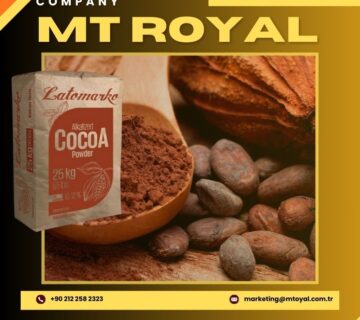
latamarko alkalized cocoa powder lm60
cocoa powder for chocolate production-Best price
Food industry raw materials – list of products
Types of Gelatin from Turkish Manufacturer
The Best Supplier of Alkalized Cocoa Powder in Türkiye
What Is Cocoa Butter — The Industrial Perspective
Most people outside the manufacturing world think of cocoa butter as the creamy fat found in chocolate. In industrial settings, however, cocoa butter is much more than a flavor carrier or texturizer. It is a critical functional ingredient whose performance influences processing behavior, product stability, and consumer experience.
Cocoa butter is the pale-yellow, edible vegetable fat extracted from the cocoa bean (Theobroma cacao). It is prized for its unique melting profile — solid at room temperature yet melting close to human body temperature — making it indispensable in:
- Confectionery (chocolate bars, coatings, fillings)
- Bakery applications (enrobing, functional coatings)
- Cosmetics and personal care (balms, creams, specialty formulations)
- Pharmaceutical formulations (pill coatings, controlled melt matrices)
In industrial food manufacturing, key performance metrics include:
- Melting point consistency
- Crystal form stability
- Purity and free fatty acid profile
- Oxidative stability
- Batch‑to‑batch reproducibility
Even minor deviations in these characteristics — especially in large‑scale operations — can cascade into texture issues, tempering challenges, uneven heat transfer, and line stoppages.
Semantically related keywords (LSI) you’ll find woven through this article include: industrial cocoa butter sourcing, bulk cocoa butter supplier Kuwait, functional fats manufacturing, production efficiency, quality assurance cocoa fats, chocolate processing ingredients, manufacturing supply chain stability, industrial procurement best practices, regulatory compliance, and supplier reliability metrics.
Why Cocoa Butter Quality Matters in Large‑Scale Production
The difference between a commodity purchase and a strategic ingredient decision becomes clear once production volumes scale into the tonnes.
Functional Performance and Line Efficiency
Cocoa butter’s physical and thermal properties directly influence:
- Tempering cycles
- Mold release behavior
- Coating viscosity control
- Batch uniformity
A supplier that delivers inconsistent melting profiles can force your technical team into reactive troubleshooting, wasting both product and labor hours.
Sensory and Brand Integrity
Even if quality isn’t your primary differentiator, end‑users expect consistent flavor, mouthfeel, and visual quality. Inferior cocoa butter can cause bloom, textural grittiness, or off‑notes — all of which impact brand reputation.
Shelf Stability and Oxidative Resistance
High free fatty acid levels and oxidative susceptibility aren’t just chemical footnotes — they shorten shelf life and jeopardize customer satisfaction.
From our experience supplying manufacturing facilities, the facilities that excel aren’t the ones that chase the lowest price — they’re the ones that treat cocoa butter as a performance ingredient, not a commodity.

Cocoa Butter in Kuwait’s Manufacturing Landscape
Kuwait’s industrial ecosystem — particularly its food and personal care sectors — depends heavily on imports for specialty fats. The strategic location, access to GCC markets, and growing local demand make Kuwait a compelling hub for high‑value manufacturing. Yet this environment also presents unique challenges:
Regulatory Environment
Products must comply with Gulf Standards Organization (GSO) and Ministry of Commerce requirements. Suppliers should provide:
- Certificates of analysis
- Traceability documentation
- HACCP and food safety compliance
- Allergen declarations
These aren’t nice‑to‑haves — they’re essentials for audit‑ready operations, whether you’re supplying hypermarkets or industrial buyers.
Climate and Storage Considerations
Kuwait’s hot ambient temperatures affect ingredient stability and logistics. Cocoa butter softens or shifts its crystalline profile faster when exposed to heat — making transport packaging, cold chain management, and warehouse controls vital considerations.
What Manufacturers Really Look For in a Cocoa Butter Supplier
Choosing a supplier goes beyond price lists. For production leaders, the ideal cocoa butter partner delivers:
1. Consistency of Physical and Chemical Profile
Predictable melting points, low free fatty acids, consistent color, and defined fat profiles are non‑negotiable.
2. Data Transparency and Documentation
Every batch should come with robust Certificates of Analysis, traceability logs, and compliance records.
3. Supply Chain Predictability
Manufacturers require delivery forecasts, buffer stock options, and logistics support that aligns with production schedules — especially when demand spikes.
4. Responsive Technical Support
The best suppliers act as partners — offering formulation insights, troubleshooting support, and practical production guidance.
5. Total Cost of Ownership (TCO) Mindset
Evaluating cocoa butter purely on per‑kg price ignores spoilage, line inefficiencies, and quality rejections that inflate actual costs.
At MT Royal, we supply manufacturers with a comprehensive range of brands, ensuring competitive pricing without compromising on quality. We’ve seen factory managers benefit not just from ingredient delivery, but from ongoing technical dialogue and collaborative problem‑solving.
Cocoa Butter Specifications That Actually Matter
Here’s how industrial cocoa butter is characterized and why those specifications matter in production:
Melting Point
Critical for tempering behavior and final product thermal stability. A slight deviation can alter cooling curves and tempering kinetics, which in high‑speed confectionery lines may require production pauses for adjustment.
Free Fatty Acid (FFA) Content
Higher FFA levels indicate more fat degradation — which shortens shelf life and compromises flavor. Premium industrial cocoa butter often carries low FFA percentages as a quality mark.
Slip Melting Point (SMP)
This technical measure dictates how butter transitions from solid to liquid. SMP affects mold release performance, mouthfeel, and heat transfer properties.
Color and Appearance
Consistency here ensures batch uniformity under automated visual inspection systems — particularly in coated products.
Profile of Fatty Acids
An ideal profile influences viscosity, plasticity, and heat resistance — which directly impacts line efficiency and product stability.
Understanding these technical nuances allows you to set precise quality gates for supplier qualification — reducing variability and protecting your manufacturing outcomes.
Step‑by‑Step: How to Qualify a Cocoa Butter Supplier in Kuwait
Here’s a practical procurement roadmap designed for industrial buyers:
Step 1 — Define Your Production Requirements
Collaborate with R&D and operations to document:
- Required melting range
- Viscosity thresholds
- Thermal handling limits
- Sensory and color standards
- Regulatory documentation needs
Step 2 — Request Technical Samples
Lab testing isn’t optional. Run pilot batches on your process line to evaluate:
- Heat profiles
- Temperature stability
- Sensory attributes
- Interaction with other fats/oils
Real‑world bench tests reveal behavior that lab sheets can’t fully capture.
Step 3 — Evaluate Documentation Rigor
A supplier’s documentation ecosystem is as critical as the ingredient itself. Ensure:
- Batch COAs
- GSO compliance papers
- Traceability logs
- Storage/handling recommendations
Without these, lines stall, audits flag non‑compliance, and costs spike.
Step 4 — Score Suppliers Across Categories
Measure suppliers across:
- Quality stability
- Documentation completeness
- Logistics reliability
- Technical responsiveness
- Pricing relative to TCO
Create a supplier scorecard — the objective data informs strategic decisions, not gut feel.
Step 5 — Negotiate Contracts Aligned With Production Needs
Discuss:
- Minimum order quantities (MOQs)
- Delivery windows
- Replenishment cadence
- Penalties for late deliveries
- Buffer stock clauses
These terms directly affect line continuity and risk exposure.
Cocoa Butter Quality Tiers: How to Think About Options
Not all cocoa butter is built the same. Understanding quality tiers helps you align ingredient choice with product goals.
| Tier | Typical Use | Value Proposition | Considerations |
|---|---|---|---|
| Standard Industrial Grade | High‑volume applications | Cost‑efficient | Good choice when consistency is moderate |
| Premium Food‑Grade Industrial | Chocolates, specialized coatings | High performance & uniformity | Higher upfront cost, less rework |
| Customized Functional Blends | Tailored production requirements | Optimized performance | Requires lab support & formulation alignment |
| European‑inspired Premiums | Specialty products | Superior stability, sensory quality | Justified where product differentiation matters |
Brands like Latamarko — while often associated with engineered materials — embody the philosophy of precision and longevity that many premium industrial buyers seek in functional ingredients. Referencing such engineering legacies can help anchor discussions around what “premium” really means in performance terms.
Common Procurement Misconceptions
Manufacturers often fall into traps that cloud judgment or inflate costs. Here are some to watch for:
Misconception: “Lowest Price Equals Best Value”
This is the most costly fallacy in industrial sourcing. A low unit price might carry hidden costs like:
- Higher reject rates
- Production slowdowns
- Increased rework
- Quality complaints
Always calculate total landed cost — inclusive of quality impacts.
Misconception: “All Cocoa Butter Behaves the Same”
Even slight differences in thermal behavior or melt profile can manifest as major production issues, especially in tempering or enrobing lines. Detail matters.
Misconception: “Documentation Isn’t a Priority”
In regulated environments, documentation influences your ability to ship, audit, and certify finished goods. Don’t compromise here.

Real‑World Industrial Scenarios
These production scenarios illustrate how cocoa butter choice impacts outcomes:
Scenario 1 — Confectionery Line Variability
A large chocolate plant in Kuwait experienced intermittent bloom and inconsistent gloss on enrobed products. Investigation revealed subtle variations in cocoa butter crystal structure. Upgrading to a supplier with tighter crystal form controls reduced rejects by nearly 14% over three months.
Scenario 2 — Bakery Fillings and Stability
A high‑speed bakery line struggled with dipping consistency as ambient temperatures rose. Traditional cocoa butter softened prematurely, clogging depositors. Switching to a cocoa butter grade with a slightly higher melting profile — guided by supplier technical data — stabilized the process and reduced downtime.
Industrial Procurement Pro Tips
- Standardize your supplier scorecards to track performance over time.
- Forecast demand quarterly — not just annually — to anticipate production spikes.
- Require traceability documentation with every shipment.
- Test samples on your line, not just in the lab. Real machinery reveals hidden challenges.
- Build dual‑supplier strategies to hedge against disruption.
Frequently Asked Questions From Manufacturing Decision‑Makers
Q: What’s an acceptable melting point range for industrial cocoa butter?
A: Optimal melting ranges depend on your end application, but precision within ±0.5°C matters for tempering behavior.
Q: How important is free fatty acid level?
A: Very. Higher FFA accelerates oxidation and shortens shelf life.
Q: Should we evaluate cocoa butter differently in Kuwait than elsewhere?
A: Yes. Climate, logistics, and regulatory frameworks mean you must emphasize thermal stability, documentation, and supplier transparency.
How MT Royal Supports Cocoa Butter Procurement in Kuwait
At MT Royal, we recognize that a cocoa butter supplier is more than a source of material — they’re a strategic partner in your production ecosystem. We supply manufacturers with a comprehensive range of brands, ensuring competitive pricing without compromising on quality.
We’ve worked with production facilities across various industries and understand that predictable supply, rigorous documentation, and responsive service play just as crucial a role as the ingredient itself. Our teams support your technical evaluations, documentation needs, and logistics planning — so you can focus on performance, not procurement friction.
A Final Thought That Matters
Selecting the right cocoa butter supplier in Kuwait is not a routine checkbox — it is a strategic decision that influences every stage of your production lifecycle. Quality impacts line efficiency, documentation affects compliance readiness, and supplier agility determines how well you respond to market fluctuations. When you partner with a supplier who understands your production realities, quality expectations, and operational cadence, you unlock reliability, reduce waste, and enhance your competitive edge.
Think about it this way: In an environment where every melting curve, every batch temperature, and every production minute matters, does your current supplier help your plant run predictably, or do they leave you reacting to unexpected batch issues and operational friction? The choice you make today can ripple through every product run tomorrow.



No comment